


Expanded Metal Aluminium
In the landscape of industrial filtration and structural engineering, expanded metal aluminium stands as a versatile and high-performance material. Unlike traditional woven wire mesh or perforated sheets, expanded metal is produced through a unique slitting and stretching process that creates a continuous, jointless mesh. For engineers and procurement specialists, understanding the technical nuances of this material is essential for optimizing filtration efficiency, structural integrity, and cost-effectiveness in demanding B2B applications.
As a specialized manufacturer, Kaifil provides precision-engineered filtration solutions that leverage the unique properties of various metals. When selecting Perforated & Expanded Metal, the choice of aluminium as a base material offers a specific set of advantages—ranging from a high strength-to-weight ratio to exceptional corrosion resistance—that are critical in sectors such as chemical processing, HVAC, and aerospace.
Understanding the Engineering of Expanded Metal Aluminium
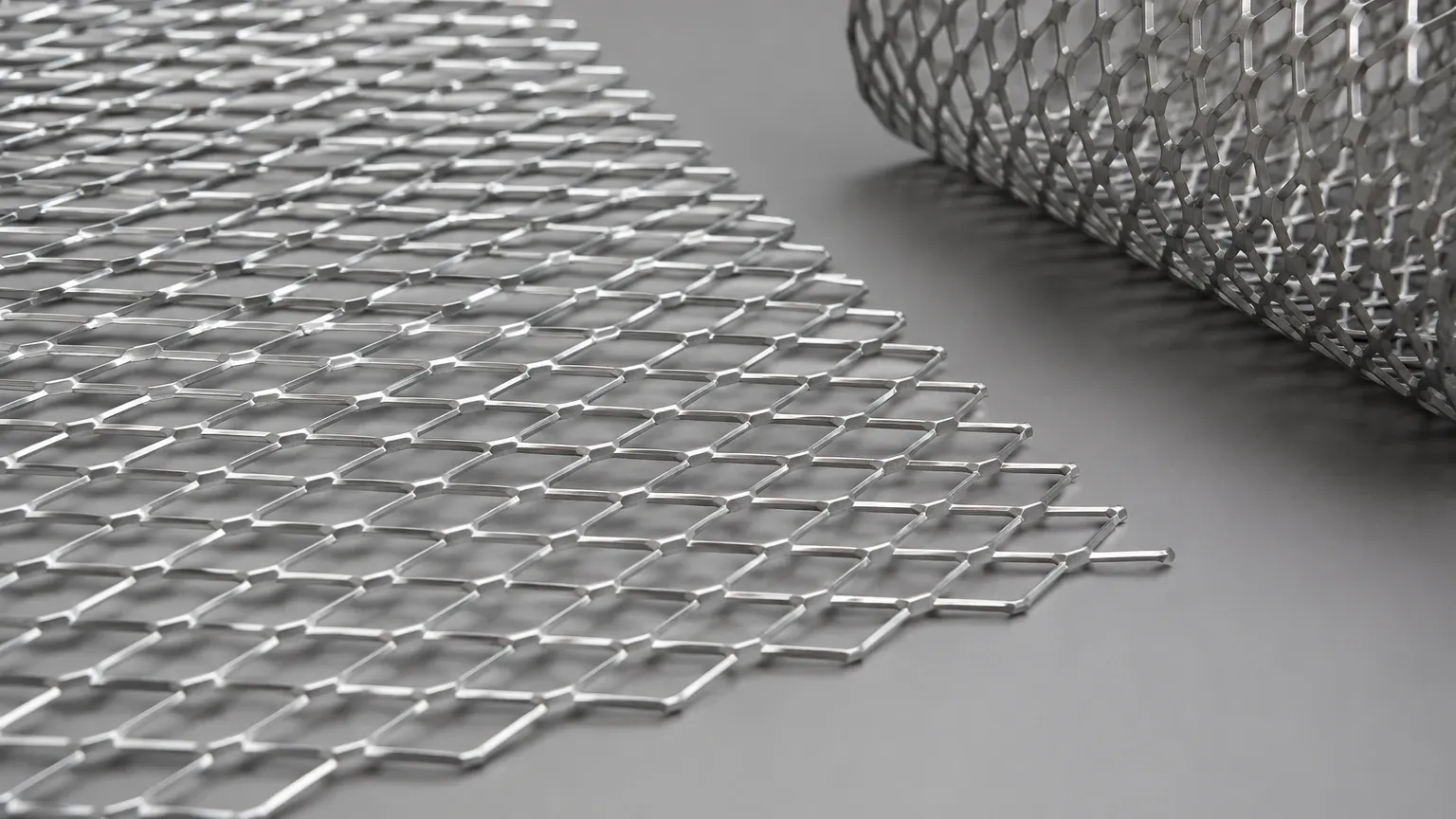
The production of expanded metal aluminium is a cold-forming process. A solid sheet or coil of aluminium is simultaneously slit and stretched (expanded) by a set of reciprocating knives. This process transforms a solid plate into a diamond-patterned mesh without any loss of material. Because the strands and bonds are part of the same piece of metal, the resulting structure is inherently stronger than a woven mesh of the same weight, which can unravel or shift under pressure.
Raised vs. Flattened Mesh
There are two primary forms of expanded metal aluminium used in industrial contexts:
1. Standard (Raised) Expanded Metal: This is the product directly off the expanding machine. The strands and bonds are set at a uniform angle to the plane of the sheet. This creates a three-dimensional surface that provides excellent grip, directional airflow control, and high structural rigidity. In filtration, the raised profile can increase the surface area available for particle impingement.
2. Flattened Expanded Metal: To produce this, the standard expanded sheet is passed through a cold-rolling reducing mill. This process flattens the strands and bonds into a single plane, resulting in a smooth, flat surface. Flattened expanded metal aluminium is often preferred when the mesh serves as a support layer for finer filter media or when a thin profile is required for compact housing units.
Material Selection: Aluminium Alloys for Industrial Filtration
The performance of expanded metal is heavily dependent on the specific aluminium alloy selected. In B2B procurement, choosing the right alloy ensures compatibility with the operating environment, particularly concerning chemical exposure and mechanical stress.
* Alloy 3003: This is the most common alloy for expanded metal. It is an alloy with manganese, providing excellent workability and moderate strength. It offers very good corrosion resistance and is frequently used in HVAC filters and general industrial screens.
* Alloy 5052: Containing magnesium, this alloy offers higher strength and superior corrosion resistance, particularly in marine environments or applications involving alkaline solutions. It is a preferred choice for filtration components in the chemical and maritime industries.
* Alloy 6061: Known for its structural strength, 6061 is often used when the expanded metal must serve as a load-bearing component. While less common in fine filtration, it is vital for heavy-duty industrial guards and support grilles.
Key Performance Metrics for Expanded Metal Aluminium
When specifying expanded metal aluminium for a project, engineers must define several critical geometric and performance parameters. These metrics dictate how the material will behave under fluid flow or mechanical load.
LWD and SWD
* LWD (Long Way of Diamond): The distance from the center of one bond to the center of the next bond across the long axis of the diamond.
* SWD (Short Way of Diamond): The distance from the center of one bond to the center of the next bond across the short axis of the diamond.
These dimensions determine the size of the openings. For filtration applications, a smaller SWD is often required to provide adequate support for fine mesh or to act as a primary coarse filter.
Strand Width and Thickness
The strand width refers to the amount of metal between the openings, while the thickness refers to the gauge of the original sheet. Together, these determine the "open area" percentage. A higher open area results in lower pressure drop and higher flow rates, which is crucial for energy-efficient air and liquid filtration systems.
Open Area Percentage
Calculated as the ratio of the area of the openings to the total area of the sheet, the open area is perhaps the most vital metric for filtration engineers. Expanded metal aluminium can be engineered to provide anywhere from 10% to 80% open area, allowing for precise calibration of flow dynamics and particle retention.
Expanded Metal vs. Perforated Metal: Choosing the Right Solution
While both perforated and expanded metals are used in industrial filtration, they offer different advantages. Understanding these differences is key to making an informed purchasing decision.
1. Material Efficiency: Perforated metal is created by punching holes in a sheet, which results in significant material waste (the "slugs" or circles of metal removed). Expanded metal involves no waste; the material is simply stretched. This often makes expanded metal aluminium a more cost-effective and sustainable option, especially when using expensive high-grade alloys.
2. Structural Integrity: Because expanded metal is a continuous piece of material, it distributes loads more efficiently than perforated metal. If a single strand in an expanded mesh is cut, the rest of the structure remains intact. In perforated metal, the remaining "bridges" between holes can be points of failure under high pressure.
3. Weight: For a given strength requirement, expanded metal aluminium is typically lighter than perforated metal. This is a critical factor in aerospace and mobile industrial equipment where weight reduction translates directly to operational efficiency.
Industrial Applications and Filtration Use Cases
Expanded metal aluminium is utilized across a broad spectrum of industries due to its adaptability. At Kaifil, we see this material applied in several high-stakes environments:
HVAC and Air Filtration
Aluminium expanded mesh is the industry standard for grease filters in commercial kitchens and pre-filters in large-scale HVAC systems. The multi-layered, staggered diamond pattern creates a tortuous path for air, which facilitates the impingement of oil droplets and dust particles. Its lightweight nature allows for easy removal and cleaning.
Support for Pleated Media
In high-pressure hydraulic and liquid filtration, fine filter media (such as fiberglass or thin stainless steel mesh) often lacks the structural rigidity to withstand flow surges. Expanded metal aluminium serves as an excellent support pleat, maintaining the shape of the filter element and preventing media collapse under differential pressure.
Chemical and Pharmaceutical Processing
Due to its non-toxic nature and resistance to many organic chemicals, expanded metal aluminium is used in the processing of specialty chemicals and pharmaceuticals. It is often used as a catalyst support or as a protective screen in centrifuges and drying equipment.
EMI/RFI Shielding
In electronic enclosures, expanded metal aluminium provides a dual function: it allows for ventilation and heat dissipation while simultaneously acting as a Faraday cage to shield sensitive components from electromagnetic interference (EMI) and radio frequency interference (RFI).
Technical Specifications and Customization Options
Standard off-the-shelf expanded metal often fails to meet the rigorous requirements of specialized industrial processes. Customization is where engineering teams can truly optimize their filtration systems. Key customization options include:
* Custom Mesh Sizes: Tailoring the LWD and SWD to match specific particle size retention requirements.
* Surface Finishes: While aluminium naturally forms a protective oxide layer, additional treatments like anodizing can further enhance corrosion resistance or provide specific surface hardness. Powder coating is also available for aesthetic or identification purposes in B2B equipment.
* Edge Configurations: Expanded metal can be supplied with "random shears" (edges ending in open diamonds) or "bond shears" (edges ending in solid metal bonds). For filters that require frequent handling, bond shearing or the addition of a U-edging frame is recommended to ensure safety and structural stability.
* Precision Shaping: Utilizing CNC cutting and forming, expanded metal can be shaped into cylinders, cones, or custom-contoured panels to fit specific filter housings.
Critical Considerations Before Procurement
Before finalizing a purchase order for expanded metal aluminium, engineers and purchasing managers should confirm several factors to ensure the product meets the intended application’s demands:
1. Tolerance Requirements: Standard industrial tolerances for expanded metal can be broader than those for machined parts. If your application requires high precision (e.g., for automated assembly), specify tighter tolerances for sheet size and diamond alignment.
2. Flow Directionality: In standard expanded metal, the angle of the strands creates directional flow. Engineers must determine if the flow should be directed in a specific way or if a flattened mesh is required to minimize turbulence.
3. Chemical Compatibility: While aluminium is highly resistant to many substances, it can react with certain strong acids or highly alkaline cleaning agents. Confirm the pH levels and chemical composition of the fluid being filtered.
4. Total Cost of Ownership: Consider the lifespan of the material. While aluminium may have a higher initial cost than galvanized steel, its longevity in corrosive environments and its recyclability often result in a lower total cost of ownership over the filter's lifecycle.
5. OEM Capabilities: When working with a manufacturer like Kaifil, discuss the possibility of integrated components. Can the expanded metal be pre-welded into a cartridge? Can it be combined with other Perforated & Expanded Metal components to create a multi-stage filtration solution?
By focusing on these technical details, B2B buyers can move beyond simple commodity purchasing and instead invest in engineered components that enhance the reliability and efficiency of their industrial systems. Expanded metal aluminium, when correctly specified and manufactured, remains one of the most effective tools in the modern filtration engineer's arsenal.
