


Expanded Metal Adalah
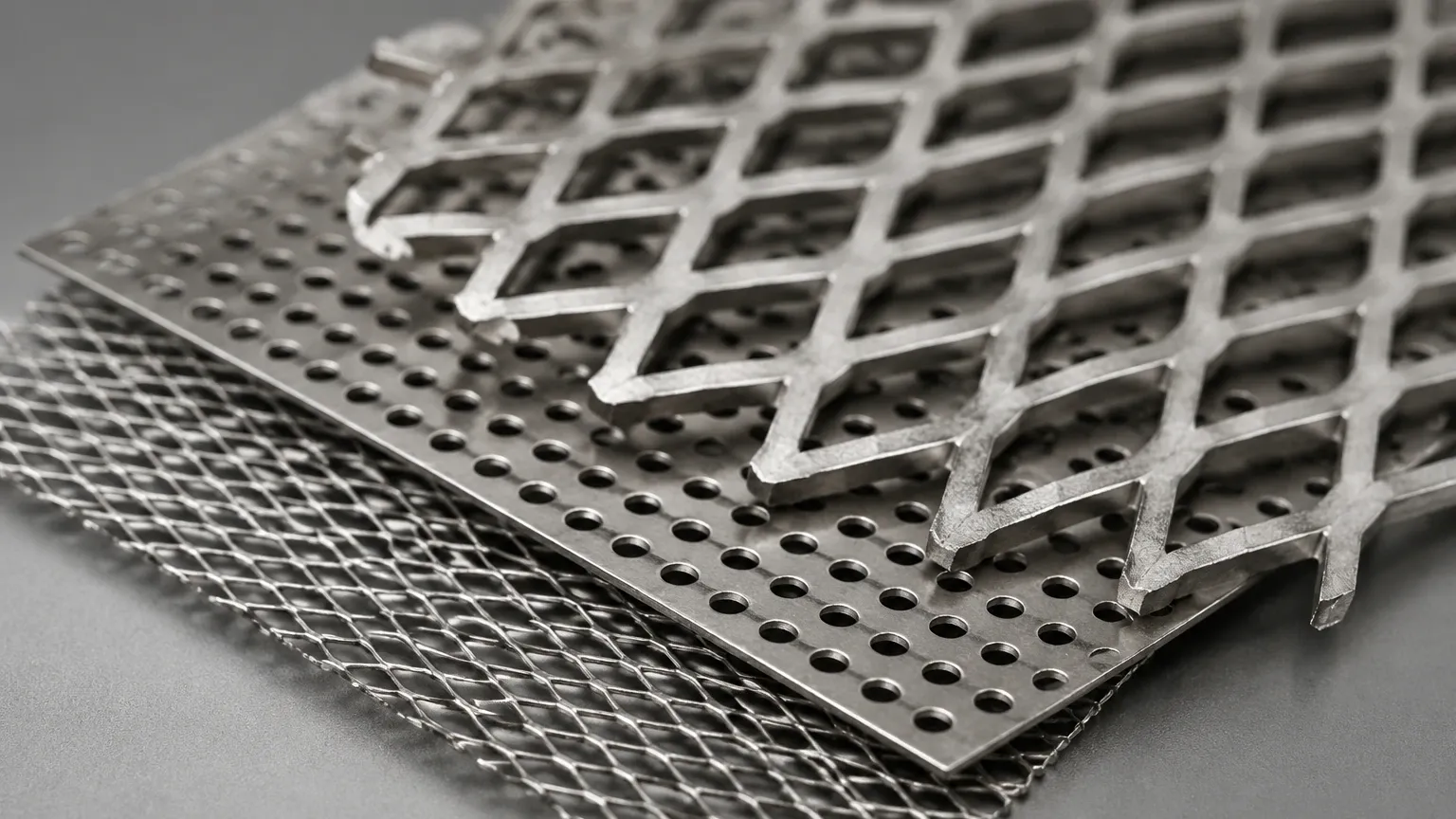
In the context of industrial manufacturing and structural engineering, understanding what expanded metal adalah (is) requires looking beyond a simple definition. Expanded metal is a versatile form of metal mesh produced by simultaneously slitting and stretching a solid sheet of metal. This process creates a diamond-shaped pattern of openings, resulting in a single-piece construction that maintains structural integrity without the need for welds or joins. For engineers and procurement specialists, expanded metal represents a cost-effective, high-strength solution for filtration, reinforcement, and protective shielding.
Unlike woven wire mesh, expanded metal is rigid and does not unravel. Because the manufacturing process involves stretching rather than punching out material, there is virtually no scrap waste, making it an environmentally and economically efficient choice compared to perforated metal in many applications. At Kaifil, we specialize in integrating these materials into precision filtration components, ensuring that the mechanical properties of the mesh align with the rigorous demands of chemical, pharmaceutical, and hydraulic processing.
The Manufacturing Process and Structural Integrity
The production of expanded metal begins with a solid metal plate or coil. A machine equipped with specialized knives slits the metal while simultaneously expanding it. The result is a network of interconnected strands and bonds. The "bonds" are the points where the strands intersect, and because they are part of the original solid sheet, the material distributes loads more effectively than many other mesh types.
There are two primary forms of expanded metal used in industrial settings:
1. Standard (Raised) Expanded Metal: In this form, the strands and bonds are set at a uniform angle to the plane of the sheet. This creates a three-dimensional surface that offers excellent grip and high rigidity. In filtration, the raised profile can help create turbulence or provide a larger surface area for specific mechanical separations.
2. Flattened Expanded Metal: This is standard expanded metal that has been cold-rolled through a mill. The process flattens the strands and bonds into a single plane, resulting in a smooth surface. Flattened expanded metal is often preferred when the mesh serves as a support layer for delicate filter media, such as fine wire cloth or non-woven membranes, as it prevents puncturing or abrasion.
Technical Specifications: SWD, LWD, and Strand Geometry
When specifying Perforated & Expanded Metal for a project, engineers must use precise terminology to ensure the final product meets flow and pressure requirements. The geometry of the diamond opening is defined by two primary measurements:
* SWD (Short Way of Design): The distance from the center of one bond to the center of the next bond measured across the short axis of the diamond.
* LWD (Long Way of Design): The distance from the center of one bond to the center of the next bond measured across the long axis of the diamond.
* Strand Width: The amount of metal fed into the machine between slits.
* Strand Thickness: The thickness of the original base metal sheet.
By adjusting these parameters, manufacturers can control the "open area" percentage. In filtration, the open area is a critical calculation for determining pressure drop across the filter element. A higher open area allows for higher flow rates but may reduce the structural rigidity of the component. Finding the equilibrium between these two factors is essential for high-pressure hydraulic or chemical processing applications.
Comparing Perforated & Expanded Metal in Filtration
While both materials are used extensively in industrial filtration, they offer different advantages. Perforated metal is created by punching holes in a sheet, which allows for a wider variety of hole shapes (round, square, hexagonal) and precise spacing. However, the punching process creates significant material waste (the "slugs"), which increases the base cost of the material.
Expanded metal, conversely, is often more rigid per pound than perforated metal because the strands are oriented at an angle, acting like structural trusses. In filtration systems, expanded metal is frequently used as a "support cage" or "pleat protector." For example, in a large-scale stainless steel filter cartridge, an outer layer of expanded metal protects the inner pleated media from mechanical damage during installation and operation, while an inner core of expanded metal prevents the media from collapsing under high differential pressure.
Material Selection for Industrial Environments
The choice of alloy is the most significant factor in the longevity of an expanded metal component. Because many industrial processes involve corrosive fluids or extreme temperatures, stainless steel is the industry standard.
* 304 Stainless Steel: Suitable for general industrial use, providing good corrosion resistance and excellent forming characteristics.
* 316/316L Stainless Steel: Contains molybdenum, which provides superior resistance to chlorides and pitting. This is the preferred choice for marine environments, pharmaceutical manufacturing, and chemical processing.
* Specialty Alloys: For highly specialized applications, expanded metal can be produced from Monel, Inconel, or Titanium, though these are typically reserved for environments where standard stainless steels would fail prematurely.
When evaluating expanded metal adalah options for your facility, it is vital to confirm the material grade and ensure it matches the chemical compatibility of the fluid being filtered. Using a lower-grade material in a corrosive environment can lead to "media migration," where the filter support breaks down and contaminates the downstream flow.
Applications in Industrial Filtration and Beyond
Expanded metal serves several distinct roles within a filtration assembly. Its unique structure allows it to perform tasks that standard wire mesh cannot always handle efficiently.
1. Support for Fine Filter Media
In multi-layer filter elements, expanded metal acts as the structural backbone. Fine wire mesh (used for precise micron ratings) is often too flexible to withstand high flow velocities. By laminating or wrapping the fine mesh around a rigid expanded metal cylinder, the filter maintains its shape and integrity even under fluctuating pressure.
2. Pre-Filtration and Coarse Separation
In water treatment or heavy industrial intake systems, expanded metal serves as a primary barrier to remove large debris before the fluid reaches the high-precision stages. The diamond pattern is effective at catching irregular solids while maintaining a high flow rate.
3. Flame and Spark Arrestors
The thermal conductivity of stainless steel expanded metal, combined with its high surface area, makes it an effective medium for flame and spark arrestors in exhaust systems and volatile chemical venting. It helps dissipate heat rapidly and prevents the passage of ignition sources.
4. Acoustic Dampening and Flow Diffusion
In gas filtration and exhaust systems, expanded metal can be used to diffuse high-velocity gas streams, reducing noise and preventing turbulence that could damage downstream components.
Engineering Considerations for Customization
Purchasing off-the-shelf expanded metal is rarely sufficient for specialized industrial equipment. Customization is often required to meet exact dimensional tolerances and performance specs. When working with a manufacturer like Kaifil, engineers should consider the following:
* Edge Finishing: Expanded metal naturally has sharp edges where the diamonds are cut. For filter cartridges, these edges must be deburred or hemmed to prevent damage to the filter media or injury to maintenance personnel.
* Cylindrical Forming: If the mesh is to be used as a filter core, it must be rolled into a precise diameter. The orientation of the diamonds (SWD vs. LWD) relative to the direction of the roll will affect the cylinder's crush strength.
* Welding Compatibility: Since expanded metal is often welded to end caps or flanges, the thickness of the strands must be compatible with the welding method (TIG, MIG, or Resistance Welding) to ensure a leak-proof seal.
Total Cost of Ownership and Maintenance
From a procurement perspective, the total cost of ownership (TCO) for expanded metal components is generally lower than that of perforated or machined parts. The lack of material waste during production translates to lower raw material costs. Furthermore, the durability of stainless steel expanded metal reduces the frequency of replacement cycles.
Maintenance usually involves periodic cleaning. Because expanded metal is a single piece of material, there are no crevices where particles can become permanently trapped (unlike woven mesh, where particles can lodge between wires). This makes it easier to clean via backwashing or ultrasonic cleaning, extending the service life of the entire filtration assembly.
Conclusion
Understanding expanded metal adalah more than knowing it is a stretched metal sheet; it is about recognizing its role as a high-performance engineering material. Its unique combination of strength, cost-efficiency, and versatility makes it an indispensable component in modern industrial filtration. Whether used as a protective outer wrap, a rigid inner core, or a primary coarse filter, expanded metal provides the structural reliability required for demanding applications.
For technical teams looking to optimize their filtration systems, selecting the right mesh involves a deep dive into material grades, open area calculations, and structural requirements. To explore specific configurations and technical data for your next project, you can Review product options and application support to find a solution tailored to your industrial needs.
