


Aluminum Expanded Metal Sheet
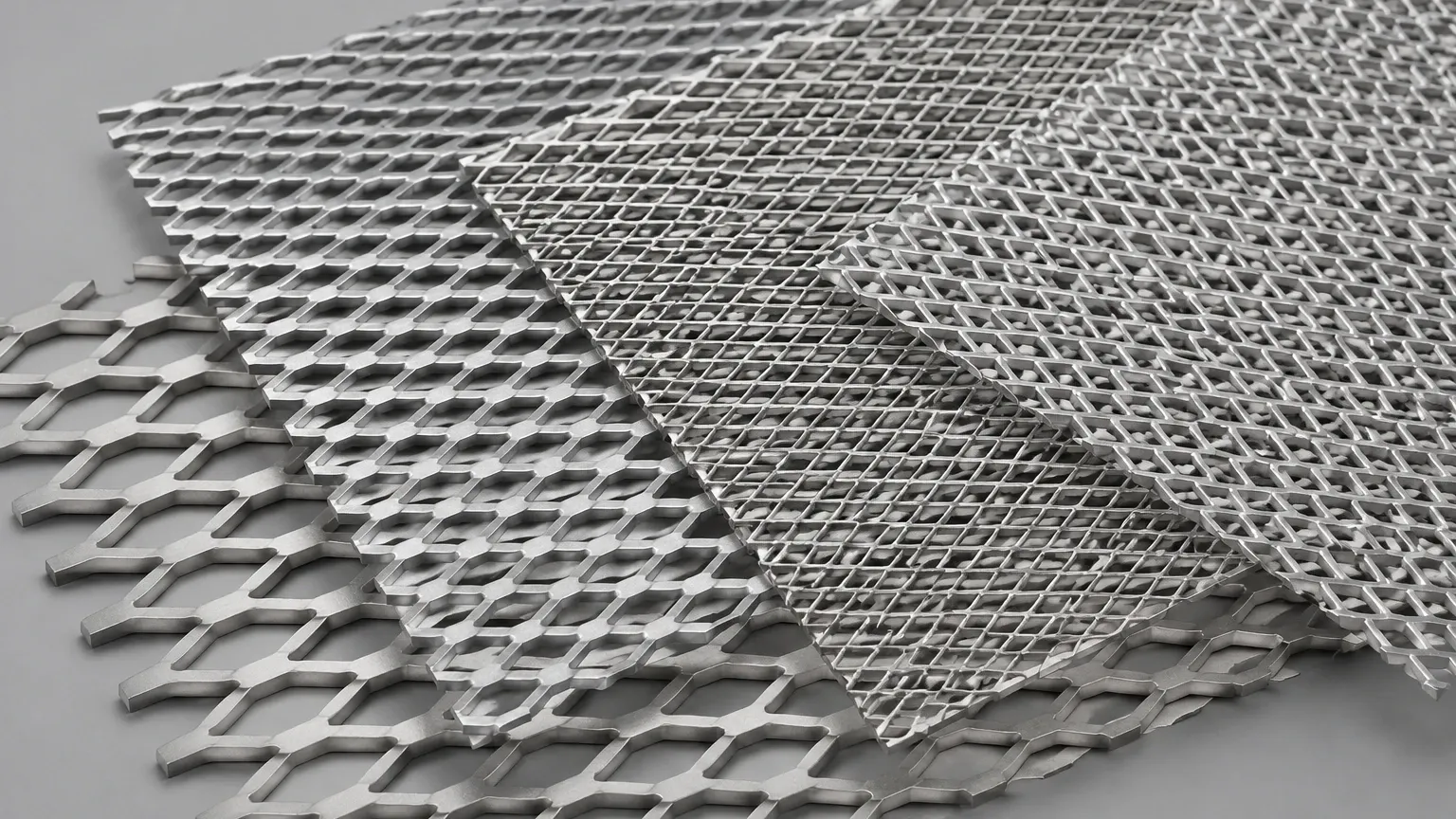
In industrial filtration and structural engineering, the selection of support materials is as critical as the selection of the primary filtration media. An aluminum expanded metal sheet represents a versatile solution that balances structural integrity with lightweight properties. Unlike perforated metal, which is created by punching holes and removing material, expanded metal is manufactured through a process of simultaneous slitting and stretching. This method results in a continuous piece of metal with diamond-shaped openings, offering unique mechanical advantages for high-performance industrial applications.
For engineers and procurement specialists, understanding the technical nuances of Perforated & Expanded Metal is essential for optimizing system performance, particularly in environments where weight, corrosion resistance, and airflow efficiency are primary concerns.
The Manufacturing Process and Structural Characteristics
The production of an aluminum expanded metal sheet involves a specialized machine that slits the metal sheet while stretching it in a single motion. This process creates a truss-like structure where the strands and bonds are angled to the plane of the sheet. This orientation provides several distinct benefits over other metal forms:
1. Material Integrity: Because the sheet is slit and stretched rather than punched, the structural integrity of the original aluminum remains intact. There are no welds or joints that can fail under mechanical stress.
2. Zero Waste: The expansion process does not remove any material. This makes it a highly cost-effective alternative to perforated metal, where the "slugs" or punched-out circles represent wasted raw material costs.
3. Strength-to-Weight Ratio: The resulting diamond pattern provides excellent rigidity. When using aluminum, which is naturally one-third the weight of steel, the resulting component offers high structural support without adding significant mass to the filtration assembly.
4. Anti-Skid and Grip: The raised edges of the strands provide natural traction, which is useful in industrial flooring or protective cages, though in filtration, these edges are often flattened (de-burred or leveled) to prevent damage to delicate filter media.
Technical Specifications for Engineering Selection
When specifying an aluminum expanded metal sheet for industrial use, engineers must define several key parameters to ensure the component meets the required performance standards. These specifications dictate the flow rate, pressure drop, and mechanical strength of the filter or support structure.
LWD and SWD (Long and Short Way of Design)
These terms refer to the dimensions of the diamond-shaped openings.
* LWD (Long Way of Design): The distance from the center of one bond to the center of the next bond across the long axis of the diamond.
* SWD (Short Way of Design): The distance across the short axis.
* LWO and SWO (Long/Short Way of Opening): These refer to the actual clear opening space, excluding the width of the metal strands.
Strand Width and Thickness
The strand width is the amount of metal fed into the machine between slits, while the thickness refers to the gauge of the original aluminum sheet. Together, these determine the "open area" percentage. For filtration applications, a high open area is often preferred to minimize resistance to fluid or gas flow, while thicker strands may be required for high-pressure hydraulic applications.
Flattened vs. Raised Expanded Metal
* Raised (Standard): The metal is left as it comes off the expansion machine. The strands are set at an angle, providing maximum strength and a three-dimensional profile.
* Flattened: The raised expanded metal is passed through a cold-rolling mill. This flattens the strands and bonds into the same plane as the sheet, reducing the thickness and creating a smooth surface. Flattened aluminum expanded metal is frequently used as a support layer for wire mesh filters to prevent the mesh from migrating or tearing.
Why Choose Aluminum for Filtration Applications?
While stainless steel is a staple in the filtration industry, aluminum expanded metal sheets offer specific advantages in specialized sectors such as aerospace, HVAC, and certain chemical processing environments.
Corrosion Resistance
Aluminum naturally forms a protective oxide layer when exposed to air, providing excellent resistance to atmospheric corrosion. In environments where moisture is present but extreme acidity or alkalinity is not a factor, aluminum provides a durable, low-maintenance solution. For enhanced protection, these sheets can be anodized or powder-coated.
Thermal and Electrical Conductivity
In applications involving heat exchange or where electrostatic discharge (ESD) must be managed, aluminum's high conductivity is a significant benefit. It allows for efficient heat dissipation in high-temperature gas filtration systems and provides a reliable grounding path in sensitive electronic enclosures.
Weight Considerations
In mobile filtration units, aerospace components, or large-scale HVAC systems, reducing the overall weight of the assembly is a priority. Using aluminum instead of steel can reduce the weight of support cages and pre-filter frames by up to 65%, facilitating easier installation and reducing structural load requirements.
Applications in Industrial Filtration and Beyond
Kaifil specializes in integrating Perforated & Expanded Metal into comprehensive filtration solutions. The aluminum expanded metal sheet serves several critical roles across various industries:
1. Filter Media Support and Pleat Spacing
In pleated filter cartridges, the expanded metal acts as a "bridge" that supports the filter media (such as paper, synthetic fiber, or fine wire mesh). It prevents the pleats from collapsing under the pressure of the fluid flow, ensuring that the entire surface area of the filter remains active. The diamond pattern is particularly effective at maintaining uniform pleat spacing.
2. Pre-filtration and Debris Guarding
In large-scale air intake systems or water treatment plants, aluminum expanded metal is used as a primary screen to capture large particulates, leaves, or debris before the fluid reaches the secondary, finer filtration stages. This protects the more expensive precision components from mechanical damage.
3. Flame and Spark Arrestors
Due to its thermal conductivity and ability to be manufactured with very fine openings, expanded aluminum is often used in flame arrestors. It helps dissipate heat rapidly, cooling a flame front below its ignition temperature as it passes through the metal matrix.
4. Acoustic Dampening
In industrial machinery enclosures, expanded metal sheets are used to hold acoustic insulation in place. The open area allows sound waves to pass into the insulation material while providing a durable, protective outer face.
Engineering Considerations: Pressure Drop and Flow Dynamics
One of the most common questions engineers face when selecting an aluminum expanded metal sheet is how it will impact the system's pressure drop. The pressure drop ($ΔP$) is directly influenced by the percentage of open area.
A higher open area results in a lower initial pressure drop, which is desirable for energy efficiency. However, there is a trade-off: as the open area increases, the structural rigidity of the sheet decreases. When designing a filter, engineers must calculate the maximum expected differential pressure across the filter element as it becomes loaded with contaminants. The expanded metal support must be able to withstand this "burst pressure" without deforming.
Kaifil provides technical guidance on selecting the optimal strand width and diamond size to balance these competing requirements. For instance, in high-velocity gas streams, a smaller diamond size with thicker strands may be necessary to prevent vibration and fatigue failure, even if it slightly increases the initial pressure drop.
Customization and OEM Capabilities
Standard off-the-shelf expanded metal often fails to meet the precise tolerances required for high-end industrial filtration. Customization is where manufacturers like Kaifil provide the most value. Key customization options for aluminum expanded metal include:
* Alloy Selection: Choosing between 3003 (general purpose), 5005 (anodizing quality), or 5052 (higher strength and marine-grade corrosion resistance).
* Precision Shearing: Cutting sheets to exact dimensions with minimal tolerances to ensure a perfect fit within filter housings or frames.
* Forming and Welding: Rolling expanded metal into cylinders for use as filter cores or outer cages, followed by precision welding (TIG or resistance welding) to ensure seamless construction.
* Surface Finishing: Degreasing, de-burring, and anodizing to meet the cleanliness standards required for food and beverage or pharmaceutical applications.
Evaluating Total Cost of Ownership
When comparing an aluminum expanded metal sheet to other materials, it is important to look beyond the initial purchase price. The total cost of ownership (TCO) includes installation labor, energy costs (related to pressure drop), and replacement cycles.
Aluminum's lightweight nature often reduces shipping and handling costs. Furthermore, its longevity in mildly corrosive environments means fewer replacements compared to galvanized steel. Because the expansion process is inherently efficient (no material waste), the per-unit cost for large production runs is often more competitive than perforated alternatives, especially when using expensive alloys.
Conclusion for Technical Buyers
The aluminum expanded metal sheet is a fundamental component in the toolkit of the industrial filtration engineer. Its combination of lightweight strength, corrosion resistance, and cost-effective manufacturing makes it an ideal choice for support structures, pre-filters, and protective components.
When sourcing these materials, it is vital to confirm the specific alloy, the required open area, and whether a raised or flattened profile is best suited for the application. Working with a manufacturer that understands the intersection of metal expansion and filtration science ensures that the final product will perform reliably under demanding industrial conditions.
For those seeking precision-engineered components, exploring the full range of Perforated & Expanded Metal options is the first step toward optimizing filtration efficiency and structural durability. Whether you are designing a new hydraulic system or upgrading a chemical processing line, the right expanded metal specification can significantly impact the lifecycle and performance of your equipment.
