


Aluminum Expanded Metal 4×8
In industrial manufacturing and filtration engineering, the selection of substrate materials is critical to the performance and longevity of the final product. Aluminum expanded metal 4×8 sheets represent one of the most versatile and widely utilized formats for structural support, protective screening, and filtration media reinforcement. As a specialized manufacturer of custom stainless steel and metal filtration solutions, Kaifil provides technical insights into the engineering considerations, material properties, and application-specific benefits of utilizing aluminum expanded metal in industrial environments.
Understanding the technical specifications of expanded metal is essential for engineers and procurement teams who must balance weight, structural integrity, and fluid dynamics. Unlike traditional woven wire or perforated sheets, expanded metal offers a unique geometry that can be tailored to specific industrial requirements.
The Manufacturing Process and Structural Integrity
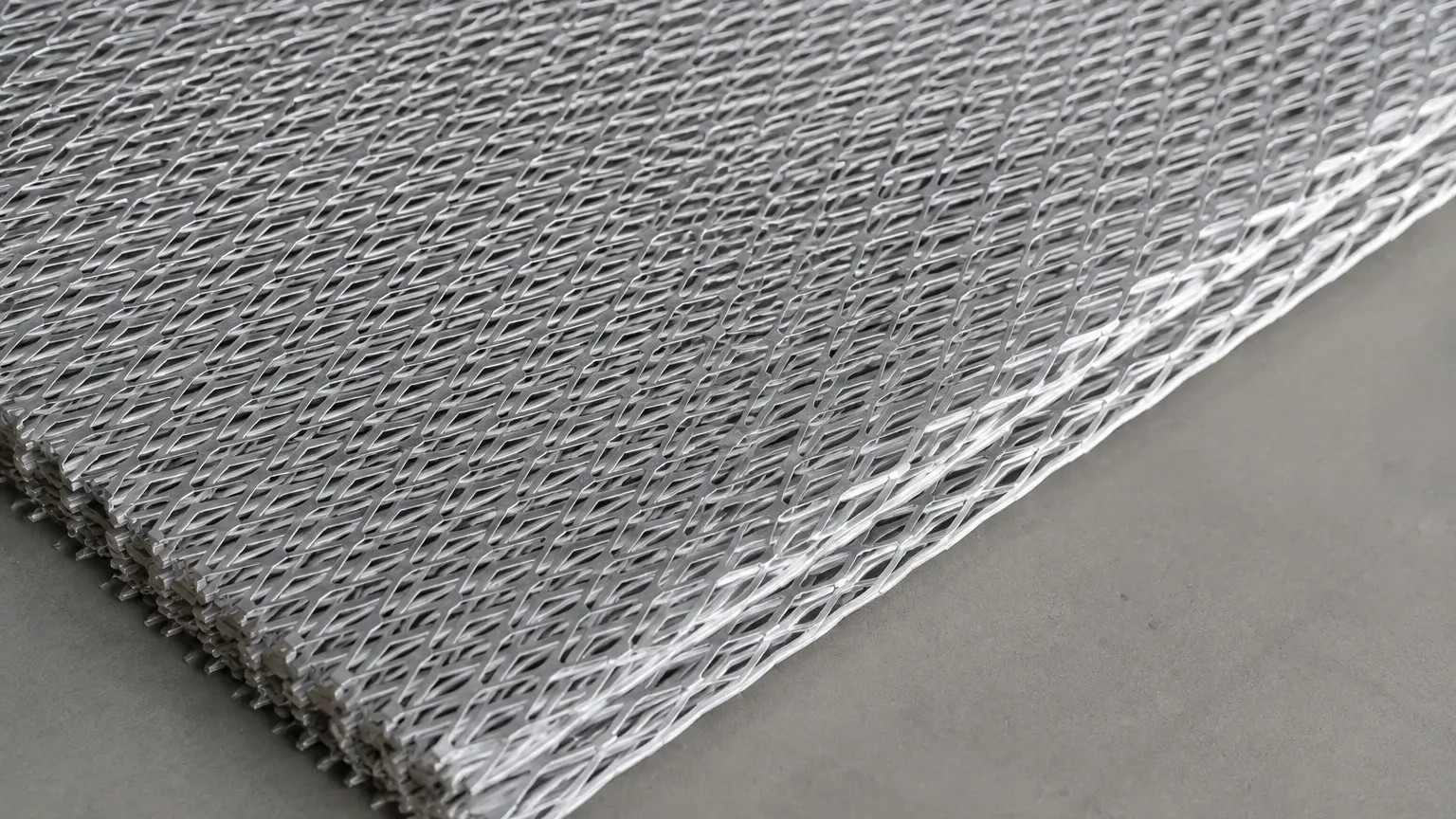
Aluminum expanded metal is produced through a simultaneous slitting and stretching process. A solid sheet of aluminum is fed through a machine equipped with specialized knives that create precise slits while stretching the metal into a diamond-shaped pattern. This process is inherently different from the production of Perforated & Expanded Metal through punching, as expansion involves no material waste. The "bonds" (the intersections of the diamonds) and "strands" (the sides of the diamonds) form a continuous piece of metal, ensuring that the structural integrity of the original sheet is maintained or even enhanced.
For the standard aluminum expanded metal 4×8 format, the 4-foot by 8-foot dimensions provide a manageable footprint for both large-scale industrial fabrication and specialized component manufacturing. Because the material is expanded, the resulting sheet is significantly lighter than a solid plate of the same dimensions while retaining a high strength-to-weight ratio. This makes it an ideal candidate for applications where reducing the overall weight of a filtration system or industrial assembly is a priority.
Key Technical Specifications for Engineers
When specifying aluminum expanded metal 4×8 for a project, engineers must define several critical geometric parameters. These dimensions dictate the material's open area, flow resistance, and mechanical strength.
SWD and LWD Dimensions
- Short Way of Diamond (SWD): This is the distance from the center of a bond to the center of the next bond measured across the short axis of the diamond.
- Long Way of Diamond (LWD): This is the distance measured across the long axis of the diamond.
The orientation of these diamonds relative to the 4×8 sheet is crucial. In most standard sheets, the LWD runs parallel to the length of the sheet (the 8-foot side), but custom orientations can be requested depending on the load-bearing requirements of the application.
Strand Width and Thickness
- Strand Thickness: This refers to the thickness of the base metal used to produce the expanded sheet.
- Strand Width: This is the amount of metal fed into the knives for each expansion stroke.
By adjusting the strand width and the degree of expansion, manufacturers can control the "Open Area" percentage. In filtration, the open area is a primary variable used to calculate pressure drop and flow rates. A higher open area allows for greater throughput but may offer less support for fine filter media like wire mesh or synthetic fabrics.
Material Grades and Chemical Compatibility
Aluminum is chosen for its natural oxide layer, which provides excellent corrosion resistance in many environments. However, different aluminum alloys offer varying mechanical and chemical properties. When sourcing aluminum expanded metal 4×8, the following grades are most common in industrial filtration and structural applications:
1. Aluminum 3003: This is the most common grade for expanded metal. It is an alloy with manganese, offering good corrosion resistance and workability. It is frequently used for general-purpose screens and filter supports.
2. Aluminum 5052: Known for its superior resistance to salt water and marine environments, 5052 is an aluminum-magnesium alloy. It is the preferred choice for filtration components used in offshore applications or chemical processing where higher corrosion resistance is required.
3. Aluminum 6061: This is a structural grade aluminum alloy. While it can be expanded, it is typically used in applications requiring high tensile strength and rigidity. It is often heat-treated to improve its mechanical properties.
Engineers must confirm the chemical compatibility of the alloy with the process fluid. For instance, while aluminum performs well in neutral or slightly acidic environments, it may degrade in highly alkaline solutions, where stainless steel components from Kaifil might be more appropriate.
Raised vs. Flattened Expanded Metal
One of the most important decisions in the selection process is whether to use "raised" or "flattened" expanded metal.
Raised Expanded Metal (Standard)
In its standard form, the strands and bonds are set at a uniform angle to the plane of the sheet. This creates a three-dimensional surface that provides excellent grip and high rigidity. In filtration, raised expanded metal can create turbulence in the fluid flow, which may be desirable in certain mixing or heat exchange applications. However, the sharp edges of raised strands can potentially damage delicate filter membranes if not handled correctly.
Flattened Expanded Metal
Flattened expanded metal is produced by passing the standard raised sheet through a cold-roll reducing mill. This process flattens the strands and bonds into a single plane, resulting in a smooth, flat surface. Flattened aluminum expanded metal 4×8 is often preferred as a support substrate for fine wire mesh. The flat surface provides uniform contact with the mesh, preventing point-loading and extending the life of the filtration media. Additionally, flattened metal is easier to clean and reduces the risk of bypass in gasketed assemblies.
Applications in Industrial Filtration and Beyond
While the 4×8 sheet is a standard commodity size, its application in specialized industrial sectors is extensive. Kaifil often integrates expanded metal components into complex filtration systems.
Support for Pleated Media
In heavy-duty air or hydraulic filters, aluminum expanded metal acts as a pleat support. It maintains the geometry of the filter media under high pressure, preventing the pleats from collapsing and ensuring that the entire surface area of the filter remains active.
Coarse Pre-filtration and Strainers
For water treatment or large-scale chemical processing, expanded metal serves as a primary strainer to remove large debris before the fluid reaches finer filtration stages. The diamond pattern is particularly effective at capturing irregular solids without blinding as quickly as some perforated patterns.
Protective Guards and Enclosures
In industrial equipment, expanded metal screens protect sensitive filtration components from mechanical damage. They allow for ventilation and visibility while providing a robust barrier. The lightweight nature of aluminum makes it ideal for removable guards that must be handled by maintenance personnel.
Engineering Evaluation and Selection Criteria
Before finalizing a purchase of aluminum expanded metal 4×8, technical teams should evaluate the following factors to ensure the material meets the operational demands of the project:
1. Load Requirements: Determine the maximum pressure or mechanical load the sheet will encounter. Raised expanded metal generally offers higher rigidity for a given weight compared to flattened metal.
2. Flow Dynamics: Calculate the required open area to minimize pressure drop. Engineers should consult manufacturer data sheets to compare the SWD/LWD configurations and their impact on fluid velocity.
3. Fabrication Needs: Consider how the 4×8 sheet will be processed. Aluminum is easily cut, welded, and formed. However, the orientation of the diamonds (LWD vs. SWD) can affect how the material bends. Bending parallel to the LWD is typically easier and results in less distortion of the diamond pattern.
4. Surface Treatment: While aluminum has natural corrosion resistance, applications in harsh environments may require anodizing or powder coating. These treatments can also provide electrical insulation or specific aesthetic qualities for architectural applications.
Maintenance and Total Cost of Ownership
From a procurement perspective, aluminum expanded metal 4×8 is a cost-effective solution. The lack of waste in the expansion process keeps material costs lower than perforated alternatives. Furthermore, the durability of aluminum reduces the frequency of replacement in non-corrosive environments.
Maintenance cycles depend heavily on the particulate load and the cleaning process. In filtration applications, expanded metal supports can often be cleaned using backwashing or ultrasonic cleaning, provided the alloy is compatible with the cleaning agents used. During routine inspections, engineers should check for strand thinning or bond fractures, which may indicate mechanical fatigue or chemical erosion.
Conclusion
Aluminum expanded metal 4×8 sheets provide a reliable, lightweight, and versatile foundation for a wide range of industrial applications. Whether used as a support structure for precision filtration media or as a standalone protective screen, the technical characteristics of the material—ranging from its diamond geometry to its alloy-specific resistance—must be carefully matched to the application's requirements.
Kaifil continues to support global industries by providing high-quality metal components and engineering expertise. For those seeking specific configurations or custom fabrication of filtration elements, understanding the fundamental properties of expanded metal is the first step toward optimized performance. To explore more about our capabilities in precision metal solutions, you can review product options and application support regarding Perforated & Expanded Metal to find the ideal fit for your technical specifications.
