


Carbon Steel Expanded Metal
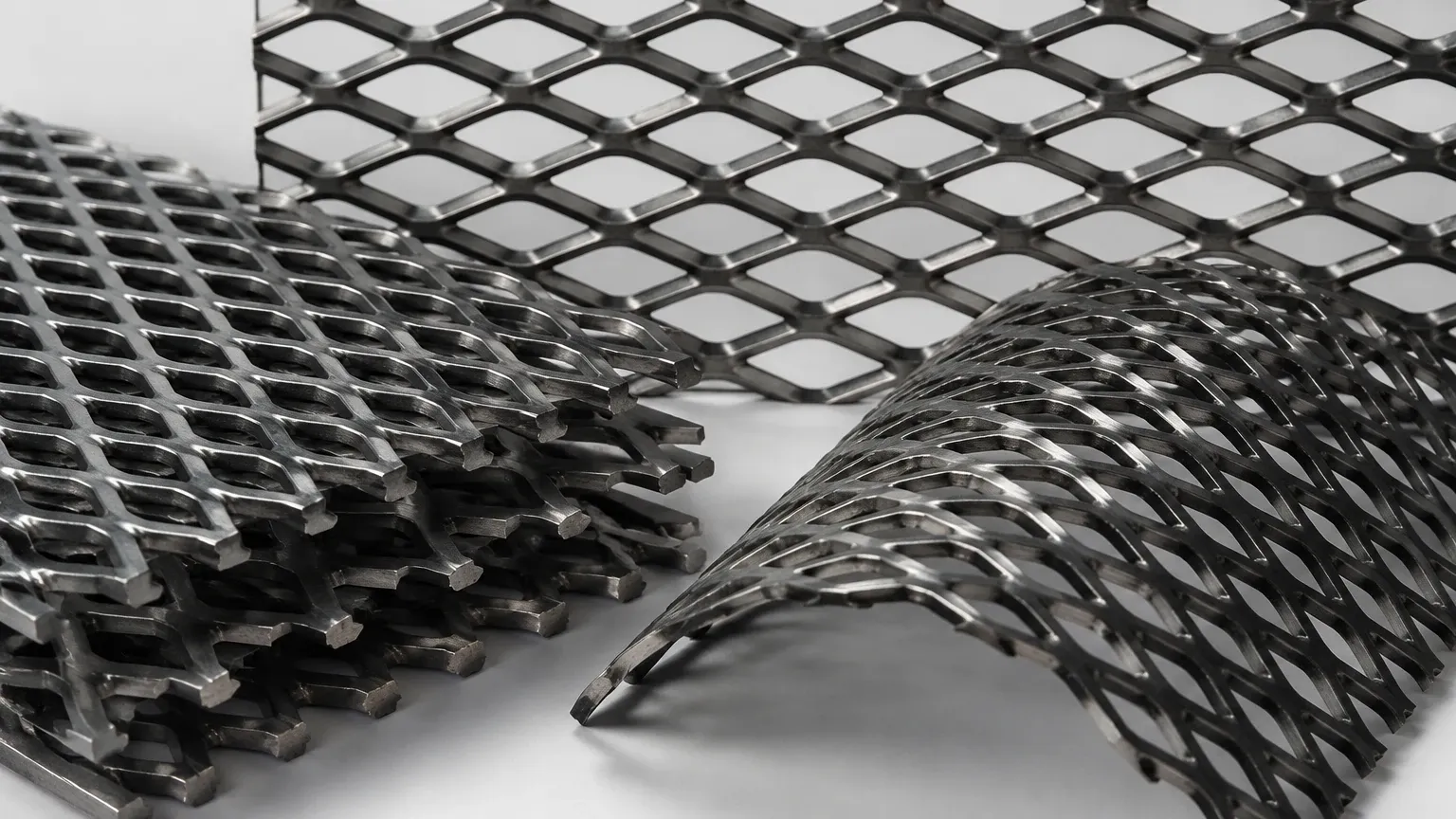
In industrial engineering and heavy-duty manufacturing, the selection of structural and filtration components often hinges on the balance between mechanical strength, weight, and cost-efficiency. Carbon steel expanded metal represents one of the most versatile materials available for these applications. Unlike perforated sheets, which are created by punching holes and removing material, expanded metal is manufactured by simultaneously slitting and stretching a solid metal sheet. This process results in a diamond-shaped pattern that maintains the structural integrity of the original plate while significantly reducing its weight and increasing its functional surface area.
For engineers and procurement professionals, understanding the technical nuances of carbon steel expanded metal is essential for optimizing performance in filtration systems, machine guarding, and structural supports. This guide examines the manufacturing characteristics, material grades, and critical selection criteria necessary for industrial implementation.
Understanding the Manufacturing and Structure of Expanded Metal
The production of expanded metal is a precision process that involves a knife-like tool performing a series of slits across a carbon steel sheet. As the slits are made, the machine stretches the metal, expanding the slits into uniform diamond-shaped openings. Because no material is lost during this process, expanded metal is often more cost-effective than perforated metal, where the "slugs" or punched-out circles represent wasted material and energy.
There are two primary forms of expanded metal used in industrial settings:
1. Standard (Raised) Expanded Metal: This is the product as it comes off the expanding machine. The strands and bonds (the intersections of the strands) are set at a sharp angle to the plane of the sheet. This creates a three-dimensional surface that offers excellent slip resistance and a high strength-to-weight ratio. In filtration, the raised profile can help disrupt laminar flow, which may be beneficial in certain turbulent mixing applications.
2. Flattened Expanded Metal: To produce this, standard expanded metal is passed through a cold-rolling reducing mill. This process flattens the strands and bonds, resulting in a smooth, level surface. Flattened carbon steel expanded metal is preferred when the material serves as a support for finer filtration media, such as wire mesh or synthetic fabrics, as the smooth surface prevents abrasion or puncturing of the delicate filter layers.
Technical Specifications and Terminology for Engineers
When specifying carbon steel expanded metal for a project, engineers must use standardized terminology to ensure the manufacturer meets the required tolerances and performance metrics. The geometry of the diamond opening determines both the flow characteristics and the mechanical load capacity.
* LWD (Long Way of Diamond): The distance from a point on a bond to the corresponding point on the next bond measured across the long axis of the diamond.
* SWD (Short Way of Diamond): The distance measured across the short axis of the diamond.
* LWO (Long Way of Opening): The actual length of the opening within the diamond.
* SWO (Short Way of Opening): The actual width of the opening within the diamond.
* Strand Thickness: The thickness of the base metal used to produce the sheet.
* Strand Width: The amount of metal fed into the machine for each slit.
Calculating the Open Area Percentage is critical for filtration applications. The open area determines the pressure drop across the filter and the velocity of the fluid passing through the media. Unlike simple perforated patterns, the open area in expanded metal is influenced by the strand width and the angle of the expansion. A narrower strand width relative to the diamond size results in a higher open area, facilitating higher flow rates but potentially reducing the structural rigidity of the sheet.
Carbon Steel Grades and Material Properties
Carbon steel is the most common substrate for expanded metal due to its excellent weldability and high tensile strength. In the context of Perforated & Expanded Metal, the choice of carbon steel grade typically falls into several categories:
Low Carbon Steel (Mild Steel)
Grades such as ASTM A36 or 1008/1011 are the industry standard. These materials offer sufficient strength for most industrial guards, partitions, and filter cages. They are easily formed and welded, making them ideal for custom OEM filtration components where complex geometries are required.
High-Strength Low-Alloy (HSLA) Steel
For environments requiring higher load-bearing capacities without adding significant weight, HSLA steels may be used. These grades provide a higher yield strength, allowing for thinner strands to support the same pressure or weight as thicker mild steel.
While carbon steel provides the necessary mechanical properties, it is inherently susceptible to oxidation. Therefore, the selection of carbon steel expanded metal must always account for the operating environment and the required lifespan of the component. If the application involves exposure to moisture or corrosive chemicals, secondary surface treatments are mandatory.
Surface Protection and Corrosion Management
In B2B industrial procurement, the total cost of ownership is often dictated by the durability of the material. Carbon steel expanded metal requires robust surface protection to prevent rust, which can lead to structural failure or contamination of the filtration process.
* Hot-Dip Galvanizing: This is the most effective treatment for long-term corrosion resistance. The expanded metal is submerged in molten zinc, creating a thick, metallurgical bond that protects even the edges of the strands. This is essential for outdoor structural applications or heavy-duty industrial wash-down environments.
* Electro-Galvanizing: This process applies a thinner layer of zinc through an electrolytic process. While it provides a smoother finish than hot-dip galvanizing, it offers less protection and is generally reserved for indoor applications or components that will receive a secondary coating.
* Powder Coating: For applications where aesthetic appearance or specific chemical resistance is required, powder coating provides a durable, non-porous barrier. It is frequently used in machine guarding and architectural filtration covers.
* Oiling: For parts that will be immediately integrated into a larger assembly or used in oil-rich environments (such as hydraulic reservoirs), carbon steel expanded metal can be supplied in a "lightly oiled" state to prevent flash rusting during transit and storage.
Industrial Applications in Filtration and Support
Carbon steel expanded metal is a staple in industrial filtration, serving as both a primary filter for large particulates and a structural skeleton for high-precision media. Its ability to be rolled into cylinders or formed into pleated shapes makes it highly adaptable.
1. Support Cores for Filter Cartridges
In high-pressure hydraulic and lubrication systems, the filter media (such as micro-glass or fine stainless steel mesh) cannot withstand the differential pressure on its own. A carbon steel expanded metal core provides the necessary collapse strength. The diamond pattern allows for maximum fluid bypass while ensuring the media remains supported across its entire surface area.
2. Debris Strainers and Pre-filtration
In water treatment and chemical processing, expanded metal acts as a first-stage strainer. It removes large debris, such as wood chips, stones, or plastic fragments, protecting downstream pumps and sensitive fine filters. The rigidity of carbon steel is particularly useful here, as it can withstand the impact of heavy solids moving at high velocities.
3. Air Intake and HVAC Filtration
Large-scale industrial HVAC systems utilize carbon steel expanded metal as a face grid to hold pleated air filters in place. The high open area ensures that the system's static pressure remains within design limits while preventing the media from fluttering or collapsing under high airflow.
4. Flame Arrestors and Spark Guards
The thermal mass of carbon steel, combined with the intricate path created by the expanded diamond pattern, makes it effective for use in spark guards and certain types of flame arrestor housings, where it helps dissipate heat and prevent the passage of ignited particles.
Comparing Expanded Metal to Perforated Metal
When deciding between expanded and perforated metal, engineers should evaluate the specific requirements of the application. While both fall under the category of Perforated & Expanded Metal, they offer different advantages.
| Feature | Expanded Metal | Perforated Metal |
| :— | :— | :— |
| Material Waste | Minimal to none (slitting/stretching) | Significant (punched-out slugs) |
| Strength-to-Weight | Very High (uninterrupted grain flow) | Moderate (holes interrupt grain) |
| Cost | Generally lower per square foot | Generally higher due to waste/tooling |
| Surface Profile | Raised or Flattened | Always Flat |
| Aperture Shape | Primarily Diamond | Round, Square, Hexagonal, etc. |
Expanded metal is typically the superior choice for structural support and heavy-duty screening where cost and weight are primary concerns. Perforated metal is often preferred when extremely precise hole diameters or specific aesthetic patterns are required.
Selection Criteria and Procurement Considerations
To ensure the successful integration of carbon steel expanded metal into an industrial project, the following factors should be confirmed during the design and quoting phase:
1. Direction of the Diamond: In many applications, the orientation of the LWD relative to the flow or the load is critical. For example, in a cylindrical filter, the LWD usually runs parallel to the circumference to provide maximum hoop strength.
2. Edge Requirements: Expanded metal can be supplied with "random sheared" edges or "bond sheared" edges. Random shearing may leave sharp prongs, which can be hazardous or damage other components. Bond shearing provides a cleaner edge but may require tighter manufacturing tolerances.
3. Flattening Requirements: If the expanded metal will be in direct contact with a fine mesh or a synthetic membrane, specify flattened metal to avoid mechanical wear on the softer material.
4. Tolerances: Standard industrial tolerances for expanded metal are broader than those for machined parts. If your application requires high precision (e.g., for automated assembly), discuss specific camber, out-of-square, and thickness tolerances with the manufacturer.
5. Compliance and Certification: For B2B applications, ensure the material meets relevant standards such as ASTM F1267 (Standard Specification for Metal, Expanded, Steel). Requesting mill test reports (MTRs) ensures the carbon steel chemistry and physical properties meet the project's engineering requirements.
By focusing on these technical parameters, engineers can leverage the unique properties of carbon steel expanded metal to create durable, efficient, and cost-effective industrial solutions. Whether used as a robust outer cage for a chemical filter or a structural walkway in a processing plant, this material remains a fundamental component in modern industrial design.
