


Expanded Metal Dxf
In the realm of industrial design and precision manufacturing, the transition from a conceptual filtration requirement to a physical component relies heavily on accurate digital documentation. For engineers and procurement teams, an expanded metal dxf (Drawing Exchange Format) file serves as the foundational blueprint for integrating structural support and filtration media into complex systems. Whether designing a high-pressure hydraulic filter or a large-scale chemical processing screen, understanding how to manipulate and specify these digital assets is critical for ensuring performance, cost-efficiency, and manufacturing feasibility.
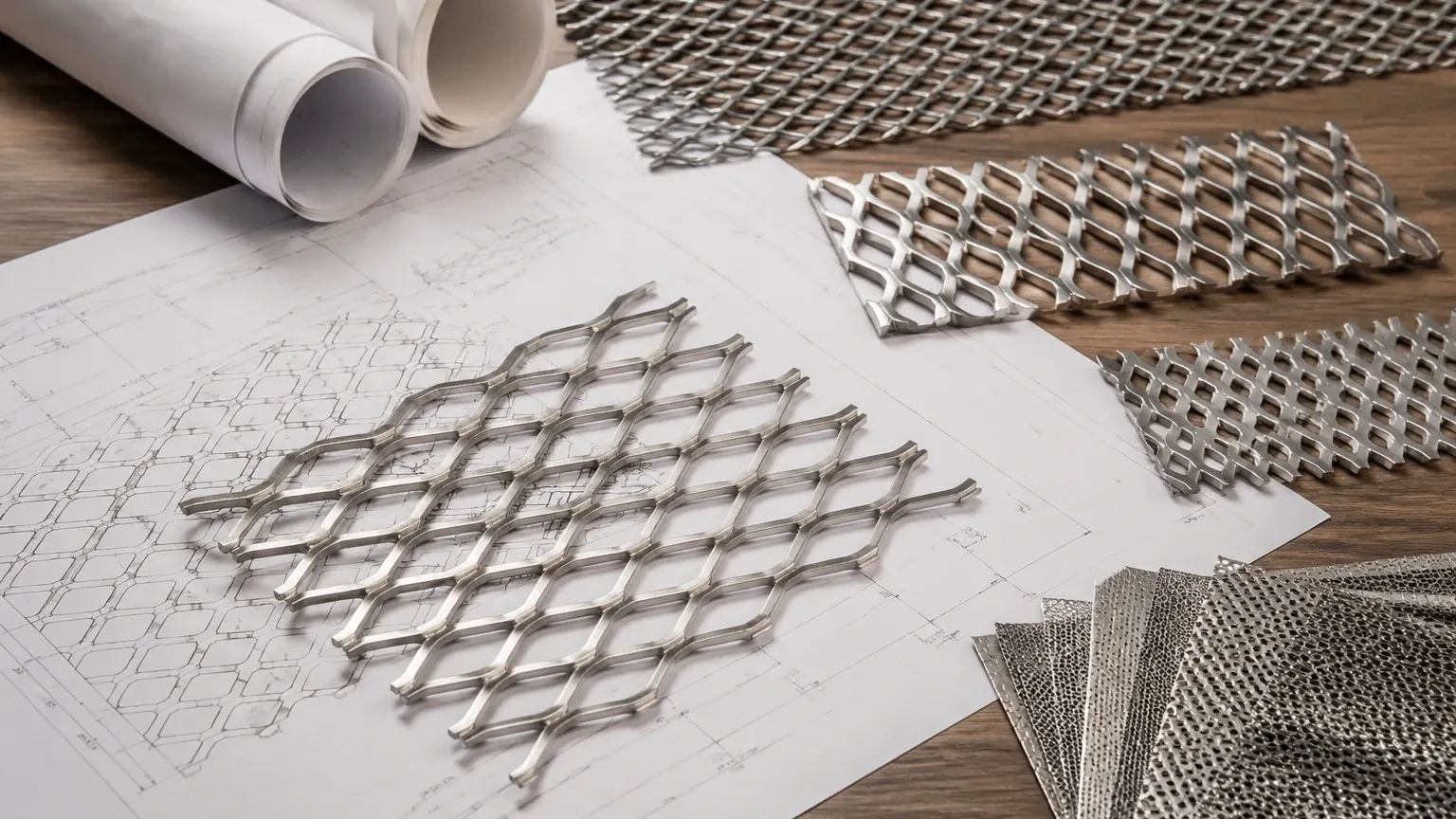
Expanded metal is a unique material produced by simultaneously slitting and stretching a solid metal sheet, creating a diamond-shaped pattern of openings. Unlike perforated metal, which involves punching out material and creating waste, expanded metal is formed through a process that retains the original mass of the sheet while increasing its surface area. This structural characteristic provides an excellent strength-to-weight ratio, making it a preferred choice for industrial filtration support and protective enclosures. However, the three-dimensional nature of expanded metal introduces specific challenges in CAD (Computer-Aided Design) environments, necessitating a clear understanding of DXF implementation.
The Engineering Significance of Expanded Metal DXF Files
The DXF format, originally developed by Autodesk, has become the universal language for 2D and 3D design data exchange across various CAD and CAM (Computer-Aided Manufacturing) platforms. In the context of industrial filtration, an expanded metal dxf file is used to communicate precise geometric requirements to manufacturers like Kaifil. It allows for the seamless integration of filter components into larger assembly models, ensuring that tolerances are met and that the filter fits perfectly within its housing.
For technical professionals, the DXF file is more than just a visual representation; it is a data-rich document that defines the boundaries of the material, the orientation of the diamond pattern, and the specific dimensions of the strands. When designing custom filtration solutions, the DXF file allows engineers to simulate fluid flow, calculate pressure drops, and assess the structural integrity of the mesh under operational loads. By utilizing a standardized file format, engineering teams can reduce the risk of communication errors during the transition from design to production.
Geometric Parameters in Expanded Metal Design
To create an accurate expanded metal dxf, designers must define several key geometric parameters that dictate both the physical appearance and the performance characteristics of the material. These parameters are essential for manufacturers to configure their equipment correctly.
1. SWD and LWD (Short Way of Design and Long Way of Design)
These terms refer to the dimensions of the diamond-shaped opening. The SWD is the distance measured across the short axis of the diamond, from the center of one bond to the center of the next. The LWD is the distance measured across the long axis. In a DXF file, these must be explicitly scaled to ensure the filtration accuracy (the size of particles the mesh can block) is maintained.
2. Strand Width and Thickness
The strand width refers to the amount of metal between the diamond openings, while the thickness refers to the gauge of the original metal sheet. These two factors combined determine the "open area" percentage of the mesh. A higher open area allows for greater flow rates but may compromise the structural rigidity of the component.
3. Bond and Pitch
The bond is the intersection where two strands meet. The pitch is the overall pattern repeat. In digital modeling, accurately representing the bond is crucial for structural analysis, as this is the point where stress concentrations are most likely to occur during pressurized filtration cycles.
Integrating Perforated & Expanded Metal into Industrial Systems
When selecting materials for filtration or structural support, engineers often weigh the benefits of Perforated & Expanded Metal based on the specific application requirements. While perforated metal offers high precision in hole sizing and placement, expanded metal provides a more cost-effective solution for large-scale applications where high strength and minimal material waste are priorities.
In chemical processing and water treatment, expanded metal is frequently used as a support structure for finer wire mesh layers. The DXF file for such an assembly must account for the interface between the expanded metal skeleton and the filtration media. If the DXF is not properly aligned with the manufacturing capabilities, it can lead to issues such as "blind spots" in the filter or structural failure under high differential pressure. Therefore, collaborating with a manufacturer that understands the nuances of both perforated and expanded geometries is vital for project success.
Technical Challenges in Modeling Expanded Metal
One of the primary difficulties in working with an expanded metal dxf is the distinction between "raised" and "flattened" expanded metal.
* Raised Expanded Metal: This is the standard form as it comes off the machine. The strands are set at an angle to the plane of the sheet, creating a three-dimensional surface. Modeling this in a 2D DXF requires a projection that accounts for the effective thickness, which is significantly greater than the original sheet gauge.
* Flattened Expanded Metal: This material has been cold-rolled after expansion to create a smooth, flat surface. A DXF for flattened expanded metal is simpler to integrate into 2D layouts but requires careful notation regarding the reduced thickness and slightly altered diamond dimensions caused by the rolling process.
Furthermore, CAD files for expanded metal can become computationally expensive due to the high number of individual geometric entities (lines and arcs) required to represent a large mesh area. Engineers often use "simplified representations" in their main assembly DXFs, while providing a detailed "swatch" or specification block to define the exact mesh pattern for the manufacturer.
Material Selection and Filtration Performance
For industrial applications, the material specified in the expanded metal dxf is as important as the geometry itself. Kaifil specializes in stainless steel filtration solutions, utilizing grades such as 304, 316, and 316L.
* Stainless Steel 304: Suitable for general industrial use where basic corrosion resistance is required.
* Stainless Steel 316/316L: Preferred for pharmaceutical, food and beverage, and marine applications due to superior resistance to pitting and chloride-induced corrosion.
* Specialty Alloys: For high-temperature or highly acidic environments, materials like Monel or Inconel may be specified in the design documentation.
In filtration, the material choice affects the longevity of the component. A DXF file intended for a stainless steel filter must consider the mechanical properties of the alloy, such as its tensile strength and elongation, which influence how the metal behaves during the expansion process. If the design calls for extremely narrow strands in a high-strength alloy, the manufacturer must evaluate if the material can withstand the stretching without fracturing.
Customization and OEM Manufacturing Workflow
Moving from an expanded metal dxf to a finished product involves a structured workflow that ensures the final component meets all technical specifications. At Kaifil, this process typically follows these stages:
1. Technical Review: The provided DXF file is analyzed for manufacturing feasibility. This includes checking the ratio of strand width to thickness and ensuring the diamond dimensions are within the tolerances of the expansion machinery.
2. Prototyping: For custom filtration components, a small-scale sample may be produced to verify the flow characteristics and structural integrity. The DXF is used to program CNC cutting equipment (laser or waterjet) to shape the sample.
3. Tooling and Setup: If a non-standard diamond pattern is required, custom knives and dies may be developed based on the digital specifications.
4. Production and Quality Control: During mass production, the physical dimensions of the expanded metal are regularly compared against the master DXF file. Precision instruments measure the SWD, LWD, and strand thickness to ensure consistency across the entire batch.
For OEM applications, where expanded metal components are integrated into larger machinery, the ability to provide accurate DXF files allows for perfect synchronization between the filter manufacturer and the equipment builder. This reduces lead times and minimizes the need for on-site adjustments during assembly.
Maintenance, Replacement, and Total Cost Considerations
When engineers evaluate the total cost of ownership for filtration systems, the durability of the expanded metal support is a key factor. Unlike synthetic meshes, stainless steel expanded metal is cleanable and reusable, significantly extending the replacement cycle.
In the design phase, the expanded metal dxf should account for the cleaning method. For example, if the filter will be cleaned via backpulsing or ultrasonic baths, the bond strength and strand thickness must be sufficient to withstand these repetitive stresses. Providing a detailed digital model helps in predicting how these maintenance cycles will affect the structural life of the component.
Furthermore, the use of expanded metal often results in a lower initial cost compared to perforated metal or heavy wire cloth, especially for large surface areas. By optimizing the design in the CAD stage using a DXF, engineers can minimize scrap and reduce the overall material weight, leading to savings in both procurement and shipping.
Conclusion
The use of an expanded metal dxf is an essential practice for modern industrial engineering, bridging the gap between complex filtration requirements and precision manufacturing. By understanding the geometric parameters, material limitations, and CAD integration challenges, technical professionals can specify expanded metal solutions that offer superior performance and durability. Whether the application requires a simple protective screen or a sophisticated multi-layer filter support, the accuracy of the digital blueprint is the first step toward achieving an optimized filtration outcome. For those seeking high-performance, customized metal filtration components, leveraging the technical expertise of a dedicated manufacturer ensures that every detail within the DXF is translated into a reliable, industrial-grade product.
