


Expanded Metal Fence Panels
In the realm of industrial security and perimeter management, the choice of fencing material is a critical engineering decision that impacts long-term durability, safety, and maintenance costs. Expanded metal fence panels have emerged as a premier solution for high-security environments, infrastructure projects, and industrial facilities. Unlike traditional chain-link or standard wire mesh, expanded metal offers a unique combination of structural rigidity and anti-climb properties that are difficult to replicate with other fabrication methods.
At its core, the production of Perforated & Expanded Metal involves a precision process of slitting and stretching a solid metal sheet. This creates a continuous, one-piece mesh that lacks the weak points found in woven or welded alternatives. For engineers and procurement teams, understanding the technical nuances of these panels—from mesh geometry to material selection—is essential for optimizing site security and operational efficiency.
The Engineering Behind Expanded Metal Fabrication
To evaluate the performance of expanded metal fence panels, one must first understand how they are manufactured. The process begins with a solid sheet of metal, typically stainless steel, carbon steel, or aluminum. A machine simultaneously slits and expands the metal in a single motion. This stretching process creates the characteristic diamond-shaped openings while maintaining the structural integrity of the original sheet.
One-Piece Construction
One of the most significant advantages of expanded metal is that it is a single piece of material. There are no welds to break, no joints to loosen, and no wires to unravel. In a fencing context, this means that if a single strand is cut, the rest of the panel remains intact. This is a stark contrast to chain-link fencing, where cutting a single wire can compromise a large section of the perimeter.
Material Efficiency and Sustainability
Because the metal is stretched rather than punched, there is virtually no scrap material produced during the manufacturing of expanded metal. This makes it a more resource-efficient choice compared to perforated metal for large-scale fencing projects. For industrial applications requiring high-volume coverage, this efficiency often translates into a more favorable cost-to-strength ratio.
Key Performance Criteria for Industrial Fencing
When specifying expanded metal fence panels, engineers must look beyond simple aesthetics. The performance of the fence is determined by several technical factors that influence its resistance to physical force and environmental degradation.
1. Security and Anti-Climb Properties
The geometry of the diamond mesh is specifically designed to discourage climbing. By selecting a mesh with a small Short Way of Diamond (SWD) measurement, designers can ensure that there are no handholds or footholds for potential intruders. Furthermore, the sharp edges of the strands in "raised" expanded metal act as a natural deterrent, making the fence significantly more difficult to scale than smooth-wire alternatives.
2. Impact Resistance and Rigidity
Expanded metal panels are inherently rigid. When installed within a robust framing system, they provide a formidable barrier against forced entry. The strands are oriented at an angle to the plane of the sheet, which adds a three-dimensional strength that resists bending and blunt force impact. This is particularly important for facilities that may face vehicular threats or high-velocity debris in industrial zones.
3. Visibility and Airflow
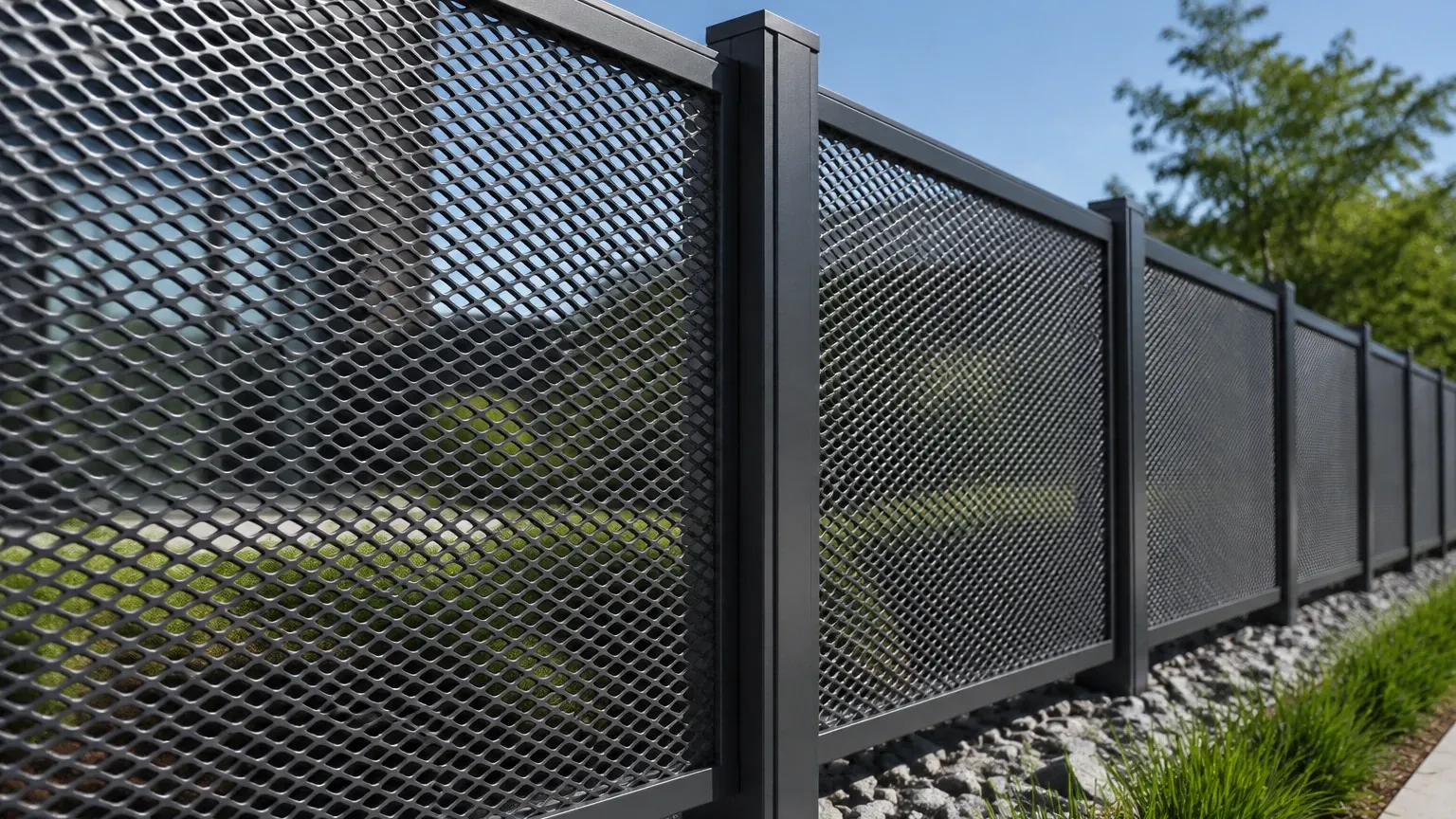
Industrial sites often require a balance between security and visibility. Expanded metal fence panels allow for excellent airflow and clear lines of sight for security cameras and personnel. Depending on the angle of the strands, the mesh can provide varying degrees of "directional" privacy—appearing opaque from a distance while remaining transparent when viewed directly. This feature is often utilized in electrical substations and data centers where ventilation is required for cooling equipment, but visual screening is preferred for security.
Material Selection: Stainless Steel vs. Alternatives
The choice of material is perhaps the most significant factor in determining the lifespan of a fencing system. While carbon steel is common, specialized environments often demand the superior properties of stainless steel.
* Stainless Steel (304 and 316 Grades): For chemical processing plants, coastal facilities, or pharmaceutical sites, stainless steel expanded metal is the gold standard. It offers exceptional corrosion resistance without the need for additional coatings. Grade 316, in particular, is recommended for environments with high chloride exposure.
* Galvanized Steel: For standard industrial use, hot-dipped galvanized carbon steel provides a cost-effective balance of strength and rust protection. The galvanization process ensures that even the inner edges of the expanded strands are coated.
* Aluminum: When weight is a primary concern, such as in bridge walkways or decorative architectural facades, aluminum expanded metal offers a lightweight, naturally corrosion-resistant alternative, though it lacks the sheer tensile strength of steel.
Technical Specifications: LWD, SWD, and Strand Geometry
To ensure the correct panel is ordered, procurement teams must use standardized terminology. The performance of Perforated & Expanded Metal is defined by four primary measurements:
1. Long Way of Diamond (LWD): The distance from the center of one joint to the center of the next joint across the long axis of the diamond.
2. Short Way of Diamond (SWD): The distance across the short axis of the diamond. For anti-climb applications, a smaller SWD is typically preferred.
3. Strand Thickness: The thickness of the base metal sheet.
4. Strand Width: The amount of metal fed into the machine to create the strand.
Additionally, engineers must choose between Raised (Standard) and Flattened expanded metal. Raised expanded metal has strands that are turned at an angle, providing maximum strength and a slip-resistant surface. Flattened expanded metal is passed through a cold-roll reducing mill, resulting in a smooth, flat surface that is easier to paint or coat but slightly less rigid than the raised version.
Comparing Expanded Metal to Traditional Fencing
In the B2B sector, the decision-making process often involves a direct comparison between expanded metal and other common fencing types like chain-link or welded wire mesh.
| Feature | Expanded Metal | Chain-Link | Welded Wire Mesh |
| :— | :— | :— | :— |
| Structural Integrity | High (One-piece) | Low (Interlocking) | Medium (Welded joints) |
| Anti-Cut Performance | Excellent | Poor | Moderate |
| Maintenance | Low (especially Stainless) | Moderate | Moderate |
| Climb Resistance | High | Low | Moderate |
| Customization | High (Varying mesh sizes) | Low | Moderate |
While the initial capital expenditure for expanded metal fence panels may be higher than chain-link, the total cost of ownership (TCO) is often lower due to reduced maintenance, longer service life, and the elimination of the need for frequent repairs or replacements following security breaches.
Common Risks and Mitigation Strategies
Despite its advantages, the success of an expanded metal fencing project depends on proper planning and addressing potential risks during the specification phase.
Corrosion at Attachment Points
A common failure point in industrial fencing is not the panel itself, but the welds or fasteners used to attach the panel to the posts. To mitigate this, it is essential to use compatible materials (e.g., stainless steel fasteners for stainless steel panels) and to treat all weld points with cold-galvanizing spray or appropriate industrial coatings to prevent localized oxidation.
Inaccurate Sizing and Tolerance
Because expanded metal is rigid, there is little room for error during installation. Unlike chain-link, which can be stretched or trimmed easily on-site, expanded metal panels should be precision-cut to the required dimensions during the manufacturing phase. Working with a manufacturer that offers custom OEM sizing ensures that the panels fit perfectly within the designated framing, reducing labor costs and material waste.
Selecting the Wrong Mesh Pattern
Using a mesh that is too large may compromise security by allowing tools to pass through or providing footholds. Conversely, a mesh that is too tight may restrict airflow unnecessarily. Engineers should confirm the specific security requirements (e.g., preventing the passage of a 1-inch diameter object) before finalizing the SWD and LWD specifications.
Procurement Checklist for Engineers
Before initiating a purchase for expanded metal fence panels, the following technical details should be confirmed with the manufacturer:
* Material Grade: Is the environment corrosive enough to require 316 stainless steel, or is galvanized carbon steel sufficient?
* Mesh Orientation: Should the diamonds run vertically or horizontally? (This affects both aesthetics and structural strength).
* Finish Requirements: Does the application require powder coating for visibility or aesthetic integration, or is a mill finish acceptable?
* Framing Compatibility: How will the panels be secured? Will they be bolted, welded, or held in place by a U-edging profile?
* Compliance: Does the fencing meet local industrial safety standards or high-security certifications required for the specific industry (e.g., energy, defense, or transport)?
Conclusion
Expanded metal fence panels represent a sophisticated engineering solution for modern industrial security needs. By leveraging the inherent strength of a one-piece metal structure, these panels provide a level of protection and durability that traditional fencing materials cannot match. Whether the goal is to secure a high-voltage transformer, protect a chemical storage area, or define the boundaries of a pharmaceutical facility, the selection of high-quality Perforated & Expanded Metal ensures a long-lasting and effective barrier.
For purchasing teams and engineers, the key to a successful installation lies in precise technical specification and a clear understanding of environmental demands. By focusing on material integrity, mesh geometry, and proper installation techniques, organizations can achieve a perimeter solution that balances security, visibility, and cost-effectiveness over the entire lifecycle of the facility.
