


Expanded Metal for Trailer Floor
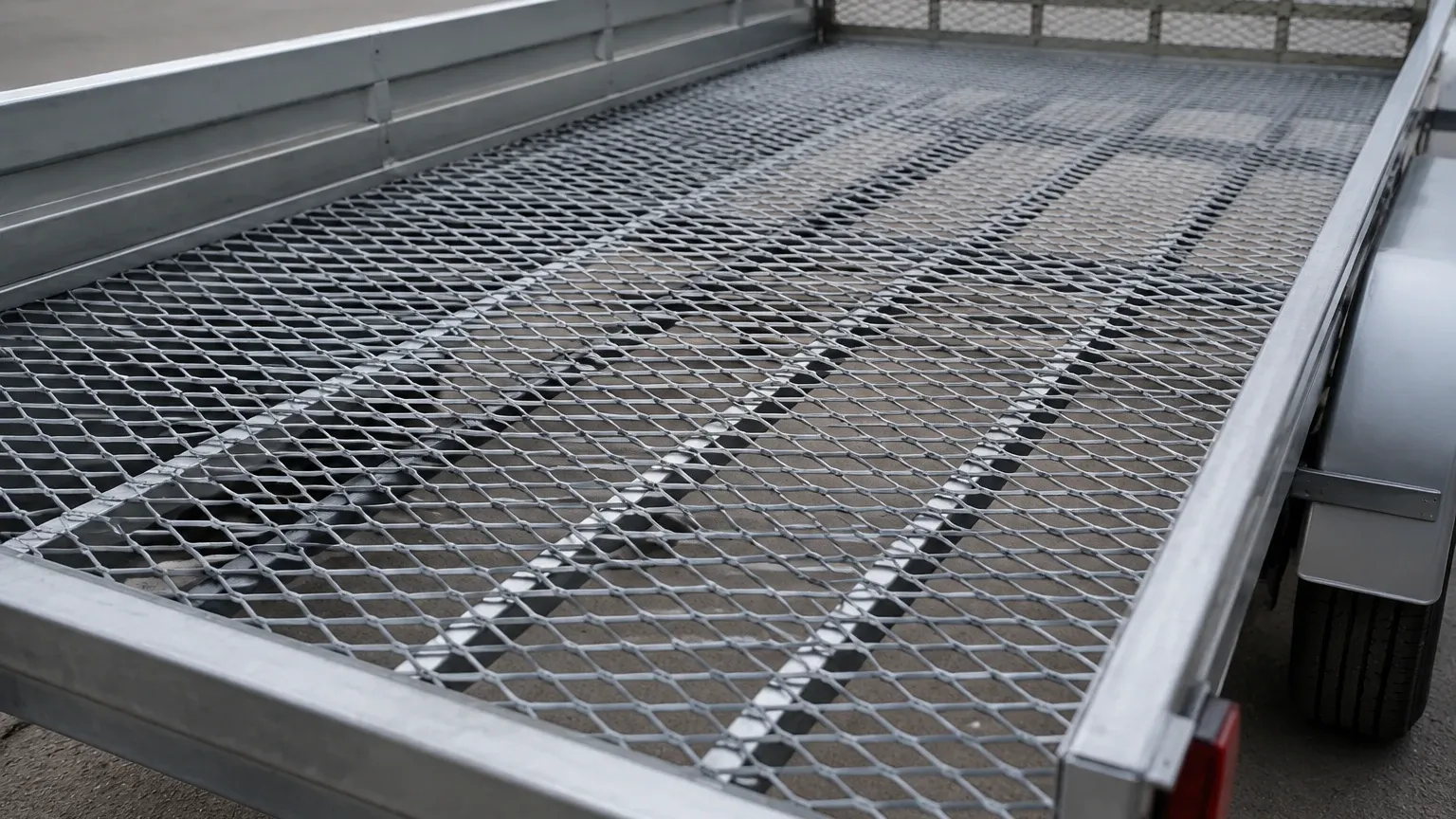
In industrial and utility transport, the choice of flooring material significantly impacts the trailer's performance, safety, and longevity. Among the various options available, expanded metal has emerged as a preferred solution for engineers and fleet managers. Unlike solid plate or wood, expanded metal offers a unique combination of high strength-to-weight ratios, exceptional traction, and self-cleaning properties. This article explores the technical specifications, engineering considerations, and material selection criteria for implementing expanded metal for trailer floor applications.
The Structural Mechanics of Expanded Metal
Expanded metal is manufactured through a specialized process of simultaneously slitting and stretching a solid sheet of metal. This process creates a continuous piece of material with diamond-shaped openings. Because the metal is expanded rather than punched, there is no material waste, making it a cost-effective and resource-efficient manufacturing method.
The resulting structure consists of strands and bonds. The strands are the individual strips of metal that form the sides of the diamond, while the bonds are the points where the strands intersect. This interconnected geometry distributes loads across a wider area than a traditional wire mesh, providing superior structural integrity. For industrial applications, Perforated & Expanded Metal is often evaluated based on its "raised" or "flattened" state. Raised expanded metal retains the natural angularity of the strands, which is critical for trailer floors requiring maximum slip resistance.
Performance Advantages for Utility and Industrial Trailers
When selecting a material for a trailer deck, engineers must balance durability with operational efficiency. Expanded metal for trailer floor applications provides several distinct advantages over solid surfaces:
1. Superior Traction and Safety
In environments where trailers are exposed to rain, mud, oil, or snow, slip resistance is a primary safety concern. The raised strands of expanded metal bite into tires and footwear, providing multi-directional grip. This is particularly vital for loading ramps and decks where heavy equipment or ATVs are frequently moved.
2. Debris and Moisture Management
The open area of the diamond pattern allows water, dirt, and gravel to pass through the floor rather than accumulating on the surface. This prevents the buildup of corrosive sludge and reduces the risk of hydroplaning for equipment being transported. Furthermore, the airflow provided by the open mesh reduces wind resistance when the trailer is towed empty, potentially improving fuel efficiency.
3. Weight Reduction
Expanded metal provides significant structural support while using less raw material than a solid steel plate of the same thickness. Reducing the tare weight of the trailer allows for a higher payload capacity without exceeding Gross Vehicle Weight Ratings (GVWR). For large-scale fleet operations, this weight savings translates directly into lower operational costs.
Technical Selection Criteria: Gauges and Pattern Dimensions
Selecting the correct specification of expanded metal requires an understanding of pattern dimensions and material thickness. These factors determine the floor's ability to withstand point loads and distributed weight.
* SWD (Short Way of Diamond): The distance from the center of one bond to the center of the next bond across the short axis.
* LWD (Long Way of Diamond): The distance across the long axis of the diamond.
* Strand Thickness and Width: These dimensions define the cross-sectional area of the metal and are the primary drivers of load-bearing capacity.
For a typical expanded metal for trailer floor, a common specification is #9 gauge or #6 gauge expanded metal. The lower the gauge number, the thicker the material. A 3/4" #9 raised expanded metal is often the standard for light-to-medium duty utility trailers, while heavy-duty industrial trailers may require #6 gauge or specialized structural gratings to prevent deformation under heavy machinery.
Engineering Load Requirements and Support Framework
One of the most common mistakes in trailer floor design is underestimating the importance of the underlying support structure. Expanded metal is not a self-supporting structural member over long spans; its performance is inextricably linked to the spacing of the trailer’s cross-members.
Cross-Member Spacing
For standard #9 gauge expanded metal, cross-members (typically C-channel or angle iron) should be spaced no further than 12 to 16 inches apart. If the trailer is intended to carry concentrated point loads, such as the wheels of a heavy zero-turn mower or a compact tractor, the spacing may need to be reduced to 8 or 10 inches. Excessive spacing leads to "oil-canning" or permanent sagging, which compromises the integrity of the welds and the safety of the load.
Orientation of the Mesh
To maximize strength, the Long Way of the Diamond (LWD) should run perpendicular to the direction of the cross-members. This orientation ensures that the strongest axis of the material is supported by the frame, minimizing deflection under load.
Material Options: Enhancing Longevity with Stainless Steel
While carbon steel is the most common material for trailer floors due to its initial cost, it is highly susceptible to oxidation. In industrial filtration and demanding environments, material selection is critical for total cost of ownership.
Kaifil specializes in high-performance metal solutions, including stainless steel variants. Using stainless steel for an expanded metal floor offers several long-term benefits:
* Corrosion Resistance: Stainless steel is impervious to the road salts and chemicals that quickly degrade galvanized or painted carbon steel.
* Strength Retention: Unlike carbon steel, which loses structural integrity as it rusts, stainless steel maintains its gauge thickness over decades of service.
* Reduced Maintenance: Eliminates the need for frequent repainting or sandblasting to manage surface rust.
For specialized trailers used in chemical processing or food-grade environments, stainless steel expanded metal is often the only viable choice to meet hygiene and durability standards.
Installation Best Practices and Structural Integrity
Proper installation is as important as material selection. Expanded metal must be securely fastened to the trailer frame to prevent vibration, noise, and structural failure.
Welding Techniques
Plug welding or tack welding at every point where a bond intersects a cross-member is the industrial standard. Because expanded metal is relatively thin compared to the structural frame, welders must exercise care to avoid "burn-through." A staggered welding pattern helps distribute thermal stress and prevents warping of the mesh during the cooling process.
Perimeter Security
The edges of the expanded metal should be tucked under a piece of flat bar or angle iron around the perimeter of the trailer. This "capping" prevents the sharp edges of the cut mesh from catching on cargo or causing injury to operators. It also provides a continuous seal that prevents the mesh from peeling away from the frame under heavy lateral loads.
Maintenance and Total Cost of Ownership
While expanded metal is a low-maintenance flooring option, regular inspections are necessary to ensure continued safety. Engineers should advise operators to check for:
* Weld Fractures: Repeated vibration and heavy loading can cause tack welds to snap over time.
* Strand Thinning: In high-traffic areas, the raised strands may eventually wear down, reducing traction.
* Deformation: Any visible sagging between cross-members indicates that the load limit has been exceeded or the support structure is insufficient.
From a B2B perspective, the total cost of ownership (TCO) for expanded metal is lower than wood, which rots and requires replacement every few years. By selecting the appropriate gauge and material—such as those found in the Perforated & Expanded Metal catalog—purchasing teams can ensure their equipment remains in service longer with fewer repairs.
Conclusion: Selecting the Right Solution
Implementing expanded metal for trailer floor applications requires a technical approach to material selection and structural design. By understanding the relationship between gauge thickness, diamond pattern, and cross-member spacing, engineers can develop trailers that are both lightweight and exceptionally durable.
Before finalizing a specification, technical professionals should confirm the maximum point loads expected during operation and evaluate whether environmental factors necessitate the use of corrosion-resistant materials like stainless steel. Kaifil’s expertise in precision metal components ensures that industrial clients receive filtration and structural solutions tailored to the most demanding mechanical requirements.
