


Expanded Metal Gate
In industrial and commercial environments, the selection of materials for security and access control is a critical engineering decision. An expanded metal gate serves as a robust solution for perimeter security, machinery guarding, and ventilation-heavy enclosures. Unlike traditional woven wire or solid paneling, expanded metal offers a unique combination of structural integrity, weight efficiency, and visibility. For engineers and facility managers, understanding the technical specifications and manufacturing nuances of these components is essential for ensuring long-term performance and safety.
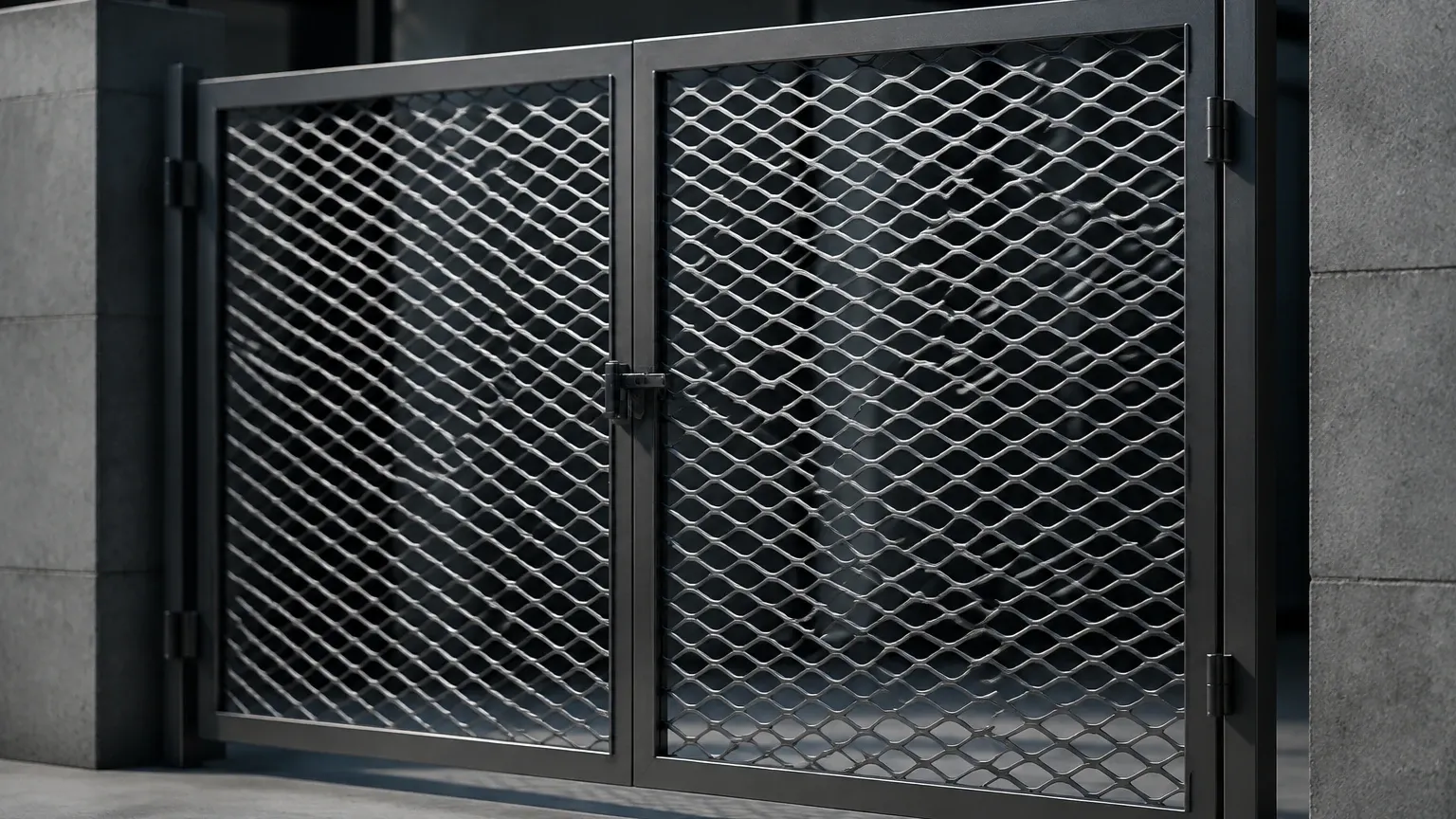
At its core, an expanded metal gate is constructed from a single sheet of metal that has been simultaneously slit and stretched. This process creates a diamond-shaped pattern that is integral to the sheet, meaning there are no welds to break or joints to loosen over time. This makes expanded metal an ideal choice for high-traffic industrial zones where durability is non-negotiable.
The Engineering Principles of Expanded Metal Fabrication
The manufacturing process of expanded metal is what distinguishes it from other mesh products. To produce the mesh used in an expanded metal gate, a solid metal plate or sheet is fed through a machine equipped with a reciprocating knife. As the knife slits the metal, the sheet is stretched, creating a series of diamond-shaped openings.
This "slitting and stretching" method provides several mechanical advantages. First, because the mesh is formed from a single piece of material, it maintains its structural continuity. If one strand is cut, the remaining strands continue to hold the shape, preventing the entire panel from unraveling—a common failure point in woven wire fences. Second, the process is highly resource-efficient, as there is virtually no scrap material produced during fabrication. This makes it a sustainable and cost-effective choice for large-scale industrial projects.
For gates, two primary styles of expanded metal are typically considered: raised and flattened.
- Raised Expanded Metal: This is the standard form as it comes off the machine. The strands are set at a slight angle to the plane of the sheet, providing a three-dimensional texture that offers excellent grip and a higher strength-to-weight ratio.
- Flattened Expanded Metal: In this secondary process, the raised mesh is passed through a cold-rolling mill. This flattens the strands and bonds back into a single plane. Flattened mesh is often preferred for gates where a smooth surface is required to prevent snagging or for aesthetic reasons in commercial settings.
Material Selection for Industrial Expanded Metal Gates
The operational environment dictates the choice of material for an expanded metal gate. Industrial applications often require resistance to corrosion, chemical exposure, and mechanical impact.
Stainless Steel (Grades 304 and 316)
For industries such as chemical processing, food and beverage, and pharmaceuticals, stainless steel is the standard. Grade 304 provides excellent corrosion resistance for most general-purpose industrial gates. However, in marine environments or facilities dealing with high chloride concentrations, Grade 316 is recommended due to its superior resistance to pitting and crevice corrosion. Stainless steel gates are also favored for their ease of sterilization and maintenance.
Carbon Steel
Carbon steel is the most common material for heavy-duty security gates where cost-effectiveness is a priority. To protect against oxidation, carbon steel gates are typically galvanized (hot-dipped) or powder-coated. Galvanization provides a thick layer of zinc that protects the underlying steel even if the surface is scratched, making it suitable for outdoor perimeter fencing.
Aluminum
In applications where weight is a primary concern—such as large sliding gates or overhead access panels—aluminum expanded metal is an excellent alternative. It offers natural corrosion resistance and is significantly lighter than steel, reducing the load on gate motors and hinges.
Comparing Perforated & Expanded Metal for Security Enclosures
When designing industrial enclosures and access points, engineers often weigh the pros and cons of Perforated & Expanded Metal to determine which best suits the application's mechanical requirements. Both materials offer ventilation and visibility, but their structural properties differ significantly.
Perforated metal is created by punching holes into a solid sheet. While this allows for highly precise hole patterns and sizes, it also results in significant material waste (the "slugs" punched out). From a structural standpoint, perforated metal is generally heavier than expanded metal for the same level of open area.
In contrast, an expanded metal gate provides a higher strength-to-weight ratio. Because the stretching process creates a truss-like structure, the material can support heavier loads with less mass. This is particularly important for large-span gates where minimizing the dead weight of the gate leaf is necessary to prevent sagging over time. Additionally, the angled strands of raised expanded metal can act as a visual screen from certain angles while still allowing for 360-degree airflow, a feature that perforated metal cannot replicate without specialized (and often expensive) tooling.
Structural Advantages: Why Expanded Metal is Preferred for Heavy-Duty Gates
The inherent rigidity of expanded metal makes it a superior choice for high-security applications. The diamond pattern functions as a series of interconnected trusses, distributing impact forces across a wide area. This makes the gate highly resistant to forced entry attempts using manual tools like bolt cutters or saws.
Furthermore, the "bond"—the point where the diamonds intersect—is the strongest part of the mesh. In an expanded metal gate, these bonds are solid metal, not welded joints. In high-vibration environments, such as gates near heavy machinery or industrial fans, welded joints in other types of mesh can suffer from fatigue and eventually crack. Expanded metal eliminates this risk, ensuring the gate remains structurally sound throughout its service life.
Another advantage is the anti-climb property of the mesh. By selecting a small diamond size (SWD), the openings become too small to provide a foothold, yet remain large enough to allow security personnel to maintain a clear line of sight through the barrier. This balance of security and visibility is a hallmark of well-engineered expanded metal systems.
Design Parameters: SWD, LWD, and Strand Geometry
To specify an expanded metal gate correctly, engineers must use standardized terminology to define the mesh dimensions. These parameters directly impact the gate's strength, weight, and open area.
1. SWD (Short Way of Diamond): The distance from the center of one bond to the center of the next bond measured across the short axis of the diamond.
2. LWD (Long Way of Diamond): The distance from the center of one bond to the center of the next bond measured across the long axis of the diamond.
3. Strand Width: The amount of metal between the slits that forms the sides of the diamond.
4. Strand Thickness: The thickness of the original base metal sheet.
By adjusting these four variables, manufacturers can create a wide range of mesh configurations. For a security gate, a typical specification might involve a heavy-gauge steel with a small SWD to maximize rigidity. For a ventilation gate in a server room or generator housing, a larger LWD and thinner strands might be chosen to maximize the "open area" percentage, ensuring sufficient airflow to prevent equipment overheating.
Environmental and Operational Compatibility
An industrial gate must perform reliably under specific environmental stressors. Beyond material selection, the physical design of the expanded metal contributes to its operational compatibility.
- Airflow and Ventilation: In facilities where gas buildup or heat accumulation is a risk, the open area of an expanded metal gate allows for natural or forced ventilation. This is critical for enclosures housing chemical tanks, transformers, or hydraulic power units.
- Drainage: Unlike solid panels, expanded metal does not allow water, oil, or other liquids to pool. In outdoor applications, this prevents ice buildup in winter and reduces the risk of hydroplaning or slipping in areas where the gate might be part of a walkway or platform.
- Acoustic Transparency: While expanded metal is a physical barrier, it is relatively transparent to sound waves. This can be an advantage in environments where audible alarms or communication must pass through the gate, or a disadvantage if sound dampening is required. In the latter case, engineers may combine expanded metal with acoustic insulation materials.
Procurement and Customization: Evaluating OEM Suppliers
For B2B procurement, the ability to customize the expanded metal gate to fit specific architectural or mechanical constraints is vital. Working with a manufacturer that offers OEM (Original Equipment Manufacturer) capabilities allows for the integration of the mesh into larger systems, such as custom-framed gate leaves, sliding track systems, or automated access controls.
When evaluating a supplier like Kaifil, purchasing teams should consider the following:
- Precision Slitting: The accuracy of the diamond pattern ensures that the mesh aligns perfectly with the gate frame, reducing the need for excessive trimming or welding during assembly.
- Finishing Options: Does the supplier provide in-house galvanizing, powder coating, or pickling and passivation for stainless steel? A high-quality finish is the first line of defense against environmental degradation.
- Material Traceability: For industries with strict compliance requirements, such as aerospace or pharmaceuticals, having Mill Test Reports (MTRs) for the steel used in the gate is essential for quality assurance.
Customization also extends to the framing of the gate. Expanded metal panels are typically welded into U-edging or L-angle frames. The method of attachment must be robust enough to handle the shear forces exerted when the gate is opened and closed, especially in automated systems where the motor applies sudden torque.
Technical Checklist for Engineers and Purchasing Teams
Before finalizing a purchase order for an expanded metal gate, the following technical factors should be confirmed to ensure the product meets the application requirements:
1. Load Requirements: Will the gate be subject to wind loads? In outdoor settings, the "windage" or drag coefficient of the mesh must be calculated to ensure the posts and hinges can withstand high-velocity winds.
2. Opening Direction: For swinging gates, ensure the LWD of the mesh is oriented correctly (usually horizontally) to provide maximum structural stiffness across the width of the gate.
3. Security Level: Determine if a "Standard" (raised) or "Flattened" mesh is required. Standard mesh is harder to climb but may have sharper edges if not properly deburred.
4. Corrosion Environment: Match the material grade (e.g., 304 vs. 316 stainless) to the chemical profile of the site.
5. Integration with Hardware: Confirm that the mesh gauge is compatible with the intended locks, latches, and automation sensors.
By focusing on these technical details, engineers can specify an expanded metal gate that provides a balance of security, longevity, and cost-effectiveness. Whether the goal is to secure a perimeter or protect sensitive industrial machinery, the inherent strengths of expanded metal make it a versatile and dependable component in modern industrial design.
