


Expanded Metal Grill
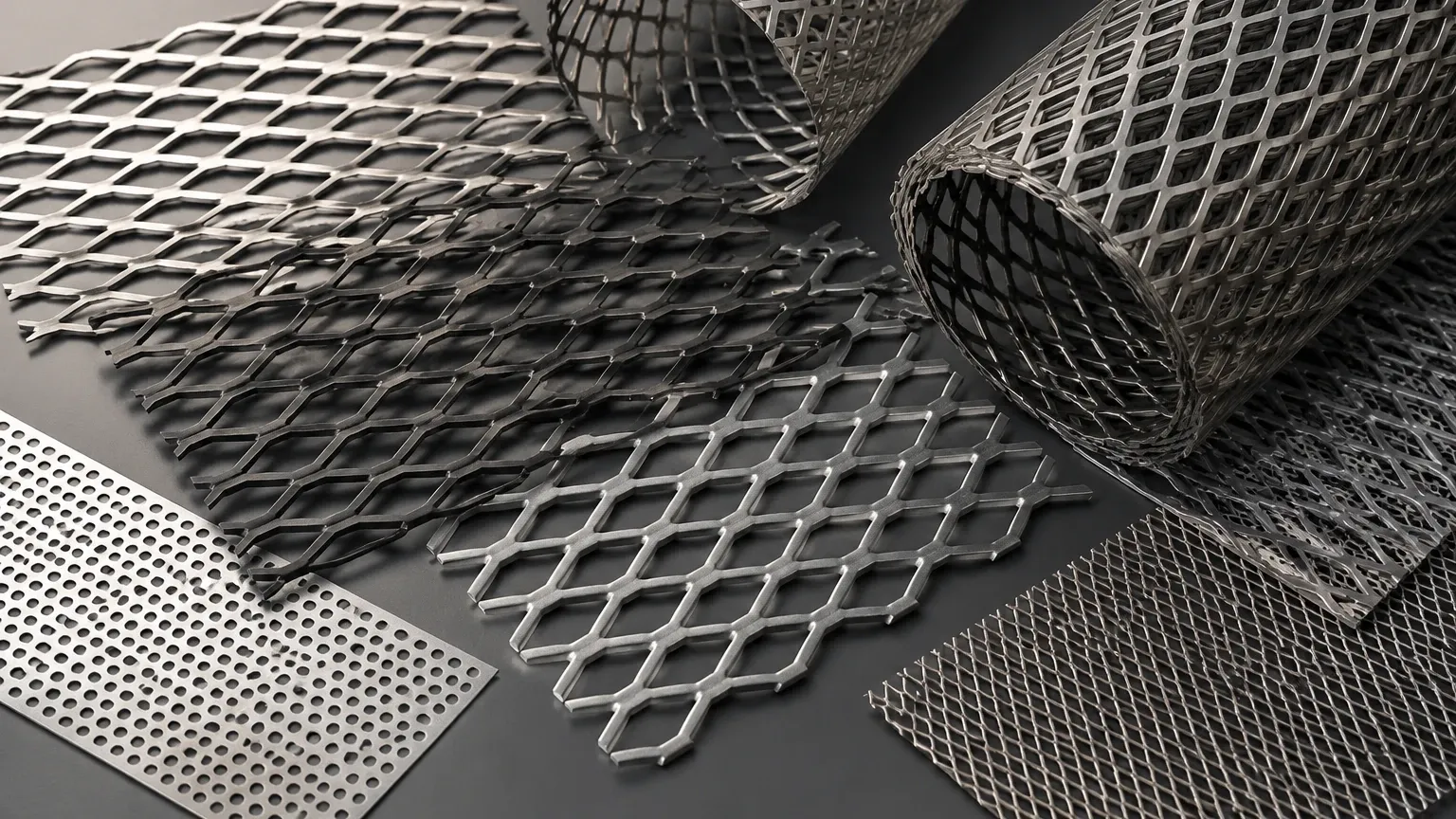
In the landscape of industrial design and filtration engineering, the expanded metal grill serves as a foundational component for safety, structural integrity, and fluid management. Unlike woven wire mesh or perforated sheets, expanded metal is produced through a unique process of simultaneous slitting and stretching. This manufacturing method results in a continuous, jointless piece of metal that retains the inherent strength of the original sheet while introducing a diamond-shaped pattern that facilitates airflow, drainage, and visibility.
For engineers and procurement professionals, understanding the technical nuances of an expanded metal grill is essential for selecting the right material for demanding environments, such as chemical processing plants, food production facilities, and hydraulic systems. This guide examines the manufacturing characteristics, material specifications, and engineering considerations necessary for integrating expanded metal into industrial applications.
The Manufacturing Process: Raised vs. Flattened
The production of expanded metal is a highly efficient process that generates zero waste, as the metal is stretched rather than punched out. There are two primary forms of expanded metal used in industrial grills: raised and flattened.
Raised Expanded Metal
Raised expanded metal, also known as "standard" expanded metal, is the product as it comes off the expanding machine. The strands and bonds are set at a uniform angle to the plane of the sheet. This creates a three-dimensional surface that provides excellent grip and structural rigidity. In filtration and industrial safety, raised grills are often used for walkways, stair treads, or machine guards where slip resistance and high strength-to-weight ratios are paramount.
Flattened Expanded Metal
Flattened expanded metal is produced by passing the standard raised expanded sheet through a cold-roll reducing mill. This process flattens the strands and bonds into a single plane, resulting in a smooth, level surface. Flattened grills are typically used when a lower profile is required or when the grill must be integrated into a tight assembly, such as a support layer for fine wire mesh in a multi-stage filter cartridge. It is also preferred in applications where a smooth surface is necessary to prevent snagging or to facilitate easier cleaning.
Technical Specifications and Terminology
To accurately specify an expanded metal grill, engineers must use standardized terminology to describe the dimensions and geometry of the diamond openings. The performance of the grill—including its open area, weight, and load-bearing capacity—depends entirely on these variables.
* SWD (Short Way of Design): The distance from the center of one bond to the center of the next bond measured across the short diamond diagonal.
* LWD (Long Way of Design): The distance from the center of one bond to the center of the next bond measured across the long diamond diagonal.
* SWO (Short Way of Opening): The actual width of the opening, measured from the inside of the bonds across the short diagonal.
* LWO (Long Way of Opening): The actual length of the opening, measured from the inside of the bonds across the long diagonal.
* Strand Thickness: The thickness of the original base metal sheet.
* Strand Width: The amount of metal fed into the machine for each stroke of the expanding die.
By adjusting the strand width and the degree of stretching, manufacturers can create a wide range of open area percentages. This flexibility is critical when the Perforated & Expanded Metal components must meet specific airflow or filtration requirements.
Key Benefits of Expanded Metal Grills in Industrial Settings
Expanded metal offers several distinct advantages over other types of metal fabrication, particularly in heavy-duty industrial environments.
Structural Integrity
Because the expanded metal grill is made from a single piece of material, there are no welds or joints to fail under stress. The "bonds" (where the strands intersect) act as structural nodes that distribute loads evenly across the sheet. This makes it exceptionally resistant to impact and vibration, which is a common requirement for protective guards in hydraulic systems and heavy machinery.
Material Efficiency and Cost-Effectiveness
Since the expanding process involves no scrap loss, it is often more cost-effective than perforated metal, especially when using expensive alloys like stainless steel 316L. You get a larger surface area of finished product from a smaller amount of raw material, reducing the total cost of ownership for large-scale projects.
Versatile Open Area
The diamond pattern allows for excellent passage of air, light, and liquid while maintaining a physical barrier. In filtration applications, the open area can be precisely engineered to minimize pressure drop while providing the necessary mechanical support for finer filter media.
Applications in Filtration and Protection
While often associated with architectural facades or security fencing, the expanded metal grill plays a vital role in specialized industrial filtration and mechanical protection.
Filtration Support Cores
In high-pressure filtration systems, such as those used in chemical processing or water treatment, fine wire mesh filters require a rigid internal or external support structure. An expanded metal grill provides the necessary hoop strength to prevent the mesh from collapsing or deforming under differential pressure. Its smooth, flattened surface ensures that the delicate filter media is not punctured or abraded during operation.
Machine Guards and Ventilation
Industrial equipment requires ventilation to dissipate heat, yet moving parts must be shielded for operator safety. Expanded metal grills allow for maximum airflow while preventing foreign objects or fingers from entering the machinery. The directional nature of the raised strands can also be used to deflect debris or direct airflow in specific patterns.
Intake Screens
For pumps and hydraulic systems, expanded metal serves as a primary intake screen, filtering out large debris before the fluid reaches more sensitive downstream components. The corrosion resistance of stainless steel expanded metal makes it ideal for submerged applications in marine or wastewater environments.
Engineering Considerations: Material Selection and Load Capacity
Selecting the correct material for an expanded metal grill is as important as the geometry of the diamonds. The choice of alloy determines the grill’s longevity in corrosive or high-temperature environments.
1. Stainless Steel (304, 316, 316L): The standard for the food, beverage, and pharmaceutical industries due to its corrosion resistance and ease of sterilization. 316L is specifically chosen for environments involving chlorides or high acidity.
2. Carbon Steel: Often used for structural applications where corrosion is not a primary concern or where the grill will be coated (galvanized or powder-coated) after fabrication.
3. Aluminum: Preferred for applications requiring a high strength-to-weight ratio and natural resistance to atmospheric corrosion, such as in aerospace or lightweight enclosure designs.
Load-Bearing Capacity
Engineers must calculate the deflection and load capacity based on the orientation of the diamonds. Typically, expanded metal is strongest when the LWD is perpendicular to the span. If the grill is intended for pedestrian traffic or heavy equipment support, the strand thickness and width must be increased to prevent permanent deformation.
Comparing Perforated & Expanded Metal for Industrial Use
When deciding between Perforated & Expanded Metal for a specific project, several factors come into play. Perforated metal offers a wider variety of hole shapes (round, square, slotted) and can be produced with "dead zones" or solid margins for easier welding and mounting. However, perforated metal involves significant material waste, as the "slugs" are punched out and must be recycled.
Expanded metal, conversely, is lighter per square foot for the same thickness and provides a higher strength-to-weight ratio. It is also generally more slip-resistant in its raised form. For filtration support, expanded metal is often the preferred choice due to its continuous structure and cost-efficiency in stainless steel grades.
Customization and OEM Solutions
Industrial applications rarely follow a one-size-fits-all approach. Customization is often required to meet specific filtration accuracies, dimensions, or mounting requirements. Professional manufacturers can provide tailored solutions that include:
* Custom Diamond Sizes: Engineering specific SWD and LWD dimensions to match airflow or particle retention needs.
* Precision Cutting and Framing: Delivering grills cut to exact tolerances with welded frames for immediate installation into industrial housings.
* Surface Treatments: Including electropolishing for pharmaceutical applications to ensure a burr-free, ultra-clean surface, or pickling and passivation for enhanced corrosion resistance.
Working with a manufacturer that understands the intersection of metal expansion and filtration science allows engineers to optimize their systems for both performance and durability.
Conclusion
The expanded metal grill is a versatile and indispensable component in modern industrial engineering. Whether it is providing the structural backbone for a high-pressure filter cartridge or serving as a protective barrier in a chemical plant, its unique combination of strength, open area, and material efficiency makes it a superior choice for many applications. By carefully considering the material grade, the choice between raised and flattened profiles, and the specific geometric dimensions, technical professionals can ensure their filtration and protection systems operate at peak efficiency for years to come.
