


Expanded Metal Home Depot
When engineers and procurement managers begin a search for materials, retail outlets like Home Depot are often the first point of reference for immediate, small-scale needs. However, for industrial applications—particularly those involving precision filtration, chemical processing, or high-load structural support—the requirements for expanded metal go far beyond what is typically available on a retail shelf. Understanding the distinction between consumer-grade products and industrial-grade Perforated & Expanded Metal is essential for ensuring the longevity and efficiency of a project.
While an expanded metal Home Depot search might yield results suitable for residential fencing or basic DIY repairs, industrial environments demand rigorous material certifications, precise tolerances, and specialized alloys. This guide explores the technical nuances of expanded metal, the limitations of retail sourcing for B2B applications, and the engineering considerations necessary for selecting the right filtration and support components.
The Role of Retail vs. Industrial Sourcing in Metal Procurement
Retailers serve a vital role in the supply chain for general contractors and hobbyists. If a project requires a single 24" x 24" sheet of carbon steel mesh for a decorative vent or a garden gate, a local retail outlet is the most efficient choice. In these scenarios, the primary concerns are availability and price, while technical specifications like precise open area percentages or metallurgical purity are secondary.
In contrast, industrial procurement through a specialized manufacturer like Kaifil focuses on performance under stress. Industrial expanded metal is often integrated into complex filtration systems, hydraulic components, or chemical reactors. In these settings, the "standard" sizes found at a hardware store rarely suffice. Industrial users require specific strand widths, thicknesses, and diamond dimensions (SWD and LWD) to meet flow rate requirements or pressure drop limits. Furthermore, the ability to source high-grade stainless steel (such as 304L or 316L) with full material traceability is a requirement that retail outlets are generally not equipped to meet.
Key Technical Specifications of Perforated & Expanded Metal
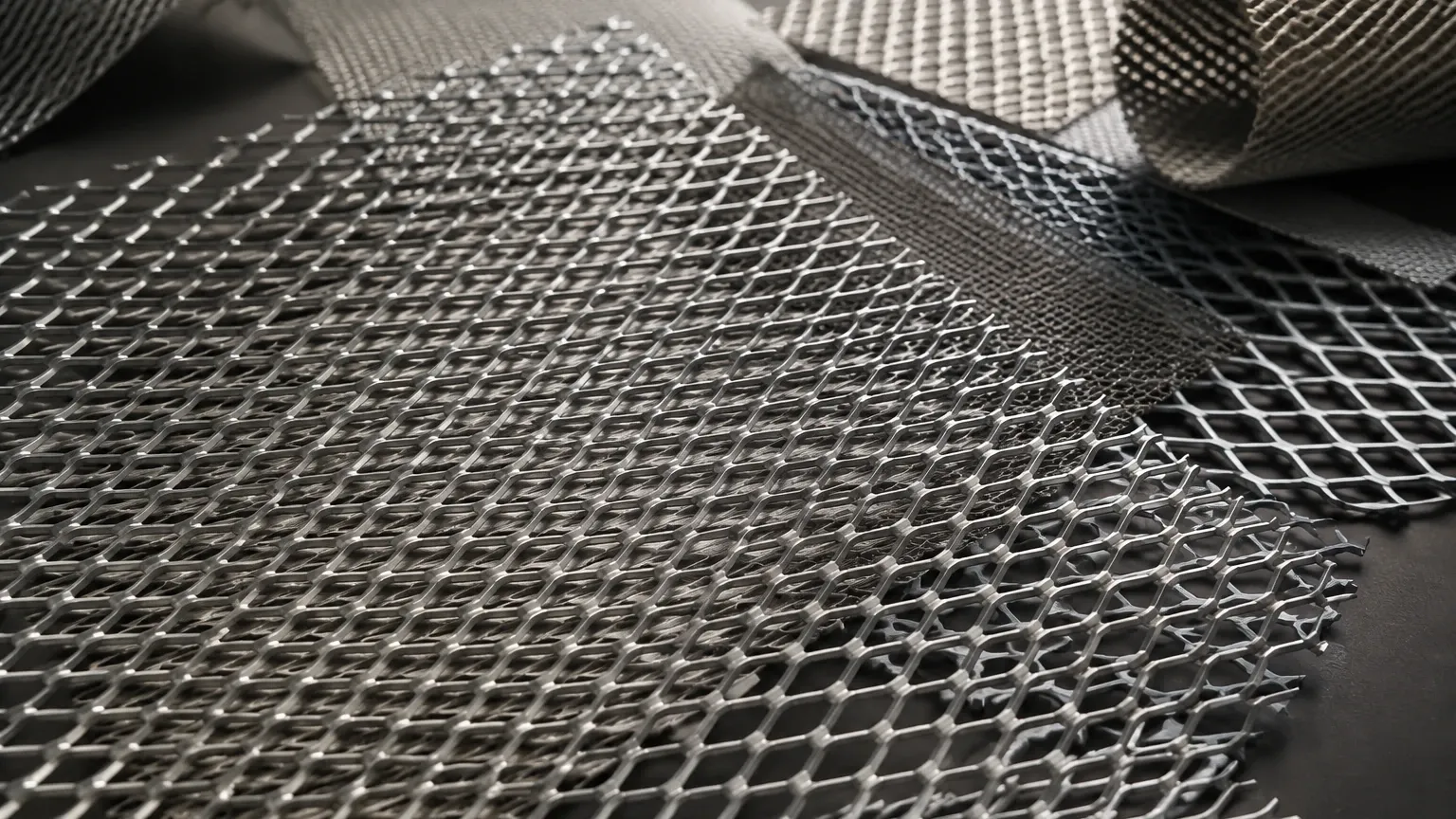
To move beyond the limitations of retail-grade products, engineers must define the specific geometry and physical properties of the mesh. Expanded metal is produced by simultaneously slitting and stretching a solid metal sheet, creating a diamond-shaped pattern without any material waste. This process results in a high strength-to-weight ratio, but it also introduces several variables that must be controlled.
SWD and LWD Dimensions
* Short Way of Design (SWD): The distance from the center of one bond to the center of the next bond measured across the short diamond diagonal.
* Long Way of Design (LWD): The distance from the center of one bond to the center of the next bond measured across the long diamond diagonal.
These dimensions dictate the "opening" size, which is critical for filtration applications. While a retail expanded metal Home Depot product might offer a generic "small" or "large" mesh, industrial manufacturers provide precise SWD/LWD configurations to ensure that the mesh captures specific particle sizes or provides the exact level of airflow required for cooling systems.
Strand Width and Thickness
The strand width refers to the amount of metal between the openings, while the thickness refers to the gauge of the original base material. Together, these determine the overall weight and structural integrity of the sheet. In heavy-duty industrial walkways or high-pressure filter supports, increasing the strand width can significantly enhance the load-bearing capacity without needing a thicker base plate.
Raised vs. Flattened Mesh
Standard expanded metal (raised) has strands that are set at a sharp angle to the plane of the sheet. This provides excellent grip for walkways and creates a three-dimensional surface that can deflect light or air. However, for many filtration applications, "flattened" expanded metal is preferred. This is achieved by passing the raised mesh through a cold-rolling mill, resulting in a smooth, flat surface. Flattened mesh is easier to clean, offers more consistent thickness for housing integration, and prevents the buildup of debris in the "pockets" created by raised strands.
Material Integrity: Why Stainless Steel Outperforms Generic Options
A significant limitation of sourcing expanded metal from general retailers is the restricted material selection. Most retail stock is limited to carbon steel or aluminum. While these are cost-effective, they often fail in industrial environments characterized by moisture, heat, or corrosive chemicals.
Corrosion Resistance in Filtration
In the chemical processing and food and beverage industries, corrosion resistance is non-negotiable. Stainless steel 304 is the standard for general-purpose industrial use, providing excellent resistance to atmospheric corrosion. For more aggressive environments, such as those involving chlorides or marine exposure, Stainless Steel 316L is required. The "L" denotes low carbon content, which prevents carbide precipitation during welding, ensuring the mesh remains durable even after fabrication into a filter cartridge.
Temperature Stability
Industrial processes often involve extreme temperatures that would cause standard carbon steel to oxidize or lose structural integrity. Stainless steel and specialized alloys used in industrial-grade Perforated & Expanded Metal maintain their mechanical properties at much higher thresholds, making them suitable for steam filtration, exhaust systems, and heat treatment baskets.
Industrial Applications: From Filtration to Structural Support
While the casual user might look for expanded metal at Home Depot for a home improvement project, B2B sectors utilize these materials for highly engineered solutions.
Filter Core Support
One of the most common uses for expanded metal in the B2B sector is as a support core for pleated filter media. The diamond pattern provides a high percentage of open area, allowing fluid to pass through with minimal resistance, while the rigid structure prevents the delicate filter paper or wire cloth from collapsing under high differential pressure. Customization here is key; the mesh must be precisely sized to fit the inner or outer diameter of the filter cartridge.
Machine Guarding and Safety
In manufacturing facilities, expanded metal is used to create safety guards around moving parts. Unlike solid panels, the mesh allows for visual inspection and airflow while preventing accidental contact. Industrial-grade mesh ensures that the guards are impact-resistant and comply with OSHA or other safety standards, which may require specific opening sizes to prevent fingers or tools from passing through.
Architectural and Acoustic Panels
Beyond functional filtration, expanded metal is increasingly used in architectural applications for sunshades, ceiling panels, and acoustic dampening. In these cases, the aesthetic consistency of the diamond pattern and the quality of the edge finishing are paramount—details that are often overlooked in mass-market retail products.
Engineering Considerations for Precision Customization
When transitioning from a retail mindset to an industrial partnership, engineers should focus on the following customization options to optimize performance and reduce total cost.
1. Open Area Calculation: The ratio of the area of the openings to the total area of the sheet. This is a critical variable in fluid dynamics. A manufacturer can adjust the strand width and SWD to achieve a specific open area percentage, ensuring that the filter meets its flow rate targets without sacrificing strength.
2. Edge Finishing: Retail mesh often comes with "random" edges, where the diamonds are cut mid-pattern, leaving sharp, uneven points. For industrial components, "bond edges" or "closed edges" can be specified. This makes the material safer to handle and easier to weld into frames or cylinders.
3. Tolerance Control: In precision machinery, a variation of even a few millimeters can lead to assembly failure. Industrial manufacturing processes allow for much tighter tolerances on sheet size, flatness, and diamond consistency than what is found in bulk retail inventory.
4. Secondary Processing: Unlike a retail supplier, a specialized manufacturer like Kaifil can provide value-added services such as degreasing, pickling, passivating, or powder coating. For pharmaceutical or food-grade applications, ensuring the mesh is free of manufacturing oils and surface contaminants is a critical step in the procurement process.
Procurement Strategy: Evaluating Total Cost of Ownership
It is tempting to view expanded metal as a commodity where price per square foot is the only metric. However, for B2B buyers, the total cost of ownership (TCO) includes factors such as installation labor, replacement frequency, and the cost of system downtime.
Sourcing a generic product from an expanded metal Home Depot search might save on initial costs, but if that material corrodes prematurely or fails under pressure, the resulting equipment damage and labor costs will far outweigh the initial savings. By partnering with a manufacturer that specializes in stainless steel filtration solutions, companies receive a product tailored to their specific environment. This leads to longer replacement cycles, better filtration efficiency, and reduced maintenance overhead.
Furthermore, industrial partners offer scalable production. Whether a project requires a prototype for a new filter design or a high-volume run for an OEM assembly line, a dedicated manufacturer provides the logistical support and quality assurance (such as ISO certifications) that retail outlets cannot.
Conclusion
For simple, non-critical tasks, retail expanded metal is a convenient solution. But when the success of an industrial process depends on filtration accuracy, material purity, and structural reliability, the choice of supplier becomes a strategic decision. Engineers and purchasing teams should look beyond the convenience of local retail and focus on the technical advantages of specialized Perforated & Expanded Metal.
By prioritizing material grades like 304 and 316L stainless steel, demanding precise geometric tolerances, and considering the specific needs of the application—be it a filter core, a safety guard, or a chemical strainer—businesses can ensure they are investing in a solution that provides long-term value and operational security. Kaifil remains committed to providing these high-performance components, bridging the gap between raw material and engineered filtration excellence.
