


Expanded Metal Heavy Duty
In the landscape of industrial filtration and structural engineering, expanded metal heavy duty serves as a foundational component for high-stress applications. Unlike standard expanded metal, which is often utilized for aesthetic or light-duty screening, the heavy-duty variant is engineered to withstand significant mechanical loads, high-pressure differentials, and abrasive environments. For engineers and procurement specialists in sectors such as chemical processing, water treatment, and hydraulic systems, understanding the technical nuances of these materials is essential for optimizing system longevity and filtration efficiency.
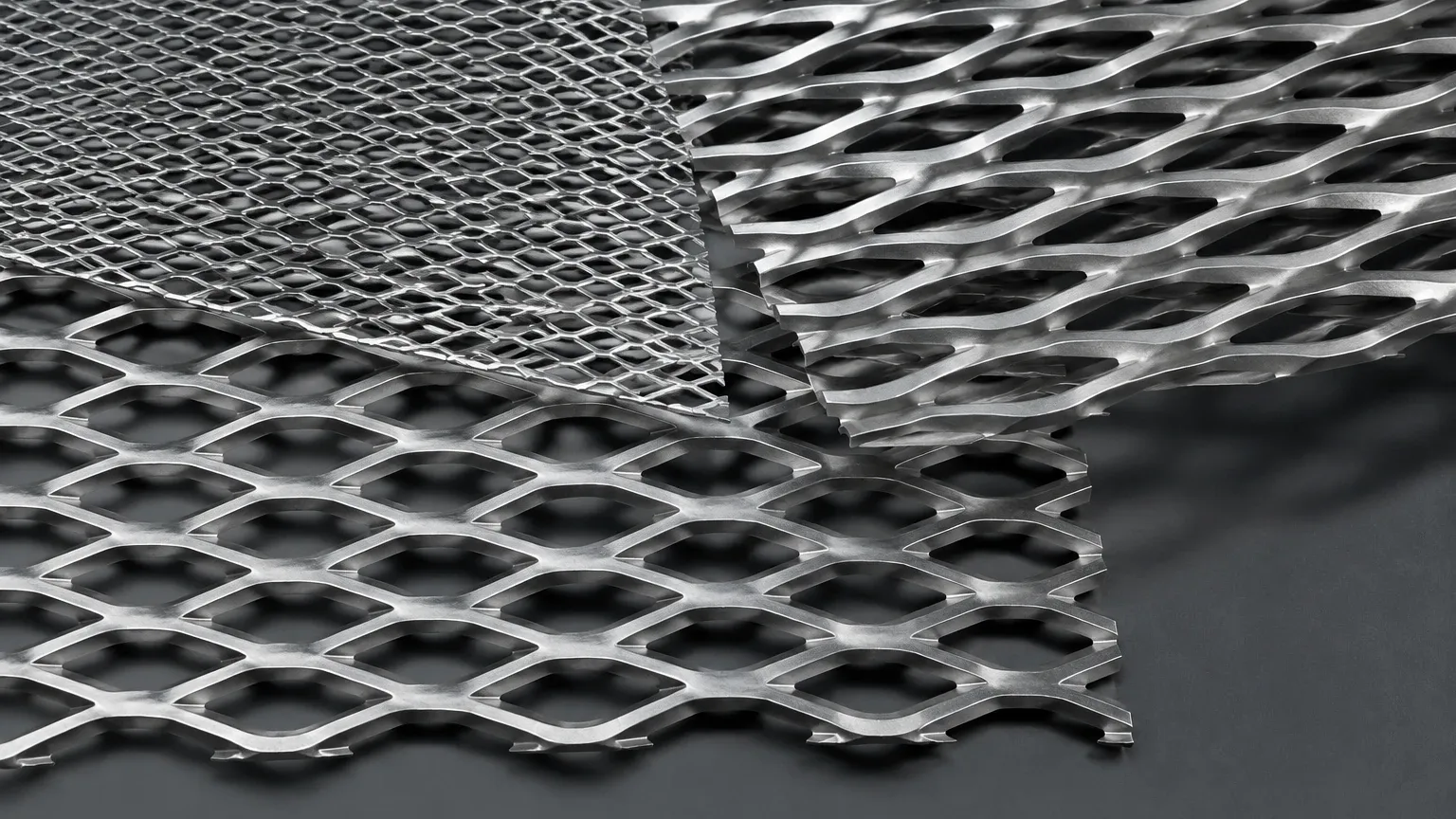
Heavy-duty expanded metal is manufactured through a process of simultaneous slitting and stretching of metal sheets—most commonly stainless steel in industrial contexts. This process creates a diamond-shaped pattern that is integral to the sheet, meaning there are no welds or joints that could fail under stress. This monolithic structure is what provides the material with its exceptional strength-to-weight ratio, making it a preferred choice for internal support cores in large-scale filter cartridges and protective outer shrouds in harsh processing environments.
Technical Specifications and Geometry
When specifying expanded metal heavy duty for industrial use, engineers must look beyond basic dimensions. The performance of the material is dictated by several geometric factors:
* Long Way of Design (LWD): The distance from the center of one joint to the center of the next joint across the long diamond axis.
* Short Way of Design (SWD): The distance across the short diamond axis.
* Strand Width and Thickness: In heavy-duty applications, the strand thickness often matches or exceeds the original gauge of the base metal sheet, providing the necessary rigidity to resist deformation.
* Open Area Percentage: This is a critical metric for filtration. It determines the flow rate and pressure drop across the component. Heavy-duty variants often balance a lower open area for higher strength, though custom configurations can optimize this for specific flow requirements.
For those evaluating these components, the choice between "raised" and "flattened" expanded metal is pivotal. Raised expanded metal features strands that are turned at an angle to the plane of the sheet, providing maximum rigidity and a slip-resistant surface. Flattened expanded metal is processed through a cold-rolling mill, resulting in a smooth, level surface. In filtration, flattened expanded metal is frequently used as a substrate for fine wire mesh, ensuring a uniform contact surface that prevents the delicate mesh from tearing under pressure.
Material Selection: The Role of Stainless Steel
In industrial filtration, the chemical and thermal environment dictates material selection. While expanded metal can be produced from carbon steel or aluminum, Perforated & Expanded Metal intended for heavy-duty industrial use is almost exclusively fabricated from stainless steel alloys, such as Grade 304 or 316L.
Stainless steel 304 offers excellent corrosion resistance for general industrial applications, including food and beverage processing and standard water filtration. However, for environments involving high chloride concentrations, acidic chemical streams, or pharmaceutical processing, Grade 316L is the industry standard. The addition of molybdenum in 316L provides superior resistance to pitting and crevice corrosion, which is vital when the expanded metal is subjected to continuous immersion in aggressive media.
Furthermore, heavy-duty expanded metal must maintain its structural integrity at elevated temperatures. In petrochemical refining or high-temperature gas filtration, the thermal expansion coefficients and creep resistance of the selected alloy are as important as the mechanical mesh dimensions.
Engineering Considerations for Filtration Support
One of the primary B2B applications for expanded metal heavy duty is as a support structure for secondary filtration media. In high-pressure hydraulic systems or large-scale liquid filtration, fine wire mesh or synthetic membranes lack the inherent strength to resist the force of the fluid flow.
Structural Integrity and Pressure Differentials
In these scenarios, the heavy-duty expanded metal acts as a "skeleton." It must be engineered to handle the maximum expected differential pressure (ΔP) during the filtration cycle, including potential pressure spikes. If the support structure fails or deforms, the fine filtration layer will rupture, leading to bypass and downstream contamination. Engineers must calculate the collapse pressure of the expanded metal cylinder or panel to ensure a safety factor that accounts for the eventual clogging of the filter media.
Flow Dynamics and Turbulence
The geometry of the expanded metal also influences the fluid dynamics. The angled strands of raised expanded metal can induce localized turbulence, which may be beneficial in certain mixing applications but detrimental in others where laminar flow is required to prevent foaming or shear-sensitive product damage. Conversely, the smooth profile of flattened expanded metal minimizes flow resistance, making it ideal for high-velocity gas or liquid streams.
Comparing Perforated & Expanded Metal
When designing a filtration system, a common question arises: should one use perforated metal or expanded metal? Both fall under the broader category of Perforated & Expanded Metal solutions, but they serve different engineering goals.
1. Material Utilization: Expanded metal is produced without any scrap loss, as the metal is stretched rather than punched. This often makes it a more cost-effective solution for large-scale industrial projects compared to perforated metal, where the "slugs" from the holes are waste material.
2. Precision: Perforated metal allows for more precise control over hole size and spacing, which is necessary for exact particle size retention in primary filtration. Expanded metal is generally used where structural support or coarse screening is the priority.
3. Strength: For a given weight, expanded metal heavy duty often provides higher rigidity than perforated metal because the strands are interconnected without welds, and the stretching process work-hardens the material.
Customization and OEM Requirements
Industrial applications rarely permit "off-the-shelf" solutions. Customization is a critical factor for engineers who need to integrate expanded metal into existing machinery or proprietary filter designs.
OEM manufacturers like Kaifil specialize in tailoring the dimensions of expanded metal to meet specific requirements. This includes custom LWD/SWD ratios to match flow patterns, specific strand thicknesses for load-bearing requirements, and specialized finishing processes. For instance, in the pharmaceutical industry, the expanded metal may require electropolishing to achieve a specific surface roughness (Ra) value, ensuring that no bacteria can harbor in microscopic crevices and that the component is fully CIP (Clean-in-Place) compatible.
Customization also extends to the form factor. Expanded metal can be supplied as flat panels, or it can be precision-rolled and welded into cylinders for use as filter cores. The welding of heavy-duty expanded metal requires technical expertise to ensure that the joints are as strong as the parent material and that there is no distortion of the mesh pattern.
Total Cost of Ownership and Maintenance
For purchasing teams, the initial acquisition cost of expanded metal heavy duty is only one part of the equation. The Total Cost of Ownership (TCO) is heavily influenced by the material’s durability and the ease of maintenance.
Durability and Replacement Cycles
Because heavy-duty expanded metal is designed for longevity, it significantly extends the replacement cycle of filtration components. In abrasive environments, such as mining or wastewater treatment containing grit, the thickness of the heavy-duty strands provides a wear allowance that thinner materials cannot offer. This reduces downtime and the labor costs associated with frequent filter changes.
Cleaning and Reusability
In many industrial processes, filtration components are cleaned and reused. Stainless steel expanded metal is highly compatible with various cleaning methods, including ultrasonic cleaning, backwashing, and chemical sanitization. Its robust nature ensures that it can withstand the mechanical stresses of high-pressure cleaning without losing its shape or structural integrity.
Selecting the Right Supplier
When sourcing expanded metal heavy duty, engineers should confirm several factors with their supplier to ensure the material is fit for purpose:
* Material Certification: Ensure the supplier provides mill test reports (MTRs) to verify the chemical composition of the stainless steel.
* Dimensional Tolerances: Confirm that the LWD, SWD, and strand dimensions meet the required engineering tolerances, as variations can affect both fitment and flow performance.
* Manufacturing Capabilities: Determine if the supplier can provide value-added services such as precision cutting, rolling, welding, and surface finishing.
By focusing on these technical and performance-based criteria, industrial professionals can select expanded metal solutions that provide the necessary balance of strength, filtration efficiency, and long-term reliability. Whether used as a protective guard in a chemical plant or a structural core in a high-pressure hydraulic filter, expanded metal heavy duty remains an indispensable material in modern industrial engineering.
