


Jilumesh Expanded Metal
In the realm of industrial filtration and structural support, material selection is dictated by the balance between mechanical strength, open area, and chemical resistance. Jilumesh expanded metal has emerged as a critical component for engineers seeking a robust alternative to traditional woven wire mesh or perforated sheets. As a specialized form of Perforated & Expanded Metal, this material is defined by its unique manufacturing process and the resulting diamond-shaped apertures that provide multi-directional rigidity.
For B2B procurement teams and filtration engineers, understanding the technical nuances of jilumesh expanded metal is essential for optimizing system performance and ensuring long-term durability in demanding environments. This guide explores the engineering characteristics, material specifications, and application-specific considerations of expanded metal within the industrial filtration landscape.
Understanding Jilumesh Expanded Metal in Industrial Applications
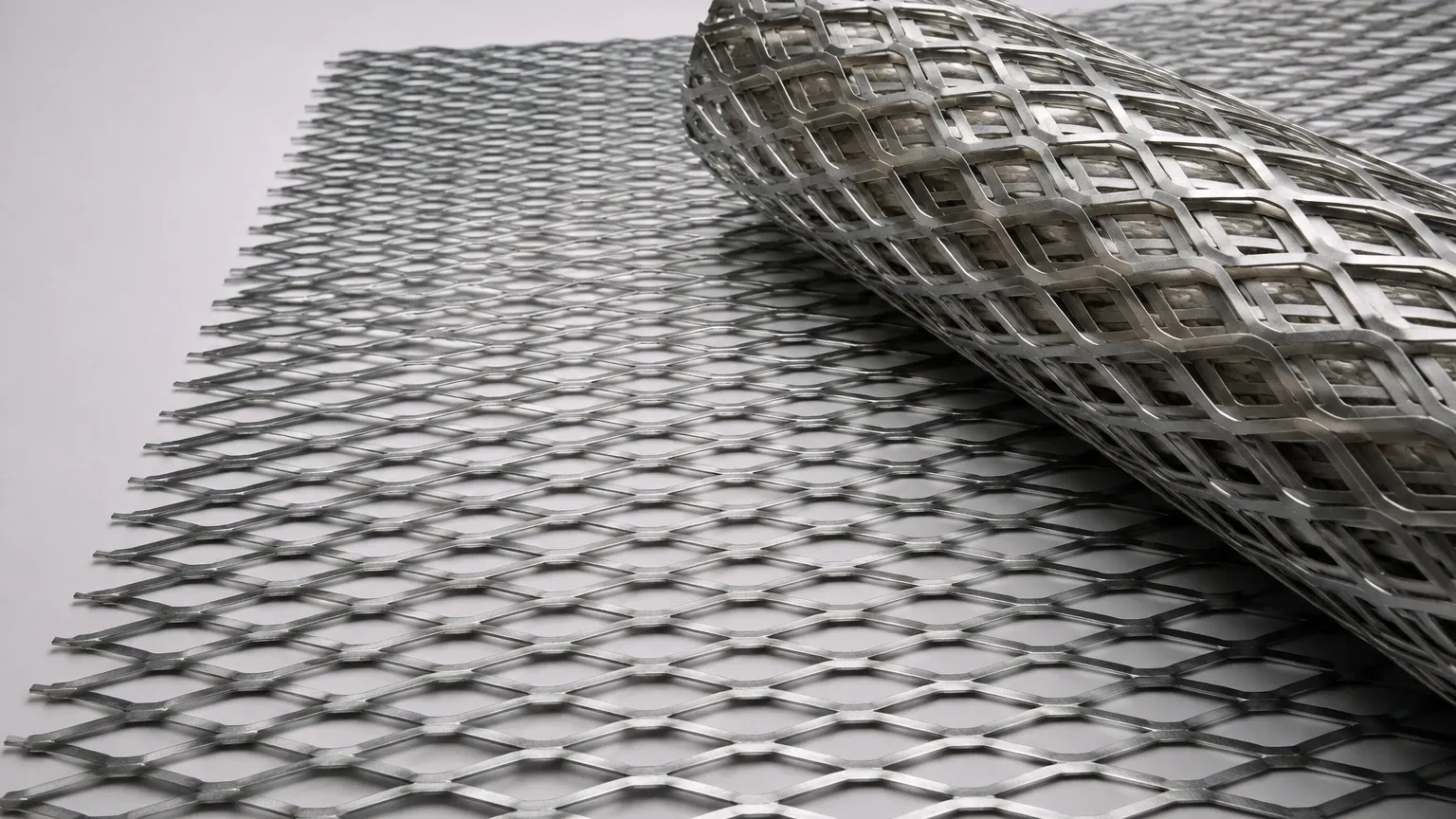
Jilumesh expanded metal is produced through a precise process of slitting and stretching metal sheets. Unlike perforated metal, which involves punching holes and generating scrap material, the expansion process is a zero-waste manufacturing method. The metal is simultaneously slit and cold-drawn, which expands the slits into uniform diamond-shaped openings.
This process creates a continuous piece of metal without joins or welds, which is a significant advantage in high-vibration or high-pressure environments. The strands and bonds of the diamond-shaped trusses are set at a uniform angle to the plane of the sheet. This configuration provides several functional benefits:
1. Structural Integrity: The one-piece construction ensures that the mesh cannot unravel under stress.
2. Weight-to-Strength Ratio: Expanded metal is lighter than solid sheet metal of the same dimensions but retains a high level of structural rigidity.
3. Flow Dynamics: The angled strands can be used to deflect or control the flow of fluids and gases, depending on the orientation of the mesh.
In filtration, jilumesh expanded metal often serves as the "skeleton" of a filter element, providing the necessary reinforcement for finer filtration media like stainless steel wire mesh or non-woven fabrics.
Manufacturing Process and Structural Integrity
The manufacturing of jilumesh expanded metal involves specialized machinery that determines the final geometry of the mesh. There are two primary forms of expanded metal: "raised" (or standard) and "flattened."
Raised Expanded Metal
Raised expanded metal is the immediate product of the expanding machine. The strands and bonds are set at an angle, creating a three-dimensional surface. This provides maximum rigidity and a high degree of slip resistance if used in flooring, but in filtration, it is primarily valued for its ability to create turbulence or provide a larger surface area for mechanical bonding.
Flattened Expanded Metal
Flattened expanded metal is produced by passing the raised expanded sheet through a cold-rolling reducing mill. This process flattens the strands and bonds into a single plane, resulting in a smooth, flat surface. Flattened jilumesh expanded metal is often preferred in filtration applications where the mesh must sit flush against another layer of media or where a specific thickness tolerance is required to fit into a filter housing.
Key terminology for engineers includes:
* SWD (Short Way of Diamond): The distance from the center of one bond to the center of the next bond across the short axis.
* LWD (Long Way of Diamond): The distance from the center of one bond to the center of the next bond across the long axis.
* Strand Width: The amount of metal fed into the machine between the slits.
* Strand Thickness: The thickness of the original base metal.
Material Selection: Why Stainless Steel Dominates
While expanded metal can be produced from various alloys, stainless steel is the industry standard for high-performance filtration. Kaifil specializes in stainless steel filtration solutions because the material properties align with the rigorous demands of chemical processing, food and beverage production, and pharmaceutical manufacturing.
Grade 304 Stainless Steel
Grade 304 is the most common choice for general industrial applications. It offers excellent corrosion resistance and weldability. It is suitable for most water treatment and hydraulic applications where extreme chemical exposure is not a primary concern.
Grade 316 and 316L Stainless Steel
For environments involving chlorides, acids, or high temperatures, Grade 316 (or its low-carbon variant, 316L) is required. The addition of molybdenum enhances resistance to pitting and crevice corrosion. This is particularly critical in marine environments, chemical processing plants, and pharmaceutical filtration where material purity is paramount.
Specialty Alloys
In specific high-temperature or highly corrosive environments, other alloys such as Monel, Inconel, or Titanium may be used to manufacture expanded metal components. These materials ensure that the structural support of the filter does not fail before the filter media itself reaches its replacement cycle.
Filtration Performance and Engineering Considerations
When integrating jilumesh expanded metal into a filtration system, engineers must evaluate several performance metrics to ensure the component meets the application's requirements.
Open Area and Pressure Drop
The percentage of open area determines the flow capacity and the initial pressure drop across the filter. Expanded metal typically offers a wide range of open area percentages, often exceeding those of perforated metals. A higher open area reduces the resistance to flow, which is vital for energy efficiency in pump-driven systems. However, the open area must be balanced against the required mechanical support for the primary filter layer.
Mechanical Support and Pleat Retention
In pleated filter cartridges, expanded metal is frequently used as an inner core or an outer wrap. Its role is to prevent the pleats from collapsing under high differential pressure (ΔP). The diamond pattern provides uniform support across the entire surface of the media, ensuring that the effective filtration area remains active even as the filter becomes loaded with contaminants.
Particle Retention
While expanded metal is rarely used as the primary filtration stage for fine particles, it is highly effective as a coarse strainer or "trash rack." In these roles, it protects downstream equipment from large debris, such as stones, metal fragments, or large organic matter. The precise control of SWD and LWD allows engineers to specify the exact maximum particle size that can pass through the mesh.
Comparing Perforated & Expanded Metal for Industrial Use
Choosing between perforated metal and jilumesh expanded metal depends on the specific priorities of the project. Both fall under the category of Perforated & Expanded Metal, but they behave differently under load.
| Feature | Perforated Metal | Expanded Metal |
| :— | :— | :— |
| Manufacturing | Punching (creates scrap) | Slitting and Stretching (no scrap) |
| Weight | Heavier per sq. ft. | Lighter per sq. ft. |
| Strength | High, but depends on hole pattern | High, due to truss-like structure |
| Surface | Smooth and flat | Can be raised or flattened |
| Cost | Generally higher (material waste) | Generally lower (material efficiency) |
| Flow | Direct path | Can be angled/directional |
For applications requiring a perfectly flat surface with specific circular apertures, perforated metal is often the standard. However, for support structures, cages, and high-strength-to-weight applications, expanded metal provides a more cost-effective and structurally sound solution.
Customization and OEM Solutions for Specialized Filtration
Industrial filtration is rarely a one-size-fits-all field. Customization is the hallmark of effective engineering. At Kaifil, the focus is on providing OEM solutions that tailor the dimensions, material, and geometry of the expanded metal to the specific needs of the client.
Dimensional Accuracy
Custom-cut sizes and specific tolerances are necessary for the seamless integration of expanded metal into existing filter housings. Precision cutting ensures that there are no sharp edges or burrs that could damage delicate wire mesh layers or compromise the seal of the filter assembly.
Cylindrical and Conical Forming
Expanded metal can be rolled into cylinders or formed into cones to create filter baskets and cores. The welding of these components requires technical expertise to ensure that the seam does not create a weak point in the structure. Resistance welding and TIG welding are commonly used to maintain the integrity of the stainless steel alloy.
Surface Treatments
Depending on the application, expanded metal may undergo secondary processes such as electropolishing, passivation, or coating. Electropolishing is particularly important in the food, beverage, and pharmaceutical industries, as it removes surface imperfections and creates a microscopically smooth finish that resists bacterial growth and is easier to clean.
Maintenance and Longevity in Demanding Environments
The total cost of ownership (TCO) for industrial filtration components is heavily influenced by the replacement cycle and maintenance requirements. Jilumesh expanded metal, particularly when manufactured from high-grade stainless steel, offers exceptional longevity.
Cleaning and Reusability
Unlike many synthetic filter media, metal filters and supports are often cleanable and reusable. Expanded metal can withstand high-pressure washing, ultrasonic cleaning, and chemical CIP (Clean-In-Place) cycles. This reusability significantly reduces the long-term waste and operational costs associated with disposable filtration systems.
Monitoring Wear and Corrosion
In aggressive chemical environments, even stainless steel must be monitored for signs of stress corrosion cracking or localized pitting. Engineers should establish a regular inspection schedule to check the integrity of the bonds in the expanded metal. If the mesh is used as a support for a finer mesh, any failure in the expanded metal could lead to the failure of the entire filter element, potentially causing downstream contamination.
Key Procurement Considerations for Engineers
Before finalizing a specification for jilumesh expanded metal, purchasing teams and engineers should confirm several critical data points with their manufacturer:
1. Material Certification: Ensure that the alloy meets international standards (e.g., ASTM, AISI) and that mill test reports (MTRs) are available to verify the chemical composition.
2. Load Requirements: Define the maximum differential pressure the component will face. This determines the required strand thickness and SWD/LWD dimensions.
3. Chemical Compatibility: Confirm that the selected metal grade is compatible with the process fluid, including any cleaning chemicals used during maintenance.
4. Fit and Finish: Specify whether the mesh should be raised or flattened and if any specific edge treatments (such as U-edging or framing) are required for safety or installation.
By focusing on these technical details, engineers can leverage the unique properties of jilumesh expanded metal to create more efficient, durable, and cost-effective filtration systems. Whether used as a primary strainer or a structural support core, this material remains a cornerstone of modern industrial engineering.
For more information on selecting the right specifications for your application, you can Review product options and application support to ensure your filtration components meet the highest standards of precision and durability.
