


Jaring Expanded Metal
In industrial engineering and filtration design, selecting the appropriate mesh structure is critical for ensuring both structural integrity and process efficiency. One of the most versatile materials utilized across these sectors is expanded metal, often referred to in various regional markets as jaring expanded metal. Unlike woven wire mesh or perforated sheets, expanded metal offers a unique combination of strength, open area, and cost-effectiveness that makes it an essential component in demanding industrial environments.
At its core, expanded metal is a single-piece material produced by simultaneously slitting and stretching a metal sheet. This process creates a diamond-shaped pattern of openings, resulting in a mesh that is stronger than the original sheet while remaining significantly lighter. For engineers and procurement professionals, understanding the technical nuances of this material is the first step toward optimizing filtration systems and structural components.
The Manufacturing Process: Slitting and Stretching
The production of jaring expanded metal is a precision manufacturing process that distinguishes it from other metal mesh products. A solid sheet of metal—typically stainless steel, carbon steel, or aluminum—is fed through an expansion machine. This machine uses a set of knives to slit the metal at precise intervals while simultaneously stretching the material.
Because the metal is stretched rather than punched, there is zero material waste during production. This makes expanded metal a highly sustainable and cost-effective alternative to perforated metal, where the "slugs" or punched-out circles are often discarded as scrap. The stretching process also orients the metal strands at an angle to the plane of the sheet, which provides inherent structural rigidity and allows for multi-directional strength. This mechanical property is particularly useful in filtration applications where the mesh must withstand high-pressure differentials without deforming.
Key Technical Specifications for Engineers
When specifying Perforated & Expanded Metal for an industrial project, engineers must define several critical dimensions to ensure the material meets the application's performance requirements. These specifications include:
* LWD (Long Way of Diamond): The distance from the center of one joint to the center of the next joint across the long axis of the diamond.
* SWD (Short Way of Diamond): The distance from the center of one joint to the center of the next joint across the short axis of the diamond.
* Strand Width: The amount of metal fed into the knives for a single stroke; essentially the width of the metal "wire" forming the diamond.
* Strand Thickness: The thickness of the original base metal sheet.
* Open Area Percentage: This is perhaps the most critical metric for filtration. It determines the flow rate and pressure drop across the mesh. A higher open area allows for greater throughput but may reduce the mechanical strength of the component.
Understanding these variables allows for the customization of jaring expanded metal to suit specific filtration accuracies or structural loads. For instance, a smaller SWD with a thicker strand width will result in a heavy-duty mesh suitable for protective grilles or high-pressure filter supports.
Material Selection for Demanding Environments
The performance of expanded metal is heavily dependent on the alloy selected. At Kaifil, we focus on high-performance materials that can withstand the rigors of chemical processing, food production, and pharmaceutical manufacturing.
1. Stainless Steel 304/304L: The most common grade for industrial applications, offering excellent corrosion resistance and durability in standard environments.
2. Stainless Steel 316/316L: Containing molybdenum, this grade is essential for marine environments, chemical processing plants, and applications involving chlorides or high temperatures. It provides superior pitting resistance.
3. Specialty Alloys: For extreme conditions involving high temperatures or highly corrosive acids, materials like Monel, Inconel, or Hastelloy can be expanded to meet specific engineering standards.
Selecting the right material ensures that the jaring expanded metal does not succumb to oxidation or chemical degradation, which could otherwise lead to process contamination or premature system failure.
Expanded Metal in Industrial Filtration Systems
In the realm of industrial filtration, expanded metal serves two primary roles: as a primary filter medium and as a structural support layer.
Structural Support for Filter Cartridges
In many high-pressure hydraulic or liquid filtration systems, the primary filtration media (such as fine wire mesh or fiber felt) lacks the mechanical strength to resist collapsing under pressure. Expanded metal is often used as an inner core or an outer cage for filter cartridges. Its rigid diamond structure provides the necessary backbone to maintain the cartridge's shape, ensuring consistent flow and preventing bypass.
Coarse Filtration and Pre-filtration
Jaring expanded metal is an excellent choice for coarse filtration stages where large debris must be removed before the fluid reaches more delicate, fine-mesh stages. Its three-dimensional structure can help break up flow patterns, promoting more efficient sediment capture. In water treatment and HVAC systems, expanded metal panels act as effective pre-filters, protecting downstream components from damage.
Diffusion and Flow Control
Because the strands of expanded metal are set at an angle, the material can be used to deflect or diffuse flow. This is particularly useful in gas filtration or air intake systems where uniform flow distribution is required to prevent localized loading on the filter media.
Comparing Perforated & Expanded Metal
Engineers often weigh the pros and cons of perforated metal versus expanded metal. While both fall under the category of Perforated & Expanded Metal, they offer different advantages:
* Strength-to-Weight Ratio: Expanded metal generally offers a higher strength-to-weight ratio because the joints of the diamonds are integral to the sheet, not welded or woven.
* Cost Efficiency: As mentioned, the lack of waste in the expansion process typically makes jaring expanded metal more economical than perforated metal of the same thickness and material.
* Aesthetics and Grip: The raised surface of "standard" (unflattened) expanded metal provides excellent grip and anti-slip properties, which is why it is frequently used for industrial walkways and stair treads. For filtration, however, "flattened" expanded metal is often preferred to ensure a smooth surface that won't snag other filter layers.
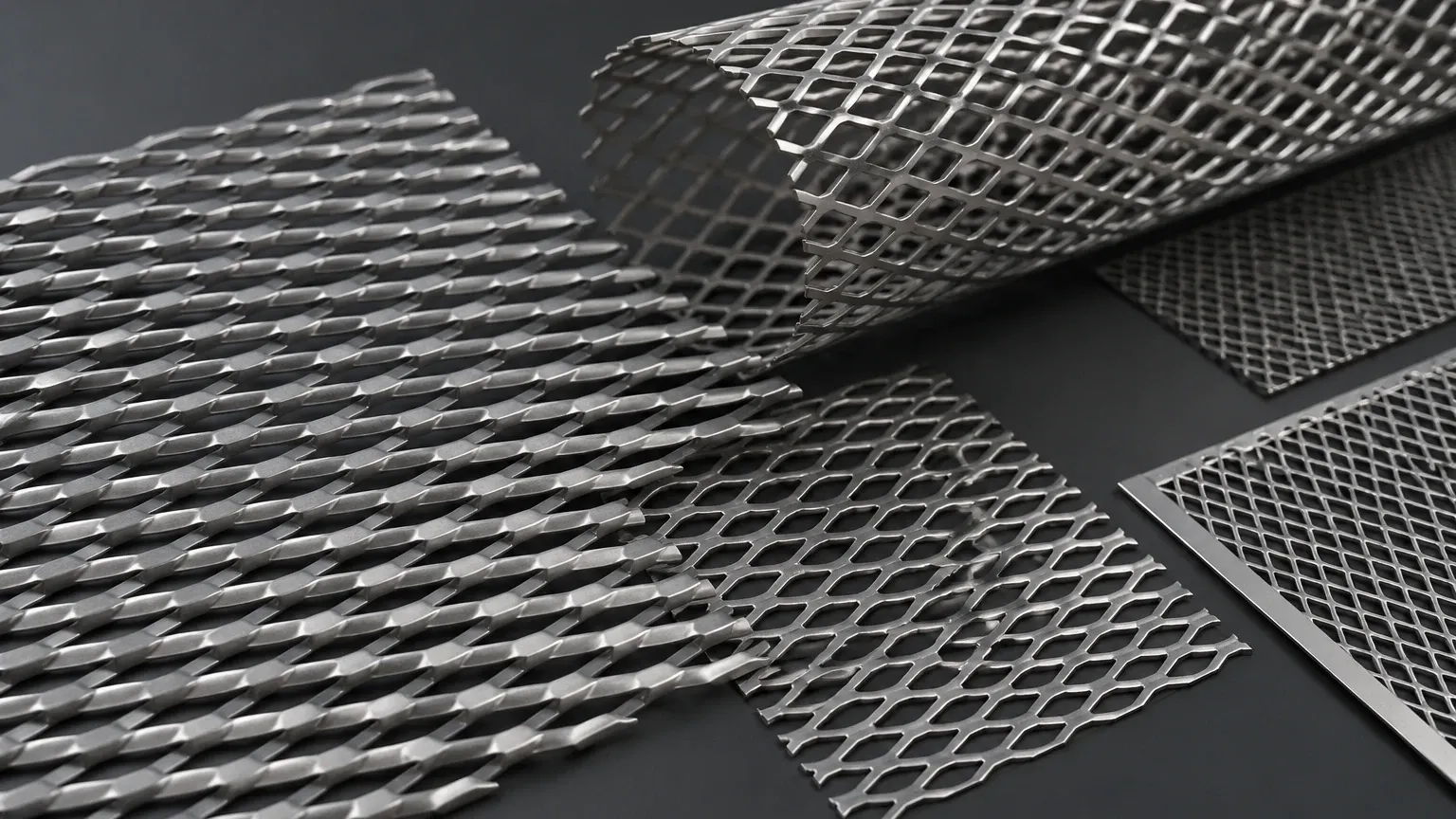
Flattened vs. Raised Expanded Metal
During the manufacturing process, the default output is "raised" expanded metal, where the strands sit at an angle. For many filtration applications, the mesh undergoes an additional cold-rolling process to create "flattened" expanded metal.
Flattening the mesh reduces the overall thickness of the sheet and creates a smooth, level surface. This is vital when the expanded metal is used as a support layer for thin, delicate wire cloth. A raised mesh could potentially cut or abrade the finer mesh over time due to vibration or pressure fluctuations. Flattened jaring expanded metal provides a stable, non-abrasive surface that extends the life of the entire filter assembly.
Quality Control and Customization Options
When sourcing filtration components, consistency is paramount. A slight deviation in strand width or diamond size can lead to significant changes in flow resistance. Professional manufacturers like Kaifil implement rigorous quality control measures to ensure that every sheet or roll of jaring expanded metal meets the required tolerances.
Customization is a core part of our service. Beyond standard dimensions, we can provide:
* Custom Diamond Sizes: Tailored to specific particle retention requirements.
* Bespoke Shapes: Circular discs, cylinders, or complex geometries for specialized filter housings.
* Surface Finishes: Including electropolishing for pharmaceutical applications to ensure a burr-free, ultra-clean surface.
* Edge Treatments: Providing finished edges to simplify the assembly process for the end-user.
Maintenance and Total Cost of Ownership
One of the primary benefits of using stainless steel expanded metal in industrial settings is its longevity. Unlike synthetic meshes, metal mesh is resistant to thermal degradation and can be cleaned and reused multiple times.
In filtration systems, the cleaning cycle is determined by the pressure drop across the filter. Because expanded metal is robust, it can often be cleaned using backwashing, ultrasonic cleaning, or chemical baths without losing its structural integrity. This durability significantly lowers the total cost of ownership by reducing the frequency of replacements and minimizing system downtime.
Conclusion: Selecting the Right Solution
Choosing the right jaring expanded metal requires a deep understanding of the operational environment, including flow rates, pressure requirements, and chemical exposure. By focusing on precision engineering and high-quality material selection, Kaifil provides filtration solutions that meet the most demanding industrial standards.
Whether you are designing a new filtration system or looking to optimize an existing process, the technical characteristics of expanded metal offer a reliable and cost-effective path to success. For more detailed technical data and to explore our range of custom filtration components, engineers and procurement teams are encouraged to consult with our technical specialists to find the ideal match for their specific application needs.
