


Jual Expanded Metal
In the landscape of industrial filtration and structural engineering, selecting the right medium for fluid dynamics and mechanical support is a critical decision. When engineers and procurement specialists search for "jual expanded metal," they are often looking for more than just a raw material; they are seeking a technical solution that balances flow efficiency, structural integrity, and long-term durability. Expanded metal, particularly when manufactured from high-grade stainless steel, serves as a cornerstone in the production of filter cartridges, support cages, and protective screens across the chemical, pharmaceutical, and food processing industries.
As a professional manufacturer, Kaifil specializes in providing precision-engineered Perforated & Expanded Metal solutions. Understanding the technical nuances of these materials is essential for optimizing filtration performance and ensuring the reliability of industrial equipment.
Understanding the Expanded Metal Manufacturing Process
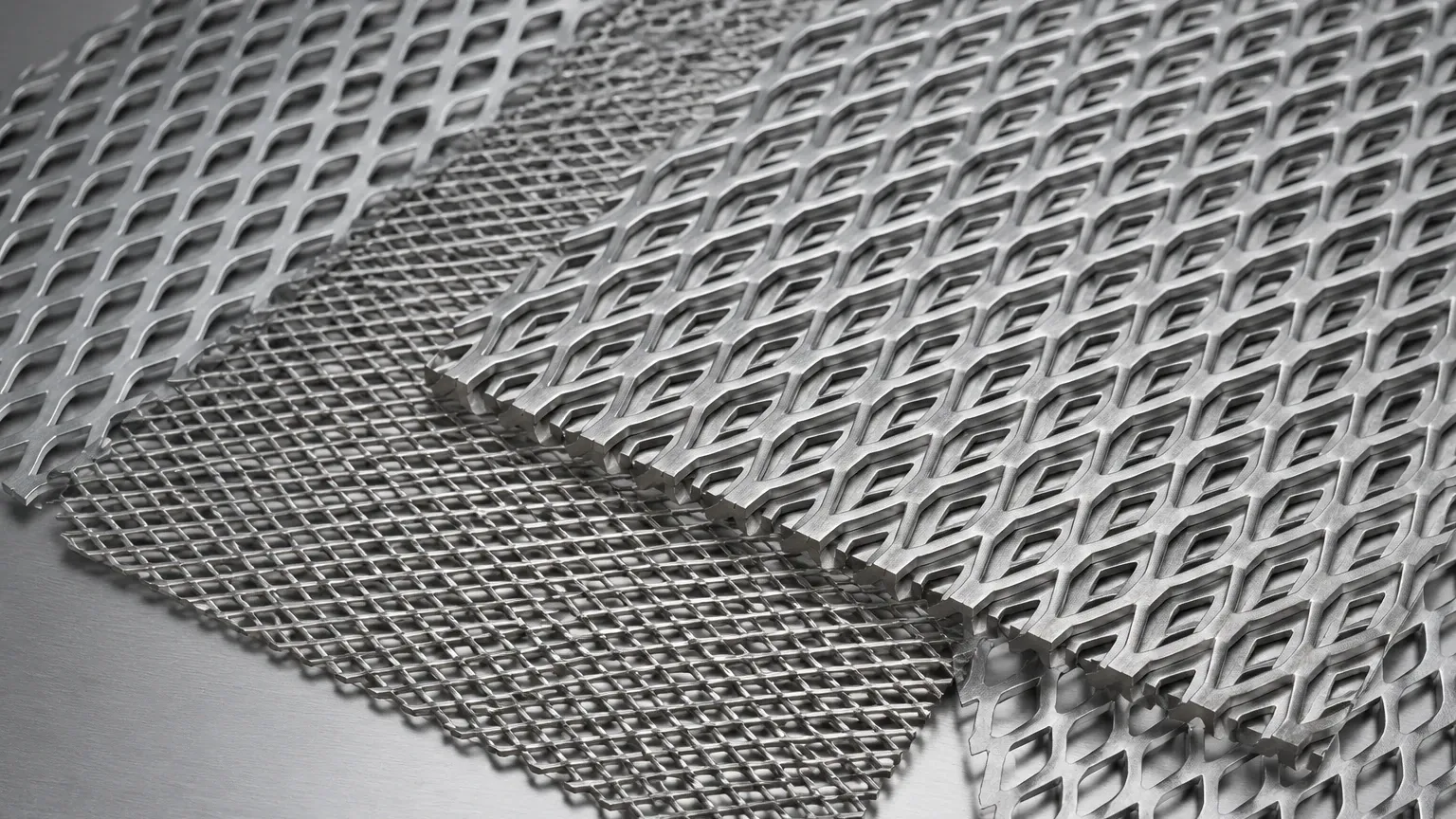
Expanded metal is produced through a unique process of simultaneous slitting and stretching. Unlike perforated metal, which involves punching holes out of a solid sheet and creating scrap material, the expansion process is a "no-waste" manufacturing method. A solid sheet of metal is fed through a machine where a set of knives slits the material while a mechanical force stretches it into a diamond-shaped or hexagonal pattern.
Standard (Raised) vs. Flattened Expanded Metal
From an engineering perspective, it is vital to distinguish between standard and flattened expanded metal, as their performance characteristics differ significantly:
1. Standard (Raised) Expanded Metal: This is the product as it comes directly from the expanding machine. The strands and bonds are set at a uniform angle to the plane of the sheet. This configuration provides maximum strength and rigidity, making it ideal for structural support in heavy-duty filtration systems or as a protective barrier in high-pressure environments.
2. Flattened Expanded Metal: To produce flattened metal, the standard expanded sheet is passed through a cold-roll reducing mill. This process flattens the strands and bonds into the same plane as the sheet surface. Flattened expanded metal is preferred in applications where a smooth surface is required to prevent damage to delicate filter membranes or where a thinner profile is necessary for compact filter cartridge designs.
Technical Specifications and Terminology
When sourcing expanded metal, technical professionals must use precise terminology to ensure the product meets application requirements. The following parameters are the industry standard for defining expanded metal geometry:
* SWD (Short Way of Design): The distance from the center of one bond to the center of the next bond measured across the short diamond diagonal.
* LWD (Long Way of Design): The distance from the center of one bond to the center of the next bond measured across the long diamond diagonal.
* SWO (Short Way of Opening): The actual width of the opening measured across the short diagonal.
* LWO (Long Way of Opening): The actual length of the opening measured across the long diagonal.
* Strand Thickness: The thickness of the original base metal.
* Strand Width: The amount of metal fed under the knives to create one strand.
For engineers evaluating "jual expanded metal" options, these dimensions dictate the open area percentage, which directly influences the pressure drop and flow rate of a filtration system.
Material Selection: Why Stainless Steel Dominates Industrial Filtration
While expanded metal can be made from various materials, stainless steel remains the gold standard for industrial B2B applications. Kaifil focuses on high-performance alloys to meet the demanding needs of chemical and pharmaceutical processing.
Stainless Steel 304/304L
This is the most common grade used for general industrial filtration. It offers excellent corrosion resistance and is cost-effective for applications involving water treatment, food processing, and mild chemical environments.
Stainless Steel 316/316L
For environments involving high salinity, chlorides, or aggressive acids, SS 316L is the preferred choice. The addition of molybdenum enhances pitting corrosion resistance, making it essential for marine applications and pharmaceutical manufacturing where strict sanitation and chemical stability are required.
Specialty Alloys
In extreme cases involving high temperatures or highly corrosive media, materials such as Monel, Inconel, or Hastelloy can be expanded. These materials ensure that the filter support remains intact even under conditions that would cause standard steels to fail.
The Role of Expanded Metal in Filtration Systems
Expanded metal is rarely used as the primary filtration medium for fine particles; rather, it serves as a critical component in the architecture of a filter cartridge or assembly. Its primary functions include:
1. Pleat Support and Spacing
In pleated filter cartridges, expanded metal is often used as an inner or outer support layer. It holds the pleats of the filter media (such as wire mesh or synthetic membranes) in place, preventing them from collapsing under high differential pressure. The open area of the expanded metal ensures that the fluid can reach the entire surface area of the filter media.
2. Structural Reinforcement
For large-scale industrial filters, expanded metal provides the necessary hoop strength to withstand the forces of fluid flow. It acts as a rigid skeleton for the filter element, ensuring that the assembly maintains its shape during backwashing or high-flow cycles.
3. Pre-Filtration and Coarse Screening
In some water treatment and HVAC applications, expanded metal serves as a pre-filter to capture large debris (leaves, stones, or large scale) before the fluid reaches the more sensitive fine-filtration stages. This protects the expensive primary filter elements and extends the overall maintenance cycle.
Comparing Perforated and Expanded Metal
When searching for "jual expanded metal," engineers often compare it with perforated metal. Choosing between the two depends on specific application needs:
* Weight vs. Strength: Expanded metal generally offers a better strength-to-weight ratio than perforated metal because the strands are interconnected and not simply a sheet with holes. This makes it ideal for weight-sensitive aerospace or portable equipment applications.
* Cost Efficiency: Since the expansion process involves no material waste, expanded metal is often more economical than perforated metal, especially when using expensive alloys like SS 316L.
* Flow Characteristics: Perforated metal provides more precise control over hole size and spacing, which can be critical for specific laminar flow requirements. However, expanded metal's angled strands can assist in breaking up fluid flow and creating turbulence, which may be beneficial in certain heat exchange or mixing applications.
Critical Factors for Purchasing Teams and Engineers
To ensure a successful procurement process when looking for "jual expanded metal" suppliers, several technical and commercial factors must be confirmed:
Filtration Accuracy and Open Area
The open area percentage is the most vital metric for filtration. A higher open area reduces pressure drop but may compromise the structural integrity of the mesh. Kaifil provides detailed technical data sheets to help engineers calculate the optimal balance for their specific flow rates.
Dimensional Tolerances
In precision filter manufacturing, even a millimeter of deviation can lead to bypass or fitment issues. It is essential to confirm that the manufacturer can maintain tight tolerances on the SWD, LWD, and overall sheet dimensions.
Edge Treatment and Safety
Expanded metal can have sharp edges (known as "random shear") where the diamonds are cut. For many filtration applications, these edges must be deburred or supplied with a solid border (bond shear) to ensure safe handling and to prevent damage to other components within the filter housing.
Compliance and Certification
In the food, beverage, and pharmaceutical sectors, material traceability is non-negotiable. Ensure that the supplier provides Mill Test Reports (MTRs) confirming the chemical composition of the stainless steel. Furthermore, compliance with FDA or EU food contact regulations may be required for specific applications.
Total Cost of Ownership (TCO) Considerations
While the initial price per square meter is a factor, the total cost of ownership is determined by the filter's service life. High-quality expanded metal from Kaifil is designed to resist deformation and corrosion, which reduces the frequency of filter replacements. In many industrial settings, the cost of downtime caused by a failed filter support far exceeds the initial investment in premium stainless steel components.
Customization is another way to reduce TCO. By ordering expanded metal cut to size or formed into specific cylindrical shapes, manufacturers can reduce their own labor costs and material waste during the final assembly of filtration products.
Conclusion: Selecting the Right Partner
Sourcing expanded metal for industrial use requires a partner who understands the engineering challenges of filtration. Whether you are designing a new hydraulic system, a chemical reactor, or a food processing line, the quality of your support media determines the efficiency and safety of your operations.
Kaifil combines advanced manufacturing capabilities with deep technical expertise to deliver Perforated & Expanded Metal that meets the most rigorous industrial standards. By focusing on precision, material integrity, and customized solutions, we help our global customers achieve optimized filtration performance and long-term reliability. When you search for "jual expanded metal," look for a manufacturer that provides the technical documentation and quality assurance necessary to support your critical infrastructure.
