


Jenis Expanded Metal
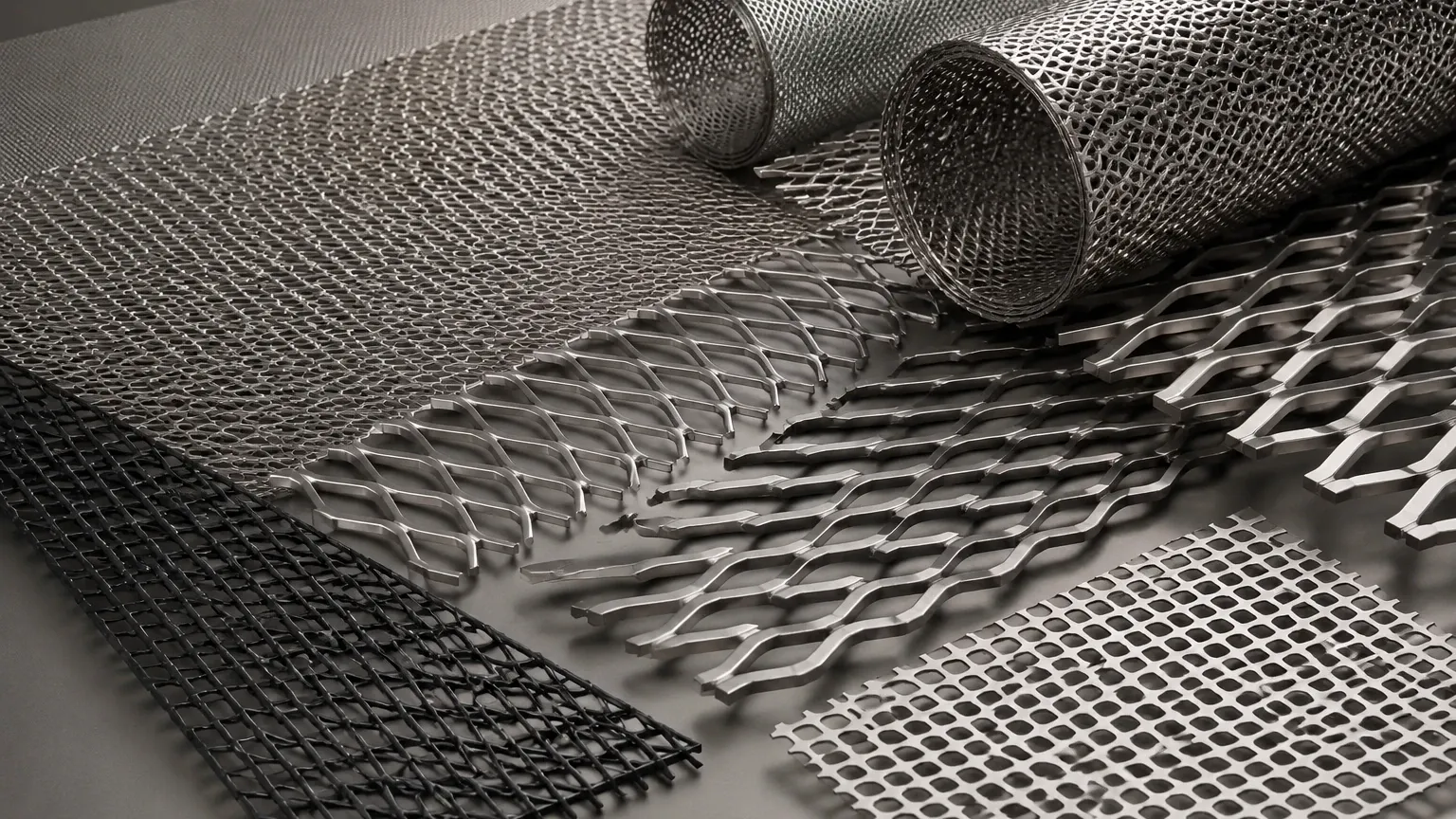
In the landscape of industrial filtration and structural engineering, selecting the correct material substrate is critical for ensuring long-term performance, structural integrity, and cost-efficiency. Expanded metal is a versatile material produced by simultaneously slitting and stretching a solid metal sheet, creating a diamond-shaped pattern without any material waste. For engineers and procurement specialists, understanding the various jenis expanded metal (types of expanded metal) is essential for matching the material's physical properties to specific application requirements, particularly in demanding environments like chemical processing, water treatment, and hydraulic systems.
Unlike perforated metal, which is created by punching holes and generating scrap, expanded metal is expanded from a single piece of material. This process results in a high strength-to-weight ratio and a unique three-dimensional structure. At Kaifil, we specialize in providing high-performance Perforated & Expanded Metal solutions tailored to the rigorous standards of industrial filtration.
The Manufacturing Process and Structural Integrity
The production of expanded metal involves a reciprocating knife that slits the metal sheet while it is simultaneously stretched. This mechanical expansion creates a series of interconnected strands and bonds. Because the material is not cut and then re-joined, but rather stretched, the electrical and thermal conductivity of the original sheet is maintained, and the structural integrity is often superior to woven wire mesh.
When evaluating the different jenis expanded metal, engineers must consider the orientation of the diamonds. The "Long Way of Diamond" (LWD) and "Short Way of Diamond" (SWD) determine the flexibility and load-bearing capacity of the sheet. In filtration applications, these dimensions are critical for determining the flow rate and the level of support provided to finer filter media, such as wire mesh or synthetic membranes.
Classification of Jenis Expanded Metal by Form
Expanded metal is generally categorized into several types based on its post-production processing and intended use. Each type offers distinct advantages in terms of surface texture, thickness, and rigidity.
Standard (Raised) Expanded Metal
Standard expanded metal is the product as it comes off the expanding machine. The strands and bonds are set at a uniform angle to the plane of the sheet. This creates a raised, slip-resistant surface with significant structural depth. In industrial settings, this type is often used for walkways, safety guards, and as a primary filtration layer where high turbulence or mechanical grip is required. The raised edges provide additional surface area, which can be beneficial in certain catalytic or heat-exchange applications.
Flattened Expanded Metal
To produce flattened expanded metal, the standard raised sheet is passed through a cold-rolling reducing mill. This process flattens the strands and bonds into a single plane, resulting in a smooth, level surface. Flattened expanded metal is slightly thinner and longer than the original raised sheet. For filtration assemblies, flattened metal is often preferred as a support layer for delicate filter media. The smooth surface prevents the media from being punctured or abraded under high-pressure differentials, ensuring the longevity of the filter cartridge.
Micro Expanded Metal
Micro expanded metal refers to sheets with very small openings, often measured in microns or millimeters. These are typically used in precision filtration, battery electrodes, and EMI/RFI shielding. In the context of industrial filtration, micro expanded metal can serve as a primary filter element for coarse particles or as a sophisticated support structure for high-efficiency membranes in pharmaceutical or food and beverage processing.
Material Selection and Corrosion Resistance
The performance of any jenis expanded metal is heavily dependent on the base alloy. Industrial environments often involve exposure to corrosive chemicals, high temperatures, or high-pressure fluids. Selecting the right material is a balance between performance and total cost of ownership.
* Stainless Steel (304 and 316L): This is the gold standard for industrial filtration. Grade 304 offers excellent corrosion resistance for general applications, while 316L provides superior resistance to chlorides and acids, making it ideal for marine and chemical processing environments. Stainless steel expanded metal is highly durable and can withstand rigorous cleaning cycles.
* Aluminum: Known for its lightweight properties and natural resistance to atmospheric corrosion. It is frequently used in HVAC filtration and aerospace applications where weight reduction is a priority.
* Carbon Steel: A cost-effective solution for non-corrosive environments or applications where the metal will be coated (e.g., galvanized or powder-coated). It is commonly used in structural supports and heavy-duty machinery guards.
* Specialty Alloys: For extreme conditions, materials like Monel, Inconel, or Titanium can be expanded to meet specific thermal or chemical requirements.
Engineering Specifications: LWD, SWD, and Open Area
When specifying expanded metal for a project, engineers must provide precise measurements to ensure the component fits and functions correctly. The following parameters are standard in the industry:
1. SWD (Short Way of Diamond): The distance from the center of one bond to the center of the next bond measured across the short diamond diagonal.
2. LWD (Long Way of Diamond): The distance from the center of one bond to the center of the next bond measured across the long diamond diagonal.
3. Strand Width: The amount of metal fed into the machine between the slits.
4. Strand Thickness: The thickness of the original base metal sheet.
5. Open Area Percentage: This is a vital calculation for filtration. It determines the pressure drop across the filter. A higher open area allows for higher flow rates but may offer less structural support. The formula generally accounts for the strand width and the SWD to determine how much of the sheet is comprised of openings.
Understanding these specifications allows for the customization of the jenis expanded metal to achieve the desired filtration accuracy and mechanical strength.
Applications in Industrial Filtration Systems
Expanded metal serves several critical roles within industrial filtration systems. Its versatility allows it to be integrated into various stages of the filtration process.
Filter Media Support
In high-pressure hydraulic or gas filtration, the primary filter media (such as fine wire mesh or fiberglass) lacks the structural strength to resist collapse. Expanded metal, particularly the flattened variety, is wrapped around the inner core or placed on the outer layer of a filter cartridge to provide a rigid skeleton. This ensures that the filter maintains its shape and performance even under fluctuating pressure loads.
Prefiltration and Coarse Screening
For water treatment and intake systems, expanded metal acts as a pre-filter. It captures large debris, such as leaves, stones, or plastic, before the fluid enters more sensitive downstream equipment. The diamond pattern is effective at trapping irregular shapes while maintaining a consistent flow.
Protective Caging
In many industrial environments, filter elements are susceptible to mechanical damage during installation or maintenance. An outer wrap of expanded metal protects the delicate internal components from impact and handling, extending the service life of the equipment.
Customization and OEM Solutions
Every industrial application has unique challenges, ranging from specific space constraints to extreme chemical exposure. Standard off-the-shelf products often fail to meet these specific needs. This is where custom manufacturing becomes essential.
Kaifil provides comprehensive OEM capabilities for expanded metal components. This includes custom sizing, specialized material sourcing, and integrated assembly services. Whether you require specific edge treatments (such as U-edging or framing) to ensure safety and ease of installation, or precise tolerances for automated assembly lines, custom engineering ensures that the jenis expanded metal you select is optimized for your specific system.
When choosing a manufacturer, engineers should confirm the following:
* Tolerance Standards: Does the manufacturer adhere to industrial standards for SWD/LWD variance and flatness?
* Surface Finish: Are options like pickling, passivation, or electropolishing available to enhance corrosion resistance?
* Testing and Certification: Can the manufacturer provide material mill reports and certificates of compliance?
Conclusion: Selecting the Right Type for Your Project
Selecting the appropriate jenis expanded metal is more than a procurement decision; it is an engineering choice that impacts the efficiency, safety, and longevity of industrial systems. By understanding the differences between raised and flattened forms, the importance of material selection, and the critical nature of diamond dimensions, technical professionals can optimize their filtration solutions.
For those seeking high-quality, precision-engineered metal components, Kaifil offers the expertise and manufacturing flexibility required to deliver reliable results. From micro-mesh for delicate laboratory filters to heavy-duty stainless steel for industrial processing, our focus remains on providing durable and cost-effective filtration performance tailored to your specific application requirements.
