


Lindner Expanded Metal Ceiling
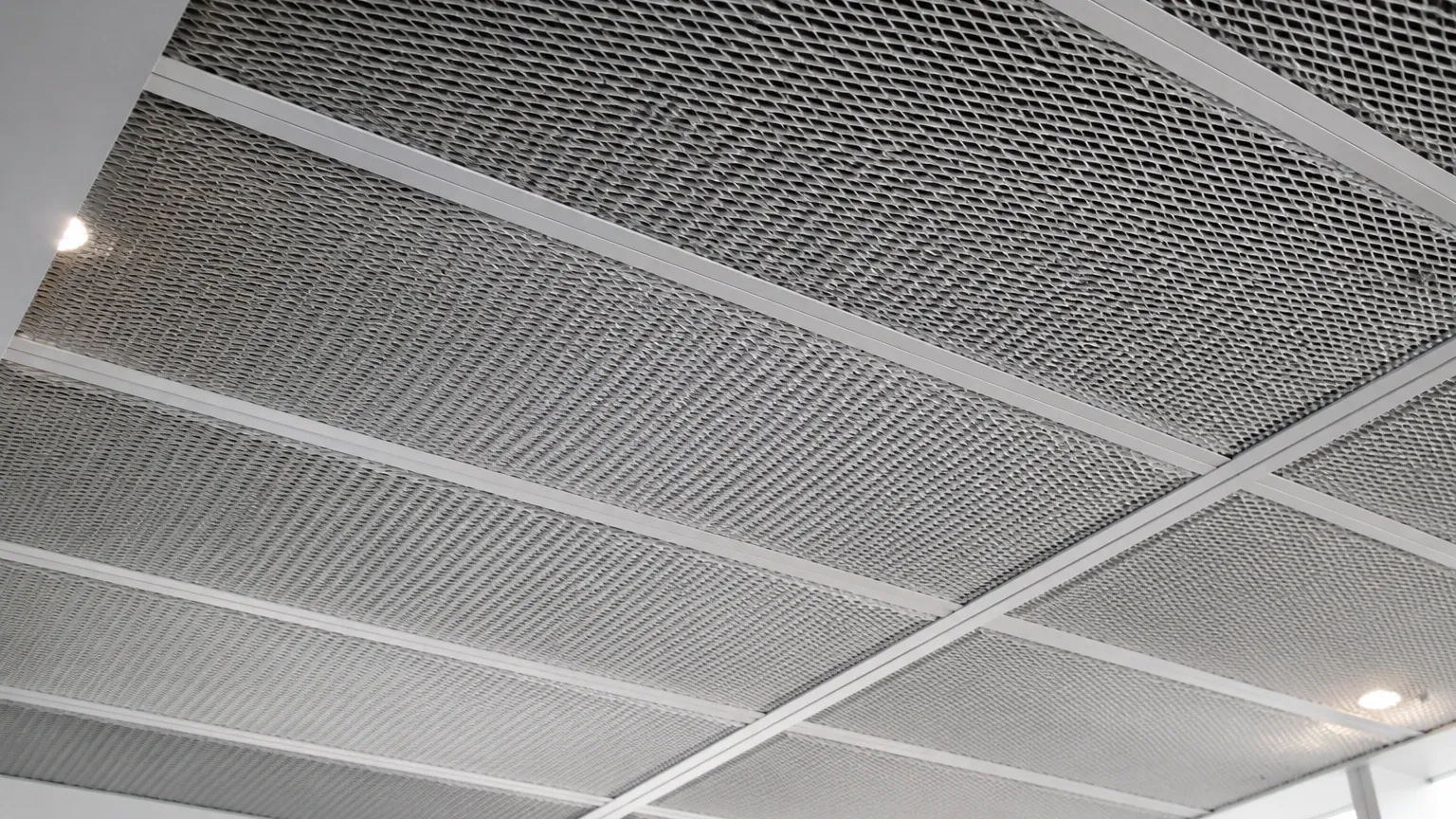
In modern industrial and architectural design, the ceiling is no longer a passive surface but a functional component that must address acoustics, ventilation, lighting, and structural integrity. The Lindner expanded metal ceiling has emerged as a benchmark for these requirements, offering a versatile solution that balances aesthetic transparency with rigorous engineering standards. For technical professionals and purchasing teams, understanding the nuances of expanded metal—from mesh geometry to material grades—is essential for ensuring long-term performance in demanding environments.
As a specialist in precision metal components, Kaifil provides high-quality Perforated & Expanded Metal solutions designed to meet the exacting tolerances required by modern ceiling systems. This guide explores the technical specifications, performance criteria, and procurement considerations for expanded metal ceiling systems.
Understanding the Architecture of Expanded Metal Ceilings
Expanded metal is manufactured by simultaneously slitting and stretching a solid metal sheet. Unlike perforated metal, which involves punching out material and creating waste, the expansion process creates a diamond-shaped pattern without any loss of material. This process results in a three-dimensional structure that provides inherent rigidity and unique visual properties.
In the context of a Lindner expanded metal ceiling, the mesh is typically integrated into a modular panel system. These panels are designed to sit within various suspension frames, such as T-grid systems, C-channel systems, or hook-on profiles. The choice of mesh pattern significantly influences the "open area" of the ceiling, which in turn dictates how the system interacts with the building’s mechanical services.
Key Geometric Definitions
To specify expanded metal accurately, engineers must use standardized terminology:
* Long Way of Diamond (LWD): The distance from the center of one joint to the center of the next joint across the long axis.
* Short Way of Diamond (SWD): The distance across the short axis.
* Strand Width: The amount of metal between the openings.
* Strand Thickness: The gauge of the original base material.
* Overall Thickness: The total depth of the panel after expansion, which is often significantly greater than the strand thickness due to the angle of the strands.
Material Selection and Engineering Specifications
The performance of an expanded metal ceiling is largely determined by the base material. While aluminum is common for lightweight commercial applications, industrial environments often require the durability and corrosion resistance of stainless steel.
Stainless Steel Grades
For facilities such as chemical processing plants, food and beverage laboratories, or pharmaceutical cleanrooms, stainless steel is the preferred substrate.
* Grade 304: Suitable for most indoor industrial applications, providing excellent strength and basic corrosion resistance.
* Grade 316: Recommended for high-humidity environments or areas exposed to corrosive cleaning agents, as the addition of molybdenum enhances resistance to pitting and crevice corrosion.
Surface Finishes
Beyond the material grade, the finish impacts both the longevity and the light reflectance of the ceiling. Options include:
* Powder Coating: Available in a wide range of RAL colors, providing an additional protective layer and allowing for specific light reflection values (LRV).
* Anodizing: Primarily for aluminum, this creates an oxide layer that is integral to the metal, offering superior scratch resistance.
* Electropolishing: For stainless steel components, this process removes surface impurities and creates a high-luster finish, which is critical in sterile environments to prevent bacterial adhesion.
Performance Evaluation: Acoustics, Airflow, and Light
One of the primary reasons engineers specify a lindner expanded metal ceiling is its ability to manage the physical environment of a room without sacrificing access to the plenum (the space above the ceiling).
Acoustic Management
Expanded metal is naturally sound-transparent. To achieve high levels of sound absorption, acoustic fleece or mineral wool pads are placed behind the metal panels. The "open area" percentage of the mesh allows sound waves to pass through the metal and be trapped by the absorbent material. For industrial workspaces with heavy machinery, this configuration can significantly reduce reverberation times.
Airflow and HVAC Integration
The open structure of Perforated & Expanded Metal facilitates natural air convection and the efficient operation of HVAC systems. Unlike solid ceiling tiles, expanded metal does not act as a barrier to smoke extraction or sprinkler systems. In many jurisdictions, ceilings with an open area exceeding 70% are classified as "open-grid," which may simplify fire suppression requirements by allowing sprinklers to be located only in the plenum.
Lighting and Visual Transparency
The three-dimensional nature of expanded metal creates a "directional" transparency. Depending on the angle of the strands and the viewer's position, the ceiling can appear either opaque or transparent. This allows designers to hide unsightly mechanical equipment in the plenum while maintaining a sense of volume and light diffusion.
Installation Systems and Structural Integrity
A ceiling system is only as reliable as its suspension mechanism. Expanded metal panels must be engineered to prevent sagging over time, especially in large-format installations.
1. Hook-on Systems: These allow for individual panels to be removed easily for maintenance. The panels are equipped with perimeter notches that "hook" onto a concealed J-profile or Z-profile.
2. Lay-in Systems: The panels rest on a visible T-grid. This is the most cost-effective method but leaves the grid exposed.
3. Swing-down Systems: Designed for frequent access, these panels remain attached to the grid on one side when opened, preventing damage to the panels during service intervals.
Engineers must calculate the point load and distributed load of the ceiling, especially if integrated lighting fixtures or signage will be supported by the mesh or the frame. Kaifil’s manufacturing process ensures that the structural integrity of the Perforated & Expanded Metal is maintained through precise expansion and flattening (if required) to meet these load-bearing demands.
Maintenance and Longevity in Industrial Environments
In B2B applications, the total cost of ownership (TCO) is a critical metric. Expanded metal ceilings offer a lower TCO compared to traditional gypsum or mineral fiber ceilings due to their durability.
* Durability: Metal panels do not warp, rot, or harbor mold. They are resistant to impact, making them suitable for high-traffic areas or industrial zones.
* Cleaning: Stainless steel and powder-coated aluminum can be cleaned with standard industrial detergents. The mesh structure allows for dust to pass through rather than accumulate on the surface, though periodic vacuuming of the plenum-side fleece may be required.
* Replacement Cycles: While the initial investment is higher than basic materials, the replacement cycle for a metal ceiling is often 20–30 years, significantly longer than non-metal alternatives.
Procurement Guide: Key Considerations for Engineers
Before finalizing a purchase order for a lindner expanded metal ceiling or custom metal components, engineering and purchasing teams should confirm the following technical details with their supplier:
1. Open Area Verification
Ensure the calculated open area meets both the HVAC requirements and local fire codes. If the open area is too low, it may impede smoke detection; if too high, it may fail to sufficiently hide the plenum equipment.
2. Panel Flatness and Tolerances
Expanded metal has internal stresses from the manufacturing process. For ceiling applications, panels must be leveled or skin-passed to ensure they remain perfectly flat within the frame. Confirm the allowable diagonal tolerance to ensure seamless alignment during installation.
3. Edge Treatment
Will the mesh be framed with a U-profile, or will the edges be folded? Folded edges provide a cleaner look for hook-on systems but require precise CNC bending to avoid cracking the strands at the expansion joints.
4. Sample Testing
Request a full-scale sample of the specific mesh pattern and finish. Visualizing the transparency and light diffusion in the actual site lighting conditions is the only way to confirm the aesthetic outcome.
5. Supplier Expertise
Work with a manufacturer that understands the mechanical properties of different alloys. Whether you require standard patterns or custom Perforated & Expanded Metal for specialized filtration or architectural needs, technical support during the design phase can prevent costly field modifications.
Conclusion
The Lindner expanded metal ceiling represents a sophisticated intersection of industrial utility and architectural design. By selecting the correct material grades, understanding mesh geometry, and ensuring robust suspension engineering, facilities can achieve a ceiling solution that is both durable and high-performing. For engineers looking to optimize their filtration or structural metal components, partnering with a precision manufacturer like Kaifil ensures that every panel meets the rigorous standards required for modern industrial infrastructure.
