


Light Gauge Expanded Metal Mesh
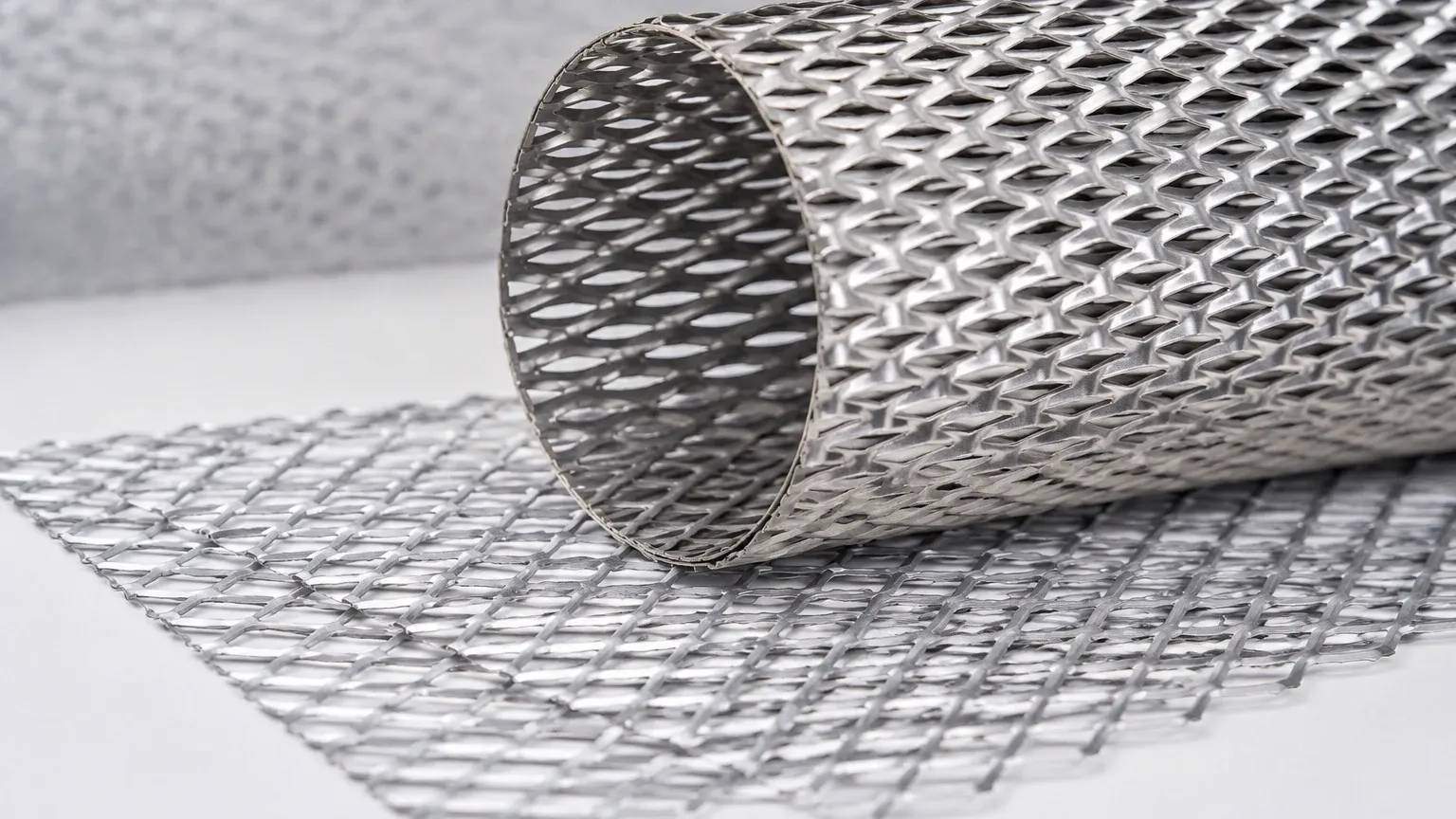
In the landscape of industrial filtration and structural support, light gauge expanded metal mesh serves as a critical component for engineers seeking a balance between lightweight design and mechanical integrity. Unlike perforated sheets, which are created by punching holes and removing material, expanded metal is manufactured through a process of simultaneous slitting and stretching. This results in a continuous, jointless structure that maintains the inherent strength of the original metal sheet while significantly increasing its surface area and providing a versatile diamond-shaped aperture.
For technical professionals in chemical processing, pharmaceutical manufacturing, and the food and beverage industry, selecting the correct Perforated & Expanded Metal solution is essential for optimizing flow rates and ensuring the longevity of filtration systems. Light gauge variants, typically characterized by thinner strand thicknesses and smaller diamond openings, are particularly valued for precision applications where weight reduction and high open-area ratios are primary design requirements.
Manufacturing and Structural Characteristics of Light Gauge Mesh
The production of light gauge expanded metal mesh begins with a solid sheet or coil of metal, most commonly stainless steel in industrial filtration contexts. A specialized machine equipped with reciprocating knives slits the metal while simultaneously stretching it. This process creates the characteristic diamond-shaped openings without any loss of material, making it a highly cost-effective and sustainable manufacturing method.
Standard vs. Flattened Expanded Metal
There are two primary forms of expanded metal used in industrial applications:
1. Standard (Raised) Expanded Metal: This is the product as it comes off the machine. The strands and bonds are set at a uniform angle to the plane of the sheet, providing a three-dimensional texture that offers excellent grip and structural rigidity. In filtration, this raised profile can help create turbulence in fluid flow, which may be desirable in certain mixing or heat exchange applications.
2. Flattened Expanded Metal: After the expansion process, the sheet is passed through a cold-rolling reducing mill. This flattens the strands and bonds into a single plane, resulting in a smooth, flat surface. Flattened light gauge expanded metal mesh is frequently used as a support layer for finer wire mesh in filter cartridges, as the smooth surface prevents damage to the delicate filter media.
Technical Terminology
When specifying light gauge expanded metal mesh, engineers must use precise terminology to ensure the product meets application requirements:
* SWD (Short Way of Design): The distance from the center of one bond to the center of the next bond measured across the short diamond diagonal.
* LWD (Long Way of Design): The distance from the center of one bond to the center of the next bond measured across the long diamond diagonal.
* Strand Width: The amount of metal fed into the machine between the slits.
* Strand Thickness: The thickness of the original base metal.
Material Selection for Demanding Environments
The performance of light gauge expanded metal mesh is heavily dependent on the material from which it is fabricated. In the B2B industrial sector, stainless steel is the gold standard due to its corrosion resistance, mechanical strength, and ability to withstand high temperatures.
Stainless Steel Grade 304
Grade 304 is the most common stainless steel used for expanded metal. It offers excellent formability and good resistance to atmospheric corrosion and many organic and inorganic chemicals. It is widely used in food processing equipment and general industrial filtration where extreme chemical resistance is not the primary concern.
Stainless Steel Grade 316 and 316L
For more aggressive environments, such as those found in chemical processing or marine applications, Grade 316 is preferred. The addition of molybdenum enhances its resistance to pitting and crevice corrosion in chloride-rich environments. Grade 316L, the low-carbon version, is often specified for components that require welding, as it minimizes the risk of intergranular corrosion in the heat-affected zone.
Specialized Alloys
In certain high-temperature or highly corrosive pharmaceutical processes, specialized alloys like Hastelloy or Monel may be used to manufacture expanded metal mesh. These materials ensure that the filtration system remains operational under conditions that would cause standard stainless steel to fail.
Engineering Advantages of Light Gauge Expanded Metal Mesh
Light gauge expanded metal mesh offers several distinct advantages over alternative materials like perforated metal or woven wire mesh in specific industrial scenarios.
High Strength-to-Weight Ratio
Because the metal is stretched rather than punched, the structural integrity of the original sheet is largely preserved. The resulting diamond trusses provide exceptional strength and rigidity while using significantly less material than a solid sheet of the same dimensions. This makes light gauge mesh an ideal choice for internal support structures in large filter housings where minimizing weight is crucial for installation and maintenance.
Optimized Open Area and Flow Rates
The expansion process allows for a wide range of open-area percentages, often exceeding 70% or 80%. For engineers, this translates to lower pressure drops across the filtration media. By using light gauge expanded metal as a support for fine wire mesh, the overall system can achieve high flow rates while maintaining the necessary structural support to prevent the filter media from collapsing under high differential pressure.
Conductivity and Heat Dissipation
As a continuous piece of metal, expanded mesh provides excellent electrical and thermal conductivity. In industrial applications involving volatile chemicals or fine powders, this conductivity is essential for grounding and preventing the buildup of static electricity. Furthermore, the open structure facilitates efficient heat dissipation in cooling or drying processes.
Key Applications in Industrial Filtration
Kaifil specializes in integrating light gauge expanded metal mesh into comprehensive filtration solutions. Its versatility allows it to serve multiple roles across various sectors.
Filter Cartridge Support and Protection
One of the most common uses for light gauge expanded metal is as the inner core or outer wrap for cylindrical filter cartridges. In this role, the mesh provides the mechanical strength required to withstand the pressure of the fluid being filtered. The light gauge ensures that the cartridge remains compact and lightweight, while the expanded structure allows for maximum fluid contact with the primary filter media.
Air and Gas Filtration
In HVAC and industrial gas processing, light gauge expanded metal is used to create pre-filters and mist eliminators. The three-dimensional nature of standard expanded metal can help capture larger particulates or droplets before they reach finer, more expensive secondary filters, thereby extending the service life of the entire system.
Centrifuge Screens and Baskets
In the food and pharmaceutical industries, expanded metal mesh is often used in centrifuges to separate solids from liquids. The precise diamond openings allow for efficient drainage while the robust structure handles the high centrifugal forces generated during operation.
Catalyst Support in Chemical Reactors
In chemical manufacturing, light gauge expanded metal serves as a support grid for catalyst beds. The mesh must be fabricated from high-performance alloys to withstand the corrosive chemicals and elevated temperatures inherent in these reactions, ensuring the catalyst remains evenly distributed and the flow remains unobstructed.
Technical Selection Criteria for Engineers
Selecting the right light gauge expanded metal mesh requires a deep understanding of the application's physical and chemical demands. Engineers should consider the following factors during the procurement process:
1. Filtration Accuracy vs. Support Requirements: If the mesh is intended to act as a primary filter, the SWD and LWD dimensions must be chosen based on the particle size to be retained. If it is a support layer, the focus should be on maximizing the open area while providing enough surface contact to prevent the primary media from stretching or tearing.
2. Pressure Drop Calculations: The strand width and thickness significantly influence the resistance to flow. Designers must calculate the expected pressure drop at the required flow rates to ensure the system pump or compressor can handle the load.
3. Mechanical Stress and Differential Pressure: In high-pressure applications, the mesh must be thick enough to resist deformation. The "light gauge" designation generally covers thicknesses from 0.5mm to 1.5mm, but the specific diamond geometry also contributes to the overall rigidity.
4. Edge Finishing and Fabrication: Depending on the installation method, the mesh may need to be supplied with "bond edges" (closed diamonds) or "random sheared edges" (open diamonds). For filter cartridges, precise shearing is necessary to ensure a proper fit within the end caps and to facilitate seam welding.
Customization and OEM Capabilities
As a professional manufacturer, Kaifil understands that standard off-the-shelf products often fail to meet the rigorous demands of specialized industrial processes. Customization is a core component of providing effective Perforated & Expanded Metal solutions.
Tailored Dimensions and Geometries
Engineers can specify non-standard SWD and LWD dimensions to achieve specific filtration characteristics or to fit unique hardware configurations. Custom strand widths can also be engineered to balance the need for open area with the requirement for structural stiffness.
Surface Treatments and Coatings
While stainless steel offers inherent corrosion resistance, additional treatments can further enhance performance. Electropolishing is frequently used in pharmaceutical and food applications to create a microscopically smooth surface that resists bacterial growth and is easier to clean. For other industrial uses, coatings like PTFE or specialized plating can provide additional chemical resistance or reduce friction.
Integration into Finished Components
Beyond providing raw mesh sheets, OEM capabilities include the fabrication of complete filtration components. This includes rolling the mesh into cylinders, welding seams, and integrating the mesh with end caps, gaskets, or other structural elements. This vertical integration ensures that the final product meets all technical specifications and quality standards.
Maintenance, Durability, and Total Cost of Ownership
When evaluating light gauge expanded metal mesh, it is important to look beyond the initial purchase price and consider the total cost of ownership. High-quality stainless steel mesh from a reliable manufacturer offers a long service life, reducing the frequency of replacements and minimizing system downtime.
Cleaning and Reusability
Unlike many synthetic or paper-based filter media, stainless steel expanded metal is highly cleanable. Depending on the contaminant, the mesh can be cleaned using backwashing, ultrasonic cleaning, or chemical soaking. This reusability is a significant factor in reducing the long-term operational costs of industrial filtration systems.
Inspection and Replacement Cycles
Regular inspection is vital to ensure the mesh has not suffered from mechanical fatigue or localized corrosion. In high-vibration environments or systems with frequent pressure pulsations, the bonds of the expanded metal should be checked for cracks. Establishing a proactive replacement cycle based on empirical performance data helps prevent catastrophic failures and ensures consistent filtration quality.
In conclusion, light gauge expanded metal mesh is a sophisticated engineering material that provides essential support and filtration capabilities across a wide range of industries. By understanding the manufacturing nuances, material properties, and selection criteria, engineers can leverage this material to create more efficient, durable, and cost-effective industrial systems. Whether used as a standalone filter or as a structural backbone for complex filter assemblies, the precision and versatility of light gauge expanded metal make it an indispensable tool in modern industrial engineering.
