


Expanded Metal Mesh Fence
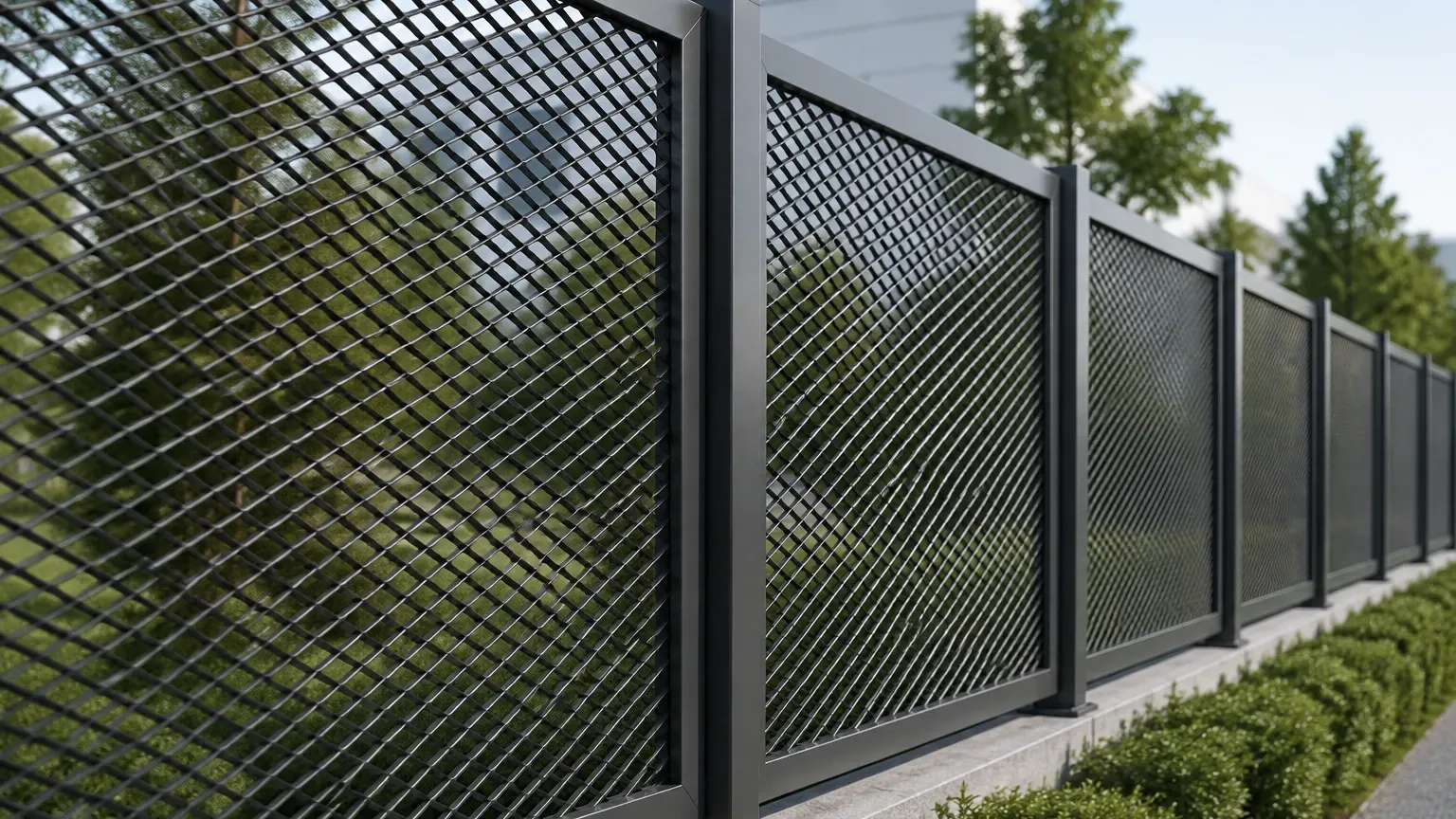
In industrial engineering and facility management, the selection of perimeter security and protective enclosures requires a balance between structural integrity, visibility, and cost-efficiency. An expanded metal mesh fence represents a specialized solution derived from the process of slitting and stretching metal sheets to create a diamond-shaped pattern. Unlike traditional woven or welded wire products, expanded metal is a single-piece construction that offers unique mechanical properties suitable for high-security and heavy-duty industrial applications.
For engineers and procurement professionals, understanding the technical nuances of Perforated & Expanded Metal is essential for specifying the correct material for long-term performance. This guide examines the engineering fundamentals, material considerations, and application-specific advantages of expanded metal fencing systems.
Understanding the Manufacturing and Structural Integrity of Expanded Metal
The manufacturing process of expanded metal distinguishes it from other mesh types. A solid sheet of metal—typically stainless steel, carbon steel, or aluminum—is fed through a machine that simultaneously slits and stretches the material. This process expands the sheet into a uniform diamond pattern without any loss of material, making it a highly resource-efficient manufacturing method.
From an engineering perspective, the most critical aspect of this construction is that it is "un-cut" at the knuckles. Because the mesh is formed from a single piece of metal, there are no welds to break or joints to unravel. This inherent structural continuity provides superior strength-to-weight ratios compared to welded wire mesh. If a single strand is cut, the remaining strands continue to hold the tension and maintain the integrity of the fence, which is a vital safety feature in high-security environments.
Material Specifications and Corrosion Resistance
Selecting the appropriate alloy is the first step in ensuring the longevity of an expanded metal mesh fence. The choice of material dictates the fence's performance in specific environmental conditions:
* Stainless Steel (Grade 304 and 316): As a specialist in stainless steel solutions, Kaifil emphasizes the use of SS304 for general industrial use and SS316 for highly corrosive environments, such as chemical processing plants or coastal installations. Stainless steel offers the highest level of durability and requires minimal maintenance over its life cycle.
* Carbon Steel: Often chosen for its high tensile strength and lower initial cost. To prevent oxidation, carbon steel expanded metal is typically hot-dip galvanized or powder-coated. Hot-dip galvanization is preferred for outdoor fencing as it provides a thick, protective zinc layer that self-heals minor scratches.
* Aluminum: Utilized where weight is a primary concern or in architectural applications where aesthetic finish and natural corrosion resistance are required without the need for heavy coatings.
Technical Parameters: SWD, LWD, and Strand Geometry
When specifying expanded metal for a fencing project, engineers must define several geometric parameters that influence both the security level and the airflow of the installation:
1. Short Way of Diamond (SWD): The distance from the center of one knuckle to the center of the next knuckle across the short axis.
2. Long Way of Diamond (LWD): The distance across the long axis of the diamond.
3. Strand Width: The amount of metal fed into the machine for each slit.
4. Strand Thickness: The original thickness of the base metal sheet.
By adjusting these variables, manufacturers can produce a range of mesh sizes. For security fencing, smaller SWD and LWD dimensions are preferred to prevent climbing and to limit the passage of objects. Conversely, larger openings may be specified for industrial partitions where airflow and visibility are prioritized.
Comparing Expanded Metal with Perforated and Welded Mesh
Engineers often weigh the benefits of expanded metal against perforated metal or welded wire mesh. Each has specific mechanical profiles:
* Expanded vs. Perforated Metal: Perforated metal is created by punching holes in a sheet, which results in material waste (the "slugs"). Expanded metal is more cost-effective because it uses the entire sheet. Furthermore, the three-dimensional "raised" profile of expanded metal provides naturally higher rigidity than a flat perforated sheet of the same gauge.
* Expanded vs. Welded Wire: Welded wire mesh relies on the strength of individual weld points. In high-vibration environments or areas subject to physical impact, these welds can fail over time. Expanded metal eliminates this point of failure entirely. Additionally, the sharp edges of the strands in an expanded metal mesh fence act as a natural deterrent against climbing, which is not present in smooth-wire welded systems.
Functional Advantages in Security and Industrial Safety
The primary driver for adopting expanded metal mesh fence systems in industrial sectors is security. The diamond pattern is inherently difficult to cut with standard bolt cutters because the tool cannot easily grip the angled strands.
Furthermore, expanded metal can be produced in two forms: Raised (Standard) and Flattened.
* Raised Expanded Metal: The strands are turned at an angle to the plane of the sheet. This creates a textured surface that is extremely difficult to climb and provides excellent deflection of impact forces.
* Flattened Expanded Metal: The raised mesh is passed through a cold-rolling mill, resulting in a smooth, flat surface. This is often used for internal partitions or machine guards where personnel might come into frequent contact with the mesh, reducing the risk of abrasions.
Integration with Industrial Filtration and Equipment Protection
While expanded metal is a staple for perimeter fencing, its role extends into the protection of sensitive industrial equipment. In many filtration applications, expanded metal serves as an outer protective cage or an inner support core for finer wire mesh filters.
In these contexts, the expanded metal mesh fence acts as a primary barrier against large debris, protecting the delicate precision filter media from mechanical damage. Its high open-area percentage ensures that fluid or air flow is not significantly restricted, which is critical for maintaining system pressure and efficiency in chemical, hydraulic, and water treatment processes.
Critical Selection Parameters for Engineering Projects
Before finalizing a procurement order for expanded metal fencing, technical teams should confirm the following criteria to ensure the product meets the application's demands:
* Open Area Percentage: This is vital for applications requiring ventilation or light passage. It is calculated based on the strand width and the diamond dimensions.
* Load-Bearing Requirements: If the mesh is to be used in a horizontal application (such as a walkway or a platform integrated into the fence line), the load-bearing capacity must be calculated based on the LWD orientation.
* Edge Finishing: Expanded metal has "open" diamonds at the edges when cut. For safety and structural attachment, these edges are typically framed in U-edging or welded into structural angle iron frames.
* Tolerances: Standard industrial tolerances for expanded metal include variations in sheet size and diamond uniformity. For precision OEM applications, tighter tolerances must be specified during the design phase.
Installation Considerations and Maintenance Protocols
Proper installation is key to maintaining the tension and security of an expanded metal mesh fence. Panels should be securely fastened to posts using specialized clamps or by direct welding to a steel framework. Because expanded metal is more rigid than chain-link fencing, it requires precise alignment of the support posts.
Maintenance requirements are generally low, especially when using stainless steel or galvanized finishes. Periodic inspections should focus on the attachment points and the integrity of the protective coatings. In environments with high salt spray or chemical exposure, regular rinsing can prevent the accumulation of corrosive particulates on the knuckles of the mesh.
Conclusion
An expanded metal mesh fence provides a robust, cost-effective, and highly secure alternative to traditional fencing materials. Its unique manufacturing process results in a continuous, weld-free structure that excels in demanding industrial environments. Whether utilized for perimeter security, machine guarding, or as a support component in complex filtration systems, the technical versatility of expanded metal makes it a preferred choice for modern engineering projects.
By carefully selecting the material grade, diamond geometry, and surface finish, purchasing teams can ensure their filtration and protection systems achieve optimal performance and durability. For those seeking specialized configurations or OEM support, exploring professional Perforated & Expanded Metal options is the most effective way to align product specifications with specific industrial requirements.
