


Micro Expanded Metal
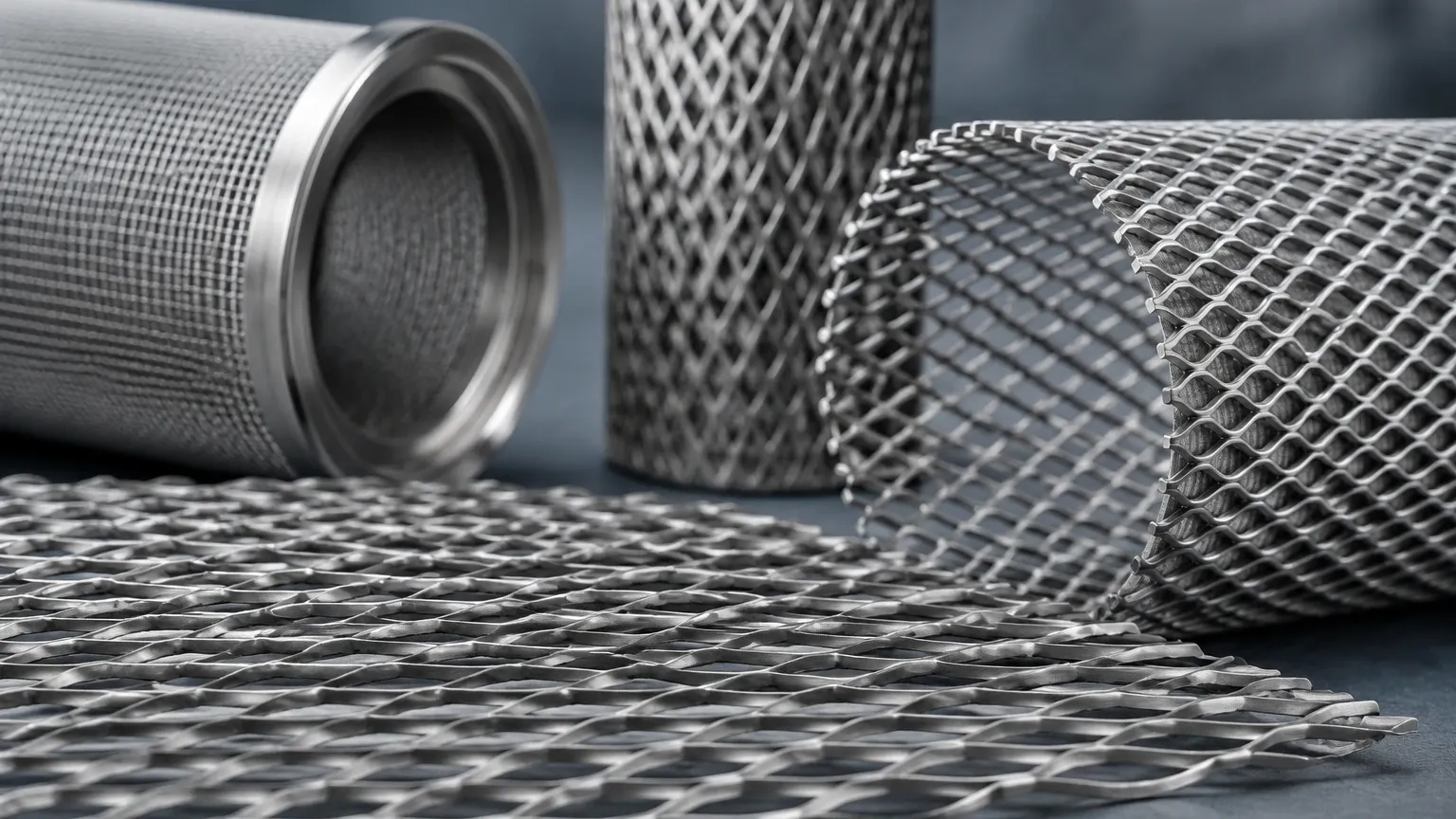
In industrial engineering and advanced manufacturing, micro expanded metal represents a specialized category of precision components used for filtration, shielding, and structural reinforcement. Unlike standard expanded metal, which is typically utilized in heavy construction or architectural grating, micro expanded metal is defined by its extremely small aperture sizes and thin foil or sheet gauges. This material is produced by simultaneously slitting and stretching a solid metal sheet, creating a uniform mesh with diamond-shaped openings without any loss of material.
For engineers and procurement specialists, understanding the technical nuances of Perforated & Expanded Metal is essential for optimizing system performance in demanding environments such as chemical processing, aerospace, and high-precision filtration. This guide examines the mechanical properties, material considerations, and application-specific selection criteria for micro expanded metal.
Geometric Parameters and Technical Specifications
The performance of micro expanded metal is dictated by its geometric configuration. Unlike woven wire mesh, which relies on the intersection of individual wires, expanded metal is a single-piece structure. This eliminates the risk of fraying and ensures consistent electrical and thermal conductivity across the entire sheet.
Key technical specifications include:
* Long Way of Diamond (LWD): The distance from the center of one joint to the center of the next joint across the long axis of the diamond.
* Short Way of Diamond (SWD): The distance across the short axis of the diamond opening.
* Strand Width: The amount of metal between the openings, determined by the depth of the slit during the expansion process.
* Strand Thickness: The original thickness of the base metal sheet or foil.
* Open Area Percentage: A critical calculation for filtration and airflow applications, determined by the ratio of the aperture area to the total sheet area.
Micro expanded metal is typically available in two forms: raised (standard) and flattened. Raised expanded metal features strands that are angled relative to the plane of the sheet, providing a three-dimensional surface that enhances mechanical grip and turbulence in fluid flow. Flattened expanded metal is processed through a cold-rolling mill after expansion, resulting in a smooth, two-dimensional surface ideal for applications requiring precise thickness control or thin-film laminations.
Material Selection for Industrial Environments
The choice of alloy is the primary factor in determining the corrosion resistance, thermal stability, and mechanical strength of the mesh. In industrial filtration and chemical processing, stainless steel is the most common substrate due to its durability and resistance to oxidation.
Stainless Steel Grades (304 and 316L)
Grade 304 is the standard choice for general industrial applications where cost-efficiency and moderate corrosion resistance are required. However, in environments involving chlorides or high-acidity fluids—common in pharmaceutical and marine applications—Grade 316L is preferred. The addition of molybdenum in 316L provides superior resistance to pitting and crevice corrosion.
Specialty Alloys
For extreme environments, micro expanded metal can be manufactured from specialty materials:
* Titanium: Used in electrochemical cells and aerospace components due to its high strength-to-weight ratio and exceptional resistance to seawater and chlorine.
* Nickel and Monel: Often selected for hydrogen production (electrolyzers) and caustic chemical processing.
* Copper and Brass: Primarily utilized for EMI/RFI shielding and heat exchange applications due to high electrical and thermal conductivity.
Manufacturing Precision and Quality Control
Producing micro expanded metal requires high-precision machinery capable of handling thin foils, often ranging from 0.05mm to 0.5mm in thickness. The expansion process must be tightly controlled to ensure uniformity in diamond size and strand width. Inconsistent expansion can lead to "dead spots" in filtration or uneven electrical resistance in shielding applications.
Quality control protocols in a B2B manufacturing context typically involve:
1. Dimensional Verification: Using optical measurement systems to confirm LWD and SWD tolerances.
2. Surface Integrity Inspection: Ensuring the absence of burrs, cracks, or oil residues, which is particularly critical for medical and food-grade applications.
3. Flatness Testing: For flattened mesh, ensuring the material meets micron-level thickness specifications for integration into multi-layer filter elements.
Micro Expanded Metal in Filtration Systems
In the field of industrial filtration, micro expanded metal serves two primary roles: as a standalone filter medium and as a support structure for finer mesh layers.
Standalone Filtration
When used as a primary filter, micro expanded metal is effective for removing coarse particulates from high-velocity gas or liquid streams. Because it is a rigid, single-piece structure, it can withstand higher pressure differentials than woven mesh without deforming. This makes it an ideal choice for hydraulic suction filters and intake screens in heavy machinery.
Support and Pleating
In multi-stage filtration cartridges, micro expanded metal is frequently used as an inner or outer support core. It provides the mechanical rigidity necessary to protect delicate pleated wire mesh or fiberglass media from collapsing under pressure. The diamond geometry of the expanded metal helps distribute fluid flow evenly across the surface of the primary filter media, reducing localized clogging and extending the service life of the component.
Comparative Analysis: Expanded Metal vs. Perforated Metal
Engineers often choose between micro expanded metal and micro-perforated metal. While both serve similar functions, their manufacturing processes and mechanical behaviors differ significantly.
* Material Efficiency: Expanded metal is produced without waste, as the metal is stretched rather than punched. Perforated metal involves punching holes, which generates scrap material (slugs), often increasing the cost of high-value alloys like titanium or tantalum.
* Structural Strength: Because the strands of expanded metal are interconnected and not simply a sheet with holes, the material often exhibits a higher strength-to-weight ratio. The angled strands in the raised version provide inherent structural stiffness.
* Flow Characteristics: Perforated metal offers straight-through flow paths, whereas expanded metal (especially the raised variety) creates a more complex, tortuous path. This can be advantageous in applications requiring fluid mixing or heat dissipation.
Specialized Industrial Applications
Beyond traditional filtration, micro expanded metal is a critical component in several high-growth industrial sectors:
Energy Storage and Fuel Cells
In battery manufacturing, micro expanded metal foils (often nickel or copper) serve as current collectors. The open structure allows for the effective adhesion of electrode pastes while facilitating the flow of ions. Similarly, in hydrogen fuel cells, it is used in the gas diffusion layer to manage the distribution of reactant gases.
EMI/RFI Shielding
Electronic enclosures in aerospace and telecommunications require protection from electromagnetic interference (EMI). Micro expanded metal provides a lightweight, conductive barrier that can be integrated into composite structures or gaskets. Its ability to provide shielding while allowing for ventilation and visibility makes it superior to solid metal foils in many electronic designs.
Lightning Strike Protection
In the aerospace industry, micro expanded copper or aluminum mesh is embedded into the outer carbon fiber layers of aircraft wings and fuselages. This mesh acts as a conductive path to dissipate the massive electrical energy from a lightning strike, preventing structural damage to the composite material.
Selection Criteria for Engineering and Procurement
When specifying micro expanded metal for a project, engineers should confirm the following data points to ensure application compatibility:
1. Required Filtration Rating: Determine the minimum particle size that must be retained. If the required rating is below 50 microns, the expanded metal will likely serve as a support for a secondary medium.
2. Pressure Drop Constraints: Calculate the allowable pressure drop across the mesh. Higher open areas reduce resistance but may compromise structural strength.
3. Chemical Compatibility: Verify the pH levels and temperature of the process fluid to select the appropriate stainless steel grade or alloy.
4. Mechanical Loading: Assess whether the material will be subject to vibration, high-pressure pulses, or mechanical abrasion. This will dictate the required strand thickness and whether a raised or flattened finish is appropriate.
5. Forming and Fabrication: Consider if the mesh needs to be welded, rolled into cylinders, or pleated. Stainless steel micro expanded metal is highly weldable using TIG or resistance welding techniques, provided the strand width is sufficient to maintain structural integrity at the weld point.
Total Cost of Ownership and Maintenance
While the initial cost of micro expanded metal is influenced by material choice and precision requirements, its total cost of ownership is often lower than alternative media. Its single-piece construction makes it highly durable and resistant to the mechanical fatigue that can cause woven wires to break and migrate into the process stream.
In filtration applications, micro expanded metal components are often cleanable and reusable. Methods such as ultrasonic cleaning or backpulsing are effective at removing trapped contaminants from the diamond apertures, significantly extending the replacement cycle compared to disposable polymer-based filters. For purchasing teams, investing in high-quality stainless steel expanded metal reduces downtime and long-term maintenance expenses in critical industrial processes.
