


Mesh Expanded Metal
In the landscape of industrial filtration and structural engineering, mesh expanded metal stands as a versatile and high-performance material. Unlike woven wire mesh or perforated plates, expanded metal is produced through a unique process of simultaneous slitting and stretching. This manufacturing method creates a rigid, one-piece structure characterized by diamond-shaped openings that offer exceptional strength-to-weight ratios. For engineers and procurement specialists, understanding the nuances of mesh expanded metal is essential for optimizing filtration efficiency, ensuring structural integrity, and managing long-term operational costs.
At Kaifil, we specialize in providing precision-engineered Perforated & Expanded Metal solutions tailored to the rigorous demands of chemical processing, water treatment, and hydraulic systems. This guide explores the technical parameters, material considerations, and application-specific benefits of mesh expanded metal in industrial environments.
Understanding the Manufacturing and Structural Properties of Mesh Expanded Metal
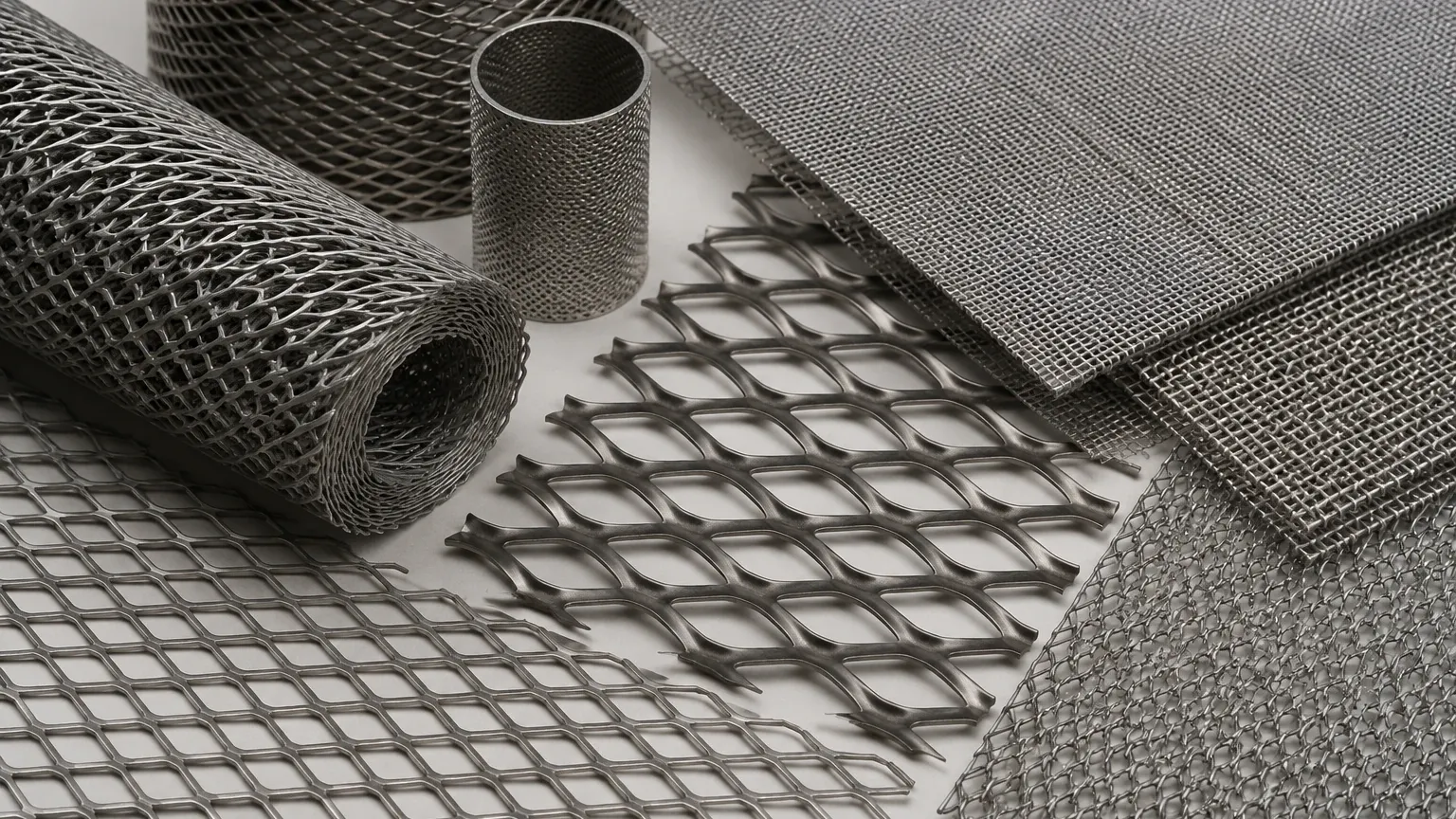
The production of mesh expanded metal is a cold-forming process that distinguishes it from other metal fabrics. A solid sheet or coil of metal is fed through a machine equipped with a reciprocating knife. As the knife slits the metal, it simultaneously stretches the material outward. This creates a series of uniform, diamond-shaped apertures without the loss of any material.
Because the metal is expanded rather than punched (as in perforated metal), there is zero scrap waste during the primary forming stage. This makes expanded metal an inherently cost-effective choice for large-scale industrial projects. Furthermore, the resulting mesh is a single, continuous piece of material. There are no welds to break, no joints to fail, and no individual wires to unravel. This monolithic structure ensures that if the mesh is cut at any point, the remaining strands continue to hold their shape and provide structural support.
From a filtration perspective, the "raised" or "standard" form of expanded metal features strands that are set at an angle to the plane of the sheet. This three-dimensional geometry can be advantageous for creating turbulence in fluid streams or providing a mechanical grip for filter media layers.
Technical Specifications: SWD, LWD, and Strand Geometry
To accurately specify mesh expanded metal for an industrial application, engineers must use standardized terminology. The dimensions of the diamond openings and the thickness of the material determine the mesh's performance characteristics.
1. SWD (Short Way of Design): This refers to the distance from the center of one bond to the center of the next bond, measured across the short axis of the diamond.
2. LWD (Long Way of Design): This is the distance measured across the long axis of the diamond, from the center of one bond to the next.
3. SWO (Short Way of Opening): The actual width of the opening, excluding the strand width.
4. LWO (Long Way of Opening): The actual length of the opening, excluding the strand width.
5. Strand Thickness: The thickness of the original base metal.
6. Strand Width: The amount of metal fed into the machine between slits, which becomes the width of the individual strands in the finished mesh.
By adjusting these variables, manufacturers can produce a wide range of mesh sizes, from micro-mesh with openings smaller than a millimeter to heavy-duty industrial gratings. In filtration, the ratio between the strand width and the opening size directly impacts the open area percentage, which in turn dictates the flow rate and pressure drop across the filter element.
Standard vs. Flattened Expanded Metal: Choosing the Right Profile
When selecting mesh expanded metal, one of the most critical decisions is whether to use the material in its "Standard" (Raised) or "Flattened" state.
Standard (Raised) Expanded Metal
Standard expanded metal comes off the machine with the strands and bonds set at a uniform angle. This creates a textured, 3D surface. In filtration, standard expanded metal is often used as a pre-filter or a protective outer cage. The angled strands can help deflect larger debris and provide a high degree of rigidity. However, the raised profile increases the overall thickness of the sheet, which must be accounted for in housing designs.
Flattened Expanded Metal
Flattened expanded metal is produced by passing standard expanded metal through a cold-rolling reducing mill. This process flattens the strands and bonds into a single plane, resulting in a smooth, flat surface. Flattened mesh is slightly thinner and the openings are slightly larger than the original standard mesh. This profile is often preferred when the mesh serves as a support layer for fine wire cloth or synthetic membranes. The smooth surface prevents the delicate filter media from being abraded or punctured by the angled strands of a raised mesh.
Material Science: Enhancing Durability with Stainless Steel Alloys
While expanded metal can be produced from carbon steel, aluminum, or copper, industrial filtration applications almost exclusively demand stainless steel. The choice of alloy is dictated by the chemical composition of the filtrate, the operating temperature, and the presence of corrosive agents.
* Grade 304/304L: The most common choice for general industrial use. It offers excellent corrosion resistance and is suitable for most water treatment and food-grade applications. The "L" (low carbon) variant is preferred if the mesh requires welding into a filter housing, as it prevents carbide precipitation.
* Grade 316/316L: Contains molybdenum, which significantly enhances resistance to chlorides and pitting. This is the standard for marine environments, chemical processing plants, and pharmaceutical filtration where aggressive cleaning agents are used.
* Specialty Alloys: For extreme environments, mesh expanded metal can be manufactured from Duplex stainless steels, Monel, or Inconel. These materials provide superior performance in high-temperature or highly acidic conditions where standard stainless steels would fail.
Selecting the correct material ensures that the filter component maintains its structural integrity over thousands of cycles, reducing the frequency of replacements and the total cost of ownership.
Industrial Filtration Applications: Support, Protection, and Pre-filtering
Mesh expanded metal serves several critical functions within an industrial filtration system. Its versatility allows it to be integrated into various stages of the process.
1. Support Structures for Fine Media
Fine wire mesh and non-woven filter media lack the structural rigidity to withstand high differential pressures. Expanded metal acts as a robust "skeleton," supporting the finer layers and preventing them from collapsing or deforming under flow. This is particularly common in hydraulic filters and high-pressure gas filtration.
2. Protective Outer Cages
In cartridge filters, expanded metal is often used as an outer wrap. It protects the internal pleated or wrapped media from mechanical damage during handling, installation, and backwashing. The high open area ensures that the protective cage does not interfere with the flow of the fluid.
3. Coarse Pre-Filtration and Strainers
For applications involving heavy solids loading, such as intake water filtration or large-scale chemical vats, mesh expanded metal serves as an effective primary strainer. It captures large particulates, protecting downstream fine filters and pumps from premature clogging or damage.
4. Flame Arrestors and Heat Exchangers
The high surface area of expanded metal makes it an excellent medium for heat dissipation and flame quenching. In specialized industrial vents, layers of stainless steel expanded mesh are used to prevent the passage of flames while allowing gas to flow freely.
Engineering Considerations: Open Area, Flow Dynamics, and Structural Integrity
When integrating mesh expanded metal into a system, engineers must perform several calculations to ensure performance meets the application’s requirements.
Calculating Open Area
The percentage of open area is a primary factor in determining the pressure drop (ΔP). Unlike perforated metal, where the open area is a simple ratio of hole area to total area, expanded metal's open area is influenced by the strand width and the angle of expansion. A higher open area reduces resistance to flow but may decrease the structural strength of the mesh. Finding the optimal balance is key to efficient filtration.
Directional Flow and Turbulence
The angled strands of raised expanded metal can induce localized turbulence. While this might increase pressure drop slightly, it can also improve filtration efficiency by preventing the formation of a stagnant boundary layer on the filter surface. In some gas-liquid separation processes, this turbulence aids in the coalescing of droplets.
Strength and Rigidity
One of the greatest advantages of expanded metal is its directional strength. The mesh is significantly stiffer along the LWD (Long Way of Design) than the SWD. Engineers should orient the mesh so that the LWD spans the direction of the greatest mechanical stress to maximize the lifespan of the component.
Selection Criteria for Custom Filtration Solutions
When partnering with a manufacturer like Kaifil for custom mesh expanded metal components, providing detailed specifications ensures the final product meets all operational goals. Before placing an order, engineering teams should confirm the following:
* Dimensional Tolerances: What are the allowable variances in sheet size and opening dimensions? For high-precision filter housings, tight tolerances are required to ensure a proper seal.
* Edge Conditions: Should the mesh have "random sheared" edges (where diamonds are cut through) or "bond sheared" edges (where the cut follows the solid bond)? Bond shearing provides a safer, smoother edge for handling.
* Surface Finish: Does the application require passivated stainless steel to maximize corrosion resistance? In food and pharmaceutical industries, an electropolished finish may be necessary to ensure the mesh is easy to clean and free of microscopic burrs.
* Forming Requirements: Will the mesh be rolled into a cylinder or pleated? The ductility of the chosen material and the orientation of the diamonds will affect how the material behaves during secondary fabrication.
By addressing these technical details during the design phase, B2B buyers can ensure they receive a filtration component that offers the perfect balance of durability, efficiency, and cost-effectiveness. Mesh expanded metal remains a cornerstone of industrial filtration, providing a level of structural reliability that few other materials can match.
