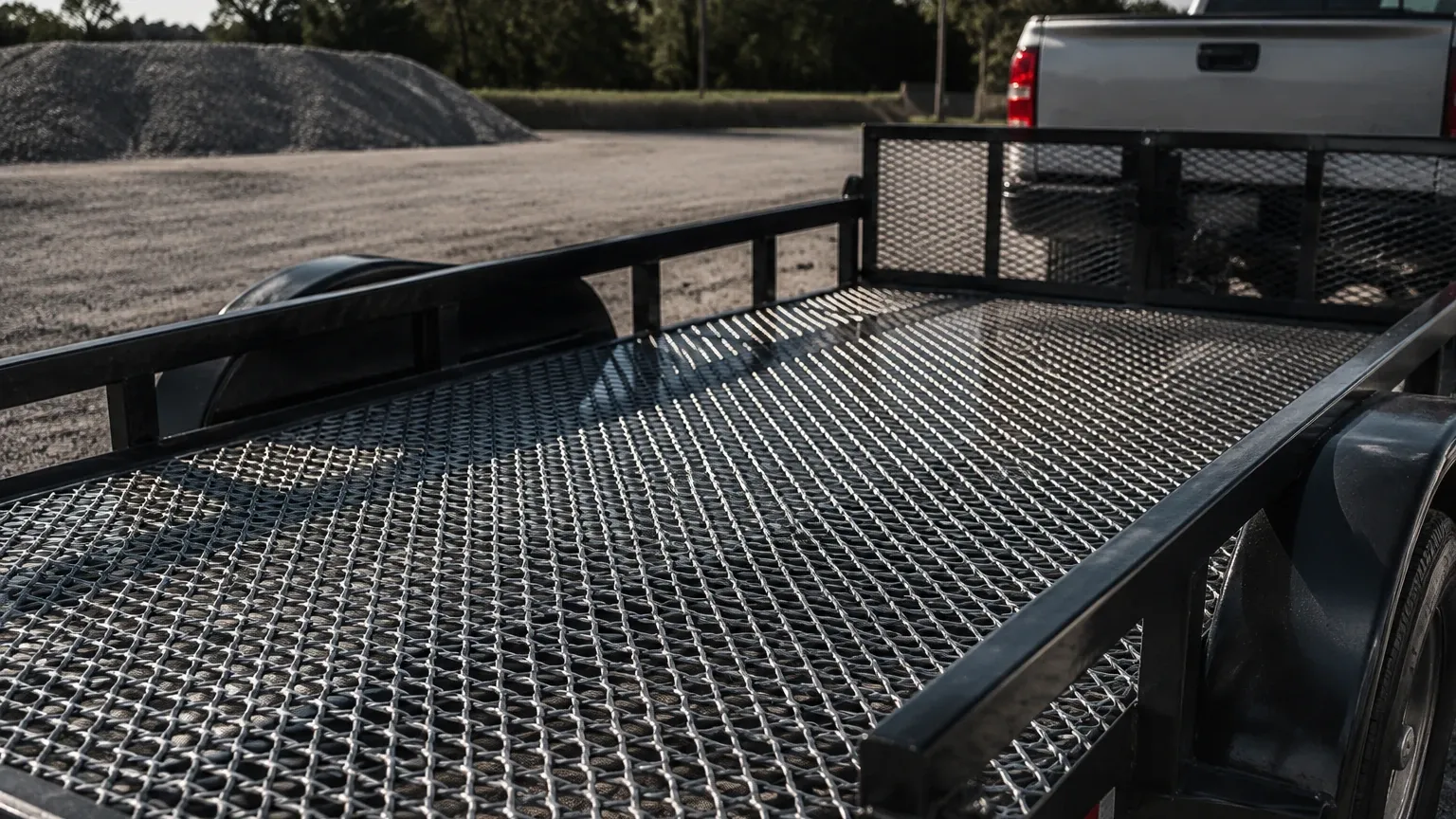

Expanded Metal on Trailer
In industrial logistics and heavy-duty transport, the structural integrity and functional efficiency of equipment are paramount. One of the most versatile materials utilized in the construction and modification of transport equipment is expanded metal. Specifically, the application of expanded metal on trailer components—such as flooring, ramps, and side walls—offers a unique combination of strength, weight reduction, and safety features that traditional solid plating cannot match. For engineers and procurement professionals, understanding the technical nuances of this material is essential for optimizing performance and ensuring long-term durability.
The Engineering Principles of Expanded Metal
Expanded metal is produced by simultaneously slitting and stretching a solid sheet of metal, typically stainless steel, carbon steel, or aluminum. This process creates a diamond-shaped pattern of openings, where the "strands" (the sides of the diamond) and "bonds" (where the strands intersect) form a continuous, one-piece structure. Unlike woven wire or welded mesh, there are no joints to unravel or welds to break under stress.
When considering Perforated & Expanded Metal for industrial trailers, the manufacturing process provides several inherent advantages:
1. Strength-to-Weight Ratio: Because the metal is stretched rather than punched (as in perforated metal), there is no material waste. The resulting mesh is lighter than the original sheet per square foot but retains significant structural rigidity.
2. Traction and Safety: The raised edges of the strands provide natural slip resistance, which is critical for trailer ramps and walkways, especially in wet, oily, or icy conditions.
3. Self-Cleaning Properties: The open area allows debris, mud, snow, and liquids to pass through, preventing buildup that could increase weight or create hazards.
4. Air and Light Permeability: This is particularly useful for trailer sides where ventilation is required for certain types of cargo.
Technical Specifications: Raised vs. Flattened Mesh
When specifying expanded metal on trailer designs, engineers must choose between two primary forms: raised (standard) and flattened.
Raised Expanded Metal
Raised expanded metal is the product as it comes off the expanding machine. The strands and bonds are set at a uniform angle to the plane of the sheet. This creates a textured surface that maximizes grip and structural stiffness. For trailer ramps and heavy-duty equipment haulers, raised mesh is often the preferred choice because it provides the highest level of multi-directional traction.
Flattened Expanded Metal
Flattened expanded metal is produced by passing the raised mesh through a cold-rolling reducing mill. This flattens the strands and bonds into the same plane, resulting in a smooth, level surface. While flattening slightly reduces the overall rigidity of the sheet compared to the raised version, it is ideal for trailer flooring where a flat surface is needed to slide cargo or for applications where a lower profile is required to prevent damage to delicate tires or equipment.
Material Selection for Harsh Environments
The choice of material is perhaps the most critical factor in determining the replacement cycle and total cost of ownership for a trailer. While carbon steel is common due to its lower initial cost, it requires galvanization or painting to resist corrosion. In many industrial and chemical processing environments, stainless steel is the superior choice.
Stainless steel expanded metal offers exceptional resistance to atmospheric corrosion, road salts, and chemical spills. For trailers used in the food and beverage or pharmaceutical industries, where hygiene and wash-down procedures are frequent, stainless steel ensures that the filtration and support components do not degrade or contaminate the environment. Kaifil specializes in high-grade stainless steel solutions that withstand these demanding conditions, providing a longer service life than standard galvanized alternatives.
Load-Bearing Capacity and Diamond Orientation
One of the most frequent technical errors in the application of expanded metal on trailer decks is the incorrect orientation of the mesh. Expanded metal has different load-bearing characteristics depending on how it is installed relative to the support framing.
* LWD (Long Way of Design): This is the distance from the center of one bond to the center of the next bond across the long axis of the diamond.
* SWD (Short Way of Design): This is the distance across the short axis of the diamond.
For maximum load-bearing capacity, the LWD should run perpendicular to the support members (cross-members). If the LWD runs parallel to the supports, the mesh is much more likely to sag or "belly" under the weight of a vehicle or heavy pallet. Engineers must also calculate the required "Strand Thickness" and "Strand Width" to ensure the mesh can handle the concentrated point loads of equipment tires or jacks.
Installation Best Practices for Industrial Trailers
To ensure the longevity of expanded metal on trailer components, proper fabrication and installation techniques must be followed. Because expanded metal is a precision-engineered product, the way it is secured to the trailer frame impacts its performance.
Welding and Fastening
Welding is the most common method for securing expanded metal. It is recommended to weld at every other bond along the perimeter and at regular intervals across the internal support beams. For stainless steel mesh, using compatible stainless steel welding wire is essential to prevent galvanic corrosion at the weld points. If mechanical fasteners are used, large-diameter washers should be employed to distribute the clamping force across multiple strands.
Framing and Edging
Raw edges of expanded metal can be sharp and prone to catching debris. Utilizing U-edging or angle iron to cap the edges not only improves safety but also adds significant structural reinforcement to the panel. This is particularly important for trailer tailgates and fold-down ramps that experience frequent impact and vibration.
Evaluating Performance and Replacement Cycles
In a B2B context, the total cost of ownership is a more relevant metric than the initial purchase price. When evaluating expanded metal for a fleet of trailers, consider the following performance indicators:
* Deflection Rates: How much does the metal flex under its rated load? Excessive deflection leads to metal fatigue and eventual cracking at the bonds.
* Corrosion Rates: In coastal or high-salt environments, how quickly does the protective coating or base metal degrade? Stainless steel often pays for itself by eliminating the need for frequent sandblasting and repainting.
* Maintenance Requirements: Does the mesh design allow for easy cleaning, or does it trap debris that accelerates wear?
Typically, a high-quality stainless steel expanded metal floor can last the entire lifespan of the trailer frame, whereas carbon steel mesh may require replacement every 3 to 5 years depending on exposure levels.
Customization and Procurement Considerations
For OEM trailer manufacturers and industrial maintenance teams, off-the-shelf solutions may not always meet specific engineering requirements. Customization options for Perforated & Expanded Metal allow for the optimization of open area percentages, diamond sizes, and sheet dimensions to fit unique trailer configurations.
When consulting with a manufacturer like Kaifil, engineers should be prepared to confirm the following data points:
1. Material Grade: (e.g., 304 or 316 Stainless Steel, Aluminum 5052).
2. Mesh Style: (e.g., 1/2" #13, 3/4" #9—where the first number is the diamond size and the second is the approximate gauge).
3. Raised vs. Flattened: Based on the need for traction vs. a smooth surface.
4. Sheet Dimensions and Orientation: Specifying the LWD and SWD relative to the sheet edges to ensure correct installation.
5. Load Requirements: The maximum anticipated weight and the spacing of the underlying support structure.
Conclusion
Expanded metal on trailer applications represents a critical intersection of material science and mechanical design. By selecting the appropriate mesh style, material, and orientation, industrial operators can significantly enhance the safety and durability of their transport equipment. Whether the goal is to provide a high-traction surface for loading heavy machinery or to create a durable, low-maintenance floor for a chemical transport trailer, expanded metal remains a foundational component in modern industrial trailer engineering. For those seeking precision-manufactured solutions, focusing on high-performance materials and expert fabrication guidance is the key to achieving optimal filtration and structural results.