


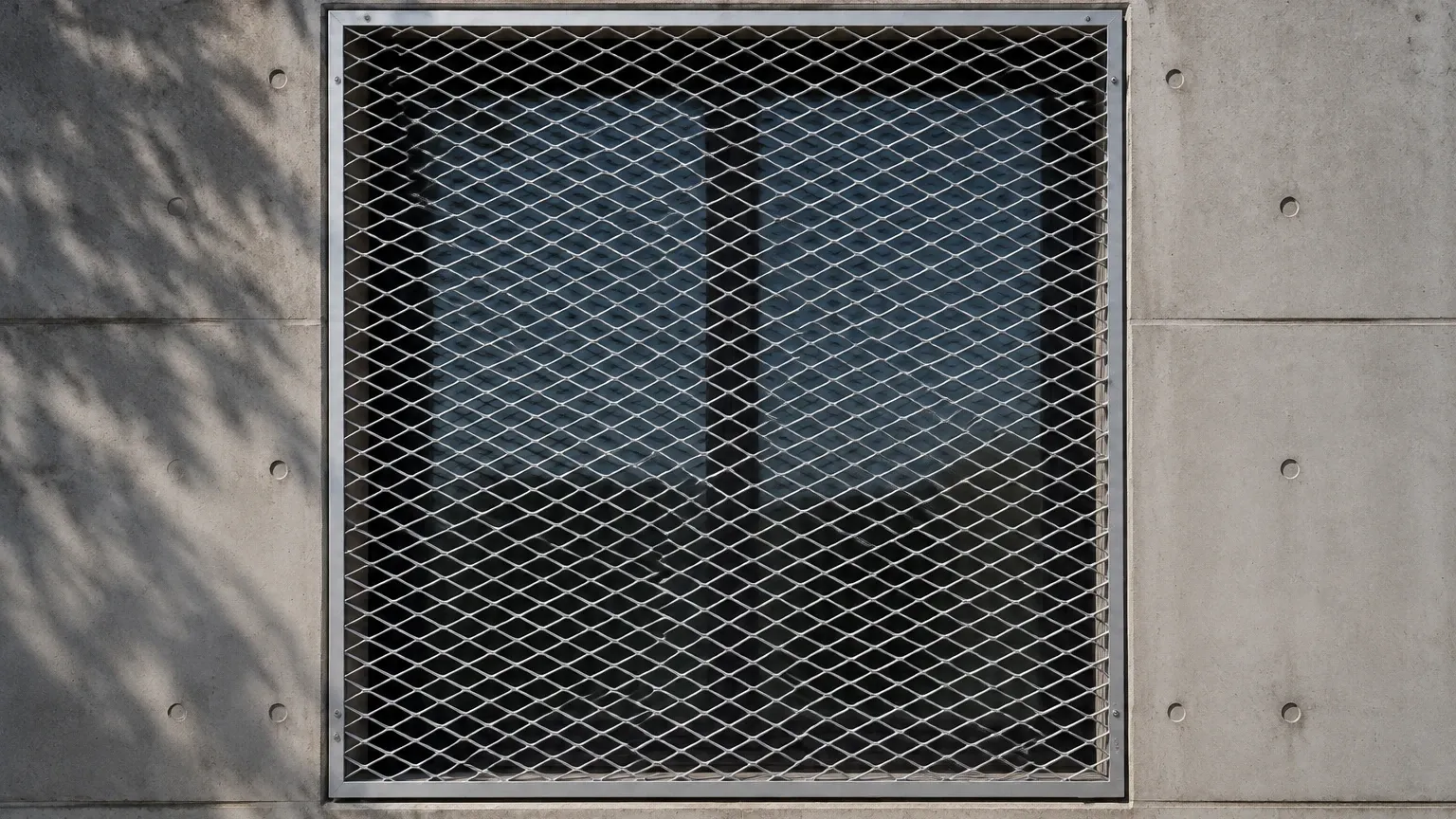
Expanded Metal Over Window
In industrial and commercial architecture, the integration of protective barriers requires a balance between security, airflow, and visibility. Utilizing expanded metal over window openings is a standard engineering practice designed to protect glass surfaces, prevent unauthorized access, and manage environmental factors such as solar heat gain and ventilation. As a specialized manufacturer of stainless steel filtration and metal components, Kaifil provides precision-engineered solutions that meet the rigorous demands of industrial environments, including chemical processing, food production, and pharmaceutical facilities.
Choosing the correct specification for expanded metal involves more than selecting a pattern; it requires a deep understanding of material properties, open area calculations, and structural integrity. This guide explores the technical considerations necessary for engineers and purchasing teams when specifying expanded metal for window applications.
Understanding the Role of Expanded Metal in Window Applications
Expanded metal is produced by simultaneously slitting and stretching a single sheet of metal, typically stainless steel or aluminum, to create a uniform pattern of diamond-shaped openings. Unlike woven wire mesh, expanded metal is a single-piece construction without joins or welds, which contributes to its inherent structural strength and durability.
When installed as an expanded metal over window solution, the material serves several critical functions:
1. Physical Security: The rigid structure acts as a formidable barrier against impact and forced entry. Because the strands are interconnected, the mesh cannot be easily unraveled if a single strand is cut.
2. Ventilation and Airflow: In industrial settings where machinery generates heat or where chemical vapors must be dissipated, expanded metal allows for consistent airflow while maintaining a secure perimeter.
3. Light Diffusion and Shading: The angled strands of the expanded metal can be oriented to provide solar shading, reducing glare and heat load within a building without completely obstructing the view.
4. Debris Protection: In environments prone to high winds or industrial accidents, these screens protect window glass from flying debris, reducing maintenance costs and safety hazards.
Technical Characteristics of Perforated & Expanded Metal
Selecting the right product requires an evaluation of the manufacturing style and the resulting physical properties. While both perforated and expanded metals are used for window coverings, expanded metal offers unique advantages in terms of weight-to-strength ratio and material efficiency.
Raised vs. Flattened Expanded Metal
Industrial window applications typically utilize one of two forms:
* Raised (Standard) Expanded Metal: The strands are turned at an angle to the plane of the sheet. This creates a three-dimensional surface that provides excellent grip (if used for walkways) and superior shading and privacy when used over windows. The angled strands can deflect rain and sunlight effectively.
* Flattened Expanded Metal: After the expansion process, the sheet is passed through a cold rolling mill. This flattens the strands back into a single plane, resulting in a smooth, flat surface. Flattened metal is often preferred for window screens where a lower profile is required or where the screen must be easily cleaned.
Key Terminology for Specification
Engineers must specify several dimensions to ensure the mesh meets the project requirements:
* LWD (Long Way of Diamond): The distance from the center of one joint to the center of the next joint across the long axis of the diamond.
* SWD (Short Way of Diamond): The distance across the short axis.
* Strand Width and Thickness: These dimensions determine the overall strength and the percentage of open area.
Material Engineering: Why Stainless Steel is the Industrial Standard
While expanded metal can be produced from various materials, stainless steel is the preferred choice for industrial window applications due to its longevity and resistance to environmental degradation. At Kaifil, we emphasize the use of high-grade stainless steel to ensure that filtration and protective components withstand the test of time.
Grade 304 Stainless Steel
This is the most common grade used for expanded metal over window installations. It offers excellent corrosion resistance and is suitable for most commercial and industrial environments. It provides a cost-effective balance between durability and performance.
Grade 316 Stainless Steel
For facilities located in coastal areas or those involved in chemical processing, Grade 316 is essential. The addition of molybdenum provides superior resistance to chlorides and pitting. In pharmaceutical or food and beverage applications where caustic cleaning agents are used, 316 stainless steel ensures that the window guards do not corrode or contaminate the environment.
Comparative Advantages
Compared to carbon steel or aluminum, stainless steel expanded metal requires no additional coatings (like powder coating or galvanizing) to prevent rust, although these can be added for aesthetic purposes. This reduces the total cost of ownership by eliminating the need for periodic repainting or rust treatment.
Key Evaluation Criteria for Window Mesh Selection
When integrating expanded metal into a window system, engineers must calculate several performance metrics to ensure the installation does not negatively impact the building's functionality.
1. Open Area Percentage
The open area determines how much light and air can pass through the mesh. For window applications, an open area of 40% to 60% is often the "sweet spot," providing sufficient security while allowing for natural lighting. High-precision manufacturing ensures that these percentages are consistent across the entire panel, which is vital for uniform airflow calculations in HVAC-dependent environments.
2. Visual Transparency and Directionality
Because of the way expanded metal is manufactured, the visibility through the mesh changes depending on the viewing angle. This is particularly true for raised expanded metal. Engineers can specify the "orientation" of the diamonds (LWD horizontal or vertical) to optimize the view for occupants while maximizing the shading effect for the building's exterior.
3. Impact Resistance and Gauge
The thickness of the metal (gauge) directly correlates to its ability to withstand impact. For high-security industrial sites, a heavier gauge (e.g., 9-gauge or 13-gauge) is recommended. For lighter commercial applications where the primary goal is preventing glass breakage from small objects, a lighter gauge (e.g., 18-gauge) may suffice.
Customization and OEM Capabilities for Industrial Windows
Standard off-the-shelf expanded metal sheets often require significant modification before they can be installed over windows. Kaifil specializes in customized filtration and metal solutions, allowing for a more streamlined integration process.
Custom Framing and Mounting
Expanded metal edges can be sharp and structurally unstable if left unfinished. Custom OEM solutions include:
* U-Edging: Attaching a U-shaped channel around the perimeter to provide a smooth edge and structural rigidity.
* Welded Frames: Integrating the mesh into a robust angle-iron or tube frame that can be bolted directly to the window masonry or steelwork.
* Bolt Hole Alignment: Pre-drilling or laser-cutting mounting points to match existing architectural structures, reducing on-site labor costs.
Precision Sizing
Industrial windows often come in non-standard sizes, especially in older retrofitted plants. Providing exact-to-size panels eliminates material waste and ensures a professional fit that maintains the security envelope of the facility.
Common Risks and Performance Expectations
While expanded metal is a highly reliable material, improper selection or installation can lead to performance issues. Understanding these risks is part of a proactive engineering approach.
Galvanic Corrosion
One of the most common risks occurs when stainless steel expanded metal is mounted directly to a dissimilar metal frame (such as aluminum or carbon steel) without an insulating barrier. This can lead to galvanic corrosion, which weakens the attachment points. Using stainless steel fasteners and EPDM gaskets can mitigate this risk.
Vibration and Noise
In environments with high-velocity airflow or heavy machinery, thin-gauge expanded metal may vibrate, creating acoustic discomfort. Specifying a heavier gauge or ensuring the mesh is tensioned and securely framed can prevent wind-induced noise (aeolian tones).
Maintenance Requirements
Although stainless steel is low-maintenance, expanded metal over window installations can accumulate dust, pollen, or industrial particulates within the diamond crevices. In food processing or pharmaceutical environments, the mesh should be specified with a finish (such as electropolishing) that minimizes surface roughness, making it easier to sanitize during routine washdowns.
Procurement Checklist: Confirmations for Engineers and Purchasing Teams
Before finalizing an order for expanded metal window guards, the following technical details should be confirmed to ensure the product is fit for purpose:
* Atmospheric Conditions: Is the environment corrosive? (Determines the choice between 304 and 316 stainless steel).
* Security Level: What is the primary threat? (Determines the gauge and strand width).
* Airflow Requirements: What is the minimum required open area for the building's ventilation system?
* Orientation: Should the diamonds run horizontally or vertically for optimal shading/visibility?
* Finishing: Does the application require a specific surface treatment (e.g., pickling, passivating, or powder coating)?
* Installation Method: Will the panels be framed, and how will they be anchored to the substrate?
By addressing these factors during the design phase, purchasing teams can avoid costly rework and ensure that the filtration and protection components provide long-term value. Kaifil’s expertise in custom metal fabrication ensures that every panel is manufactured to precise tolerances, meeting the specific engineering standards required for demanding industrial applications.
For technical support or to discuss specific project requirements regarding Perforated & Expanded Metal solutions, contact our engineering team to review material compatibility and customization options.
