


Expanded Metal Opening Sizes
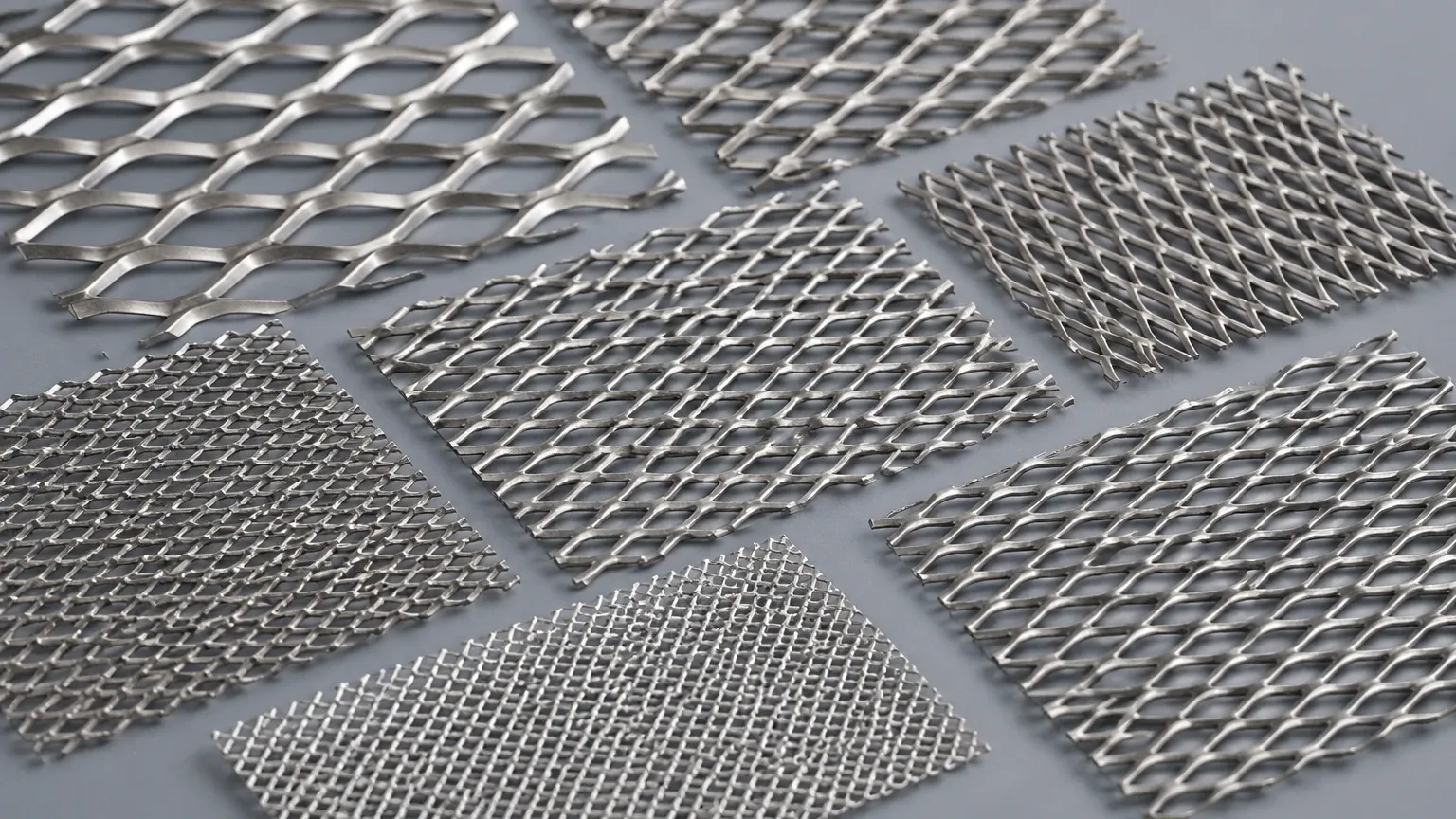
In the field of industrial filtration and structural engineering, selecting the appropriate media requires a granular understanding of material geometry. Expanded metal is a versatile material produced by simultaneously slitting and stretching a metal sheet, creating a diamond-shaped pattern of openings. Unlike perforated metal, which involves punching holes and generating scrap, the expansion process is a zero-waste manufacturing method that preserves the structural integrity of the base material while providing specific flow characteristics. For engineers and procurement teams, understanding expanded metal opening sizes is fundamental to ensuring filtration efficiency, structural support, and long-term durability in demanding industrial environments.
At Kaifil, we specialize in high-precision Perforated & Expanded Metal solutions tailored for chemical processing, food and beverage production, and hydraulic systems. This guide provides a technical deep dive into the terminology, measurement standards, and engineering considerations necessary for specifying expanded metal for industrial applications.
1. Defining the Geometry of Expanded Metal
To accurately specify expanded metal opening sizes, one must first master the standard industry terminology used to describe the diamond-shaped voids. Unlike a simple circular hole in a perforated sheet, an expanded metal opening is defined by four primary dimensions and the relationship between the strands and bonds.
SWD and LWD (Design Dimensions)
* Short Way of Design (SWD): This refers to the distance from a point on a diamond to the corresponding point on the next diamond, measured across the short axis. It is measured from the center of one bond to the center of the next.
* Long Way of Design (LWD): This is the distance from a point on a diamond to the corresponding point on the next diamond, measured across the long axis (center-to-center of the bonds).
SWO and LWO (Opening Dimensions)
While SWD and LWD provide the pitch of the pattern, the actual expanded metal opening sizes—the physical space through which fluids or particles pass—are defined by the "Opening" measurements:
* Short Way of Opening (SWO): The clear distance between the inside edges of the strands across the short diamond axis.
* Long Way of Opening (LWO): The clear distance between the inside edges of the strands across the long diamond axis.
In filtration applications, the SWO is often the most critical dimension, as it determines the maximum size of a spherical particle that can pass through the media. The LWO, while larger, influences the overall flow rate and the mechanical strength of the filter element.
2. Standard vs. Flattened Expanded Metal
The manufacturing process results in two distinct types of expanded metal, each of which affects the effective opening size and the flow dynamics of the system.
Standard (Raised) Expanded Metal
Standard expanded metal comes off the machine with the strands and bonds set at an angle to the plane of the sheet. This creates a three-dimensional profile. While the nominal SWO and LWO might meet a specific requirement, the angular orientation of the strands can create a "directional" flow or act as a baffle. For filtration, raised expanded metal provides excellent surface area for debris impingement but may require more complex housing designs due to its thickness.
Flattened Expanded Metal
Flattened expanded metal is standard expanded metal that has been cold-rolled through a mill. This process flattens the strands and bonds into the same plane as the sheet. Flattening slightly increases the SWD and LWD while reducing the thickness of the material. For technical filtration components, flattened metal is often preferred because it provides a smooth, consistent surface that is easier to clean and integrate into multi-layered filter cartridges where tight tolerances are required.
3. The Relationship Between Strand Width and Open Area
The efficiency of a filter is often measured by its "Open Area" percentage. This is the ratio of the area of the openings to the total area of the sheet. In expanded metal, the open area is determined by the relationship between the opening sizes and the strand width.
* Strand Width: The amount of metal between the openings.
* Strand Thickness: The thickness of the original base metal sheet.
When specifying expanded metal opening sizes, engineers must balance the need for a high open area (to minimize pressure drop) with the need for structural rigidity. A narrower strand width increases the open area but reduces the load-bearing capacity of the mesh. Conversely, wider strands provide a robust support structure for finer mesh layers but increase the resistance to flow. Kaifil’s engineering team works with clients to calculate the optimal balance of these factors based on the viscosity of the fluid and the expected flow velocity.
4. Material Selection and Its Impact on Opening Consistency
The choice of material significantly impacts the precision and stability of expanded metal opening sizes. In industrial filtration, stainless steel is the gold standard due to its corrosion resistance and mechanical properties.
* Stainless Steel 304/304L: Suitable for general industrial applications, providing good resistance to atmospheric corrosion and many organic and inorganic chemicals.
* Stainless Steel 316/316L: The preferred choice for pharmaceutical and food-grade applications, as well as marine environments. The addition of molybdenum enhances resistance to pitting and crevice corrosion in chloride-rich environments.
* Specialty Alloys: For high-temperature or highly acidic environments, alloys like Monel, Inconel, or Hastelloy may be used. These materials have different ductility profiles, which can affect the "spring-back" during the expansion process, necessitating precise calibration to maintain consistent opening sizes.
Consistency is vital. In a filtration sequence, if the opening sizes vary across the sheet, it can lead to "channeling," where the fluid takes the path of least resistance through the larger openings, leading to uneven wear and premature bypass of contaminants.
5. Engineering Considerations for Filtration Applications
When integrating expanded metal into a filtration system, several technical factors must be evaluated beyond just the nominal opening size.
Support for Fine Mesh Media
Expanded metal is frequently used as a support drainage layer for fine wire mesh or non-woven filter media. In this role, the expanded metal opening sizes must be small enough to prevent the fine mesh from "pleat-bunching" or migrating into the openings under high pressure, yet large enough to allow for maximum drainage and minimal flow restriction.
Pressure Drop (Delta P)
Every layer in a filter assembly contributes to the total pressure drop. Because expanded metal has a unique 3D geometry (especially in its raised form), the turbulence it creates can actually be beneficial in certain mixing or coalescing applications, but it must be accounted for in the system's pump head calculations.
Micron Rating Equivalence
While expanded metal is typically measured in inches or millimeters, engineers often need to translate these dimensions into a micron rating. For example, a very fine expanded metal with an SWO of 0.030 inches is roughly equivalent to 762 microns. This is generally considered coarse filtration or "straining." If a finer filtration level is required, the expanded metal serves as the structural skeleton for a multi-layered sintered or pleated cartridge.
6. Common Risks and Specification Pitfalls
Errors in specifying expanded metal can lead to system failures or increased maintenance costs. To avoid these, technical professionals should confirm the following before procurement:
1. Confusion Between SWD and SWO: Ordering based on the design pitch (SWD) instead of the actual opening (SWO) will result in a filter that captures fewer particles than intended. Always specify the "opening" size for filtration accuracy.
2. Ignoring Directionality: In standard (raised) expanded metal, the flow characteristics differ depending on whether the fluid hits the "face" or the "back" of the diamond. Ensure the orientation is specified if the flow is not perpendicular to the sheet.
3. Tolerance Accumulation: During the expansion and subsequent flattening or shearing, small variations can occur. It is essential to work with a manufacturer like Kaifil that maintains tight manufacturing tolerances to ensure that the filter fits perfectly within the housing and maintains a consistent seal.
4. Edge Conditions: When expanded metal is cut to size, the edges can have "random" or "matched" diamonds. For filter cartridges, matched edges are often necessary to ensure a clean longitudinal weld or seam.
7. Customization and OEM Capabilities
Standard off-the-shelf expanded metal rarely meets the exacting requirements of specialized industrial processes. Customization allows for the optimization of the filtration process. At Kaifil, we provide tailored solutions that include:
* Custom Opening Ratios: Adjusting the expansion ratio to achieve specific open area percentages.
* Precision Shearing and Forming: Cutting the media to exact dimensions for seamless integration into hydraulic or chemical filter housings.
* Material Certification: Providing full traceability for materials used in pharmaceutical and food-grade applications.
* Multi-Layer Integration: Combining expanded metal with other filtration media to create high-performance composite filters.
Conclusion
Selecting the correct expanded metal opening sizes is a technical decision that impacts the entire lifecycle of an industrial filtration system. By understanding the nuances of SWO, LWO, and the effects of flattening and material choice, engineers can design systems that offer superior particle retention, structural integrity, and cost-efficiency.
Whether you are designing a support structure for a high-pressure hydraulic filter or a coarse strainer for a chemical processing plant, precision in specification is the key to performance. For more information on technical specifications or to discuss a custom project, Review product options and application support to ensure your filtration components meet the highest industrial standards.
