


Ordering Expanded Metal
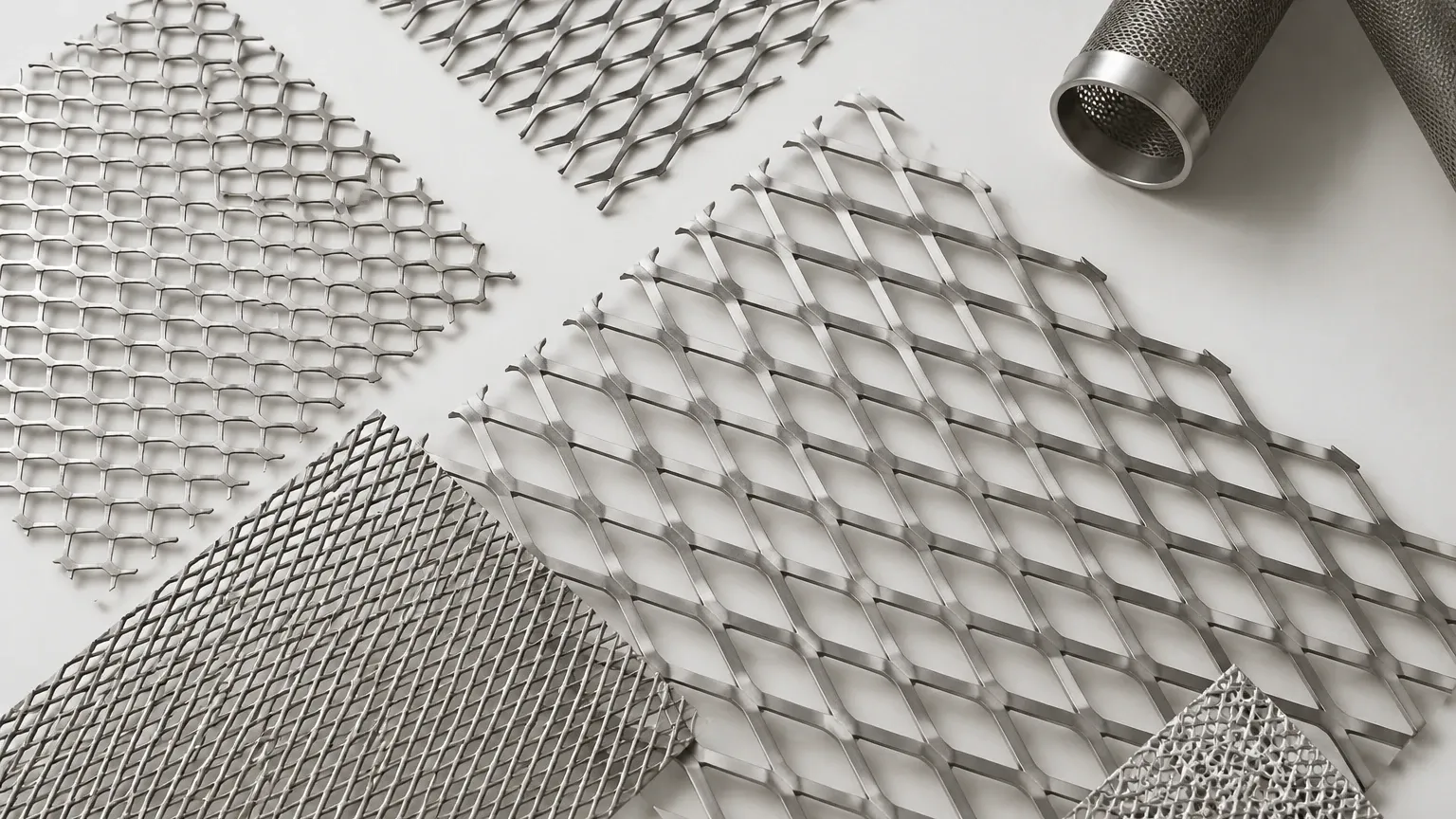
In the landscape of industrial filtration and structural support, expanded metal serves as a critical component due to its unique combination of mechanical strength, open area, and cost-efficiency. Unlike perforated metal, which is created by punching holes and removing material, expanded metal is manufactured by simultaneously slitting and stretching a solid sheet of metal. This process creates a diamond-shaped pattern without any material waste, making it an environmentally and economically sustainable choice for high-performance applications.
For procurement teams and design engineers, ordering expanded metal requires a deep understanding of geometric specifications, material properties, and application-specific requirements. Whether the material is intended for use as a support cage in a high-pressure hydraulic filter or as a protective screen in a chemical processing plant, precision in the ordering process is essential to ensure operational reliability and longevity.
Understanding Expanded Metal Terminology
To communicate effectively with a manufacturer like Kaifil, it is necessary to use standardized industry terminology. The geometry of expanded metal is defined by several key measurements that dictate both its physical dimensions and its performance characteristics.
SWD and LWD
* Short Way of Design (SWD): This is the distance from the center of one bond to the center of the next bond measured across the short axis of the diamond.
* Long Way of Design (LWD): This is the distance from the center of one bond to the center of the next bond measured across the long axis of the diamond.
SWO and LWO
* Short Way of Opening (SWO): The actual width of the opening, measured from the inside of the bonds.
* Long Way of Opening (LWO): The actual length of the opening, measured from the inside of the bonds.
Strands and Bonds
* Strands: These are the individual metal strips that form the sides of the diamond opening.
* Bonds: These are the points where the strands intersect.
* Strand Thickness: The thickness of the original base metal.
* Strand Width: The amount of metal fed into the machine between each slit, which determines the width of the resulting strand.
When ordering expanded metal, specifying these dimensions accurately ensures that the resulting mesh provides the necessary filtration rating or structural support required for the project.
Standard vs. Flattened Expanded Metal
One of the most important decisions during the specification phase is choosing between standard (raised) and flattened expanded metal. Each type offers distinct advantages depending on the industrial environment.
Standard Expanded Metal
Standard expanded metal, also known as raised expanded metal, comes directly from the expanding machine. The strands and bonds are set at a uniform angle to the plane of the sheet. This creates a three-dimensional surface that provides excellent grip and high structural rigidity. In filtration applications, the raised profile can help create turbulence in fluid flow, which may be desirable in certain mixing or heat exchange processes. However, the raised edges can be sharp, which must be considered during handling and installation.
Flattened Expanded Metal
Flattened expanded metal is produced by passing the standard expanded sheet through a cold-roll reducing mill. This process flattens the strands and bonds into a single plane, resulting in a smooth, flat surface. Flattened metal is typically about 5% to 10% thinner than the original base material due to the rolling process. This variant is often preferred for filter support layers where a smooth interface is required to prevent damage to delicate filter media, such as fine wire mesh or synthetic membranes.
Material Selection for Industrial Filtration
The choice of material is the primary factor in determining the corrosion resistance and temperature tolerance of the expanded metal. As a specialist in stainless steel filtration, Kaifil emphasizes the importance of selecting alloys that match the chemical profile of the process fluid.
Stainless Steel 304 and 304L
Grade 304 is the most common stainless steel used for expanded metal. It offers good corrosion resistance to many chemical corrodents and industrial atmospheres. For applications involving welding, 304L (low carbon) is often specified to prevent carbide precipitation and maintain corrosion resistance in the heat-affected zone.
Stainless Steel 316 and 316L
For more demanding environments, such as marine applications or chemical processing involving chlorides, Grade 316 is the industry standard. It contains molybdenum, which significantly enhances resistance to pitting and crevice corrosion. 316L is preferred for high-precision filter components that require extensive welding or operate in highly acidic environments.
Specialty Alloys
In addition to standard stainless steels, expanded metal can be manufactured from aluminum, carbon steel, and specialty alloys like Monel or Inconel for extreme temperature or high-corrosion applications. When Perforated & Expanded Metal is used in the pharmaceutical or food and beverage industries, material certification (MTR) is often a mandatory requirement to ensure compliance with safety standards.
Technical Specifications and Open Area Calculations
For engineers, the "Open Area" percentage is a critical metric. It determines the flow rate, pressure drop, and filtration efficiency of the component. The open area is a function of the strand width and the diamond dimensions.
When ordering expanded metal, the open area can be calculated using the following general formula for standard expanded metal:
**Open Area % = (1 – (Strand Width * 2) / SWD) * 100**
It is important to note that this is a simplified calculation. Factors such as the angle of the strands in raised metal can affect the effective open area for fluid flow. At Kaifil, we provide technical support to help customers calculate the exact flow characteristics required for their specific filter housings or support structures.
Critical Considerations for Custom Ordering
To avoid common pitfalls and ensure a seamless procurement process, several additional factors should be confirmed before finalizing an order.
Sheet Orientation and Dimensions
The orientation of the diamonds relative to the sheet dimensions is vital. In most cases, the LWD is parallel to the length of the sheet. If your application requires the LWD to be parallel to the width (often called "turned diamonds"), this must be specified clearly. Incorrect orientation can lead to structural failure if the material is being used to wrap a cylindrical filter core.
Edge Conditions (Shearing)
Expanded metal sheets can be sheared in two ways:
1. Bond Shearing: The cut is made through the center of the bond, resulting in a closed-edge diamond without sharp prongs.
2. Random Shearing: The cut is made at a random point, which often leaves open diamonds or sharp "teeth" along the edge.
For filtration components that will be handled frequently or integrated into assemblies, bond shearing or subsequent edge treatment (such as U-edging or framing) is recommended to improve safety and ease of installation.
Tolerances and Flatness
Industrial applications often require tighter tolerances than standard commercial grades. Specify the allowable variance in sheet size, camber (the bow in the sheet), and flatness. For automated assembly processes, high-precision flatness is often a prerequisite to prevent machine jams or welding misalignments.
The Role of Expanded Metal in Filter Assembly
Kaifil specializes in integrating Perforated & Expanded Metal into complex filtration solutions. Expanded metal is frequently used as the outer protection sleeve or the inner support core for pleated filter cartridges.
In these roles, the expanded metal must withstand significant differential pressure. If the mesh is too light, it may collapse under the force of the fluid flow; if it is too heavy, it unnecessarily increases the weight and cost of the filter. Our engineering team works with clients to determine the optimal balance between strand thickness and open area to maximize the service life of the filter element.
Furthermore, expanded metal can be custom-fabricated into various shapes, including cylinders, cones, and flat panels. Advanced secondary processes such as degreasing, pickling, and electro-polishing are available to ensure the components meet the cleanliness standards required for pharmaceutical and high-purity chemical applications.
Quality Assurance and Supplier Evaluation
When selecting a partner for ordering expanded metal, it is essential to evaluate their quality control protocols. A reliable manufacturer should provide:
* Material Traceability: Full documentation of the raw material source and chemical composition.
* Dimensional Inspection: Verification that the SWD, LWD, and strand dimensions meet the agreed-upon specifications.
* Surface Integrity: Ensuring the material is free from burrs, oil, and surface defects that could contaminate the process fluid or damage the filter media.
* Customization Capabilities: The ability to provide value-added services such as welding, forming, and specialized finishing.
Kaifil’s commitment to quality and technical expertise ensures that every expanded metal component we produce meets the rigorous demands of industrial filtration. By focusing on precision manufacturing and collaborative engineering, we help our clients achieve optimized performance and reduced total cost of ownership.
Conclusion
Ordering expanded metal for industrial use is a technical process that extends far beyond simply choosing a material and a size. By understanding the nuances of diamond geometry, material selection, and edge conditions, engineers and purchasing professionals can secure components that enhance the efficiency and durability of their filtration systems.
Whether you are designing a new filtration system or seeking a reliable OEM partner for existing components, clear communication of technical requirements is the key to success. For more information on our capabilities and to explore our range of custom filtration solutions, we invite you to Review product options and application support at Kaifil.
