


Expanded Metal Platform
In industrial engineering and facility management, the selection of flooring and walkway materials is a critical decision that impacts safety, structural integrity, and long-term maintenance costs. An expanded metal platform represents a versatile and high-performance solution for these environments. Unlike traditional solid plating or heavy bar grating, expanded metal offers a unique combination of high strength-to-weight ratios, excellent slip resistance, and superior drainage capabilities.
For engineers and procurement professionals, understanding the technical nuances of Perforated & Expanded Metal is essential when designing or upgrading industrial infrastructure. This guide examines the engineering considerations, material specifications, and performance factors that define a high-quality expanded metal platform.
Understanding the Manufacturing Process and Structural Advantages
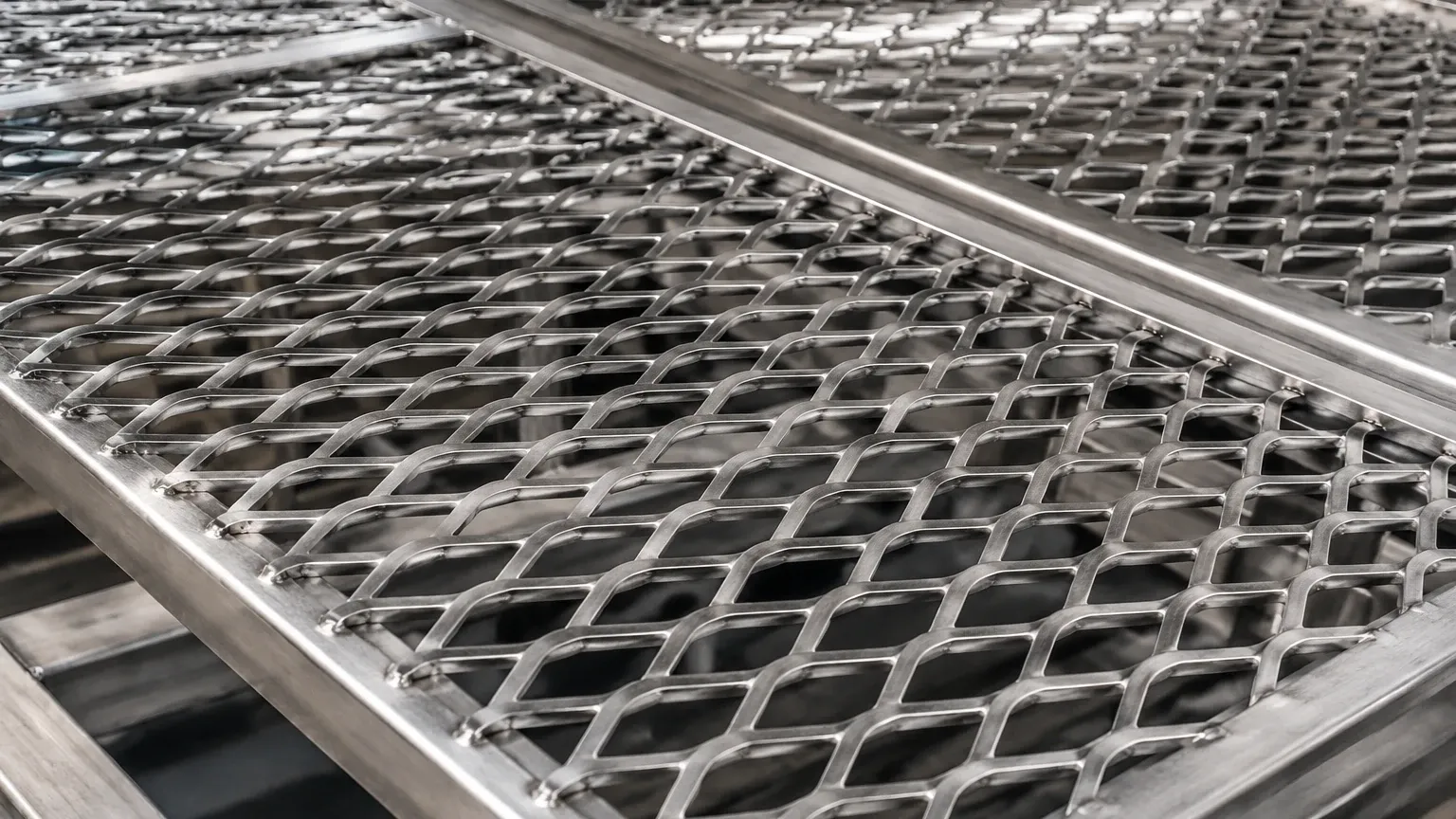
The fundamental advantage of an expanded metal platform lies in its manufacturing process. Expanded metal is produced by simultaneously slitting and stretching a single sheet of metal—typically stainless steel, carbon steel, or aluminum. This process creates a diamond-shaped pattern of openings, where the metal strands are interconnected without any welds or joints.
From a structural perspective, this "one-piece" construction is vital. Because the material is not joined by mechanical fasteners or welding at the intersections, there are no points of potential failure or stress concentration that could lead to fatigue over time. The strands are oriented at an angle to the plane of the sheet, which provides inherent stiffness and the ability to distribute loads across a wider area than individual bars in a grating system.
When evaluating materials for an expanded metal platform, it is important to distinguish between "raised" (or standard) and "flattened" expanded metal. Raised expanded metal retains the natural angularity of the strands, providing a high-friction surface ideal for slip resistance. Flattened expanded metal undergoes an additional cold-rolling process to create a smooth, level surface, which may be preferred in applications where wheeled traffic or hand-loading is common.
Key Engineering Criteria for Material Selection
Material selection is the most significant factor in determining the lifespan and performance of an industrial platform. As a manufacturer specializing in stainless steel solutions, Kaifil emphasizes the importance of matching the alloy to the specific environmental stressors of the application.
Stainless Steel (Grades 304 and 316)
In industries such as chemical processing, food and beverage, and pharmaceuticals, stainless steel is the standard for expanded metal platforms. Grade 304 offers excellent corrosion resistance for most general industrial uses. However, in marine environments or facilities handling highly corrosive chemicals, Grade 316 is recommended due to its molybdenum content, which provides superior resistance to pitting and chloride-induced stress corrosion cracking.
Carbon Steel and Galvanized Options
For general industrial warehouses or outdoor structures where extreme corrosion is not a primary concern, carbon steel is a cost-effective alternative. To prevent oxidation, these platforms are typically hot-dip galvanized. This process provides a thick layer of zinc that protects the underlying steel through both barrier protection and sacrificial cathodic protection.
Aluminum
In applications where weight reduction is a priority—such as mobile platforms or aerospace maintenance docks—aluminum expanded metal is utilized. While it offers a lower load-bearing capacity than steel of the same thickness, its high strength-to-weight ratio and natural oxide layer make it suitable for specific niche applications.
Load-Bearing Capacity and Structural Integrity
Designing an expanded metal platform requires precise calculation of load-bearing requirements. Engineers must consider both static loads (the weight of the platform and fixed equipment) and dynamic loads (personnel movement, carts, and impact loads).
Two critical dimensions define the strength of the mesh: the Long Way of Design (LWD) and the Short Way of Design (SWD). For maximum structural efficiency, the LWD should generally run perpendicular to the support beams. This orientation ensures that the strands act as a continuous bridge, effectively transferring the load to the structural frame.
Technical specifications for expanded metal platforms typically include:
- Strand Thickness: The gauge of the original metal sheet.
- Strand Width: The amount of metal between the slits.
- Opening Size: The dimensions of the diamond aperture.
- Overall Thickness: The height of the raised strands from the base plane.
By adjusting these variables, manufacturers can customize the platform to meet specific PSF (pounds per square foot) requirements. It is essential for purchasing teams to confirm these specifications against the intended span between supports to prevent excessive deflection or structural failure.
Safety Features: Slip Resistance and Drainage
Safety is the primary driver for installing an expanded metal platform in industrial settings. The diamond-patterned openings provide two essential safety functions: traction and debris management.
Enhanced Traction
The raised edges of the strands in standard expanded metal act as a multi-directional anti-slip surface. This is particularly important in environments where oil, water, or chemical spills are frequent. Unlike solid metal plates, which become hazardous when wet, the angular profile of expanded metal bites into footwear, providing secure footing for personnel.
Drainage and Self-Cleaning
The open area of the mesh allows for the immediate passage of liquids, dust, and small debris. This prevents the accumulation of standing water or ice, which are common causes of industrial accidents. Furthermore, the open design facilitates airflow, which is critical for platforms located near heat-generating machinery or in areas requiring specific ventilation standards. In many cases, the transparency of the mesh also allows for better light penetration, improving visibility for workers on lower levels.
Customization and Fabrication for Industrial Projects
Every industrial facility has unique spatial constraints and functional requirements. A standard off-the-shelf solution rarely suffices for complex plant layouts. Customization of Perforated & Expanded Metal allows for seamless integration into existing structures.
Precision Cutting and Framing
Expanded metal can be sheared to exact dimensions to fit around pipes, columns, and machinery. To ensure the safety of the edges and to provide additional structural rigidity, these panels are often "banded" or framed with U-edging or L-angles. This framing covers the sharp "cut diamonds" at the perimeter and provides a secure surface for welding or bolting the platform to the primary support structure.
OEM Capabilities
For equipment manufacturers (OEMs) who integrate platforms into their machinery—such as large-scale filtration systems or hydraulic power units—working with a manufacturer like Kaifil allows for the development of bespoke mesh patterns. These can be optimized for specific filtration needs or aesthetic requirements while maintaining the necessary structural properties of a walking surface.
Evaluating Total Cost of Ownership (TCO)
When comparing an expanded metal platform to other flooring options, engineers should look beyond the initial purchase price and evaluate the Total Cost of Ownership (TCO). Several factors contribute to the long-term value of expanded metal:
1. Installation Efficiency: Expanded metal is significantly lighter than solid plate or heavy bar grating. This reduces the load on the building's primary structure and often allows for faster installation with less specialized lifting equipment.
2. Maintenance Requirements: Because the material is self-draining and resistant to debris buildup, cleaning cycles are less frequent. In stainless steel configurations, the need for painting or protective coatings is eliminated, further reducing operational costs.
3. Longevity: The lack of welds in the mesh itself means there are fewer points for corrosion to take hold. In a properly specified stainless steel platform, the service life can span several decades even in harsh chemical environments.
4. Material Savings: The expansion process increases the surface area of the original sheet without adding weight. This means you get more "coverage" per ton of metal compared to perforated metal or solid plate, leading to lower raw material costs.
Information to Confirm Before Procurement
Before finalizing a specification for an expanded metal platform, technical professionals should confirm the following data points with their supplier:
- Environmental Conditions: Will the platform be exposed to high temperatures, cryogenic conditions, or specific chemical vapors?
- Load Type: Is the load primarily static (storage) or dynamic (personnel and equipment movement)?
- Span Distance: What is the distance between the structural supports? This will dictate the required thickness and strand width of the mesh.
- Regulatory Compliance: Does the platform need to meet specific OSHA, ADA, or industry-specific safety standards regarding opening sizes and slip resistance?
- Finish Requirements: Is a mill finish sufficient, or is electropolishing (for stainless steel) or galvanizing (for carbon steel) required for the application?
Conclusion
The expanded metal platform is a highly engineered solution that addresses the complex demands of modern industrial environments. By leveraging the inherent strengths of the expansion process and selecting the appropriate material grades, facilities can achieve a balance of safety, durability, and cost-efficiency. Whether used in a chemical processing plant, a food production facility, or a general industrial walkway, Perforated & Expanded Metal provides a reliable foundation for industrial operations.
For engineers seeking to optimize their filtration or structural systems, partnering with a manufacturer that understands the technical requirements of precision metal components is essential. By focusing on material integrity and customized design, you can ensure that your platform meets the rigorous standards of your specific application.
