


Expanded Metal Pictures
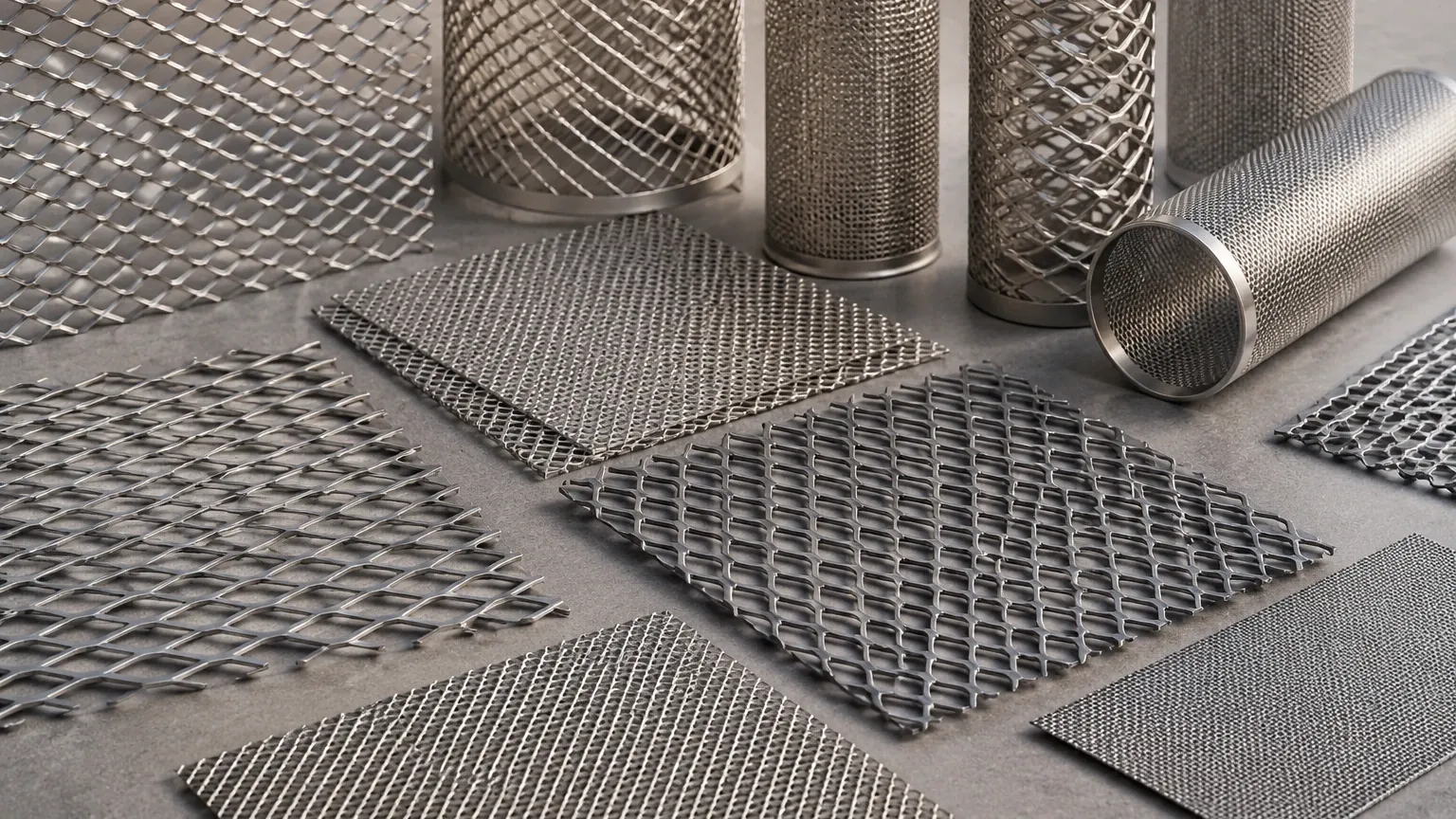
In the realm of industrial engineering and filtration design, visual data serves as a critical bridge between theoretical specifications and physical performance. While the search for expanded metal pictures often begins as a quest for aesthetic inspiration or general reference, for the professional engineer or procurement specialist, these images represent a data-rich resource. High-resolution technical imagery provides essential insights into mesh geometry, strand integrity, and surface finish—factors that directly influence the efficiency of filtration systems and structural components.
At Kaifil, we understand that selecting the right Perforated & Expanded Metal requires more than just a glance at a datasheet. It requires a deep understanding of how the material is formed, how its dimensions are measured, and how its physical characteristics will behave under the stresses of industrial processing. This guide examines the technical nuances of expanded metal through the lens of visual documentation and engineering requirements.
The Engineering Value of Visual Documentation
In a B2B procurement environment, expanded metal pictures are used to verify the suitability of a mesh for specific applications, such as supporting filter media or acting as a protective screen in hydraulic systems. Unlike perforated metal, which is created by punching holes and removing material, expanded metal is manufactured by simultaneously slitting and stretching a solid sheet. This process creates a unique diamond-shaped pattern that is inherently stronger and more rigid than the original sheet.
When evaluating technical imagery, engineers look for several key indicators:
1. Uniformity of the Openings: Visual consistency across the sheet ensures that the flow rate and pressure drop will be predictable across the entire surface area.
2. Bond Integrity: The "bond" is where the strands intersect. Pictures allow engineers to inspect the strength of these points, which are critical for load-bearing applications.
3. Edge Quality: For filtration components that must be welded or fitted into housings, the cleanliness of the edges shown in photos can indicate the precision of the manufacturer’s shearing process.
Decoding the Mesh Geometry: SWD and LWD
To accurately interpret expanded metal pictures, one must understand the standard terminology used to describe the mesh dimensions. These measurements are the foundation of any technical drawing or product photograph.
* SWD (Short Way of Design): This is the distance from the center of one bond to the center of the next bond measured across the short axis of the diamond.
* LWD (Long Way of Design): This is the distance from the center of one bond to the center of the next bond measured across the long axis of the diamond.
* Strand Width: The amount of metal between the openings.
* Strand Thickness: The thickness of the original base metal.
When viewing expanded metal pictures, the orientation of the LWD and SWD is paramount. Depending on how the mesh is installed—for example, in a cylindrical filter cartridge—the direction of the diamond can affect the structural rigidity of the component. In filtration, the "open area" percentage, which is calculated based on these dimensions, determines the flow capacity of the filter.
Visual Identification: Standard vs. Flattened Expanded Metal
One of the most important distinctions visible in expanded metal pictures is the difference between "Standard" (raised) and "Flattened" mesh. Each has distinct physical properties that suit different industrial needs.
Standard Expanded Metal
Standard expanded metal is the product as it comes directly from the expanding machine. The strands and bonds are set at a uniform angle to the plane of the sheet. In photos, this appears as a three-dimensional, textured surface.
* Engineering Benefit: The raised profile provides excellent grip and structural stiffness. In filtration, this 3D structure can act as a pre-filter, trapping larger particles before they reach a finer mesh layer.
* Visual Cue: Look for the shadow and depth in the diamonds, which indicates the angularity of the strands.
Flattened Expanded Metal
Flattened expanded metal is produced by passing the standard expanded sheet through a cold roll reducing mill. This process flattens the strands and bonds into a single plane, resulting in a smooth, level surface.
* Engineering Benefit: Flattened mesh is ideal when a smooth surface is required to prevent abrasion of sensitive filter media or when the material needs to be easily cleaned. It also results in a slightly thinner overall profile.
* Visual Cue: In expanded metal pictures, flattened mesh looks like a 2D grid with no visible thickness variation between the strands and bonds.
Material Selection and Surface Integrity
As a specialist in stainless steel filtration, Kaifil emphasizes the importance of material integrity. When reviewing expanded metal pictures for high-stakes environments—such as chemical processing or pharmaceutical manufacturing—the visual appearance of the metal surface can reveal much about its corrosion resistance and purity.
Stainless Steel (304 and 316L)
Stainless steel is the preferred material for industrial filtration due to its durability and resistance to oxidation. In technical photos, high-quality stainless steel expanded metal should exhibit a clean, bright finish. For pharmaceutical or food-grade applications, the surface must be free of pits, scratches, or manufacturing oils.
Carbon Steel and Galvanized Options
While carbon steel is common for general industrial use, it requires protective coatings like galvanization or powder coating. Pictures of galvanized expanded metal will show a characteristic "spangle" or a matte grey finish, which indicates the protective zinc layer is intact.
The Role of Expanded Metal in Filtration Systems
Within the broader category of Perforated & Expanded Metal, expanded metal serves several critical functions in filtration engineering. It is rarely a standalone component; rather, it is often integrated into complex filter assemblies.
1. Support Cores: In stainless steel filter cartridges, expanded metal often serves as the inner core. Its high strength-to-weight ratio allows it to withstand high differential pressures without collapsing.
2. Outer Guards: It can be used as an outer protective layer to prevent mechanical damage to delicate pleated wire mesh or fiber media.
3. Coarse Filtration: In water treatment or HVAC systems, larger-scale expanded metal acts as a primary strainer to remove large debris.
When engineers examine expanded metal pictures for these applications, they are looking for the "bond-to-open-area" ratio. A high open area is desirable for low pressure drop, but it must be balanced against the structural requirements of the specific industrial environment.
Evaluating Quality and Manufacturing Precision
Not all expanded metal is created equal. When sourcing components for OEM projects, visual inspection of supplier-provided expanded metal pictures can serve as an initial quality control step. Engineers should look for the following potential red flags:
* Burrs and Sharp Edges: In high-precision filtration, burrs can break off and contaminate the downstream fluid or puncture the filter media. Quality expanded metal should have clean slits.
* Inconsistent Diamond Shapes: If the diamonds appear distorted in photos, it may indicate uneven tension during the stretching process, which leads to structural weak points.
* Strand Thinning: If the strands appear excessively thin at the bonds, the material may fail under hydraulic shock or vibration.
Kaifil utilizes advanced manufacturing capabilities to ensure that every sheet of expanded metal meets rigorous industrial standards. Our process controls ensure that the dimensions shown in our technical documentation match the physical product delivered to the site.
Customization and Engineering Specifications
One of the primary reasons engineers seek out expanded metal pictures is to visualize how a custom specification might look. Customization is often necessary when standard mesh sizes do not meet the flow or structural requirements of a unique application.
At Kaifil, we provide customized solutions including:
* Bespoke Mesh Sizes: Adjusting the SWD and LWD to achieve a specific micron rating or open area percentage.
* Variable Strand Widths: Increasing strand width for higher pressure environments.
* Specialty Materials: Beyond standard stainless steel, we can work with exotic alloys for highly corrosive chemical environments.
* Secondary Processing: This includes cutting to size, circular shearing, forming into cylinders, and precision welding.
Technical Considerations for Purchasing Teams
When transitioning from viewing expanded metal pictures to placing an order, purchasing teams should confirm several technical details with the manufacturer to ensure the product is fit for purpose:
1. Total Thickness: In standard expanded metal, the total thickness is significantly greater than the original sheet thickness. This must be accounted for in the design of filter housings.
2. Weight per Square Foot: Because expanded metal is made by stretching, one ton of raw sheet metal produces many more square feet of expanded mesh than perforated metal. This makes it a cost-effective choice for large-scale projects.
3. Tolerances: Confirm the allowable variance in diamond size and sheet dimensions. For precision filtration, tight tolerances are non-negotiable.
4. Cleaning and Passivation: For stainless steel components used in sensitive industries, ensure the product undergoes proper cleaning and passivation to maximize corrosion resistance.
Conclusion
Expanded metal pictures are more than just visual aids; they are essential tools for identifying the geometric and structural characteristics required for industrial success. Whether used as a support structure in a high-pressure hydraulic filter or as a protective screen in a chemical reactor, the quality of the expanded metal is paramount.
By focusing on technical precision, material integrity, and customized engineering, Kaifil provides the reliable filtration components that modern industry demands. When evaluating your next project involving Perforated & Expanded Metal, consider both the visual evidence of quality and the engineering expertise behind the manufacturing process. Choosing the right partner ensures that the performance of your filtration system matches the precision of your design specifications.
