


Expanded Metal Sizes Explained
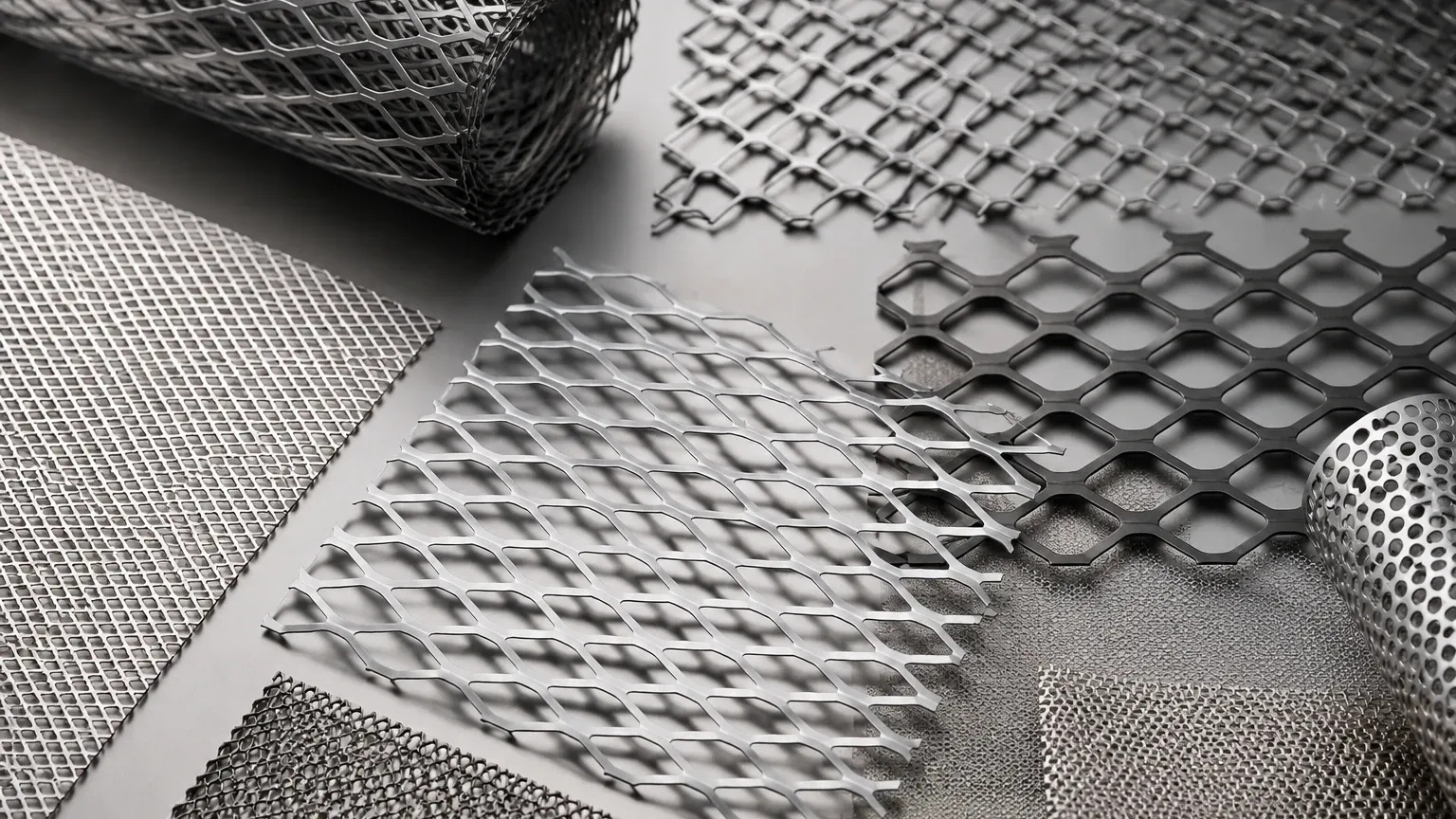
In industrial filtration and structural engineering, expanded metal is a versatile material prized for its strength-to-weight ratio and precise open area. Unlike woven wire mesh, expanded metal is produced from a single solid sheet of metal that is simultaneously slit and stretched. This process creates a diamond-shaped pattern without any joins or welds, ensuring structural integrity. However, for engineers and procurement specialists, the nomenclature used to describe these products can be complex. Having expanded metal sizes explained is essential for ensuring that a component meets the flow rate, filtration efficiency, and mechanical support requirements of a specific application.
At Kaifil, we specialize in manufacturing custom stainless steel filtration solutions where expanded metal often serves as a primary support cage or a coarse filtration layer. Understanding the nuances of Short Way of Design (SWD), Long Way of Design (LWD), and strand dimensions is the first step in selecting the right Perforated & Expanded Metal for your industrial project.
The Fundamental Dimensions: SWD and LWD
The most critical aspect of expanded metal sizing is the orientation and measurement of the diamond-shaped openings. These are categorized into two primary directions: the Short Way of Design and the Long Way of Design.
Short Way of Design (SWD)
SWD refers to the distance from a point on one diamond to the corresponding point on the next diamond, measured across the short axis. It is important to note that this is a center-to-center measurement of the bridge or "bond" where the strands meet, not the clear opening of the hole itself. In a standard specification, the SWD is usually listed first.
Long Way of Design (LWD)
LWD is the distance measured across the long axis of the diamond, again from center-to-center of the bonds. The relationship between SWD and LWD determines the overall shape of the diamond and influences the rigidity of the sheet. For filtration applications, the LWD often runs parallel to the width of the sheet, though this can be customized based on the fabrication requirements of a filter cartridge or screen.
Clear Openings (SWO and LWO)
While SWD and LWD are used for ordering and layout, engineers focused on filtration must look at the Short Way of Opening (SWO) and Long Way of Opening (LWO). These represent the actual space between the strands. If a process requires a specific particle retention size, the SWO is the dimension that dictates the maximum particle size that can pass through the medium.
Understanding Strand Dimensions and Material Thickness
Beyond the diamond size, the physical properties of the metal strands themselves define the strength and the "open area" percentage of the material. There are two distinct measurements for the strands: thickness and width.
1. Strand Thickness: This is the thickness of the original base metal sheet before it is expanded. In stainless steel filtration components, this typically ranges from 0.5mm to 3.0mm, depending on the pressure requirements of the system.
2. Strand Width: This refers to the amount of metal fed into the expanding machine between each slit. Increasing the strand width reduces the open area but significantly increases the mechanical strength and weight of the sheet.
When reviewing expanded metal sizes explained in a technical data sheet, you will often see these dimensions paired. For example, a specification might list a 1.5mm thickness with a 2.0mm strand width. The combination of these two factors, relative to the SWD and LWD, allows engineers to calculate the total weight per square meter and the percentage of open area.
Standard vs. Flattened Expanded Metal
One of the most common points of confusion in expanded metal sizing is the difference between "Standard" (or Raised) and "Flattened" varieties. Both start from the same expansion process, but their final dimensions differ significantly.
Standard Expanded Metal
In its standard form, expanded metal is "raised." The strands are set at an angle to the plane of the sheet, creating a three-dimensional surface. This provides excellent grip and high rigidity. However, in filtration, the raised edges can create turbulence in fluid flow or make it difficult to bond the expanded metal to other layers of fine wire mesh. The "overall thickness" of a raised sheet is much greater than the thickness of the base metal.
Flattened Expanded Metal
Flattened expanded metal is produced by passing the standard expanded sheet through a cold-roll reducing mill. This process flattens the strands and bonds into a single plane. Flattening increases the LWD slightly and makes the overall sheet thinner—usually about 5% to 10% thinner than the original base metal thickness due to the pressure of the rollers. Flattened metal is preferred for filter outer guards and inner cores because it provides a smooth surface that won't damage delicate filter media.
How to Read Industrial Size Designations
In many B2B markets, especially in North America and parts of Europe, expanded metal is often designated by a shorthand code, such as "1/2 #13" or "3/4 #9." Understanding these codes is vital for procurement.
* The First Number (e.g., 1/2): This represents the nominal SWD dimension in inches. A "1/2" designation means the SWD is approximately 0.5 inches from center-to-center.
* The Second Number (e.g., #13): This traditionally refers to the gauge of the metal. However, it is a "nominal" gauge. For instance, #13 carbon steel has a different thickness than #13 stainless steel.
* S vs. F: You may see an "S" for Standard or an "F" for Flattened following the designation (e.g., 1/2 #13F).
For precision engineering in the chemical or pharmaceutical sectors, Kaifil recommends moving away from nominal designations and providing exact decimal or millimeter measurements for SWD, LWD, strand width, and thickness to ensure perfect compatibility with existing filtration housings.
Calculating Open Area for Filtration Performance
For any filtration application, the percentage of open area is the most critical metric. It dictates the pressure drop (Delta P) across the filter and the velocity of the fluid as it passes through the media. If the open area is too low, the system will experience high resistance, leading to increased energy consumption and potential pump failure.
To calculate the open area of expanded metal, the following formula is generally used:
Percentage of Open Area = (1 – (Strand Width × 2) / SWD) × 100
This formula assumes standard diamond patterns. Because expanded metal is often used as a support structure for finer mesh, the open area must be high enough to not interfere with the flow, but the strands must be wide enough to prevent the mesh from sagging or bursting under hydraulic pressure. In high-pressure hydraulic filters, a smaller SWD with a thicker strand is often chosen to provide maximum support to the primary pleated filter element.
Material Selection and Size Stability
The material chosen for expanded metal significantly impacts its dimensional stability and its suitability for specific environments. At Kaifil, we focus on stainless steel (304, 316, and 316L) due to its corrosion resistance and ability to maintain precise tolerances during the expansion process.
* Stainless Steel 304: Suitable for general industrial applications, providing good strength and basic corrosion resistance.
* Stainless Steel 316L: Preferred for pharmaceutical and food-grade filtration. The low carbon content and addition of molybdenum make it resistant to pitting and crevice corrosion, which is vital when dealing with cleaning chemicals or saline solutions.
* Specialty Alloys: For high-temperature or highly corrosive chemical processing, materials like Monel or Inconel can be expanded, though their sizing tolerances may differ slightly from standard stainless steel due to the different ductility of the alloys.
Common Risks and Selection Errors
When engineers specify expanded metal without a full understanding of sizing, several common issues can arise:
1. Misinterpreting SWD vs. SWO: Ordering based on the "opening" size when the manufacturer uses "design" (center-to-center) sizes will result in a product that is much tighter than intended, restricting flow.
2. Ignoring Strand Direction: The orientation of the diamonds (LWD vs. SWD) relative to the length of the sheet is crucial for fabrication. If the diamonds are oriented incorrectly, the sheet may not roll into a cylinder properly for a filter cartridge, leading to structural weakness.
3. Overlooking Flattening Tolerances: If a design requires a very specific thickness to fit into a machined groove, the slight reduction in thickness during the flattening process must be accounted for.
Specifying Custom Expanded Metal for OEM Applications
For OEMs developing new filtration equipment, off-the-shelf expanded metal sizes may not provide the optimal balance of flow and support. Kaifil provides customized Perforated & Expanded Metal solutions tailored to specific engineering requirements.
When requesting a quote or technical consultation, engineers should confirm the following data points:
* Material Grade: (e.g., SS316L)
* Style: (Standard or Flattened)
* SWD & LWD: (Exact center-to-center measurements)
* Strand Width & Thickness: (Decimal measurements)
* Sheet or Roll Dimensions: (Width and Length)
* Diamond Direction: (Which way the LWD should run relative to the sheet length)
By providing these specific details, you ensure that the filtration component will perform reliably within its intended environment, maintaining structural integrity throughout its service life. Whether you are designing a coarse strainer for water treatment or a heavy-duty support cage for a chemical reactor filter, understanding these sizing principles is the foundation of a successful filtration solution.
