


Expanded Metal Mesh B&q
When professionals and engineers search for expanded metal mesh b&q, they are often looking for immediate, small-scale solutions for general-purpose applications. While retail outlets provide accessible options for DIY projects or basic hardware needs, industrial-grade filtration and high-performance engineering require a more specialized approach. In the B2B sector, the selection of Perforated & Expanded Metal is governed by precise tolerances, material certifications, and specific mechanical properties that retail-grade products typically cannot meet.
For industries such as chemical processing, pharmaceuticals, and hydraulic systems, the "off-the-shelf" approach is rarely sufficient. Understanding the technical nuances between consumer-grade mesh and industrial expanded metal is critical for ensuring the longevity and efficiency of filtration systems. This guide explores the engineering considerations, material science, and application-specific requirements that define high-quality expanded metal components.
The Mechanics of Expanded Metal Production
Expanded metal is a unique material produced through a process of simultaneous slitting and stretching. Unlike perforated metal, which involves punching holes and creating scrap material, the expansion process is highly efficient and produces zero waste. This makes it an environmentally and economically viable choice for large-scale industrial projects.
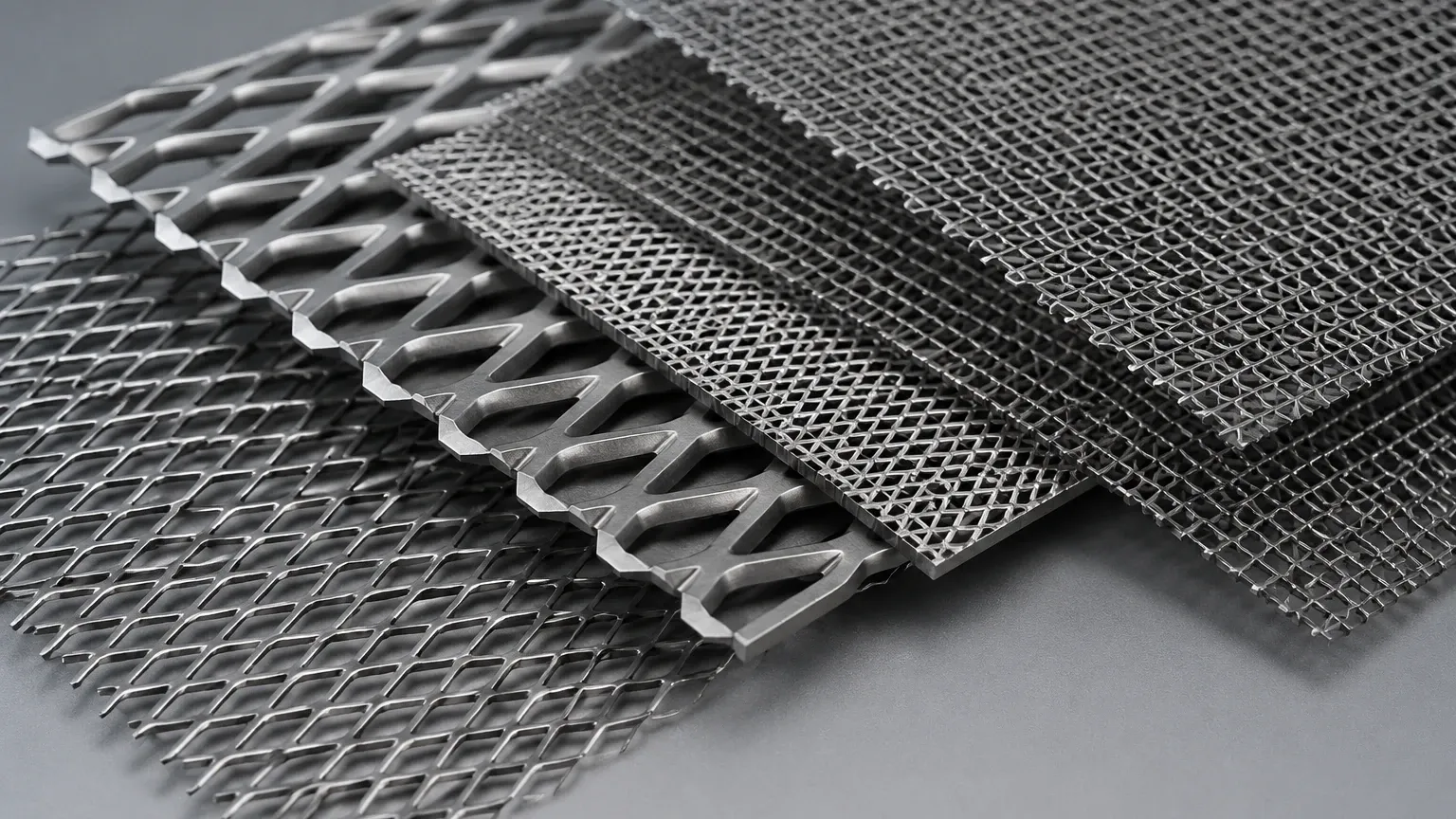
During manufacturing, a solid sheet or coil of metal is fed through a machine equipped with a reciprocating knife. As the knife slits the metal, it also stretches it, creating a uniform pattern of diamond-shaped openings. The resulting structure is a single piece of metal without joins or welds, which contributes to its inherent structural integrity. Because the strands and bonds are set at a uniform angle to the plane of the sheet, the material possesses a high strength-to-weight ratio and excellent directional properties.
In industrial contexts, the precision of this expansion process is paramount. While a search for expanded metal mesh b&q might lead to products with standard dimensions, industrial manufacturers like Kaifil offer customization of the diamond size, strand width, and overall thickness to meet specific flow rate and pressure drop requirements in filtration applications.
Technical Specifications: SWD, LWD, and Strand Geometry
To specify expanded metal for a B2B application, engineers must look beyond the general descriptions found in retail catalogs. The geometry of the diamond opening is defined by four primary measurements:
1. Short Way of Diamond (SWD): The distance from the center of one bond to the center of the next bond across the short axis of the diamond.
2. Long Way of Diamond (LWD): The distance from the center of one bond to the center of the next bond across the long axis of the diamond.
3. Strand Width: The amount of metal fed into the machine for each slit, which determines the thickness of the individual "ribs" of the mesh.
4. Strand Thickness: The original thickness of the base metal sheet.
For filtration purposes, the relationship between SWD and LWD determines the "open area" percentage. A higher open area allows for greater fluid or gas throughput but may reduce the structural rigidity of the mesh. In industrial filtration, calculating the precise open area is essential for maintaining system pressure and preventing pump cavitation or media bypass.
Furthermore, engineers must decide between "Raised" and "Flattened" expanded metal. Raised expanded metal (also known as standard expanded metal) retains the angular orientation of the strands, providing a textured surface and maximum rigidity. Flattened expanded metal is processed through a cold-rolling mill after expansion, resulting in a smooth, flat surface. Flattened mesh is often preferred in food and beverage or pharmaceutical applications where easy cleaning and the prevention of material entrapment are critical.
Comparing Retail (B&Q) vs. Industrial Grade Expanded Metal
While expanded metal mesh b&q options are suitable for garden trellises, vent covers, or basic security screening, they often fall short in industrial environments for several reasons:
Material Grade and Traceability
Retail products are frequently made from mild steel or low-grade aluminum with limited information on material composition. In contrast, industrial Perforated & Expanded Metal is typically manufactured from high-grade stainless steel (such as 304, 316, or 316L), duplex steels, or exotic alloys like Monel and Inconel. These materials offer the corrosion resistance and thermal stability required for chemical processing and high-temperature filtration. Industrial suppliers provide Mill Test Reports (MTRs) to ensure full traceability and compliance with industry standards.
Tolerances and Consistency
In a B2B procurement cycle, consistency is vital. A batch of expanded metal used as a support core for a filter cartridge must have exact dimensions to fit within the housing. Retail-grade mesh often has wider tolerances, which can lead to assembly failures or bypass issues in precision equipment. Industrial manufacturing utilizes CNC-controlled expansion lines to maintain tight tolerances across thousands of units.
Load-Bearing Requirements
In hydraulic and heavy industrial applications, expanded metal often serves as a structural support for finer filter media (such as wire cloth or non-woven fabrics). Retail mesh is rarely rated for specific load-bearing capacities or pressure differentials. Industrial engineers calculate the deflection and yield strength of the mesh to ensure it can withstand the stresses of high-viscosity fluids or high-pressure gas streams without collapsing.
Material Selection for Industrial Filtration
The choice of material is the most significant factor in the performance of expanded metal. For B2B buyers, stainless steel is the industry standard due to its versatility and durability.
* Stainless Steel 304: Suitable for general industrial use, offering good corrosion resistance and excellent formability. It is commonly used in water treatment and food processing where moderate chemical exposure is expected.
* Stainless Steel 316/316L: Contains molybdenum, which provides superior resistance to chlorides and pitting. This is the preferred choice for marine environments, pharmaceutical manufacturing, and aggressive chemical filtration.
* Specialty Alloys: For extreme environments involving high temperatures or highly acidic/alkaline solutions, expanded metal can be produced from materials like Hastelloy or Titanium. These are specialized solutions that are never available through retail channels like B&Q.
When selecting a material, engineers must consider the chemical compatibility with the fluid being filtered, the operating temperature, and the potential for galvanic corrosion if the mesh is in contact with dissimilar metals in the filter housing.
Applications of Perforated & Expanded Metal in Heavy Industry
Expanded metal is a versatile component found in numerous industrial systems. Its primary roles include:
1. Filter Media Support
Fine wire mesh filters lack the structural strength to resist high pressure. Expanded metal is often used as an inner or outer support tube (core) for pleated filter cartridges. The diamond pattern provides a robust framework while allowing maximum flow to reach the primary filter media.
2. Coarse Filtration and Strainers
In applications where large debris needs to be removed from a fluid stream—such as in cooling water intakes or raw chemical processing—expanded metal acts as the primary strainer. Its rigid, one-piece construction prevents the mesh from fraying or unraveling, which is a common failure point in woven wire meshes.
3. Flame Arrestors and Heat Shields
The high surface area of expanded metal makes it effective at dissipating heat. It is used in flame arrestor assemblies to prevent the propagation of flames through gas piping systems, providing a critical safety function in oil and gas facilities.
4. Acoustic Dampening and EMI Shielding
In power generation and aerospace, expanded metal is used in acoustic panels to reduce noise. Additionally, when made from conductive materials, it provides effective Electromagnetic Interference (EMI) shielding for sensitive electronic components within industrial machinery.
Procurement Considerations: Total Cost of Ownership
When evaluating expanded metal mesh b&q against industrial OEM solutions, B2B purchasing teams must consider the Total Cost of Ownership (TCO). While the initial unit price of a retail product may be lower, the long-term costs associated with frequent replacements, system downtime, and potential equipment damage far outweigh the savings.
Industrial-grade expanded metal from a manufacturer like Kaifil is designed for longevity. By selecting the correct material grade and strand geometry, engineers can extend the service life of filtration components, reduce maintenance intervals, and ensure the purity of the end product. Furthermore, working directly with a manufacturer allows for customized sizing, which reduces the need for secondary cutting or welding on-site, further lowering labor costs and material waste.
Conclusion: Choosing the Right Solution
While searching for expanded metal mesh b&q is a common starting point for those unfamiliar with the complexities of industrial metalwork, it is clear that B2B applications demand a higher level of technical rigor. For engineers and procurement professionals, the focus should remain on material integrity, geometric precision, and application-specific customization.
Whether you are designing a new hydraulic filtration system, upgrading a chemical processing line, or seeking a reliable support structure for fine filter media, choosing the right Perforated & Expanded Metal is essential. By partnering with a specialist manufacturer, you gain access to the engineering expertise and high-quality materials necessary to achieve optimal performance in the most demanding industrial environments.
