


Expanded Metal Enclosures
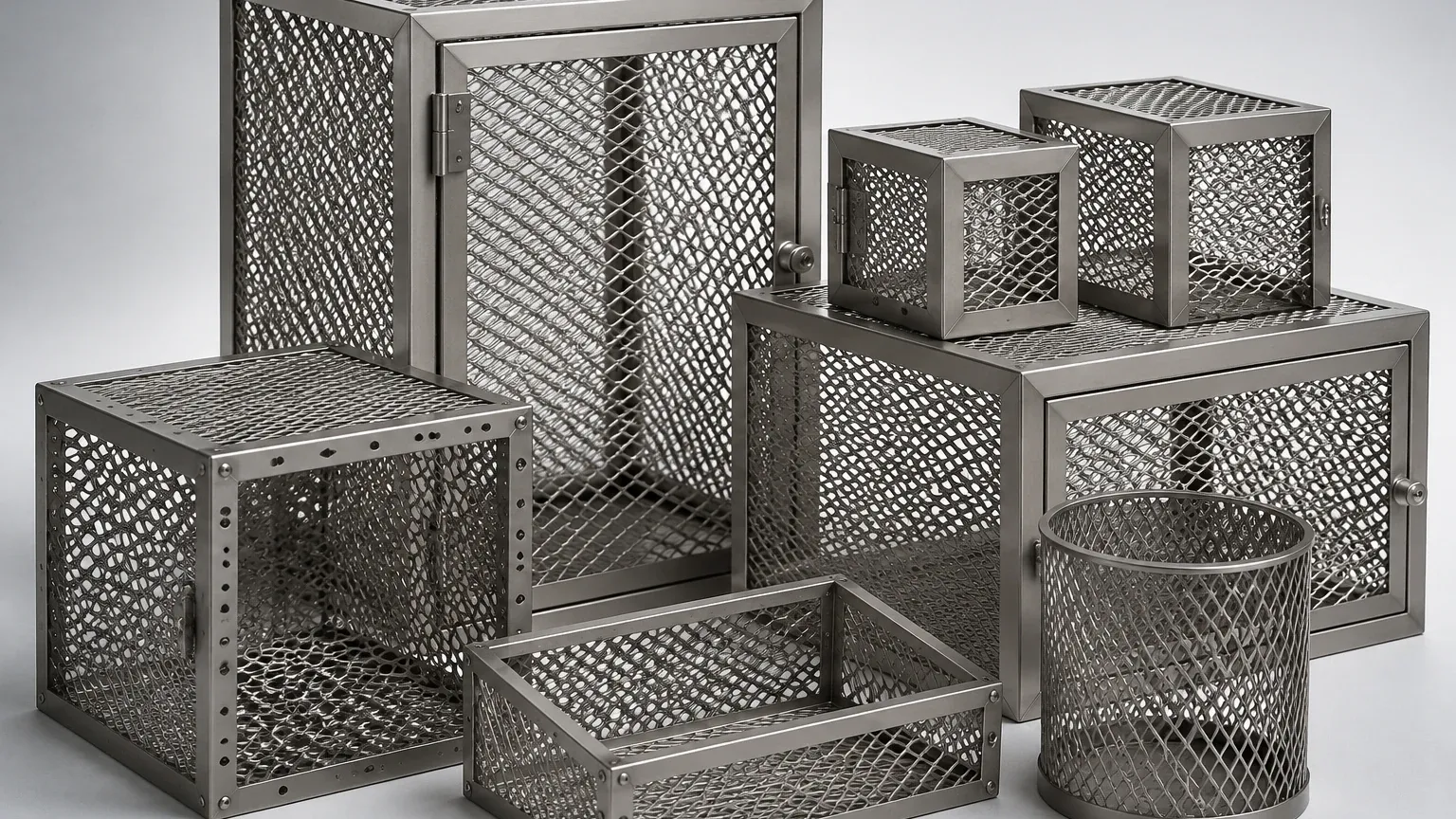
In industrial engineering and facility management, the selection of protective barriers and housing units requires a balance between structural rigidity, weight efficiency, and environmental permeability. Expanded metal enclosures have emerged as a standard solution for protecting sensitive machinery, facilitating ventilation in electrical housings, and providing secondary containment in filtration systems. Unlike traditional solid sheet metal or woven wire mesh, expanded metal offers a unique combination of mechanical properties derived from its specific manufacturing process.
For engineers and procurement specialists, understanding the technical nuances of Perforated & Expanded Metal is essential for ensuring that an enclosure meets the safety and operational requirements of a given application. This article examines the engineering fundamentals, material selection criteria, and design considerations necessary for implementing effective expanded metal enclosures in industrial environments.
Understanding the Structural Integrity of Expanded Metal
The performance of expanded metal enclosures begins with the manufacturing process. Expanded metal is produced by simultaneously slitting and stretching a solid metal sheet. This process creates a diamond-shaped pattern where the "strands" and "bonds" (the points where strands intersect) form a continuous, integral piece of material. Because the metal is expanded rather than punched, there is no material waste, and the resulting structure is often stronger per pound than the original solid sheet.
From an engineering perspective, the structural integrity of expanded metal enclosures is superior to many welded alternatives. In a welded mesh enclosure, the points of intersection are potential failure sites due to fatigue or corrosion at the weld. In expanded metal, the bonds are part of the parent metal, meaning the stress is distributed more uniformly across the entire panel. This makes expanded metal particularly effective for high-vibration environments, such as machine guards or enclosures for heavy-duty hydraulic equipment.
There are two primary forms of expanded metal used in enclosures: raised (or standard) and flattened. Raised expanded metal features strands that are turned at a sharp angle to the plane of the sheet, providing maximum rigidity and a high-grip surface. Flattened expanded metal is processed through a cold-rolling mill after expansion, resulting in a smooth, level surface. For enclosures where personnel may come into frequent contact with the surface, or where a slim profile is required, flattened expanded metal is typically the preferred specification.
Material Considerations for Industrial Enclosures
The choice of material for expanded metal enclosures is dictated by the operating environment, specifically regarding chemical exposure, temperature fluctuations, and mechanical impact.
Stainless Steel (Grades 304 and 316L)
For industries such as pharmaceutical manufacturing, food and beverage processing, and chemical treatment, stainless steel is the authoritative choice. Grade 304 provides excellent corrosion resistance for general industrial use. However, in environments involving high chloride concentrations or marine exposure, Grade 316L is required. The addition of molybdenum in 316L enhances pitting resistance, ensuring that the enclosure maintains its structural integrity over decades of service. Furthermore, stainless steel expanded metal can withstand high-temperature sterilization processes, making it ideal for enclosures within cleanroom environments.
Carbon Steel
In applications where corrosion is not a primary concern or where the enclosure will be powder-coated or galvanized, carbon steel offers a cost-effective alternative. It provides high tensile strength and impact resistance, making it suitable for heavy-duty machine guarding and warehouse partitions. Galvanized carbon steel is frequently used for outdoor enclosures to prevent oxidation while maintaining the structural benefits of steel.
Aluminum
When weight reduction is a critical design constraint, such as in aerospace or mobile industrial equipment, aluminum expanded metal is utilized. While it offers lower tensile strength than steel, its natural oxide layer provides a degree of corrosion resistance, and its high strength-to-weight ratio allows for the construction of large enclosures that are easy to maneuver or install.
Design Specifications: Mesh Geometry and Airflow
When specifying expanded metal enclosures, engineers must define the mesh geometry based on the required level of protection and the necessary airflow. The two primary measurements are the Long Way of the Diamond (LWD) and the Short Way of the Diamond (SWD). These dimensions, along with the strand width and thickness, determine the "open area" percentage of the enclosure.
Airflow and Heat Dissipation
In electrical and motor enclosures, heat dissipation is a primary concern. Expanded metal allows for significant airflow compared to perforated metal with similar hole sizes. The angled strands of raised expanded metal can also act as a directional louver, allowing air to pass through while shielding the internal components from direct overhead debris or moisture. Engineers must calculate the required cubic feet per minute (CFM) of airflow to ensure the mesh density does not lead to overheating of the enclosed equipment.
Security and Visibility
The diamond pattern of expanded metal provides a high degree of visibility, allowing operators to inspect machinery without opening the enclosure. However, the size of the diamond must be small enough to prevent unauthorized access or the entry of foreign objects. In safety-critical applications, such as finger guards for rotating fans, the SWD must be strictly controlled to meet OSHA or ISO safety standards.
Applications Across Critical Industrial Sectors
Expanded metal enclosures serve diverse roles across various sectors, often acting as the first line of defense for both personnel and sensitive equipment.
* Industrial Filtration Systems: In large-scale water treatment or chemical processing, expanded metal is used to create robust enclosures for filter cartridges and media. These enclosures protect the delicate inner filtration layers from mechanical damage during installation and operation while providing a rigid frame that can withstand high pressure differentials.
* Machine Guarding: In manufacturing plants, expanded metal enclosures are used to isolate moving parts of conveyors, presses, and robotic arms. The transparency of the mesh ensures that safety sensors and visual inspections remain functional while providing a physical barrier against impact.
* Power and Utilities: Electrical transformers and high-voltage switchgear often require enclosures that prevent physical contact while allowing for constant cooling. Expanded metal's conductive properties also allow it to be integrated into grounding systems for EMI/RFI shielding in specialized electronic enclosures.
* HVAC and Ventilation: External air intake units use expanded metal enclosures to prevent birds, rodents, and large debris from entering the ventilation system, ensuring that the primary filters are not prematurely clogged by large contaminants.
Quality Standards and Evaluation for Procurement
For purchasing teams, evaluating the quality of expanded metal enclosures requires looking beyond basic dimensions. Precision in manufacturing is critical for ensuring that panels fit perfectly into frames and that the mesh remains consistent across large production runs.
Edge Finishing and Safety
One of the most common risks with expanded metal is the presence of sharp edges or burrs. During the expansion process, the metal is sheared, which can leave rough edges. For high-quality enclosures, it is essential to confirm that the material has been properly deburred or that the design includes a U-edging or frame that encapsulates the raw edges. This is particularly important in the food and pharmaceutical industries, where snagging or material shedding can lead to contamination.
Flatness and Tolerances
In large-scale enclosures, panel flatness is vital for ease of assembly. Bowed or warped panels can create gaps in the enclosure, compromising security and aesthetics. Procurement specialists should verify the manufacturer’s tolerances for camber and out-of-squareness. High-precision manufacturing ensures that the diamond pattern aligns perfectly across multiple panels, which is essential for both structural uniformity and visual consistency.
Maintenance, Durability, and Total Cost of Ownership
The total cost of ownership (TCO) for expanded metal enclosures is generally lower than that of alternative materials due to their durability and low maintenance requirements. Because the structure is a single piece of metal, there are no joints to loosen or welds to crack over time.
Cleaning and Hygiene
In hygienic applications, the open structure of expanded metal allows for easy "wash-down" procedures. Unlike solid enclosures that can trap moisture and bacteria in corners, expanded metal promotes rapid drying and allows cleaning agents to reach all surfaces of the mesh. Stainless steel variants are particularly resistant to the harsh caustic chemicals used in CIP (Clean-In-Place) cycles.
Replacement Cycles
The lifespan of an expanded metal enclosure is largely determined by its material and environmental exposure. A 316L stainless steel enclosure in a controlled indoor environment can last indefinitely. In contrast, a carbon steel enclosure in an outdoor setting will require periodic inspection for coating degradation. When an enclosure does reach the end of its service life, the material is 100% recyclable, aligning with corporate sustainability goals.
Conclusion
Expanded metal enclosures provide a versatile, high-strength solution for industrial protection and filtration support. By selecting the appropriate material, mesh geometry, and finish, engineers can design enclosures that optimize airflow, ensure safety, and withstand the rigors of demanding industrial environments. When sourcing these components, partnering with a manufacturer that understands the technical requirements of precision filtration and metal fabrication is essential for achieving long-term operational efficiency. Confirming specifications such as LWD/SWD, material grade, and edge treatment before production will ensure that the final enclosure meets the rigorous standards required by modern industry.
