


Expanded Metal Pieces
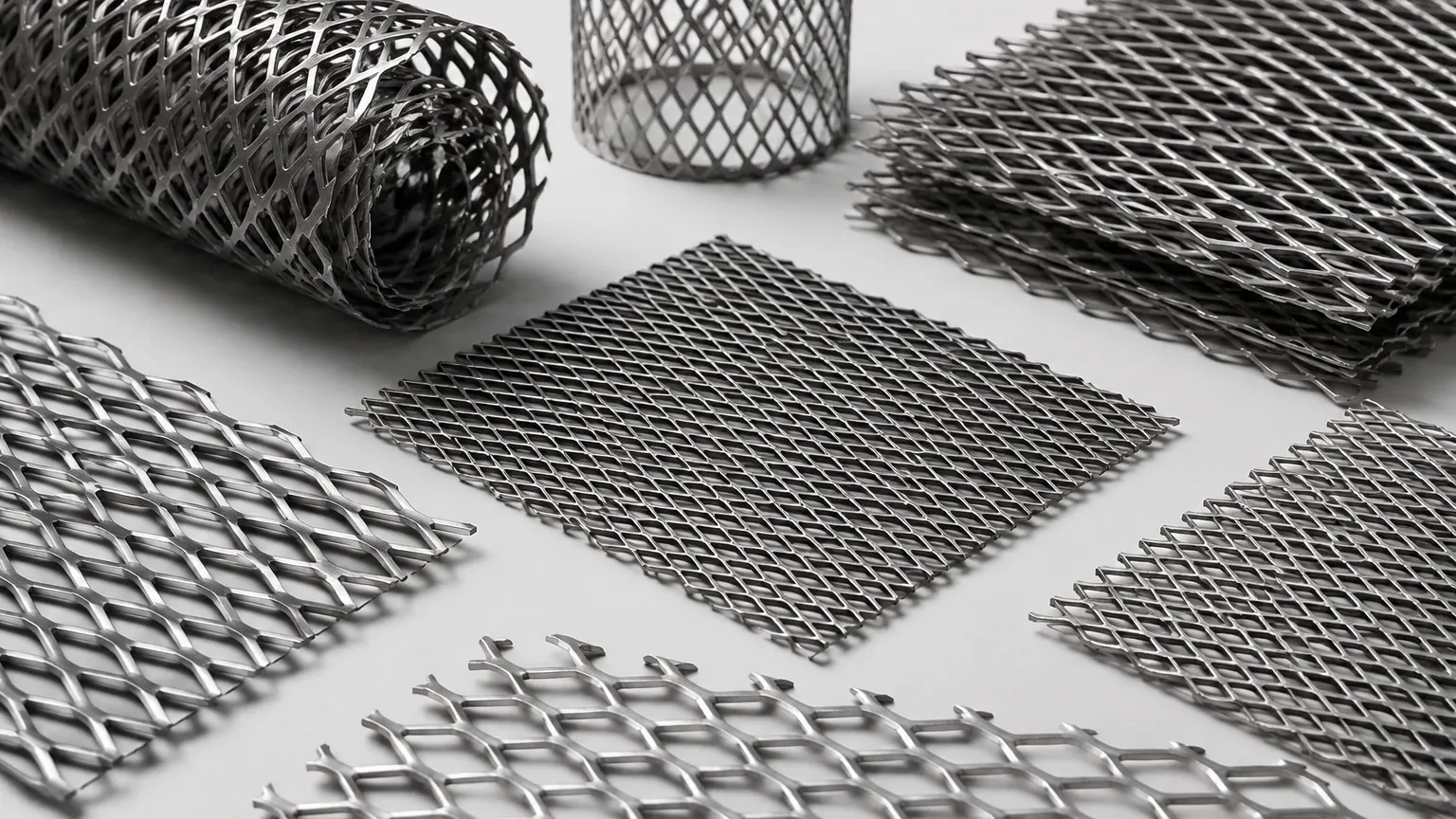
In industrial engineering and filtration design, the selection of structural support materials is as critical as the selection of the primary filter media. Expanded metal pieces represent a versatile and cost-effective solution for providing mechanical strength, flow distribution, and protective barriers in demanding environments. Unlike woven wire mesh or perforated sheets, expanded metal is manufactured through a unique process of simultaneous slitting and stretching, which creates a continuous, jointless structure that maintains its integrity even when cut into complex shapes.
For engineers and procurement professionals, understanding the technical nuances of expanded metal—from its geometric properties to material compatibility—is essential for optimizing the performance of filtration systems and industrial equipment. This guide examines the engineering principles, manufacturing variations, and application-specific considerations for integrating expanded metal components into industrial workflows.
The Engineering and Manufacturing of Expanded Metal
The production of expanded metal is a precision process that transforms a solid metal sheet into a diamond-patterned mesh. A machine equipped with a reciprocating knife slits and stretches the metal in a single motion. Because no material is lost during the punching process—unlike in perforated metal production—it is often a more sustainable and cost-efficient choice for large-scale industrial projects.
The resulting Perforated & Expanded Metal structures possess a high strength-to-weight ratio. The strands and bonds (the intersections of the strands) are set at a uniform angle to the plane of the sheet. This configuration provides inherent directional strength and allows for controlled transparency and airflow. When specifying expanded metal pieces, engineers must distinguish between the two primary forms: standard (raised) and flattened.
Standard (Raised) Expanded Metal
Standard expanded metal comes directly from the expanding machine. The strands and bonds are set at a sharp angle, giving the sheet a three-dimensional, textured surface. This profile is advantageous for applications requiring maximum rigidity or slip resistance, as well as for certain filtration pre-stages where the angled strands can help deflect larger debris.
Flattened Expanded Metal
Flattened expanded metal is produced by passing standard expanded metal through a cold-roll reducing mill. This process flattens the strands and bonds into the same plane as the original sheet, resulting in a smooth, level surface. Flattened pieces are typically preferred when the metal serves as a support layer for delicate filter membranes, as the smooth surface prevents puncturing or abrasion of the media.
Technical Specifications and Geometric Parameters
To ensure that expanded metal pieces meet the requirements of a specific application, several geometric variables must be precisely defined. These parameters dictate the mesh's open area, flow resistance, and mechanical load-bearing capacity.
1. Long Way of Diamond (LWD): The distance from the center of one bond to the center of the next bond measured across the long axis of the diamond.
2. Short Way of Diamond (SWD): The distance from the center of one bond to the center of the next bond measured across the short axis of the diamond.
3. Long Way of Opening (LWO): The actual clear opening distance across the long axis.
4. Short Way of Opening (SWO): The clear opening distance across the short axis, which is the primary factor in determining the size of particles that can pass through the mesh.
5. Strand Width and Thickness: The width of the metal slit by the knife and the thickness of the original base material. Together, these determine the overall weight and structural integrity of the piece.
Calculating the open area percentage is vital for filtration applications to predict pressure drop across the system. Engineers must balance the need for a high open area (to minimize flow resistance) with the need for sufficient strand thickness to withstand the differential pressure of the process fluid.
Material Selection for Industrial Filtration
The chemical and thermal environment of the application dictates the material choice for expanded metal pieces. In industrial filtration, where exposure to corrosive fluids, high temperatures, and high pressures is common, stainless steel is the industry standard.
* Type 304 Stainless Steel: This is the most common grade, offering excellent strength and basic corrosion resistance. It is suitable for food and beverage applications, general industrial filtration, and water treatment where chloride exposure is minimal.
* Type 316/316L Stainless Steel: For chemical processing, pharmaceutical manufacturing, or marine environments, Type 316 is preferred due to the addition of molybdenum, which enhances resistance to pitting and crevice corrosion in chloride-rich environments.
* Specialty Alloys: In extreme cases involving highly acidic or high-temperature gases, alloys such as Monel, Inconel, or Hastelloy may be used to ensure the longevity of the filter components.
Beyond corrosion resistance, the material must also be compatible with the fabrication processes required for the final assembly, such as TIG or MIG welding, forming, or specialized coating.
Role of Expanded Metal in Filtration Systems
In many industrial filter cartridges, expanded metal pieces do not act as the primary filtration stage but rather as a critical support structure. Their role is multi-faceted:
Structural Reinforcement (Cores and Cages)
In high-pressure hydraulic or chemical filtration, the primary filter media (such as fine wire mesh or fiber felt) lacks the structural rigidity to withstand the force of the fluid flow. Expanded metal is rolled into cylinders to form the inner core or outer cage of the cartridge. The diamond pattern provides uniform support across the entire surface of the media, preventing collapse or pleat bunching under high differential pressure.
Pre-Filtration and Coarse Screening
In water intake systems or heavy industrial cooling loops, expanded metal pieces serve as the first line of defense. They capture large debris, such as stones, wood, or plastic, protecting more sensitive downstream components from mechanical damage. The angled strands of raised expanded metal can be particularly effective at breaking up laminar flow and trapping irregular solids.
Flow Diffusion
Expanded metal can be used to distribute the flow of liquids or gases evenly across a larger surface area. By placing an expanded metal layer before a fine filter membrane, engineers can reduce the velocity of the fluid at specific points, preventing "hot spots" where the media might otherwise blind prematurely.
Comparing Expanded Metal vs. Perforated Metal
When designing a system, engineers often weigh the benefits of expanded metal against perforated metal. While both serve similar functions, there are distinct technical trade-offs.
* Material Efficiency: Expanded metal is more efficient to produce because it involves no scrap. Perforated metal requires the removal of material to create holes, which can increase the cost, especially when using expensive alloys like 316L stainless steel.
* Strength-to-Weight Ratio: Expanded metal is often stronger than perforated metal of the same weight because the strands are oriented at an angle, creating a truss-like structure. However, perforated metal offers more precise control over hole geometry and spacing.
* Surface Texture: Perforated metal is naturally flat, whereas expanded metal requires secondary processing to achieve a flat surface. If the application requires a perfectly smooth interface with a gasket or seal, perforated metal or flattened expanded metal must be specified.
* Flow Characteristics: The diamond shape of expanded metal creates a more turbulent flow compared to the round or square holes of perforated sheets. This can be an advantage or a disadvantage depending on whether the goal is mixing or maintaining laminar flow.
Customization and Procurement Considerations
Sourcing expanded metal pieces for specialized industrial applications requires clear communication of technical requirements to the manufacturer. Standard off-the-shelf sheets are rarely sufficient for precision filtration components. Customization options often include:
Precision Cutting and Tolerances
Expanded metal can be supplied in custom-cut pieces, circles, or complex geometries. It is important to specify whether the edges should be "bonded" (cut through the intersections for a smooth edge) or "random" (cut through the strands, which may leave sharp points). For filter assembly, bonded edges are typically required to ensure safe handling and proper welding.
Secondary Fabrication
Many projects require expanded metal to be formed into specific shapes, such as cones, cylinders, or baskets. Manufacturers like Kaifil provide integrated services where the expanded metal is not only cut but also rolled and welded into a finished component, ensuring that the structural integrity of the diamond pattern is maintained throughout the seam.
Surface Treatments
To further enhance performance, expanded metal pieces can undergo various treatments. Electropolishing is common in the pharmaceutical and food industries to remove burrs and create a mirror-like finish that resists bacterial growth. Passivation is another essential step for stainless steel components to restore the protective oxide layer after fabrication.
Confirming Requirements Before Purchase
Before finalizing an order for expanded metal pieces, technical teams should confirm several key factors to avoid performance failures or installation issues:
* Load Requirements: What is the maximum pressure or mechanical load the piece must support? This will determine the required strand thickness and material grade.
* Dimensional Accuracy: Are the SWD and LWD dimensions critical for the assembly? Ensure that tolerances are clearly defined on the technical drawings.
* Edge Finishing: Will the piece be handled by operators or come into contact with soft filter media? If so, specify flattened metal and bonded edges to prevent injury or equipment damage.
* Environmental Compatibility: Verify that the chosen alloy can withstand the specific chemical composition and temperature fluctuations of the process fluid.
By addressing these engineering considerations early in the design phase, companies can ensure that their filtration systems operate with maximum efficiency and minimal downtime. Expanded metal remains a cornerstone of industrial design, providing the necessary balance of strength, permeability, and cost-effectiveness required for modern manufacturing and processing environments.
