


Quarter Inch Expanded Metal
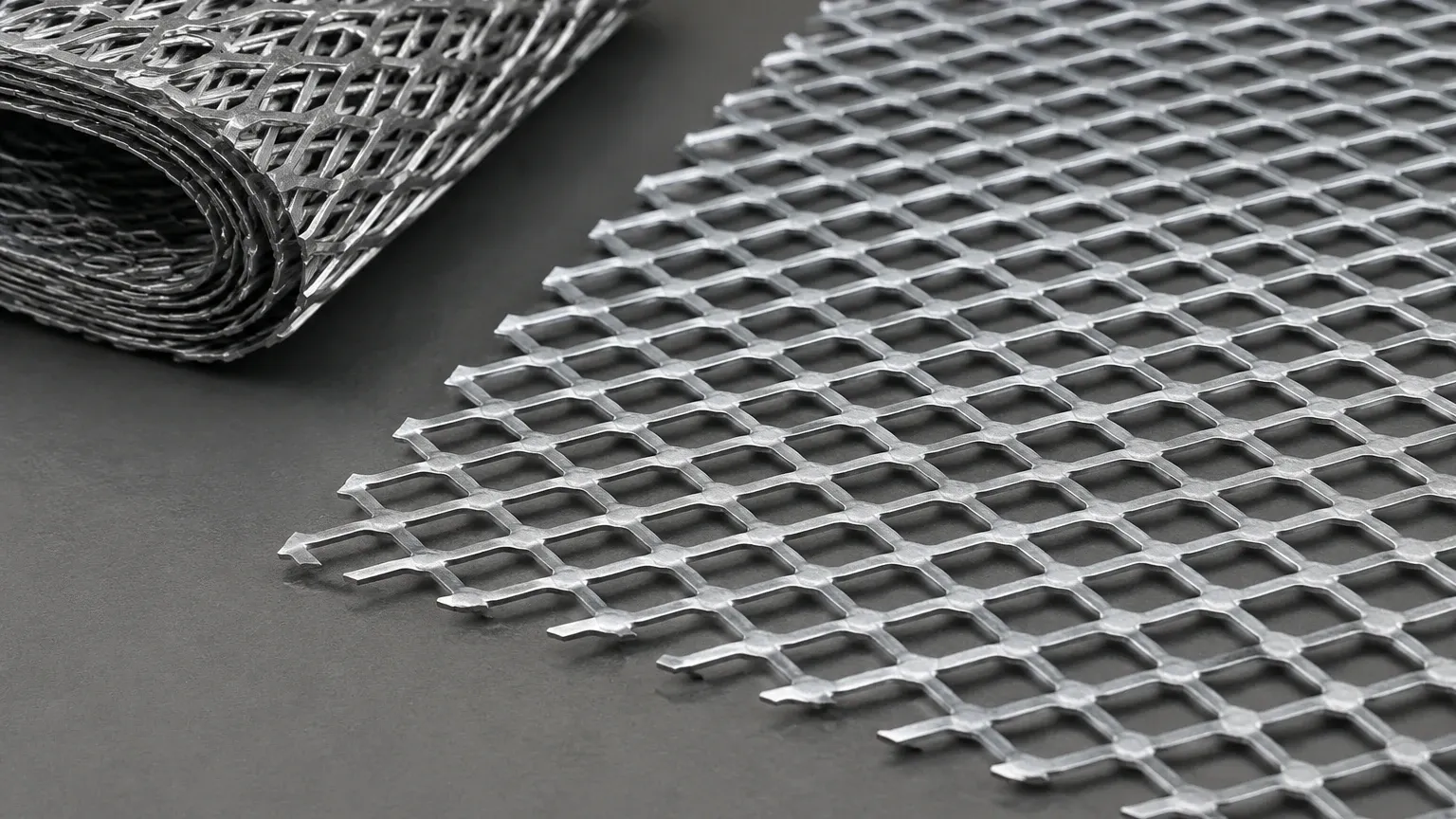
In the realm of industrial filtration and structural components, the selection of material geometry is as critical as the material composition itself. Quarter inch expanded metal represents a specific specification within the broader category of expanded metal products, characterized by its precise diamond-shaped openings. Unlike perforated metal, which is created by punching holes and removing material, expanded metal is manufactured through a process of simultaneous slitting and stretching. This results in a continuous piece of mesh that maintains structural integrity while offering a high strength-to-weight ratio.
For engineers and procurement professionals, understanding the nuances of Perforated & Expanded Metal is essential for optimizing system performance, particularly in demanding environments such as chemical processing, food production, and hydraulic systems. This guide examines the technical specifications, manufacturing considerations, and industrial applications of quarter inch expanded metal.
Technical Specifications and Geometry
When specifying quarter inch expanded metal, the term "quarter inch" typically refers to the Short Way of Design (SWD), which is the distance from the center of one bond to the center of the next bond across the short axis of the diamond. However, in technical procurement, it is vital to distinguish between the nominal size and the actual clear opening.
Key Dimensional Variables
1. SWD (Short Way of Design): The nominal 1/4 inch dimension. This determines the density of the mesh and the frequency of the diamond pattern.
2. LWD (Long Way of Design): The distance across the long axis of the diamond. For a standard 1/4" SWD, the LWD typically ranges from 0.5" to 1.0", depending on the stretch ratio applied during manufacturing.
3. Strand Width: The amount of metal between the openings. Increasing the strand width increases the overall weight and strength of the sheet but reduces the open area percentage.
4. Strand Thickness: The gauge of the original base metal. In industrial filtration, common thicknesses range from 0.015" to 0.125".
5. Open Area Percentage: This is a critical metric for filtration applications. A quarter inch expanded metal pattern can provide anywhere from 40% to 70% open area, influencing flow rates and pressure drop characteristics.
Manufacturing Process and Material Options
The manufacturing of expanded metal is an efficient, zero-waste process. A solid sheet of metal is fed through a machine equipped with a specialized knife that slits the metal while simultaneously stretching it forward. This expansion creates the characteristic diamond pattern and turns the flat strands at an angle to the original plane of the sheet.
Material Selection for Industrial Environments
* Stainless Steel (304 and 316L): This is the standard choice for Kaifil’s filtration solutions. Stainless steel provides excellent corrosion resistance and is suitable for high-temperature applications. 316L is specifically preferred in pharmaceutical and chemical processing due to its superior resistance to pitting and chloride-induced stress corrosion.
* Carbon Steel: Often used in structural applications or where the environment is non-corrosive. It offers high tensile strength at a lower cost point.
* Aluminum: Selected for applications requiring lightweight components. It offers moderate corrosion resistance and is non-magnetic, making it ideal for certain electronic or aerospace filtration housings.
* Specialty Alloys: For extreme environments, materials like Monel, Inconel, or Titanium can be expanded to meet specific chemical compatibility requirements.
Flattened vs. Raised Expanded Metal
One of the primary decisions an engineer must make when selecting quarter inch expanded metal is whether to use the "raised" (standard) or "flattened" version.
Raised Expanded Metal
In its raw state, the strands of expanded metal are set at an angle. This creates a three-dimensional surface that provides excellent grip and high rigidity. In filtration, the raised profile can create turbulence, which may be desirable in certain mixing applications or to prevent the "blinding" of a filter surface by creating a non-planar contact area.
Flattened Expanded Metal
Flattened expanded metal is produced by passing the raised sheet through a cold-rolling reducing mill. This process levels the strands and bonds into a single plane, resulting in a smooth, flat surface. Flattened mesh is often preferred when the expanded metal serves as a support layer for a finer wire mesh. The smooth surface prevents the finer mesh from being abraded or punctured under high-pressure conditions.
Applications in Industrial Filtration and Support
Quarter inch expanded metal is a versatile component in the design of industrial filter cartridges and strainers. Its structural properties make it an ideal candidate for several specific roles:
1. Filter Media Support and Caging
In high-pressure hydraulic or gas filtration, fine wire mesh or fiber media often lack the structural rigidity to withstand the differential pressure. A layer of quarter inch expanded metal provides a robust "cage" or inner core. It maintains the shape of the filter element and prevents the media from collapsing or migrating downstream.
2. Pre-Filtration and Coarse Straining
In water treatment or food processing, 1/4" expanded metal serves as an effective primary stage to remove large debris, such as stones, wood chips, or large organic matter, before the fluid reaches more sensitive, finer filtration stages. The diamond geometry is particularly effective at catching irregular shapes that might pass through circular perforations of the same nominal size.
3. Diffusers and Flow Distributors
The angular nature of the strands in raised expanded metal can be utilized to break up laminar flow and create more uniform distribution across a larger filter bed. This ensures that the entire surface area of the primary filter media is utilized, extending the service life of the component.
4. Heat Shielding and Guards
Beyond fluid filtration, these components are frequently used in industrial machinery as protective guards around hot or moving parts. The 1/4" opening is small enough to prevent accidental contact with fingers or tools while allowing for maximum airflow and heat dissipation.
Engineering Considerations for Selection
When integrating quarter inch expanded metal into a product design, engineers must evaluate several performance factors to ensure long-term reliability and cost-effectiveness.
Pressure Drop and Flow Resistance
Because expanded metal strands are angled (in the raised version), they present a different profile to fluid flow than flat perforated sheets. Engineers must calculate the effective open area based on the angle of incidence of the fluid. If the pressure drop is a critical constraint, a flattened mesh with a thinner strand width may be required to maximize the clear opening.
Mechanical Strength and Load Bearing
The orientation of the mesh matters. Expanded metal has significantly higher strength across the Short Way of Design (SWD) than the Long Way of Design (LWD). When used as a support floor or a pressurized cylinder, the orientation of the diamonds relative to the load direction must be specified to prevent deformation.
Corrosion and Material Compatibility
In chemical processing, the "cut edges" of expanded metal are areas where the protective oxide layer of stainless steel may be thinner or where crevices can form. It is essential to confirm that the chosen alloy is compatible with the process fluid, especially at the bond points where stresses are highest.
Quality Control and Customization Options
At Kaifil, we recognize that standard off-the-shelf components often fall short of the requirements for precision industrial equipment. Customization is often necessary to achieve the perfect balance of filtration accuracy and structural integrity.
Custom Dimensions and Tolerances
While "quarter inch" is a standard, the actual SWD can be adjusted during the manufacturing process to meet specific flow requirements. Furthermore, sheet sizes can be custom-cut to eliminate waste and ensure a perfect fit within filter housings. Precision shearing ensures that edges are clean and ready for welding or mechanical fastening.
Edge Finishing
For many B2B applications, the sharp edges of expanded metal are a concern. We offer various edge treatments, including "random sheared" (where diamonds are cut through) or "bond sheared" (where the cut follows the solid bond points), providing a safer and more stable edge for assembly.
Surface Treatments
To enhance performance, expanded metal can undergo additional processing, such as:
* Electropolishing: Removes surface impurities and creates a mirror-like finish, essential for food and pharmaceutical applications to prevent bacterial growth.
* Passivation: Strengthens the protective chromium oxide layer on stainless steel to maximize corrosion resistance.
* Annealing: Relieves the internal stresses created during the expansion process, making the metal easier to form into cylinders or complex shapes.
Conclusion: Making Informed Procurement Decisions
Selecting the right quarter inch expanded metal involves more than just picking a diamond size. It requires a comprehensive evaluation of material properties, manufacturing styles (raised vs. flattened), and the specific demands of the application environment. By focusing on technical accuracy and engineering requirements, purchasing teams can ensure they receive components that offer the best total cost of ownership through durability and optimized performance.
For those seeking specialized filtration components, reviewing Perforated & Expanded Metal options is the first step toward a customized solution. Whether the goal is to provide structural support for a high-pressure hydraulic filter or to create a durable pre-filter for a chemical reactor, the versatility of expanded metal remains an industry standard for a reason. By partnering with a manufacturer that understands the nuances of metal expansion and filtration engineering, companies can achieve higher efficiency and greater system reliability.
