


Expanded Metal Ramp
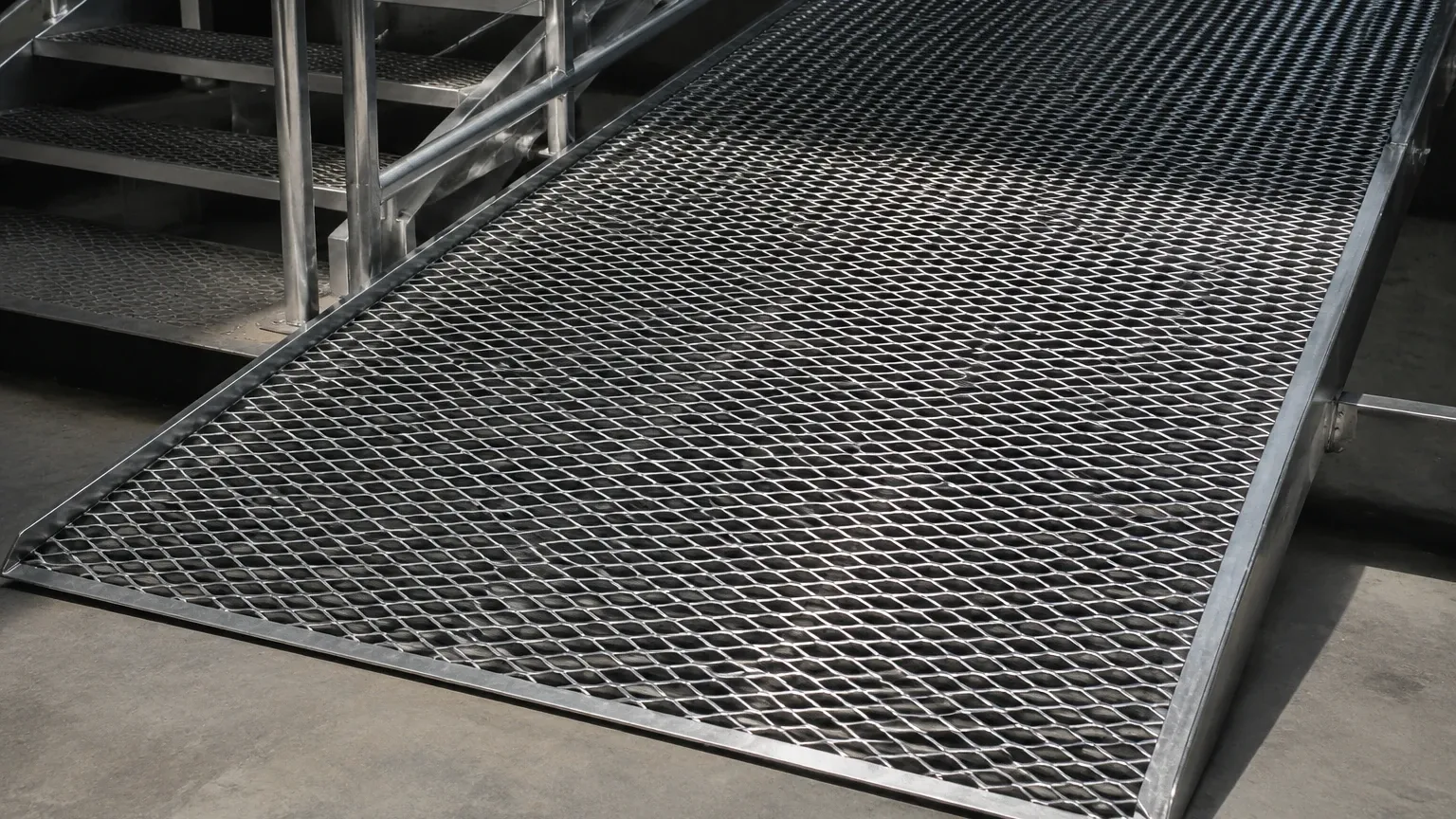
In industrial and commercial environments, the safety and efficiency of material handling often depend on the structural integrity of access equipment. An expanded metal ramp serves as a critical component in these settings, providing a high-traction, durable surface for the movement of goods, vehicles, and personnel. Unlike solid plate surfaces, expanded metal offers a unique combination of strength-to-weight ratio and open-area functionality that addresses specific engineering challenges such as slip resistance, drainage, and structural load distribution.
For engineers and procurement professionals, selecting the correct specifications for an expanded metal ramp involves understanding the manufacturing process, material properties, and the mechanical behavior of the mesh under load. This guide explores the technical considerations necessary for integrating expanded metal into ramp systems, ensuring long-term performance in demanding industrial applications.
The Engineering of Expanded Metal for Ramps
Expanded metal is manufactured through a process of simultaneous slitting and stretching. A single sheet of metal—typically stainless steel, carbon steel, or aluminum—is fed through a machine where a reciprocating knife cuts and expands the material into a continuous diamond-shaped pattern. This process is highly efficient as it produces no scrap material, unlike perforated metal which involves punching out holes.
When utilized in the construction of an expanded metal ramp, the resulting mesh possesses structural characteristics that are distinct from other metal forms:
1. Monolithic Structure: Because the mesh is formed from a single piece of metal, there are no welds or joints within the sheet itself. This eliminates the risk of joint failure under repetitive stress, which is common in traditional bar grating.
2. Raised vs. Flattened Mesh: For ramp applications, "raised" (or standard) expanded metal is almost always preferred. In this form, the strands and bonds are set at a sharp angle to the plane of the sheet. This creates a multi-directional, jagged surface that provides exceptional mechanical grip for tires and footwear.
3. High Strength-to-Weight Ratio: The expansion process creates a truss-like structure. This allows the material to support significant loads while remaining much lighter than a solid plate of equivalent thickness, reducing the dead weight of the ramp assembly.
For projects requiring specific hole patterns or high-precision finishes, sourcing from a specialist in Perforated & Expanded Metal ensures that the material meets the tight tolerances required for industrial safety standards.
Critical Evaluation Criteria for Ramp Design
When designing or specifying an expanded metal ramp, several technical variables must be confirmed to ensure the system is fit for purpose. Engineers must look beyond the aesthetic of the diamond pattern and focus on the mechanical specifications.
Load-Bearing Capacity and Span
The primary concern for any ramp is its ability to handle the intended load without excessive deflection. In an expanded metal ramp, the load-bearing capacity is determined by the strand thickness, the strand width, and the overall weight per square foot.
It is vital to note that expanded metal has a "directional" strength. The Long Way of the Diamond (LWD) should generally run perpendicular to the support members to maximize the structural integrity of the span. Engineers must calculate the maximum expected point load (such as a forklift wheel) rather than just the uniform live load to prevent localized deformation of the mesh.
Material Selection and Corrosion Resistance
The choice of alloy significantly impacts the lifecycle of the ramp.
* Stainless Steel (304 or 316): Ideal for chemical processing, food and beverage, or pharmaceutical environments. Stainless steel expanded metal offers superior resistance to corrosive agents and high-pressure washdowns, which are common in Kaifil’s core industries.
* Carbon Steel: Frequently used in heavy-duty industrial loading docks. To prevent oxidation, carbon steel ramps are typically hot-dip galvanized or powder-coated.
* Aluminum: Selected for portable or mobile ramps where weight reduction is a priority. While aluminum is corrosion-resistant, its load-bearing capacity per inch of thickness is lower than steel, requiring deeper structural supports.
Traction and Slip Resistance
The "raised" profile of expanded metal provides inherent slip resistance. However, the aggressiveness of this traction can be customized. For ramps used by pedestrians or those with pneumatic tires, a standard diamond size (e.g., 3/4" #9) is common. For heavy-duty vehicle ramps, a larger, heavier gauge mesh may be required to provide deeper "teeth" for tire engagement, especially in wet, oily, or icy conditions.
Advantages of Expanded Metal Over Alternative Surfaces
Choosing an expanded metal ramp over solid plate or traditional bar grating offers several operational advantages that contribute to a lower total cost of ownership.
Superior Drainage and Debris Management
One of the most significant risks in industrial environments is the accumulation of liquids, oils, or snow on walking and driving surfaces. The open area of an expanded metal ramp allows these substances to pass through the surface immediately. This self-cleaning property ensures that the contact points between the vehicle tires (or boots) and the metal strands remain clear, maintaining traction even in adverse weather or during industrial cleaning cycles.
Air and Light Permeability
In multi-level facilities or over-the-road loading areas, maintaining airflow and light visibility is essential for safety. Expanded metal allows for the passage of light and air, which can reduce the need for additional lighting under ramp structures and prevent the buildup of hazardous fumes in semi-enclosed loading bays.
Ease of Installation and Customization
Because expanded metal is relatively lightweight and easy to cut to shape, it allows for faster installation. It can be easily welded to a perimeter frame or bolted down using specialized clips. For OEM applications, manufacturers like Kaifil can provide customized filtration and metal components that integrate seamlessly into larger ramp systems, ensuring that the mesh dimensions align perfectly with the structural framing.
Common Risks and Mitigation Strategies
While an expanded metal ramp is a robust solution, certain risks must be addressed during the specification and maintenance phases to avoid premature failure.
Stress Concentrations and Fatigue
In ramps subjected to high-frequency traffic, such as automated guided vehicles (AGVs) or constant forklift movement, the bonds of the expanded metal can experience fatigue. If the mesh is not properly supported by a sub-frame, the repetitive flexing will eventually lead to cracks in the strands.
Mitigation: Ensure that the support spacing (the distance between cross-members) is calculated based on the deflection limits of the specific mesh gauge. Using a heavier gauge than strictly necessary can significantly extend the fatigue life of the ramp.
Sharp Edges and Handling
By its nature, raised expanded metal has sharp edges. While this is the source of its traction, it can be a hazard during installation or if used in applications where skin contact is likely (e.g., residential accessibility).
Mitigation: For pedestrian-facing ramps, engineers may specify a "deburred" or "leveled" edge, or choose a specific diamond size that balances grip with safety. In industrial settings, the perimeter of the expanded metal should always be encased in a U-edging or welded securely into a C-channel frame to hide raw cut edges.
Corrosion in Hidden Areas
In environments with high moisture or chemical exposure, the points where the expanded metal meets the support frame can trap debris and moisture, leading to crevice corrosion.
Mitigation: Utilizing stainless steel components or ensuring a high-quality hot-dip galvanized finish after the ramp is fully fabricated (including all welds) is the most effective way to prevent localized rust. Regular inspection of the bond points is recommended to identify early signs of coating failure.
Information to Confirm Before Procurement
Before finalizing the order for an expanded metal ramp or the materials to build one, the following technical details should be confirmed with the manufacturer or engineering team:
1. Specific Load Requirements: What is the maximum weight, and is it a static or dynamic load? Are there high-impact loads (e.g., dropping pallets)?
2. Environmental Conditions: Will the ramp be exposed to salt air, caustic chemicals, or extreme temperature fluctuations? This dictates the material grade (e.g., 316 vs 304 stainless steel).
3. Diamond Orientation: Confirm that the LWD (Long Way of Diamond) is oriented correctly relative to the support structure to optimize strength.
4. Percent of Open Area: If the ramp is part of a ventilation or drainage system, the specific percentage of open area must be calculated to meet airflow or fluid flow requirements.
5. Surface Finish: Is a mill finish sufficient, or does the application require pickling and passivation (for stainless) or galvanizing (for carbon steel)?
Conclusion
The expanded metal ramp remains a staple of industrial design due to its uncompromising traction and structural efficiency. By selecting the appropriate material grade and mesh configuration, engineers can create access solutions that withstand the rigors of heavy industrial use while prioritizing operator safety.
For organizations looking to optimize their filtration or metal component infrastructure, understanding the nuances of material expansion is key. Whether the application is a heavy-duty loading dock or a precision-engineered walkway in a pharmaceutical plant, the technical integrity of the Perforated & Expanded Metal used will determine the safety and longevity of the installation. Proper engineering at the outset—focusing on load paths, material compatibility, and environmental resistance—ensures that the ramp remains a reliable asset for years to come.
