


Expanded Metal Running Boards
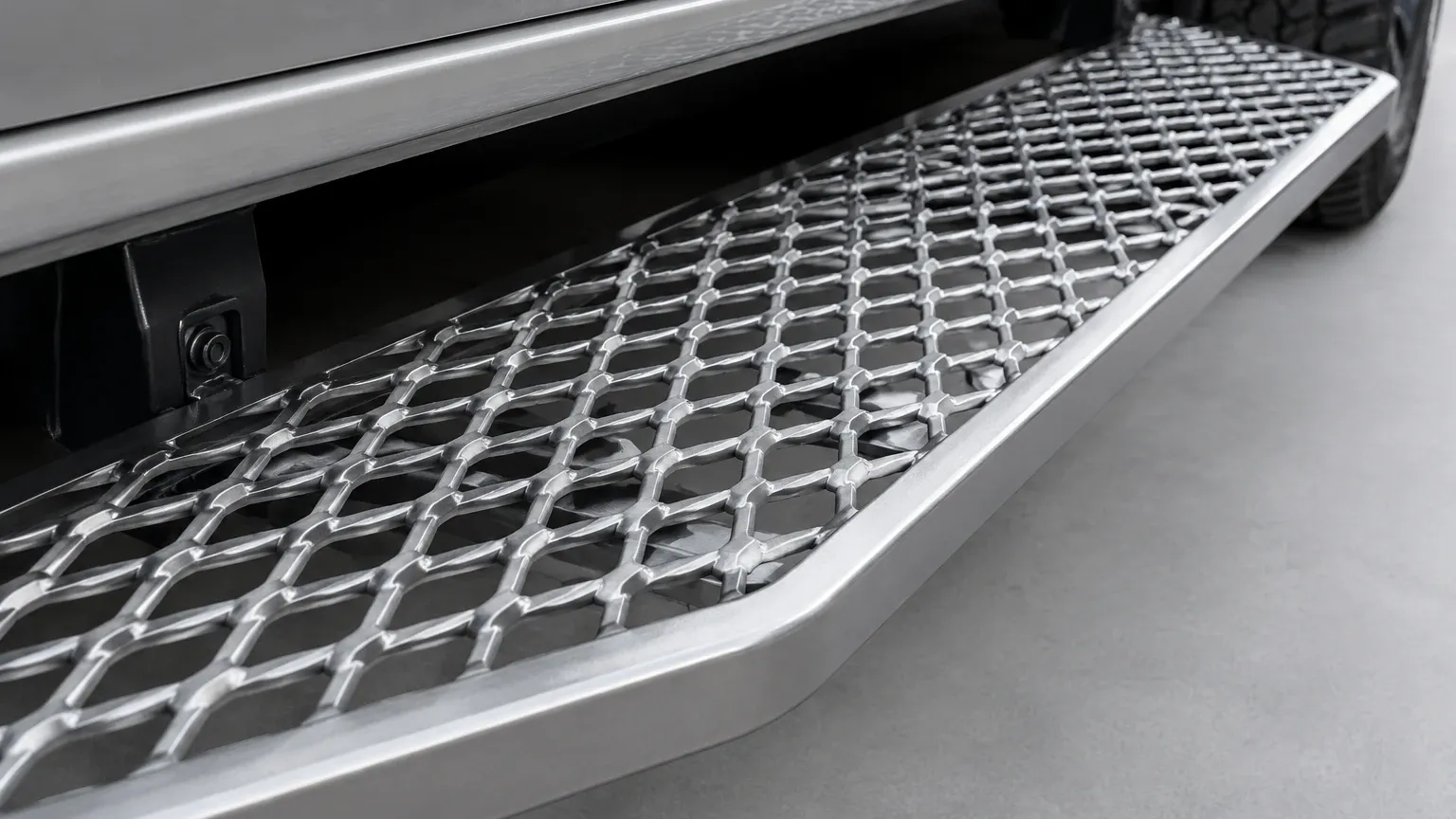
In industrial and commercial vehicle engineering, the selection of materials for access components—such as steps, walkways, and running boards—is a critical decision that impacts safety, durability, and structural integrity. Expanded metal running boards have emerged as a standard solution for heavy-duty applications due to their unique mechanical properties and cost-effective manufacturing process. Unlike solid plates or traditional grip tapes, expanded metal offers a permanent, high-traction surface that excels in environments where debris, moisture, and heavy wear are constant factors.
For engineers and procurement teams, understanding the technical nuances of Perforated & Expanded Metal is essential for specifying the right component for fleet vehicles, industrial machinery, or specialized transport equipment. This guide examines the engineering characteristics, material selection criteria, and performance expectations for expanded metal in traction-critical applications.
Understanding Expanded Metal in Heavy-Duty Applications
Expanded metal is produced through a simultaneous slitting and stretching process. A single sheet of metal—typically stainless steel, carbon steel, or aluminum—is fed through a machine where a reciprocating knife cuts and expands the material into a continuous diamond-shaped pattern. Because the metal is stretched rather than punched (as in perforated metal), there is zero material waste, making it a highly sustainable and cost-efficient option for large-scale industrial projects.
In the context of running boards, the manufacturing process results in a "raised" or "standard" expanded metal. In this form, the strands and bonds are set at a uniform angle to the plane of the sheet. This angular orientation provides a natural mechanical "bite" that is far superior to flat surfaces. For applications requiring a smoother finish, the material can be cold-rolled to create "flattened" expanded metal, though this is less common for running boards where maximum slip resistance is the primary objective.
Key Advantages of Expanded Metal for Running Boards
The adoption of expanded metal for vehicle access points is driven by several functional advantages that traditional materials cannot match:
1. Superior Traction and Safety
The raised diamond pattern of expanded metal creates multi-directional grip. This is particularly vital in industrial sectors like mining, oil and gas, and construction, where operators often deal with mud, oil, ice, or hydraulic fluids. The sharp edges of the strands penetrate through surface contaminants to provide a secure footing.
2. Self-Cleaning Properties
One of the most significant benefits of expanded metal is its high percentage of open area. This allows snow, dirt, grease, and water to fall through the mesh rather than accumulating on the surface. This self-cleaning characteristic reduces maintenance requirements and prevents the buildup of slip hazards that commonly affect solid-plate running boards.
3. High Strength-to-Weight Ratio
Because the material is expanded from a single sheet, it maintains structural continuity. The resulting mesh is often stronger per pound than the original solid sheet. This allows engineers to reduce the overall weight of the vehicle or equipment without compromising the load-bearing capacity of the access steps.
4. Visibility and Ventilation
In certain industrial configurations, running boards also serve as covers for equipment or ventilation points. The open mesh allows for airflow and light passage, which can be beneficial for cooling under-chassis components or providing visibility for inspections.
Material Selection: Stainless Steel vs. Alternative Alloys
Selecting the correct alloy for expanded metal running boards depends heavily on the operating environment and the required lifecycle of the equipment. While carbon steel is a common choice for general-purpose applications, specialized environments require more robust materials.
Stainless Steel (304 and 316 Grades)
As a specialist in stainless steel solutions, Kaifil emphasizes the use of stainless steel for applications involving corrosive chemicals, salt spray, or strict hygiene requirements (such as food transport).
- Grade 304: Offers excellent corrosion resistance and durability for most outdoor and industrial environments.
- Grade 316: Contains molybdenum, providing superior resistance to chlorides and marine environments. This is the preferred choice for offshore platforms and coastal transport vehicles.
Aluminum
Aluminum expanded metal is favored for its lightweight properties and natural resistance to atmospheric corrosion. It is frequently used in the automotive aftermarket and for light-duty commercial vehicles where fuel efficiency and weight reduction are prioritized.
Carbon Steel
Usually hot-dip galvanized or powder-coated, carbon steel provides a high-strength, low-cost solution. However, once the protective coating is breached by mechanical wear (common on running boards), the underlying metal is susceptible to rapid oxidation.
Engineering Specifications: SWD, LWD, and Load Capacity
When specifying Perforated & Expanded Metal for running boards, engineers must define several key dimensions that dictate the performance of the mesh:
* SWD (Short Way of Design): The distance from the center of one bond to the center of the next bond measured across the short diamond diagonal.
* LWD (Long Way of Design): The distance across the long diamond diagonal.
* Strand Width and Thickness: These dimensions determine the overall strength and weight of the mesh. For running boards, a thicker strand is typically required to handle the point loads of personnel entering and exiting a vehicle.
* Orientation: For optimal traction, the SWD should generally run perpendicular to the direction of foot traffic. This ensures that the "ridges" of the expanded metal are positioned to catch the sole of a boot most effectively.
Load capacity is a critical safety consideration. Engineers must calculate the deflection of the expanded metal under the maximum anticipated weight (including a safety factor). Unlike solid plate, expanded metal has different load-bearing characteristics depending on whether the force is applied parallel or perpendicular to the LWD.
Comparing Expanded Metal and Perforated Metal for Traction Surfaces
While both materials are used in industrial fabrication, they serve different functional needs.
Expanded Metal is generally preferred for running boards because of its raised texture. The process of expanding the metal naturally creates an aggressive surface without the need for secondary embossing. It is also more cost-effective for high-strength applications because no material is lost during production.
Perforated Metal, on the other hand, is a flat sheet with punched holes. While it can be manufactured with "dimpled" or raised-hole patterns to provide grip, it often lacks the aggressive multi-directional traction of expanded metal. Perforated metal is typically chosen when a specific aesthetic is required or when very precise hole sizes are needed for filtration or airflow control within the running board assembly.
Customization and Procurement for Industrial Fleet Requirements
For B2B procurement and engineering teams, off-the-shelf solutions rarely meet the specific demands of specialized industrial equipment. Customization is often necessary to ensure the running boards integrate seamlessly with the vehicle chassis or structural framework.
Edge Finishing and Safety
Raw expanded metal has sharp edges where the diamonds are cut. For running boards, these edges must be addressed to prevent injury or damage to clothing. Common solutions include:
- U-Edging: A metal trim welded around the perimeter to provide a smooth, finished edge.
- L-Angle Framing: Integrating the expanded metal into a structural frame that provides both edge protection and additional load support.
Surface Treatments
Beyond material selection, surface treatments can enhance the performance of expanded metal running boards. Options include anti-slip coatings (such as serrated strands), specialized powder coating for high visibility (safety yellow), or pickling and passivation for stainless steel components to ensure maximum corrosion resistance.
Confirming Specifications with Manufacturers
Before finalizing a purchase order, technical teams should confirm the following with their supplier:
1. Material Certifications: Ensure the alloy meets ASTM or ISO standards.
2. Tolerances: Define acceptable variances in sheet size and diamond uniformity.
3. Load Data: Request deflection charts specific to the mesh pattern and span distance.
4. Custom Fabrication: Verify if the supplier can provide value-added services like precision cutting, bending, or welding to reduce on-site assembly time.
Conclusion
Expanded metal running boards represent a sophisticated intersection of material science and safety engineering. By leveraging the inherent strength and traction of the expanded diamond pattern, industrial operators can ensure safer access to equipment while benefiting from the durability of materials like stainless steel. Whether for a single custom vehicle or a large-scale fleet, selecting the appropriate Perforated & Expanded Metal configuration is a vital step in optimizing equipment performance and operator safety.
For those seeking precision-engineered metal components, focusing on the technical details—from SWD/LWD dimensions to the specific benefits of stainless steel grades—will result in a more reliable and cost-effective filtration or structural solution. As industrial requirements continue to evolve, the versatility of expanded metal remains a cornerstone of robust mechanical design.
