


Expanded Metal Size Chart
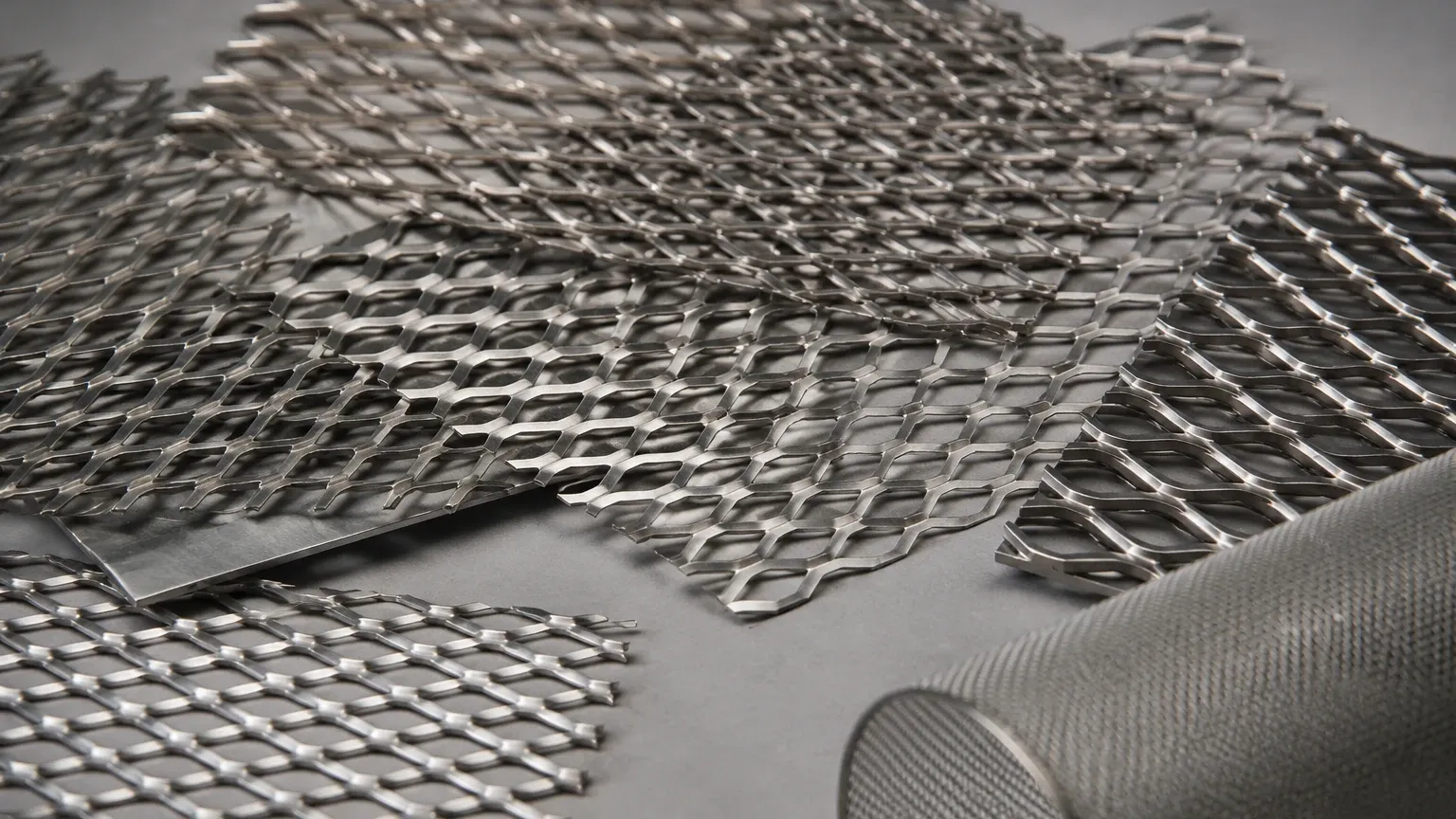
In industrial manufacturing and engineering, selecting the correct material specifications is critical to the performance, safety, and longevity of a component. For professionals involved in filtration, structural support, or protective screening, understanding the expanded metal size chart is a fundamental requirement. Expanded metal is a versatile material produced by simultaneously slitting and stretching a solid sheet of metal, creating a diamond-shaped pattern of openings. Unlike perforated metal, which involves punching holes and generating scrap, expanded metal is manufactured through a zero-waste process that maintains the structural integrity of the original sheet while providing a high strength-to-weight ratio.
This guide provides a comprehensive technical overview of expanded metal specifications, focusing on how to interpret size charts, the engineering considerations for different diamond geometries, and the selection criteria necessary for high-performance industrial applications.
Understanding the Fundamentals of Expanded Metal Specifications
To effectively use an expanded metal size chart, one must first understand the unique terminology used to describe the material's geometry. Because expanded metal is formed through stretching, its dimensions are not as straightforward as a simple hole diameter. Instead, dimensions are categorized based on the direction of the diamond and the thickness of the metal "strands."
The primary distinction in any size chart is between Standard (Raised) and Flattened expanded metal.
* Standard Expanded Metal: This is the material as it comes off the expanding machine. The strands and bonds are set at a uniform angle to the plane of the sheet, giving the material a three-dimensional texture. This provides maximum rigidity and a high-grip surface, which is often used in walkways or as a support substrate for filtration media.
* Flattened Expanded Metal: This is standard expanded metal that has been cold-rolled through a finishing mill. The process flattens the strands and bonds into a single plane, resulting in a smooth, level surface. While this reduces the overall thickness and slightly increases the diamond dimensions, it is often preferred for applications requiring a flush surface or specific clearance requirements.
Key Dimensional Parameters in an Expanded Metal Size Chart
When reviewing a manufacturer's size chart, engineers must look for several specific abbreviations that define the diamond's size and the material's physical properties. These parameters are essential for calculating flow rates, structural loads, and fitment within housings.
SWD and LWD (Short Way of Design and Long Way of Design)
These are the most common measurements found in a size chart.
* SWD (Short Way of Design): The distance from the center of one bond to the center of the next bond, measured across the short diamond dimension.
* LWD (Long Way of Design): The distance from the center of one bond to the center of the next bond, measured across the long diamond dimension.
It is important to note that SWD and LWD refer to center-to-center measurements, not the actual opening size. For engineers designing filtration systems, the center-to-center measurement is used for layout, but the "opening" size is what dictates particle retention.
SWO and LWO (Short Way of Opening and Long Way of Opening)
These measurements define the actual clear space within the diamond.
* SWO (Short Way of Opening): The clear distance between the inside edges of the bonds across the short dimension.
* LWO (Long Way of Opening): The clear distance between the inside edges of the bonds across the long dimension.
In filtration applications, the SWO is often the critical dimension, as it determines the largest particle that can pass through the narrowest part of the diamond.
Strand Width and Strand Thickness
* Strand Thickness: This is the thickness of the base metal (the gauge) before it is expanded.
* Strand Width: This is the amount of metal fed into the machine for each slit-and-stretch cycle.
The combination of strand width and thickness determines the cross-sectional area of each "rib" in the mesh, which directly impacts the material's tensile strength and the percentage of open area.
Standard vs. Flattened Expanded Metal: Impact on Dimensions
The transition from standard to flattened expanded metal alters the data found in an expanded metal size chart. Engineers must be aware that the nominal size (e.g., 1/2" #13) refers to the standard version. Once flattened, the following changes typically occur:
1. Opening Dimensions: The LWD and SWD usually increase slightly because the rolling process stretches the diamonds further.
2. Overall Thickness: The thickness is reduced significantly, often becoming roughly equal to the original strand thickness.
3. Strand Width: The strands become wider as they are compressed.
For precision filtration components, such as those used in chemical processing or hydraulic systems, these dimensional shifts must be accounted for during the design phase to ensure the component fits within the intended assembly without bypassing or mechanical interference.
Interpreting the Expanded Metal Size Chart for Industrial Applications
Industrial size charts are usually organized by the "Style Designation." A common designation might look like "1/2 #13."
* The first number (1/2) refers to the nominal dimension of the short way of the diamond (SWD).
* The second number (#13) refers to the gauge of the metal.
However, a "1/2 #13" in carbon steel will have different physical properties than a "1/2 #13" in stainless steel due to differences in material density and manufacturing tolerances. Below is a conceptual breakdown of how these charts assist in technical decision-making:
Weight per Square Foot
This is a critical metric for purchasing teams and structural engineers. Because expanded metal is stretched, it is significantly lighter than a solid sheet of the same thickness. The size chart will list the weight per square foot, allowing for accurate shipping cost estimates and structural load calculations for large-scale filtration units or industrial platforms.
Percentage of Open Area
For filtration and ventilation, the percentage of open area is the most vital statistic. This figure tells the engineer how much of the sheet is comprised of holes versus solid metal. A higher open area results in lower pressure drop and higher flow rates but may sacrifice structural rigidity. Most industrial expanded metal charts provide this percentage, which typically ranges from 25% to 80% depending on the strand width and diamond size.
Material Selection and Technical Considerations for Filtration
While the expanded metal size chart provides the geometry, the material selection determines the performance in demanding environments. In the context of Perforated & Expanded Metal solutions, stainless steel is the industry standard for several reasons:
1. Corrosion Resistance: In chemical processing or water treatment, carbon steel would oxidize and contaminate the process fluid. Stainless steel (304 or 316L) ensures the filter maintains its structural integrity and purity.
2. Temperature Stability: Industrial filtration often occurs at elevated temperatures. Stainless steel expanded metal retains its mechanical properties far better than polymers or lower-grade alloys.
3. Cleanability: For food and beverage or pharmaceutical applications, the smooth surface of flattened stainless steel expanded metal allows for effective CIP (Clean-in-Place) procedures.
When using expanded metal as a support layer for fine wire mesh (a common configuration in high-pressure filter cartridges), the size chart helps engineers select a diamond size that provides maximum support to the mesh without creating "blind spots" where the fluid cannot flow.
Engineering Tolerances and Customization Options
Standard size charts provide nominal values, but real-world manufacturing involves tolerances. When ordering custom filtration components, it is essential to confirm the manufacturer's tolerance standards for:
* SWD/LWD Variance: Small deviations in the stretching process can occur.
* Shearing (Edge Conditions): Expanded metal can be sheared in two ways: Bond Shearing (cutting through the intersection of the diamonds to create a closed, safe edge) or Random Shearing (cutting through the diamonds, leaving sharp "prongs").
* Flatness: For flattened expanded metal, the degree of flatness (camber) is important for automated assembly processes.
Customization allows engineers to specify non-standard strand widths to achieve a very specific open area percentage that may not be available in a standard commercial chart. This is particularly useful in specialized hydraulic or aerospace filtration where pressure drop must be tightly controlled.
Procurement Checklist: Confirming Specifications with Manufacturers
Before finalizing a purchase or specifying a part in a technical drawing based on an expanded metal size chart, purchasing teams and engineers should confirm the following with their supplier:
1. Material Grade: Ensure the alloy (e.g., SS304, SS316, Aluminum) matches the chemical compatibility requirements of the application.
2. Standard vs. Flattened: Explicitly state if the application requires the three-dimensional strength of standard mesh or the smooth profile of flattened mesh.
3. Direction of the Diamond: In some applications, the orientation of the LWD (parallel or perpendicular to the length of the sheet) affects the flow dynamics or the structural strength of a cylindrical filter cartridge.
4. Quantity and Dimensions: Confirm sheet sizes or finished component dimensions. Expanded metal is often sold in 4'x8' sheets, but custom-cut discs or cylinders are standard for OEM filtration needs.
5. Total Cost of Ownership: Consider the durability of the material. While stainless steel expanded metal may have a higher initial cost than galvanized steel, its resistance to corrosion and ability to be cleaned and reused often result in a lower total cost over the equipment's lifecycle.
By accurately interpreting the expanded metal size chart and understanding the relationship between diamond geometry and material performance, engineers can ensure they select the most efficient and durable filtration solutions for their specific industrial needs. Whether the application involves coarse debris removal in water treatment or providing a rigid skeleton for pleated filter media, the precision of the expanded metal specification is the foundation of a successful filtration system.
