


Expanded Metal Stainless Steel
In industrial filtration and structural engineering, material selection often dictates the longevity and efficiency of a system. Expanded metal stainless steel represents a specialized category of processed metal that offers a unique combination of structural rigidity, high open-area ratios, and superior resistance to environmental degradation. Unlike perforated metal, which is created by punching holes and removing material, expanded metal is produced by simultaneously slitting and stretching a solid sheet. This process results in a continuous, jointless mesh that maintains the inherent strength of the original stainless steel while providing a versatile geometry for filtration, support, and separation.
For engineers and procurement professionals, understanding the technical nuances of expanded metal—ranging from the mechanical properties of different stainless steel grades to the geometric variables of the diamond pattern—is essential for optimizing performance in demanding applications such as chemical processing, water treatment, and pharmaceutical manufacturing.
The Manufacturing Process and Structural Integrity
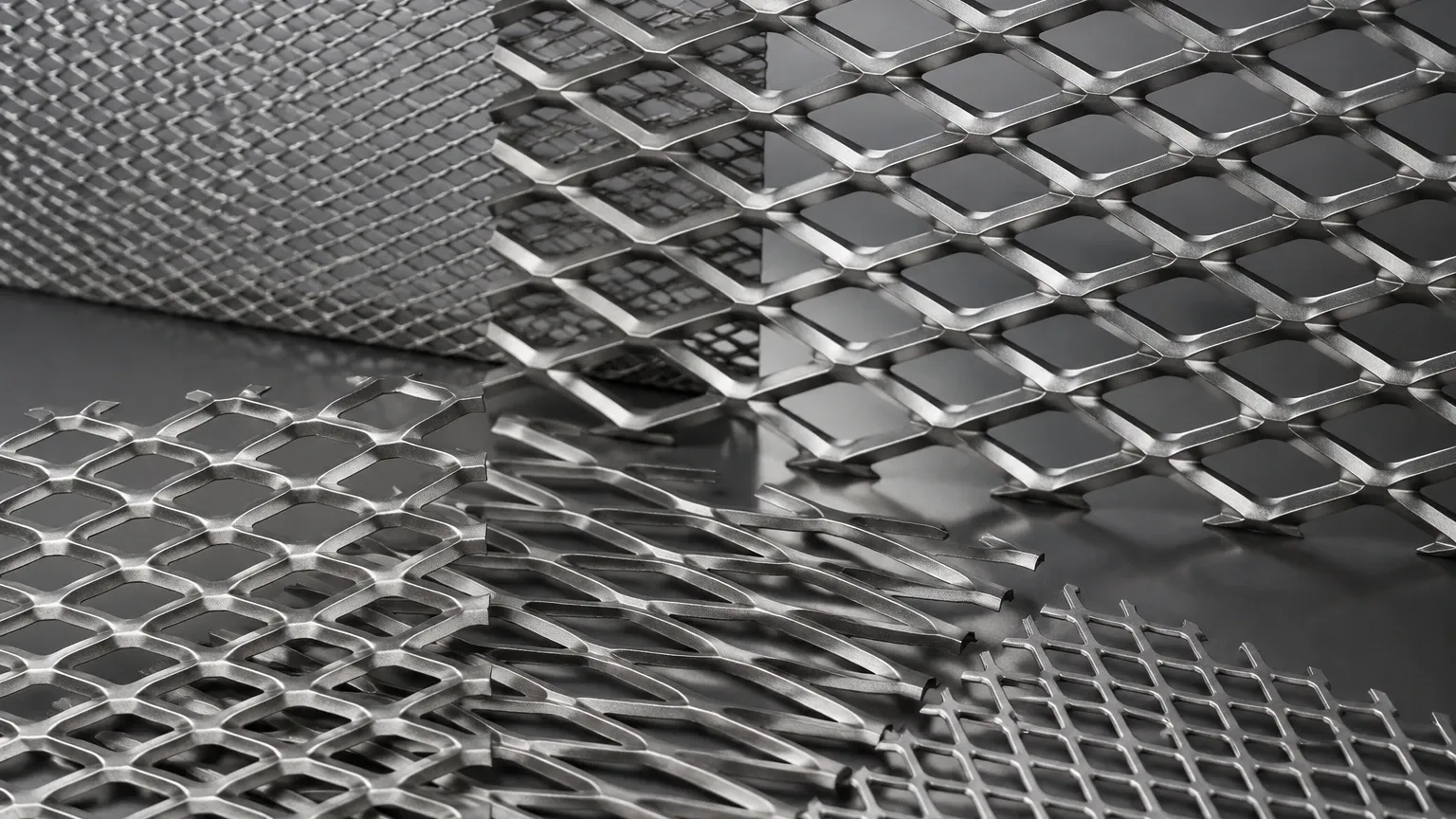
The production of expanded metal is a precision-engineered process that maximizes material utility. A stainless steel sheet or coil is fed through an expanding machine equipped with a specialized knife. As the knife descends, it slits the metal at regular intervals while the machine stretches the material forward. This simultaneous action creates the characteristic diamond-shaped openings. Because no material is lost during this process, expanded metal is often a more cost-effective and sustainable alternative to other metal mesh products.
The resulting structure is composed of "strands" (the metal strips) and "bonds" (where the strands intersect). Because the bonds are part of the original solid sheet, the mesh is inherently stronger than woven wire mesh, which can fray or unravel if cut. This structural continuity makes expanded metal stainless steel an ideal choice for high-pressure environments where the integrity of the filtration media or support structure is paramount.
Material Grades for Demanding Environments
While expanded metal can be produced from various alloys, stainless steel is the standard for industrial applications due to its mechanical strength and chemical stability. The choice of grade is a critical engineering decision based on the specific operating environment:
* Grade 304: The most common austenitic stainless steel, providing excellent corrosion resistance in standard atmospheric conditions and fresh water. It is widely used in food processing and general industrial equipment where high-temperature resistance and durability are required.
* Grade 316/316L: Containing molybdenum, Grade 316 offers enhanced resistance to pitting and crevice corrosion, particularly in chloride-rich environments. Grade 316L (low carbon) is preferred for applications involving welding, as it prevents carbide precipitation that can lead to intergranular corrosion. These grades are essential for marine, chemical, and pharmaceutical applications.
* High-Temperature Alloys: For specialized filtration in exhaust systems or heat exchangers, grades such as 310 or 321 may be utilized to maintain structural integrity at temperatures exceeding 800°C.
Selecting the correct grade ensures that the Perforated & Expanded Metal components can withstand the chemical cleaning agents, high-pressure washdowns, and corrosive process fluids typical of industrial workflows.
Expanded Metal vs. Perforated Metal in Filtration
In the broader category of Perforated & Expanded Metal, engineers must often choose between these two distinct types of media. While both provide mechanical filtration and support, their performance profiles differ significantly.
Perforated metal offers high precision in hole size and shape, making it suitable for exact particle size exclusion. However, the punching process creates scrap material, increasing the total cost of ownership for high-grade alloys like stainless steel. Furthermore, the edges of perforated holes can sometimes be sharp or burred, requiring secondary finishing.
Expanded metal stainless steel, conversely, offers a three-dimensional profile (in its "raised" form) that can influence fluid dynamics. The angled strands can act as a series of baffles, diffusing flow and reducing turbulence. Additionally, the high strength-to-weight ratio of expanded metal allows for lighter support structures without sacrificing load-bearing capacity. For many pre-filtration and support applications, expanded metal provides a more robust and economical solution than perforated alternatives.
Key Dimensional Parameters for Engineering Specifications
When specifying expanded metal for a project, engineers must define several critical dimensions that determine the mesh's performance. These parameters include:
1. SWD (Short Way of Design): The distance from the center of one bond to the center of the next bond across the short axis of the diamond.
2. LWD (Long Way of Design): The distance from the center of one bond to the center of the next bond across the long axis of the diamond.
3. Strand Width: The amount of metal fed into the machine between slits, which determines the thickness of the individual mesh segments.
4. Strand Thickness: The original thickness of the stainless steel sheet.
5. Open Area: Expressed as a percentage, this indicates the ratio of the openings to the total area. This is a vital calculation for determining flow rates and pressure drops across the filter.
Understanding these variables allows for the customization of the mesh to meet specific filtration accuracies or structural requirements. For instance, a smaller SWD with a wider strand width will result in a more rigid mesh with a lower open area, suitable for heavy-duty support baskets.
Industrial Applications and Filtration Support
Expanded metal stainless steel serves diverse roles across various sectors, primarily due to its versatility and hygiene-friendly properties. Its most common applications include:
1. Support for Fine Filtration Media
In high-pressure hydraulic or chemical filtration, fine wire mesh or non-woven filter media lack the structural strength to resist collapse. Expanded metal is frequently used as an internal or external support core (centertube) for filter cartridges. It provides the necessary rigidity to maintain the filter's shape under differential pressure while allowing for maximum fluid throughput.
2. Coarse Filtration and Pre-filters
In water treatment and HVAC systems, expanded metal acts as a primary barrier to remove large debris before the fluid reaches more delicate secondary filters. Its resistance to rust and bio-fouling makes it ideal for submerged applications.
3. Industrial Baskets and Trays
In the food and pharmaceutical industries, expanded metal is used to fabricate sterilization baskets, drying trays, and centrifuge components. The jointless construction prevents the buildup of bacteria in crevices, and the stainless steel surface can be electropolished to meet stringent sanitary standards.
4. Safety and Protective Guarding
Beyond filtration, expanded metal is used for machine guards and ventilation panels. It allows for airflow and visibility while providing a physical barrier that is difficult to penetrate or deform.
Flattened vs. Raised Expanded Metal
A critical distinction in the selection process is whether the metal should be "raised" or "flattened."
* Raised (Standard) Expanded Metal: This is the product as it comes off the machine. The strands and bonds are set at a uniform angle to the plane of the sheet. This creates a textured, 3D surface that provides excellent grip and flow diffusion. However, the thickness of a raised sheet is significantly greater than the original strand thickness.
* Flattened Expanded Metal: The raised sheet is passed through a cold-rolling reducing mill. This process flattens the strands and bonds into a single plane, resulting in a smooth, flat surface. Flattened expanded metal is often preferred when the mesh needs to be bonded to other materials, when a smooth surface is required to prevent snagging, or when the overall thickness of the component must be minimized.
For filtration support, flattened expanded metal is often the better choice as it provides a uniform contact surface for the primary filter media, reducing the risk of point-loading or abrasion.
Quality Control and Procurement Considerations
When sourcing expanded metal stainless steel, technical professionals must evaluate the manufacturer's ability to maintain tight tolerances and material purity. Key considerations for procurement include:
* Tolerance Standards: Industrial applications often require strict adherence to SWD and LWD dimensions to ensure the mesh fits perfectly into housings or frames. Manufacturers should provide clear data on dimensional variances.
* Edge Conditions: Expanded metal can be supplied with "random sheared" edges or "selvage" (solid) edges. For filter cartridge construction, clean, burr-free edges are necessary to ensure a secure seal and prevent damage to the assembly.
* Surface Treatment: Depending on the application, the stainless steel may require pickling and passivation to remove surface contaminants and restore the protective oxide layer. For pharmaceutical or high-purity chemical applications, ultrasonic cleaning or electropolishing may be necessary to ensure the component is free of oils and microscopic debris.
* Total Cost of Ownership: While the initial cost of stainless steel is higher than carbon steel, the elimination of maintenance, coating requirements, and frequent replacements makes it a more cost-effective choice over the lifecycle of the industrial equipment.
Conclusion
Expanded metal stainless steel is a foundational component in modern industrial filtration and engineering. Its unique manufacturing process creates a product that is structurally superior to woven mesh and more material-efficient than perforated metal. By carefully selecting the appropriate grade, diamond dimensions, and finish (raised or flattened), engineers can design filtration systems that offer high performance, durability, and reliability in the most challenging environments.
Whether used as a support structure for high-precision cartridges or as a standalone coarse filter, expanded metal provides the mechanical integrity required for long-term industrial service. For those seeking specialized solutions, reviewing the full range of Perforated & Expanded Metal options is the first step toward optimizing filtration efficiency and ensuring system longevity.
