


Expanded Metal Sheet 4×8 Near Me
For engineers and procurement professionals in the industrial sector, sourcing an expanded metal sheet 4×8 near me often begins as a search for convenience but quickly evolves into a complex evaluation of material science, structural integrity, and manufacturing precision. While the 4ft x 8ft (1220mm x 2440mm) dimension is the industry standard for metal sheeting, the technical requirements of industrial filtration, chemical processing, and heavy-duty machinery protection require a deeper understanding than simple local availability can provide.
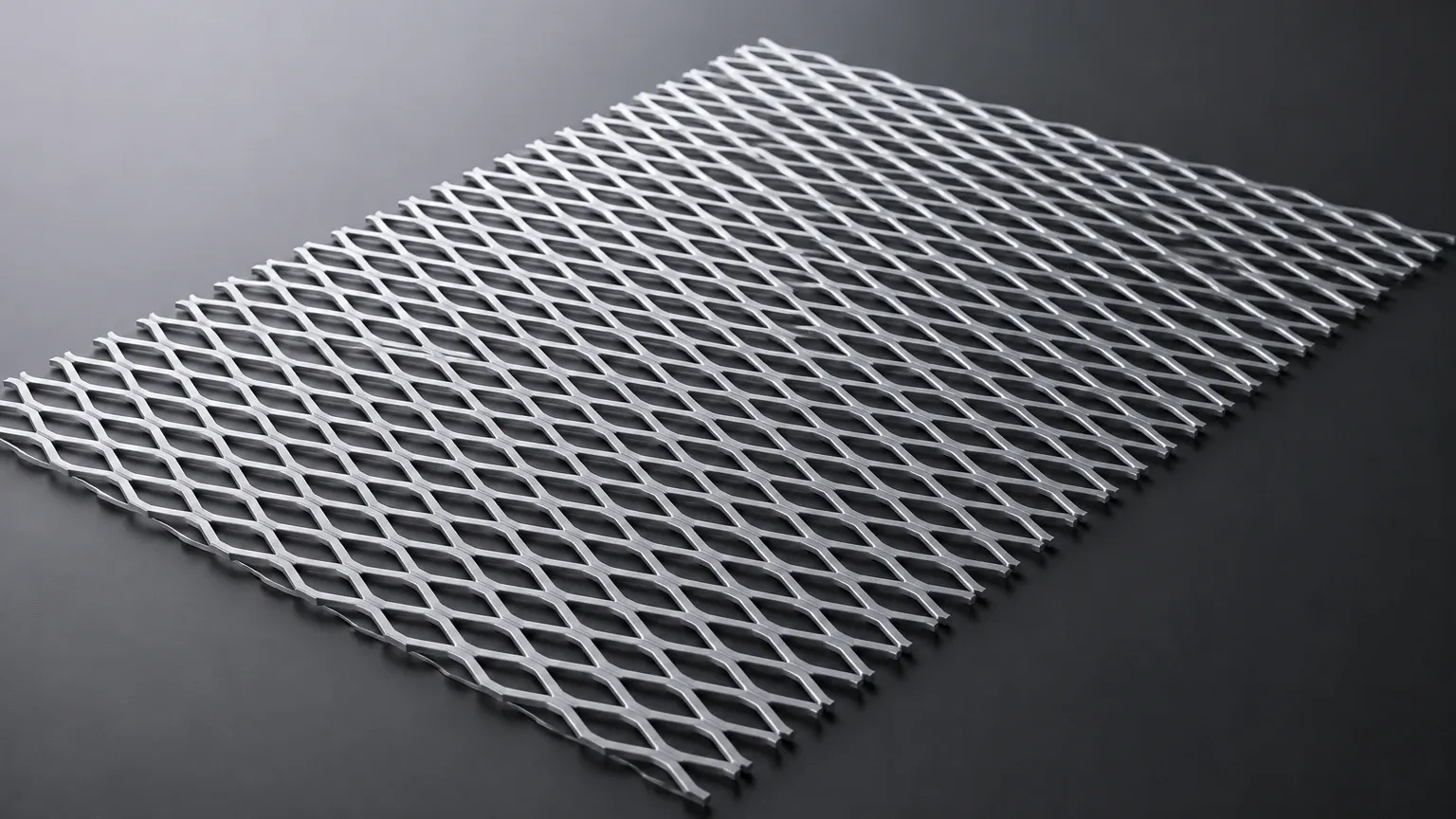
Expanded metal is a unique material created by simultaneously slitting and stretching a solid sheet of metal. This process creates a diamond-shaped pattern of openings that are integral to the sheet, meaning there are no welds or joins that can fail under stress. Unlike perforated metal, which involves punching out material and creating scrap, the expansion process is highly efficient, producing virtually no waste while increasing the strength-to-weight ratio of the original plate.
Understanding the Technical Geometry of Expanded Metal
When specifying an expanded metal sheet for industrial applications, the dimensions of the sheet are only the starting point. Engineers must define the geometry of the diamond openings to ensure the material meets the flow rate, filtration, or structural requirements of the project. The two primary measurements used to define these openings are the Short Way of Design (SWD) and the Long Way of Design (LWD).
* Short Way of Design (SWD): This is the distance from the center of one bond to the center of the next bond measured across the short diamond diagonal.
* Long Way of Design (LWD): This is the distance from the center of one bond to the center of the next bond measured across the long diamond diagonal.
* Strand Width: The amount of metal fed into the expanding machine between the upper and lower dies.
* Strand Thickness: The thickness of the base metal used to produce the sheet.
In a standard 4×8 sheet, the orientation of these diamonds relative to the length and width of the sheet is critical. Typically, the LWD runs parallel to the length of the sheet (the 8ft dimension), but custom configurations can be manufactured to meet specific structural load requirements. For those searching for Perforated & Expanded Metal solutions, understanding these geometric nuances is essential for ensuring the component integrates correctly into larger assemblies.
Standard vs. Flattened Expanded Metal
One of the most significant decisions an engineer must make when sourcing 4×8 sheets is whether to use "Standard" (also known as raised) or "Flattened" expanded metal. Each type offers distinct mechanical properties and surface characteristics.
Standard Expanded Metal
Standard expanded metal is the product as it comes off the expanding machine. The strands and bonds are set at a uniform angle to the plane of the sheet. This creates a three-dimensional surface that provides excellent grip and high structural rigidity. In industrial filtration, the raised profile of standard expanded metal can be used to create turbulence in fluid flow or to provide a high-friction surface for mechanical separators. However, the raised edges can be sharp, which may be a consideration for applications involving manual handling.
Flattened Expanded Metal
Flattened expanded metal is manufactured by passing standard expanded metal through a cold-roll reducing mill. This process flattens the strands and bonds into a single plane, resulting in a smooth, level surface. Flattening reduces the overall thickness of the sheet and slightly elongates the diamond pattern. Flattened sheets are often preferred in applications where a smooth surface is required to prevent snagging or where the sheet must be bonded to another flat surface, such as in the construction of composite filter media supports.
Material Selection for Demanding Environments
While search results for "expanded metal sheet 4×8 near me" may yield carbon steel options at local hardware distributors, industrial applications often require high-performance alloys to withstand corrosive environments, extreme temperatures, or strict hygiene standards.
Stainless Steel (304 and 316 Grades)
For the chemical processing, pharmaceutical, and food and beverage industries, stainless steel is the material of choice. Grade 304 provides excellent corrosion resistance and is suitable for most general industrial uses. However, for marine environments or applications involving high chloride exposure, Grade 316 is necessary due to its molybdenum content, which provides superior pitting resistance. Kaifil specializes in these high-grade stainless steel solutions, ensuring that the expanded metal used in filtration cartridges or industrial screens maintains its integrity over long service cycles.
Aluminum and Specialized Alloys
Aluminum expanded metal is utilized when weight reduction is a priority without sacrificing structural stability. It is naturally corrosion-resistant and is frequently used in HVAC systems and architectural applications. For highly specialized industrial needs, alloys like Monel, Inconel, or Titanium may be expanded to meet specific chemical compatibility or high-temperature requirements.
The Role of Expanded Metal in Industrial Filtration
In the context of industrial filtration, an expanded metal sheet 4×8 is rarely used as a standalone filter. Instead, it serves as a critical support structure for finer filtration media, such as wire mesh or non-woven fabrics.
In high-pressure hydraulic systems or large-scale water treatment plants, the fine filter mesh lacks the structural strength to withstand the differential pressure of the fluid flow. By wrapping the fine mesh around a cylinder made from expanded metal, or by sandwiching the mesh between two layers of expanded metal, engineers can create a robust filter element. The open area of the expanded metal is carefully calculated to ensure it does not restrict flow (pressure drop) while providing maximum support to the primary filtration layer.
Customization in this area is vital. A standard 4×8 sheet from a local supplier may not have the precise open area percentage or strand thickness required to optimize the performance of a custom filter cartridge. Working with a specialized manufacturer like Kaifil allows for the engineering of Perforated & Expanded Metal components that are tailored to the specific flow dynamics of the application.
Evaluating "Near Me" Sourcing vs. Technical Manufacturing
When a project requires an expanded metal sheet 4×8 near me, the immediate instinct is to look for local metal service centers. While local sourcing is effective for standard carbon steel sheets used in general construction or basic fencing, it often falls short for technical B2B requirements. There are several factors to consider when deciding between a local distributor and a specialized manufacturer:
1. Material Traceability: Industrial applications in the pharmaceutical or aerospace sectors require full material traceability (MTRs). Local general-purpose distributors may not always provide the rigorous documentation needed for compliance.
2. Custom Apertures: Standard stock usually follows common sizes like 1/2" #13 or 3/4" #9. If an engineering design requires a specific SWD/LWD ratio to achieve a exact percentage of open area for a filtration system, custom manufacturing is required.
3. Edge Conditions: For 4×8 sheets, the edge condition—whether it is "random sheared" or "bond sheared"—is important for safety and fitment. Bond shearing provides a smooth edge with no exposed sharp points, which is often necessary for components that will be handled by operators or integrated into precision housings.
4. Quantity and Scale: While a local shop might have two or three sheets in stock, a large-scale industrial project may require hundreds of sheets with consistent tolerances across the entire batch. Specialized manufacturers have the capacity to maintain high consistency in large production runs.
Engineering Considerations for Installation and Maintenance
Integrating expanded metal into an industrial system requires careful planning regarding orientation and fastening. Because expanded metal has a directional pattern, its strength varies depending on how it is oriented relative to the load. The LWD is generally stronger and should span the distance between supports in load-bearing applications.
Welding and Fabrication
Stainless steel expanded metal requires specific welding techniques to prevent carbide precipitation, which can lead to corrosion at the weld sites (intergranular corrosion). Using low-carbon grades like 304L or 316L and employing TIG (Tungsten Inert Gas) welding ensures that the structural integrity of the 4×8 sheet is maintained during fabrication into filter housings or machine guards.
Cleaning and Longevity
In filtration applications, the longevity of the expanded metal support is tied to its ability to be cleaned. Stainless steel expanded metal is highly compatible with Clean-in-Place (CIP) systems. Its seamless construction means there are no crevices where bacteria or contaminants can hide, making it ideal for the food and pharmaceutical industries. When evaluating total cost of ownership, the durability of a high-quality stainless steel sheet often outweighs the lower initial cost of a galvanized or carbon steel alternative that may require frequent replacement due to corrosion.
Conclusion: Making an Informed Sourcing Decision
Searching for an expanded metal sheet 4×8 near me is a practical starting point for many industrial projects, but the selection process must be guided by technical specifications rather than proximity alone. For basic structural needs, local availability is sufficient. However, when the material is destined for critical roles in filtration, chemical processing, or precision engineering, the focus must shift to material grade, geometric accuracy, and manufacturing quality.
By understanding the differences between standard and flattened profiles, the importance of material selection like 316 stainless steel, and the structural implications of diamond orientation, engineers can ensure their systems operate efficiently and safely. For those requiring high-performance components, exploring professional Perforated & Expanded Metal options provides the customization and reliability that standard off-the-shelf products cannot match. Whether you are designing a new filtration system or replacing worn components in an existing facility, prioritizing technical compliance over simple convenience will lead to better long-term performance and reduced maintenance costs.
