


Expanded Metal U1015
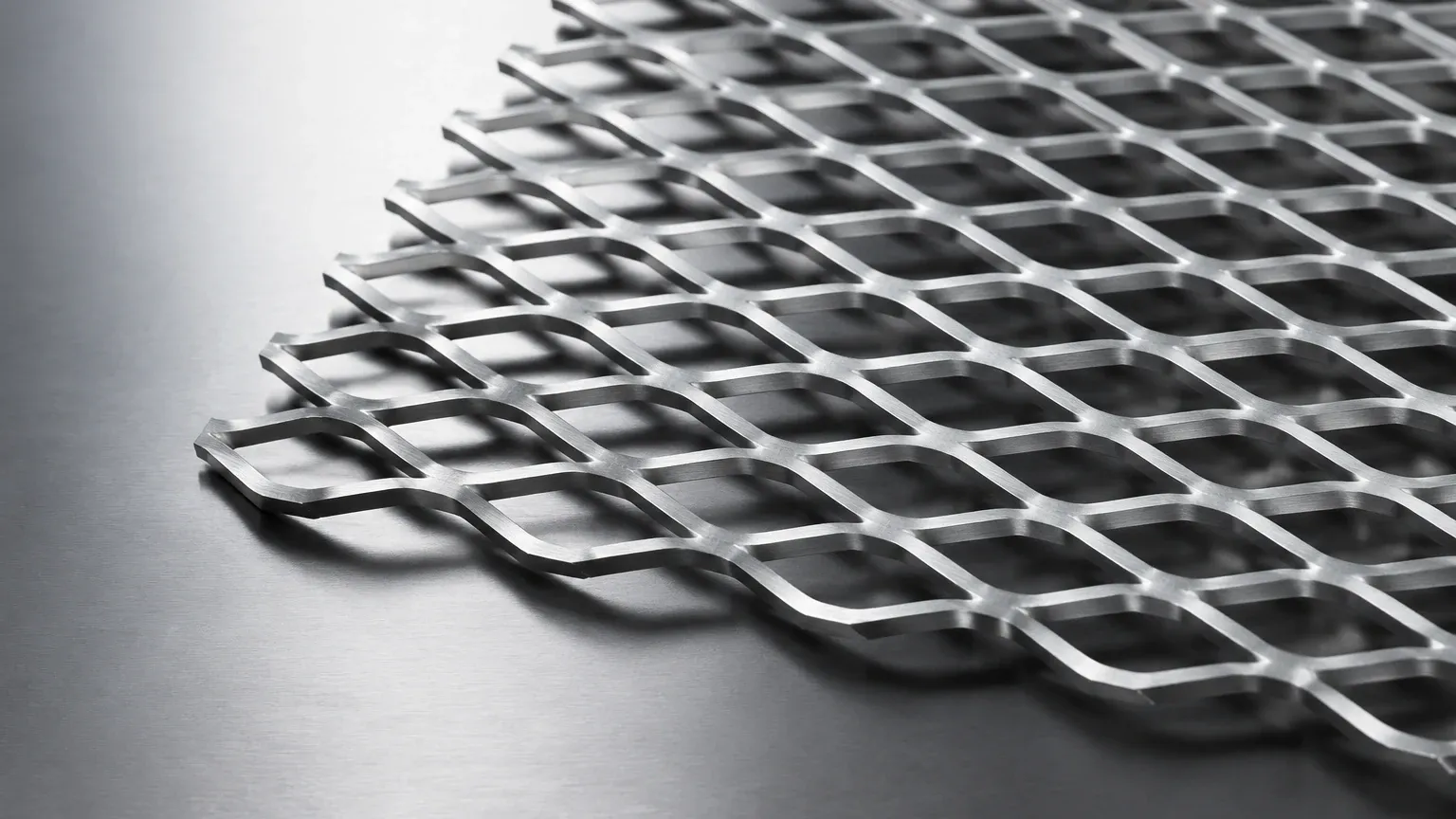
In the landscape of industrial filtration and structural support, expanded metal stands as a critical component due to its unique combination of rigidity, open area, and material efficiency. Among the various specifications available to engineers, expanded metal u1015 represents a specific technical standard often utilized in demanding B2B environments. Unlike perforated metals that lose material during the punching process, expanded metal is produced by simultaneously slitting and stretching a single solid sheet of metal. This process creates a continuous, jointless mesh that offers superior strength-to-weight ratios compared to woven or welded alternatives.
For technical professionals and procurement teams, understanding the nuances of the U1015 designation is essential for ensuring mechanical compatibility and long-term performance in filtration systems. As a specialized manufacturer, Kaifil provides high-precision Perforated & Expanded Metal solutions tailored to the rigorous standards of chemical processing, hydraulics, and pharmaceutical manufacturing.
Understanding the Technical Profile of U1015 Expanded Metal
The "U" in the U1015 designation typically signifies "Unflattened" or "Raised" expanded metal. In this state, the strands and bonds are set at a sharp angle to the original plane of the sheet. This 3D geometry is not merely an aesthetic choice; it provides significant structural advantages. The raised profile increases the section modulus of the material, making it significantly more resistant to bending and deflection than flattened variants of the same gauge.
Geometric Parameters
When specifying expanded metal u1015, engineers must account for several critical dimensions:
* SWD (Short Way of Design): The distance from the center of one bond to the center of the next bond measured across the short diamond diagonal.
* LWD (Long Way of Design): The distance from the center of one bond to the center of the next bond measured across the long diamond diagonal.
* Strand Width: The amount of metal fed into the expanding machine for each stroke.
* Strand Thickness: The thickness of the original base metal sheet.
The U1015 specification typically falls into the category of medium-duty expanded metal, often utilizing a base material thickness around 0.090 inches (approximately 13 gauge) with a specific diamond opening designed to balance fluid flow with structural reinforcement. Because the material is expanded rather than woven, there are no intersecting wires to fray or work loose under vibration, a common failure point in high-velocity hydraulic or gas filtration applications.
Material Selection and Metallurgical Considerations
While expanded metal can be produced from various alloys, Kaifil specializes in stainless steel variants to meet the corrosion resistance requirements of industrial sectors. The choice of material for expanded metal u1015 directly impacts the component's lifespan and its compatibility with the processed media.
Stainless Steel 304 vs. 316L
For most general industrial applications, Grade 304 stainless steel provides adequate corrosion resistance and mechanical strength. However, in environments involving chlorides, high temperatures, or aggressive chemical solvents, Grade 316L is the preferred standard. The addition of molybdenum in 316L enhances resistance to pitting and crevice corrosion. Furthermore, the "L" (low carbon) designation is crucial for components that require welding into filter housings or support frames, as it prevents carbide precipitation and ensures the integrity of the heat-affected zone.
Surface Treatments
To further enhance the performance of expanded metal u1015, several surface treatments are available:
1. Passivation: Essential for stainless steel components to remove surface iron and restore the protective oxide layer.
2. Electropolishing: This process smooths the microscopic peaks and valleys of the expanded metal strands, reducing the risk of bacterial growth in food and beverage applications and improving the ease of cleaning (CIP/SIP cycles).
3. Degreasing: For oxygen-service or high-purity pharmaceutical applications, ensuring the material is free from residual manufacturing lubricants is a non-negotiable requirement.
Structural Role in Industrial Filtration Assemblies
In the context of filtration engineering, expanded metal u1015 is rarely used as the primary filtration media for fine particles. Instead, it serves as a robust support structure or "skeleton" for finer wire mesh or non-woven media. This is particularly vital in high-differential pressure environments.
Support for Fine Wire Mesh
Fine filtration meshes (ranging from 5 to 100 microns) are inherently delicate. Under the pressure of fluid flow, these meshes can deform or collapse into the drainage channels of a filter housing. By utilizing a layer of expanded metal u1015 as a pleat support or a core wrap, engineers can ensure that the fine mesh maintains its shape and effective surface area. The raised strands of the unflattened metal create a natural standoff, allowing fluid to flow across the entire surface of the mesh rather than being restricted at the points of contact.
Mechanical Protection
In heavy-duty industrial filters, such as those used in oil and gas or water treatment, expanded metal serves as an outer guard. It protects the internal filter elements from mechanical damage during installation, maintenance, or from large debris (slugs) within the process stream. The rigid, interconnected diamond pattern of the U1015 specification excels at absorbing kinetic energy and distributing mechanical loads across the entire frame.
Manufacturing Precision and Customization Options
Standard catalog items often fail to meet the precise tolerances required for high-performance OEM filtration components. Kaifil’s manufacturing process for expanded metal u1015 focuses on dimensional accuracy and secondary processing to ensure seamless integration into the final product.
Shearing and Edge Conditions
One of the most common challenges with expanded metal is the "sharp" edge created by the expanding process. For B2B applications where the metal is inserted into tight-fitting housings, edge treatment is critical. We offer:
* Random Shearing: The diamond pattern is cut at any point, which is cost-effective but leaves open prongs.
* Bond Shearing: The cut is made through the bonds, resulting in a closed-diamond edge that is safer for handling and easier to weld.
Forming and Cylindrical Fabrication
Expanded metal u1015 is frequently formed into cylinders to serve as filter cores or outer cages. Achieving a perfectly round profile with a precise diameter requires specialized rolling equipment that accounts for the "spring-back" inherent in high-strength stainless steel. Kaifil provides custom-rolled cylinders with longitudinal seams that are TIG or plasma welded to maintain structural integrity under high radial loads.
Performance Evaluation: Flow Dynamics and Pressure Drop
From an engineering perspective, the selection of expanded metal u1015 must be validated by its impact on the system's pressure drop ($ΔP$). The open area percentage is the primary metric here, but the 3D orientation of the strands also plays a role in fluid dynamics.
Open Area Calculations
The open area of U1015 is typically calculated based on the relationship between the strand width and the SWD. While a higher open area reduces initial pressure drop, it also reduces the mechanical strength of the sheet. Engineers must find the "sweet spot" where the support structure provides sufficient rigidity without becoming a bottleneck for the process flow.
Turbulence and Flow Distribution
The raised strands of unflattened expanded metal can induce micro-turbulence in the fluid stream. In some applications, this is beneficial as it prevents the stagnation of particles and promotes more uniform cake formation on the primary filter media. However, in high-velocity gas applications, this turbulence must be modeled to ensure it does not lead to vibration-induced fatigue of the finer mesh layers.
Procurement and Lifecycle Management
When purchasing expanded metal u1015 for industrial projects, the total cost of ownership (TCO) should be prioritized over the initial purchase price. Factors such as material certification, dimensional consistency, and durability directly influence the frequency of filter replacements and system downtime.
Essential Confirmation Points for Engineers
Before finalizing a specification for expanded metal u1015, the following technical details should be confirmed with the manufacturer:
* Material Certification: Request Mill Test Reports (MTRs) to verify the chemical composition and mechanical properties of the stainless steel.
* Flattening Requirements: Explicitly state whether the application requires "Standard/Raised" (U1015) or "Flattened" metal, as this changes both the thickness and the flow characteristics.
* Tolerance Levels: Define the acceptable variance in SWD/LWD and overall sheet dimensions, especially for automated assembly lines.
* Cleaning Standards: Specify if the material needs to be ultrasonic cleaned or oil-free for specialized environments.
Replacement Cycles and Maintenance
Because expanded metal is a single-piece construction, it is inherently more durable than woven mesh. In many industrial filtration systems, the expanded metal support core is a permanent or long-term component, while only the inner mesh or cartridge is replaced. Choosing a high-quality stainless steel U1015 component ensures that the support structure will not succumb to stress-corrosion cracking or erosion over years of service.
Conclusion
Expanded metal u1015 is a versatile and robust solution for industrial filtration, offering a unique balance of structural strength and open area. Whether used as a pleat support, a protective cage, or a structural core, its performance is predicated on precise manufacturing and correct material selection. By focusing on technical parameters such as strand geometry, alloy grade, and edge treatments, engineers can optimize their filtration systems for maximum efficiency and longevity.
As a dedicated partner in industrial filtration, Kaifil provides the technical expertise and manufacturing capabilities required to deliver custom Perforated & Expanded Metal components that meet the most exacting specifications. From initial design consultation to final production, our focus remains on providing reliable, high-performance solutions that support the critical operations of our global B2B clients.
