


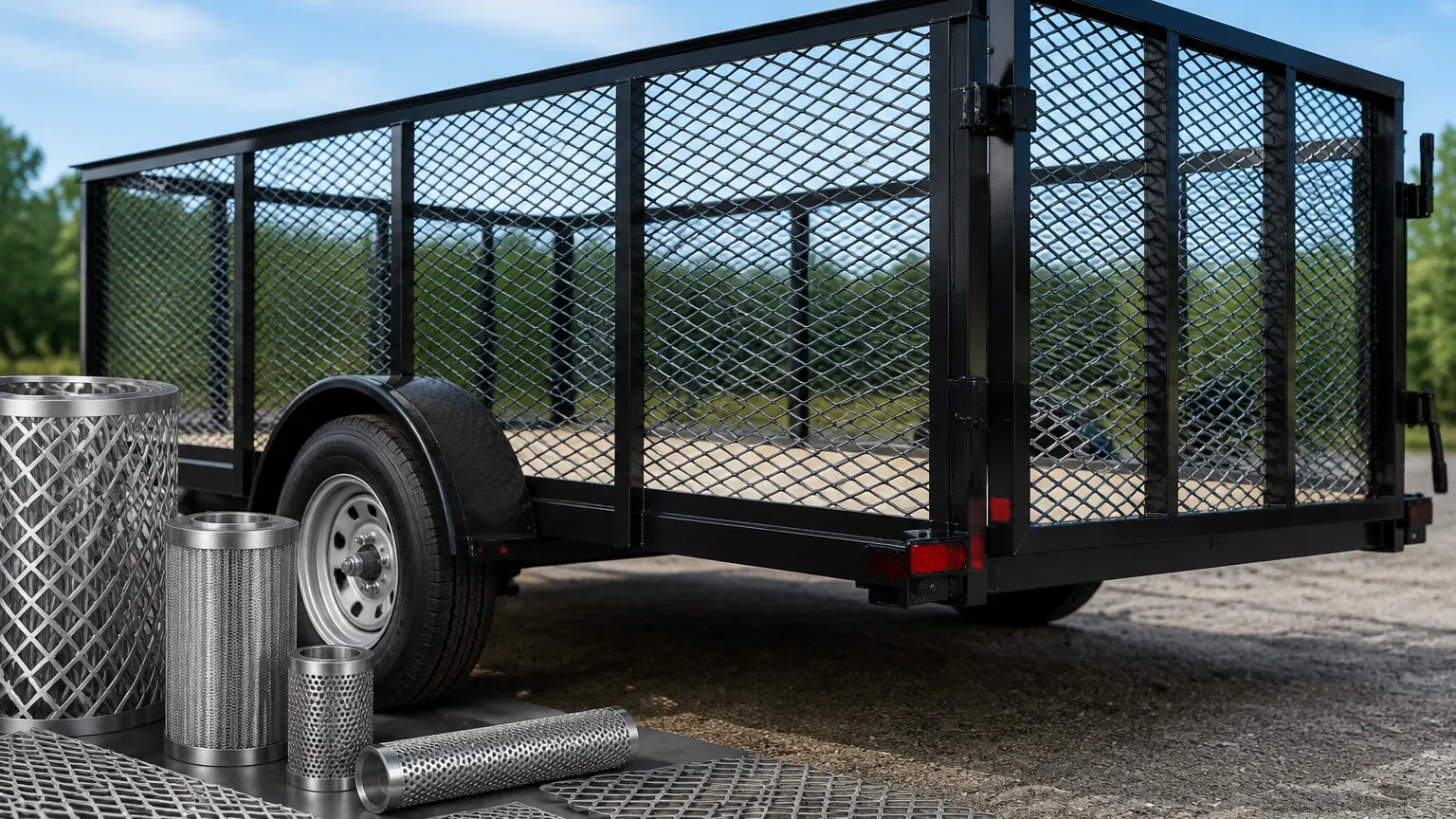
Utility Trailer with Expanded Metal Sides
In industrial logistics and equipment transport, the structural integrity and functional design of transport vehicles are paramount. A utility trailer with expanded metal sides represents a specialized engineering solution that balances structural rigidity, cargo security, and weight efficiency. For technical professionals and procurement teams, selecting the right metal components for these trailers involves understanding the mechanical properties of expanded metal and how they interact with the demands of heavy-duty industrial environments.
Expanded metal is not merely a decorative choice; it is a functional material produced through a precision shearing and stretching process. This manufacturing method creates a continuous, jointless mesh that offers unique advantages over woven wire or solid sheet metal. When integrated into the side walls of a utility trailer, it provides a versatile barrier that accommodates various cargo types while maintaining the aerodynamic and weight-saving profiles required for efficient transport.
Engineering Advantages of Expanded Metal in Trailer Design
The primary reason engineers specify expanded metal for trailer sides is its exceptional strength-to-weight ratio. Because the metal is stretched rather than punched, there is zero material waste during production, and the structural bonds of the original sheet remain intact. This creates a one-piece construction that does not unravel under stress, a common failure point in welded or woven alternatives.
Impact Resistance and Load Distribution
From a mechanical perspective, the diamond-shaped trusses of expanded metal act as a series of interconnected bridges. When a load shifts during transit and strikes the side of the trailer, the energy is distributed across the entire panel rather than being concentrated at a single point. This reduces the likelihood of permanent deformation or structural failure. For industries transporting heavy machinery or abrasive materials, this durability is critical for maintaining a long service life.
Aerodynamics and Visibility
A utility trailer with expanded metal sides offers significant aerodynamic benefits. The open area of the mesh allows air to flow through the trailer sides, reducing wind resistance (drag) when the trailer is empty or carrying low-profile loads. This contributes to better fuel efficiency for the towing vehicle. Furthermore, the transparency of the mesh provides the driver with better visibility through the rearview mirror, enhancing safety during lane changes and reversing maneuvers.
Structural Specifications: SWD, LWD, and Strand Geometry
When specifying Perforated & Expanded Metal for industrial applications, engineers must define several key geometric parameters. These dimensions dictate the mesh's performance in terms of containment and structural stiffness.
* SWD (Short Way of Design): This is the distance from the center of one bond to the center of the next bond measured across the short diamond diagonal. It determines the density of the mesh.
* LWD (Long Way of Design): The distance measured across the long diamond diagonal. Together with SWD, this defines the aperture size.
* Strand Width and Thickness: These dimensions refer to the amount of metal fed into the precision dies and the thickness of the original sheet. Increasing the strand width significantly boosts the overall rigidity of the trailer side.
For a utility trailer, a "raised" or "standard" expanded metal is often preferred over "flattened" expanded metal. Raised expanded metal retains the slight angle of the strands, which provides additional grip for securing straps and adds a three-dimensional stiffness to the panel that helps prevent buckling under lateral pressure.
Material Selection: Enhancing Durability with Stainless Steel
While carbon steel is common in consumer-grade trailers, industrial applications often require the superior properties of stainless steel. Kaifil specializes in custom stainless steel solutions, and applying this expertise to trailer components ensures longevity in harsh environments.
Corrosion Resistance in Industrial Environments
Utility trailers used in chemical processing, food and beverage transport, or coastal regions are subject to aggressive corrosive agents. Road salts, chemical runoff, and high humidity can quickly degrade carbon steel, leading to structural weakening. Using 304 or 316L stainless steel for expanded metal sides eliminates the need for frequent repainting or galvanizing. Stainless steel develops a passive chromium oxide layer that self-heals, ensuring the trailer remains structural sound and aesthetically professional over decades of use.
Hygiene and Cleaning
In the pharmaceutical and food industries, equipment must often be sanitized. Stainless steel expanded metal sides are resistant to high-pressure washing and caustic cleaning agents. The open design of the mesh prevents the accumulation of debris and biological contaminants, making it the ideal choice for trailers that must move between sensitive production zones.
Comparing Perforated & Expanded Metal for Cargo Containment
Choosing between perforated and expanded metal depends on the specific requirements of the cargo and the desired structural characteristics. Both materials are used in trailer fabrication, but they serve different engineering goals.
| Feature | Expanded Metal | Perforated Metal |
| :— | :— | :— |
| Manufacturing | Sheared and stretched (no waste) | Punched from sheet (waste produced) |
| Structural Integrity | Single-piece truss system | Dependent on remaining bridge width |
| Weight | Lighter for the same strength | Heavier due to solid sections |
| Surface Profile | Raised strands provide grip | Flat surface, easier to slide against |
| Cost Efficiency | Generally higher due to material utilization | Higher due to scrap metal loss |
For a utility trailer with expanded metal sides, the expanded option is typically favored for its weight efficiency and the "grip" provided by the raised strands, which helps stabilize loose cargo. However, perforated metal may be specified if a perfectly flat interior surface is required to prevent scratching of sensitive equipment or if specific hole patterns are needed for specialized mounting brackets.
Customization and Fabrication Considerations for Industrial Trailers
Industrial procurement teams should look for customization options that align with their specific operational needs. A one-size-fits-all approach rarely suffices for specialized transport. Customization in expanded metal involves more than just selecting a mesh size; it involves engineering the component for the intended assembly method.
Framing and Attachment
Expanded metal panels must be properly framed to ensure safety and durability. Typically, the mesh is welded into an angle iron or square tubing frame. During fabrication, it is essential to ensure that the "bonds" of the expanded metal are securely tacked to the frame. For stainless steel applications, TIG or MIG welding with compatible filler metals is required to maintain the corrosion resistance of the joints.
Aperture Size vs. Cargo Type
The choice of aperture (the size of the diamond opening) is a critical safety consideration. If the trailer is intended to transport small components or scrap, a smaller SWD is necessary to prevent items from falling through. Conversely, for large equipment transport, a larger aperture reduces weight and improves visibility without sacrificing the containment of the main load.
Maintenance and Lifecycle Management
One of the primary advantages of high-quality metal filtration and structural components is the reduction in total cost of ownership (TCO). While the initial investment in a utility trailer with expanded metal sides—particularly one utilizing stainless steel—may be higher than wood-sided or plastic-sided alternatives, the lifecycle costs are significantly lower.
Inspection Cycles
Industrial trailers should undergo regular inspections. For expanded metal sides, inspectors should check for:
1. Weld Integrity: Ensuring the mesh remains securely attached to the frame.
2. Strand Fractures: Checking for signs of metal fatigue, particularly in high-vibration areas near the hitch or axle.
3. Deformation: Identifying any significant bowing that might indicate the trailer has been overloaded or subjected to improper impact.
Replacement and Repair
Unlike solid panels, damaged sections of expanded metal can often be cut out and replaced with a matching patch of mesh. This modularity simplifies repairs and reduces downtime. Because Kaifil provides reliable OEM and customized solutions, sourcing exact replacement specifications for industrial-grade mesh ensures that repairs maintain the original engineering standards of the trailer.
Conclusion: Selecting a Reliable Filtration and Metal Partner
Selecting the components for a utility trailer with expanded metal sides requires a deep understanding of material science and mechanical engineering. Whether the goal is to optimize airflow, maximize payload capacity, or ensure long-term resistance to corrosive chemicals, the quality of the expanded metal is the deciding factor in the trailer’s performance.
By focusing on precision manufacturing and material integrity, organizations can ensure their transport equipment meets the rigorous demands of modern industry. For those seeking high-performance materials, exploring the technical specifications of Perforated & Expanded Metal is the first step toward achieving a durable, efficient, and cost-effective filtration or containment solution. When engineering and purchasing teams prioritize technical excellence over short-term cost savings, the result is a more reliable infrastructure that supports the entire industrial supply chain.
