


Using Expanded Metal for Grill
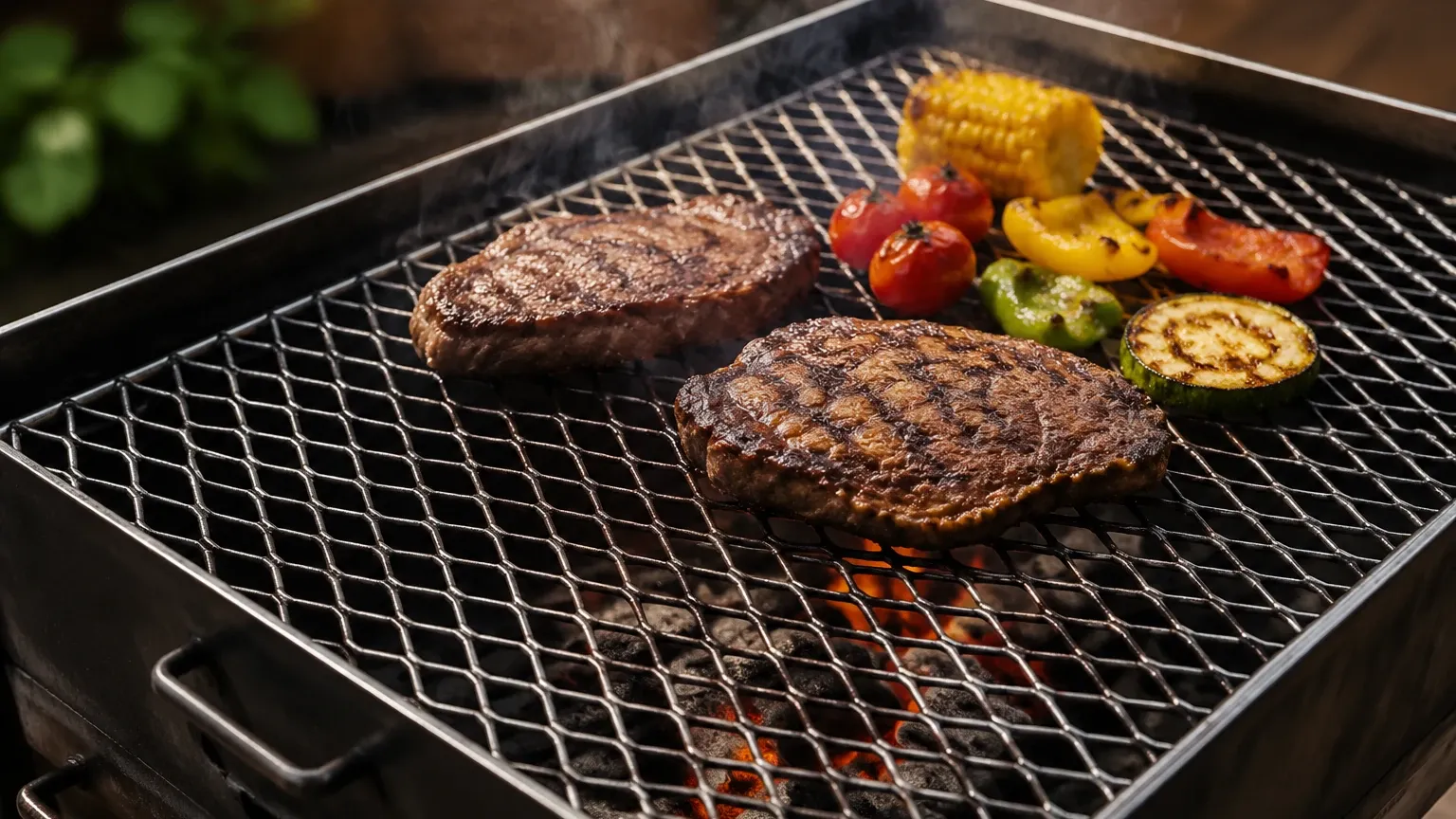
In industrial food processing, commercial catering, and heavy-duty equipment manufacturing, the choice of grilling surface directly impacts thermal efficiency, structural longevity, and food safety. Using expanded metal for grill applications has become a standard engineering practice due to its unique combination of high open-area ratios and structural rigidity. Unlike woven wire mesh, which can fray or shift under mechanical stress, or perforated plate, which often results in significant material waste during production, expanded metal offers a cost-effective, single-piece construction that excels in high-heat environments.
For engineers and procurement specialists, selecting the right Perforated & Expanded Metal requires a deep understanding of material science, geometric specifications, and the specific demands of the application, whether it is a high-volume industrial dehydrator, a commercial smoker, or a filtration support structure in a chemical processing plant.
Understanding the Geometry of Expanded Metal
Expanded metal is manufactured by simultaneously slitting and stretching a solid metal sheet. This process creates a diamond-shaped pattern of openings, where the metal "strands" are set at an angle to the plane of the sheet. This geometry is critical when using expanded metal for grill surfaces because it influences several performance factors.
LWD and SWD Dimensions
The Long Way of the Design (LWD) and Short Way of the Design (SWD) determine the size of the diamond opening. In grilling applications, the SWD is particularly important as it dictates the level of support for the product being cooked or processed. A smaller SWD prevents smaller food items from falling through while maintaining sufficient airflow. Conversely, a larger LWD allows for higher heat throughput and easier cleaning.
Strand Width and Thickness
The strand width (the amount of metal between the slits) and the thickness of the original sheet determine the overall strength of the grill. For industrial grills that must support heavy loads—such as large cuts of meat in a commercial smokehouse or heavy trays in a drying oven—increasing the strand width is more effective for structural integrity than simply increasing the gauge of the metal.
Material Selection: Stainless Steel vs. Carbon Steel
When specifying materials for a grill or filtration component, the environmental conditions are the primary driver.
304 and 316 Stainless Steel
For most food-grade applications, 304-grade stainless steel is the industry standard. It provides excellent corrosion resistance and can withstand the frequent high-pressure washdowns and chemical sanitizers used in industrial kitchens. In more aggressive environments, such as those involving high salt concentrations or acidic marinades, 316-grade stainless steel is preferred due to its added molybdenum content, which provides superior resistance to pitting and crevice corrosion.
Carbon Steel and Specialty Alloys
While carbon steel is often used in outdoor residential BBQ applications due to its heat retention properties, it is less common in B2B industrial food processing unless it is treated with a food-safe coating. However, in non-food industrial applications—such as protective grilles for machinery or heat shields—expanded carbon steel is a highly economical choice. For extreme temperature applications, specialty alloys like Inconel or Monel may be considered, though these are typically reserved for specialized chemical or aerospace filtration needs.
Raised vs. Flattened Expanded Metal
One of the most important decisions when using expanded metal for grill components is whether to use the material in its "raised" (standard) or "flattened" state.
Raised Expanded Metal
In its standard form, the strands of expanded metal are turned at a sharp angle. This creates a textured surface that provides excellent grip and increases the surface area for heat dissipation. In a grilling context, raised expanded metal is often used for heavy-duty charcoal grates where the primary goal is to support fuel while allowing ash to fall through. The angled strands also help direct airflow, which can be engineered to create specific convection patterns.
Flattened Expanded Metal
Flattened expanded metal is produced by passing the raised sheet through a cold-roll reducing mill. This flattens the strands and bonds them into the same plane as the sheet. For food-contact surfaces, flattened expanded metal is generally preferred. The smooth, level surface is easier to clean, reduces the risk of food sticking, and provides a more uniform contact area for heat transfer. Furthermore, flattened metal is safer for operators to handle, as the sharp edges created during the expansion process are significantly reduced.
Engineering Advantages in Thermal Applications
Using expanded metal for grill surfaces offers several technical advantages over solid plates or traditional bars:
1. Thermal Expansion Management: High-heat applications cause metal to expand and contract. The diamond pattern of expanded metal acts as a series of small expansion joints, allowing the material to flex without warping or cracking. This is a significant advantage over solid perforated sheets, which may buckle under uneven heating.
2. Airflow and Heat Distribution: The open area of expanded metal can be precisely calculated to meet specific CFM (Cubic Feet per Minute) requirements for airflow. This ensures consistent temperature zones across the entire grilling or drying surface, which is vital for quality control in industrial food production.
3. Strength-to-Weight Ratio: Because the material is stretched rather than punched, the resulting mesh is stronger than the original sheet on a per-pound basis. This allows engineers to design lighter equipment without sacrificing the load-bearing capacity of the grill surface.
Cleaning, Maintenance, and Hygiene Standards
In any B2B food processing environment, hygiene is a non-negotiable requirement. The design of the expanded metal must facilitate thorough cleaning to prevent bacterial growth and cross-contamination.
Deburring and Surface Finishing
The expansion process naturally creates sharp edges. For grill applications, it is essential to specify deburring. Methods such as vibratory finishing or electropolishing are used to smooth these edges. Electropolishing, in particular, is highly recommended for stainless steel grills as it removes surface impurities and creates a microscopically smooth finish that resists food adhesion and simplifies the sanitation process.
Drainage and Residue Removal
The diamond shape of the openings facilitates the drainage of fats, oils, and moisture. Unlike woven wire, which has "knuckles" or intersection points where organic matter can become trapped, expanded metal is a single, continuous piece of material. This lack of joints makes it far more hygienic and easier to sanitize using automated Clean-In-Place (CIP) systems.
Customization Options for OEM Applications
As a professional manufacturer, Kaifil understands that a "one-size-fits-all" approach rarely works for complex industrial filtration and grilling systems. Customization is key to optimizing performance. When ordering Perforated & Expanded Metal for specialized projects, several variables can be adjusted:
* Custom Sheet Sizes: Reducing the need for on-site cutting and welding by providing exact-to-size panels.
* Varying Open Areas: Adjusting the LWD and SWD to achieve specific filtration or airflow targets.
* Border Styles: Providing "random" sheared edges or "bond" edges (where the diamonds are closed) to facilitate easier mounting and increased safety.
* Material Thickness: Matching the gauge to the specific load requirements of the industrial process.
Risk Assessment and Selection Criteria
Before finalizing a specification for expanded metal grills, engineers should confirm the following data points to avoid common pitfalls:
* Maximum Operating Temperature: Ensure the selected alloy can maintain its structural integrity at peak heat without excessive oxidation.
* Load Distribution: Calculate the maximum weight the grill will support and ensure the strand width and thickness are sufficient to prevent sagging over time.
* Chemical Compatibility: If the grill will be exposed to caustic cleaning agents or high-salt environments, verify that the grade of stainless steel (e.g., 304 vs 316) is appropriate.
* Compliance Requirements: Ensure the material and any secondary finishes meet local and international food safety standards (such as FDA or NSF guidelines).
Conclusion
Using expanded metal for grill applications provides a robust, efficient, and cost-effective solution for industrial and commercial needs. By focusing on the technical nuances of material grade, diamond geometry, and surface finish, procurement teams can ensure they are investing in components that enhance both the performance and the lifespan of their equipment. Whether the goal is to improve airflow in a drying kiln or to provide a durable, hygienic surface for high-volume food processing, expanded metal remains a versatile choice for modern engineering challenges.
