


Utility Trailer with Expanded Metal Floor
In the realm of industrial logistics and equipment transport, the structural integrity of a utility trailer is largely defined by its flooring material. While wood and solid steel plates are traditional choices, the utility trailer with expanded metal floor has emerged as a preferred specification for engineers and fleet managers who prioritize a high strength-to-weight ratio, superior traction, and low maintenance. Understanding the technical nuances of expanded metal—from its manufacturing process to its load-bearing characteristics—is essential for making an informed procurement decision.
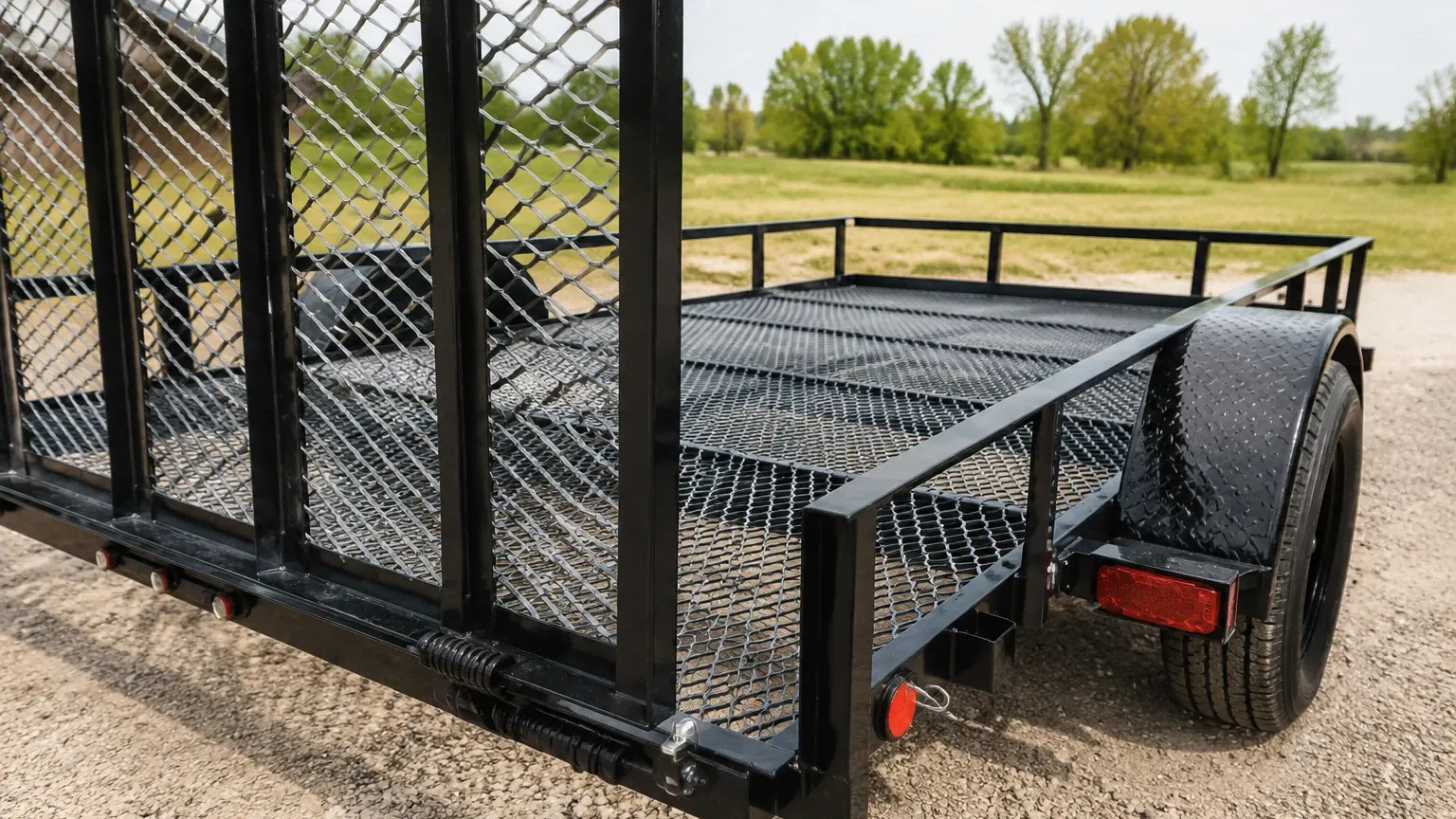
Expanded metal is not a woven or welded product; rather, it is produced by simultaneously slitting and stretching a single sheet of solid metal. This process creates a continuous piece of material with diamond-shaped openings, ensuring that there are no joints or welds that could fail under repetitive stress. For utility trailers, this translates to a floor that can withstand significant impact while remaining significantly lighter than solid plate alternatives.
Understanding the Role of Expanded Metal in Utility Trailer Flooring
The choice of flooring material directly impacts the trailer's Gross Vehicle Weight Rating (GVWR) and its overall fuel efficiency. A utility trailer with expanded metal floor utilizes the inherent structural rigidity of the diamond pattern to provide support across the entire frame. Because the metal is expanded rather than perforated, there is zero material waste during production, making it a cost-effective solution for large-scale industrial applications.
In a trailer context, the "raised" or "standard" version of expanded metal is often preferred over the "flattened" version. The raised edges of the strands provide an aggressive, multi-directional grip that is critical when loading equipment in wet, icy, or oily conditions. This self-draining and self-cleaning nature is a primary reason why expanded metal is specified for trailers used in construction, landscaping, and heavy machinery transport.
Key Benefits: Why Specifying Expanded Metal Improves Trailer Performance
When evaluating a utility trailer with expanded metal floor, several performance advantages become apparent compared to traditional timber or solid steel surfaces:
1. Superior Drainage and Debris Clearance: The open area of the expanded metal allows rain, snow, mud, and gravel to fall through the floor rather than accumulating on the surface. This prevents the buildup of weight and reduces the risk of hydroplaning for the equipment being transported.
2. Enhanced Traction: The angular profile of the strands acts as a natural non-slip surface. For trailers used to transport ATVs, lawnmowers, or small industrial loaders, this grip is essential for safe loading and unloading on inclines.
3. Weight Reduction: By removing a significant percentage of the metal's mass while retaining structural integrity, expanded metal floors allow for a higher payload capacity within the trailer's weight limits. This reduction in tare weight also contributes to better fuel economy for the towing vehicle.
4. Aerodynamic Efficiency: On open trailers, air can pass through the floor during transit, reducing wind resistance and "buffeting" at highway speeds. This is a subtle but important factor for long-haul logistics.
Technical Comparison: Perforated & Expanded Metal vs. Traditional Flooring
Engineers must often choose between Perforated & Expanded Metal for various industrial components. While perforated metal offers high precision for filtration and acoustic applications, expanded metal is generally superior for heavy-duty flooring due to its structural continuity. In perforated metal, holes are punched out, which can lead to material waste and potential stress points around the holes. In contrast, expanded metal strands are interconnected, distributing the load more evenly across the sheet.
Compared to wood flooring, expanded metal offers significantly higher durability in outdoor environments. Wood is susceptible to rot, warping, and splintering, especially when exposed to constant moisture or chemical spills. A utility trailer with expanded metal floor eliminates these issues, providing a fire-resistant and pest-proof surface that maintains its dimensions regardless of humidity levels.
Engineering Considerations: Selecting the Right Gauge and Opening Size
Selecting the correct specification for a trailer floor requires a balance between weight and load capacity. The two most critical measurements are the metal gauge (thickness) and the diamond size, typically referred to as the Long Way of Design (LWD) and Short Way of Design (SWD).
* Gauge Selection: For light-duty utility trailers, 13-gauge or 11-gauge expanded metal may suffice. However, for industrial or commercial trailers, 9-gauge or even 6-gauge is standard to ensure the floor does not "bow" or deform under the concentrated weight of heavy tires or machinery legs.
* Diamond Size: A smaller SWD (Short Way of Diamond) provides more support points per square foot, which is ideal for smaller-wheeled equipment. A larger LWD allows for better debris clearance but may require more frequent cross-members in the trailer frame to prevent sagging.
* Raised vs. Flattened: As mentioned, raised expanded metal is the standard for traction. Flattened expanded metal, which is cold-rolled after expansion to create a smooth, level surface, is rarely used for trailer floors unless the trailer is intended for hand-loading boxes or sensitive materials where a smooth sliding surface is required.
Material Selection and Corrosion Protection for Long-Term Durability
The environment in which the trailer operates dictates the material choice. While carbon steel is the most common material for a utility trailer with expanded metal floor due to its strength and cost-efficiency, it requires robust surface treatment to prevent oxidation.
* Hot-Dip Galvanized Steel: This is the industry standard for utility trailers. The zinc coating provides cathodic protection, ensuring that even if the floor is scratched during loading, the underlying steel remains protected from rust. This is essential for trailers used in coastal regions or areas where road salt is common.
* Stainless Steel: For specialized applications, such as chemical transport or food-grade environments, stainless steel expanded metal (304 or 316 grade) offers unparalleled corrosion resistance. While the initial cost is higher, the total cost of ownership is reduced through the elimination of painting or re-galvanizing.
* Aluminum: Aluminum expanded metal is used when extreme weight savings are required. While not as high in tensile strength as steel, it is naturally corrosion-resistant and ideal for smaller utility trailers or marine environments.
Maintenance and Operational Lifespan of Expanded Metal Floors
One of the primary B2B advantages of a utility trailer with expanded metal floor is the minimal maintenance required. Unlike wood, which needs periodic sealing or replacement, a metal floor primarily requires inspection of the attachment points.
In most industrial designs, the expanded metal is tack-welded to the trailer frame cross-members. Over years of heavy use and vibration, these welds should be inspected for stress fractures. Additionally, because the open design allows moisture to pass through, the trailer frame itself is less likely to trap water against the flooring, which extends the life of the entire chassis.
Cleaning is typically limited to power washing. Because there are no recessed pockets or wood grain to trap oils or chemicals, the floor can be decontaminated quickly, which is a critical requirement for trailers moving between different industrial sites with strict environmental protocols.
Customization and OEM Solutions for Specialized Industrial Trailers
For manufacturers of specialized equipment, a standard off-the-shelf trailer floor may not meet specific engineering tolerances. This is where custom Perforated & Expanded Metal solutions become vital. Customization options include:
* Variable Open Area: Adjusting the expansion ratio to provide more or less transparency and airflow depending on the cargo requirements.
* Custom Sheet Sizes: Producing expanded metal in exact dimensions to minimize welding seams on the trailer bed, which improves structural integrity and aesthetic appeal.
* Edge Banding: For high-end utility trailers, the expanded metal can be supplied with U-edging or solid borders to simplify the installation process and eliminate sharp edges.
When partnering with a manufacturer like Kaifil, engineers can specify the exact material grade and filtration-like precision required for specialized metal components. Whether the application is a standard utility trailer or a custom industrial platform, the focus remains on durability and precise performance.
Conclusion: Confirming Specifications Before Procurement
Before finalizing the design or purchase of a utility trailer with expanded metal floor, purchasing teams and engineers should confirm several key data points with their supplier. These include the concentrated load capacity (rather than just the distributed load), the specific alloy and temper of the metal, and the type of finish applied.
By selecting a floor made from high-quality expanded metal, businesses can ensure their transport assets remain operational for longer periods with fewer repairs. The combination of lightweight design, aggressive traction, and environmental resilience makes expanded metal an objectively superior choice for modern industrial utility trailers.
