


What Is #9 Expanded Metal
In the realm of industrial materials, precision in terminology and specification is paramount for engineering success. When procurement teams or design engineers encounter the term "#9 expanded metal," they are looking at a specific classification of metal mesh defined by its thickness, weight, and structural integrity. Understanding the nuances of this material is essential for applications ranging from heavy-duty filtration support to industrial safety partitions.
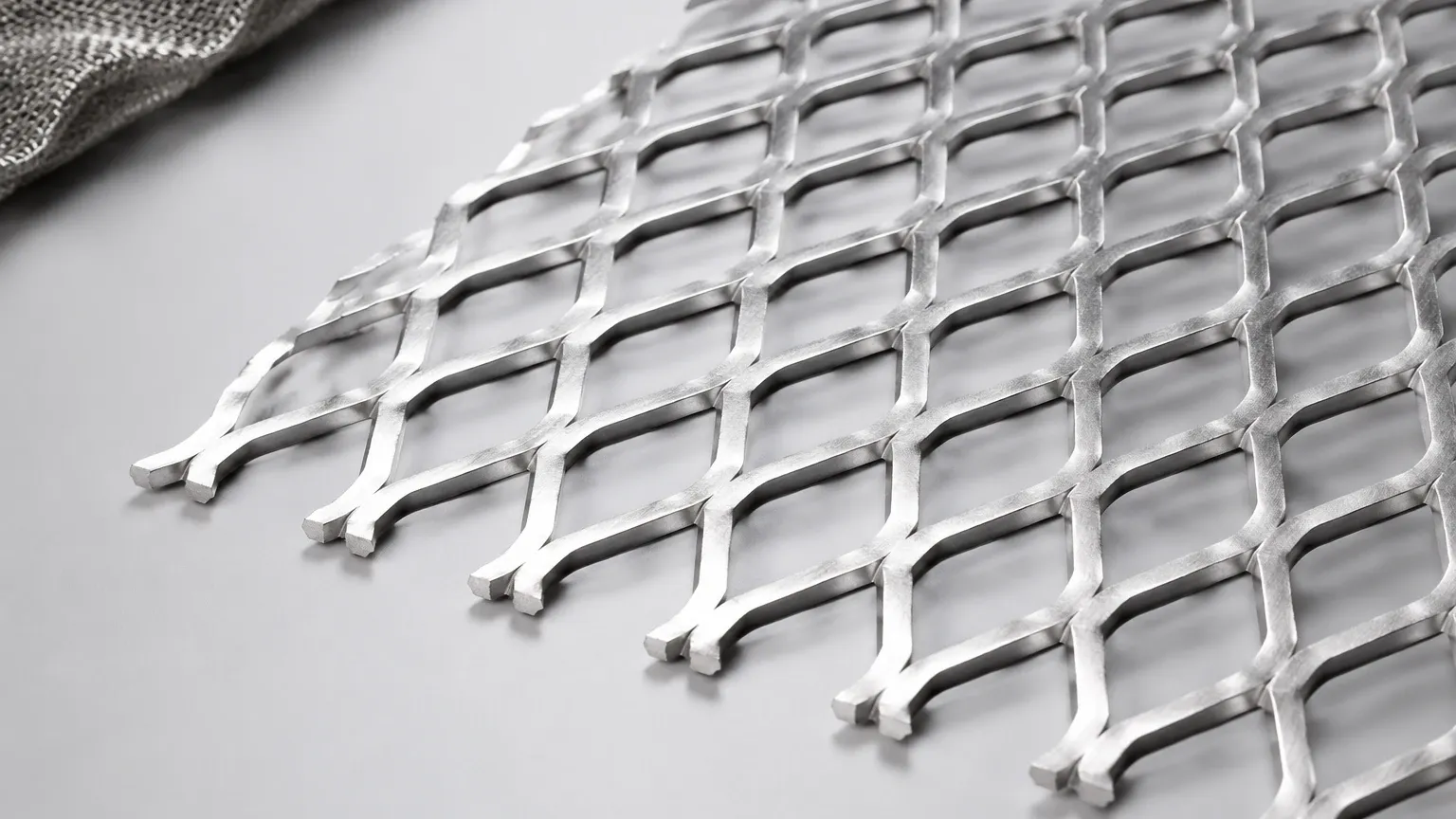
Perforated & Expanded Metal serves as a foundational component in many industrial systems. While perforated metal is created by punching holes into a sheet, expanded metal is produced by simultaneously slitting and stretching the material. The "#9" designation specifically refers to the gauge of the base metal used before the expansion process begins. For carbon steel, #9 gauge typically translates to a nominal thickness of 0.1345 inches (approximately 3.4 mm), providing a robust profile for demanding environments.
The Technical Definition of #9 Expanded Metal
To answer the question of what is #9 expanded metal, one must look at the American standard for sheet metal gauges. In the industrial sector, expanded metal is often categorized by its weight per square foot and the original gauge of the sheet. A "#9" expanded metal product indicates that the strands of the mesh are derived from a 9-gauge steel plate.
However, it is important to distinguish between the two primary forms this material takes: Raised (Standard) and Flattened.
1. Raised Expanded Metal: This is the material as it comes off the expanding machine. The strands and bonds are set at a uniform angle to the plane of the sheet. This creates a three-dimensional surface that offers excellent grip and high structural rigidity. In a #9 raised configuration, the thickness of the strand remains the original 9-gauge thickness.
2. Flattened Expanded Metal: This version is produced by passing the standard expanded metal through a cold-roll reducing mill. This process flattens the strands and bonds into a single plane, reducing the overall thickness and creating a smooth, level surface. While the "#9" still refers to the starting material, the final thickness of flattened #9 expanded metal will be slightly less than the original gauge due to the rolling process.
Dimensional Specifications and Nomenclature
When specifying #9 expanded metal for a project, engineers must look beyond the gauge number. The performance of the mesh is dictated by several key dimensions that define the geometry of the openings:
* SWD (Short Way of Design): The distance from the center of one bond to the center of the next bond measured across the short diamond diagonal.
* LWD (Long Way of Design): The distance from the center of one bond to the center of the next bond measured across the long diamond diagonal.
* SWO (Short Way of Opening): The actual width of the opening, measured from the inside of the bonds.
* LWO (Long Way of Opening): The actual length of the opening, measured from the inside of the bonds.
* Strand Width: The amount of metal fed into the machine between slits to form one strand.
* Strand Thickness: The gauge of the base metal (in this case, #9 gauge).
For example, a common specification might be "3/4" #9 Expanded Metal." This indicates that the Short Way of Design (SWD) is 0.75 inches, and the base material is 9-gauge steel. This combination yields a specific open area percentage, which is a critical calculation for filtration and airflow applications.
Material Composition and Engineering Considerations
While the "#9 gauge" terminology is most frequently applied to carbon steel, the principles of expanded metal apply to various alloys. At Kaifil, the focus is often on stainless steel filtration solutions where durability and corrosion resistance are non-negotiable.
Carbon Steel vs. Stainless Steel
In many industrial settings, #9 carbon steel expanded metal is used for its cost-effectiveness and high strength. However, in chemical processing, food and beverage, or pharmaceutical applications, stainless steel (such as 304 or 316L) is preferred. It is important to note that the gauge-to-thickness conversion for stainless steel can differ slightly from carbon steel. Engineers must verify the decimal thickness of the #9 gauge in the specific alloy being ordered to ensure compatibility with housing tolerances and pressure requirements.
Strength-to-Weight Ratio
One of the primary reasons engineers select #9 expanded metal is its exceptional strength-to-weight ratio. Because the metal is stretched rather than punched, there is zero material waste during production. The resulting diamond-shaped trusses distribute loads more effectively than solid sheets of the same weight. This makes it an ideal choice for reinforcing filter media or creating rigid cages for large-scale industrial filter cartridges.
Applications of #9 Expanded Metal in Industrial Filtration
Within the specialized field of filtration, #9 expanded metal serves as a critical structural component. While it is rarely the primary filtering medium (due to the relatively large size of the diamond openings), it provides the mechanical support necessary for finer wire mesh or synthetic media to function under high pressure.
1. Support Cores and Outer Cages
In high-pressure hydraulic or chemical filtration, the inner core of a filter cartridge must withstand significant differential pressure without collapsing. A #9 expanded metal cylinder provides the necessary hoop strength. Similarly, outer cages made from this material protect the delicate inner pleats from mechanical damage during installation or backwashing cycles.
2. Pre-Filtration and Debris Removal
In water treatment or intake systems, #9 expanded metal can act as a primary screen to remove large debris, such as stones or organic matter, before the fluid reaches more sensitive filtration stages. Its rigid structure ensures it does not deform under the weight of trapped debris.
3. Catalyst Support
In chemical reactors, expanded metal sheets are used to support catalyst beds. The #9 gauge provides the thermal stability and physical strength required to hold heavy catalyst pellets while maintaining maximum open area for gas or liquid flow.
Selection Criteria: What Engineers Should Confirm
Before finalizing a purchase order for #9 expanded metal, technical professionals should evaluate the following criteria to ensure the material meets the application's demands:
* Open Area Percentage: This determines the flow rate and pressure drop across the metal. If the open area is too low, it may cause system inefficiency; if it is too high, the material may lack the required structural integrity.
* Direction of the Diamond: The orientation of the LWD and SWD relative to the flow or the load can impact the performance. In filtration cylinders, the LWD is typically oriented around the circumference to maximize strength.
* Edge Conditions: Expanded metal can have "random sheared" edges or "bond sheared" edges. For filtration components that require welding into a housing, bond shearing is often preferred to provide a cleaner welding surface and prevent sharp protrusions.
* Surface Finish: For many B2B applications, the material may require post-processing. This includes pickling and passivation for stainless steel to enhance corrosion resistance, or galvanizing for carbon steel to prevent oxidation.
Why Choose Expanded Metal Over Perforated Metal?
When deciding between Perforated & Expanded Metal, the choice often comes down to the specific mechanical requirements of the project.
Expanded metal is generally more cost-effective because the manufacturing process involves no scrap. Furthermore, the interconnected diamond structure provides better structural continuity than a perforated sheet, where the "bridges" between holes can be points of failure under extreme stress. However, perforated metal offers more flexibility in hole shapes (round, square, slotted) and can achieve much smaller opening sizes than are typically possible with expansion techniques.
For heavy-duty industrial support, #9 expanded metal is often the superior choice due to its thickness and the inherent rigidity of the expanded diamond pattern.
Maintenance and Replacement Cycles
In industrial environments, the longevity of #9 expanded metal depends largely on the fluid chemistry and the mechanical load. In non-corrosive environments, these components can last for decades. However, in filtration systems dealing with abrasive slurries or corrosive chemicals, regular inspection is required.
Engineers should look for signs of "strand thinning" or stress fractures at the bonds. In high-vibration environments, the bonds of the expanded metal can experience fatigue. Choosing a high-quality manufacturer like Kaifil ensures that the expansion process is controlled, minimizing internal stresses in the metal and extending the component's service life.
Conclusion
#9 expanded metal is a versatile, high-strength material that plays a vital role in industrial infrastructure and filtration. By understanding the difference between raised and flattened varieties, and by accurately specifying the SWD and LWD dimensions, procurement teams can secure components that offer the perfect balance of flow efficiency and structural support. Whether used as a protective guard or a critical filter core, the #9 gauge provides the heavy-duty performance required for modern industrial applications.
