


24 X 24 Expanded Metal
In the landscape of industrial filtration and structural support, the specification of components is driven by precision, material durability, and geometric efficiency. Among the various configurations available to engineers, 24 x 24 expanded metal panels serve as a standard yet highly versatile dimension for a wide range of applications. Whether used as a support substrate for fine wire mesh or as a standalone filtration medium for coarse particulates, understanding the technical nuances of this material is essential for optimizing system performance and longevity.
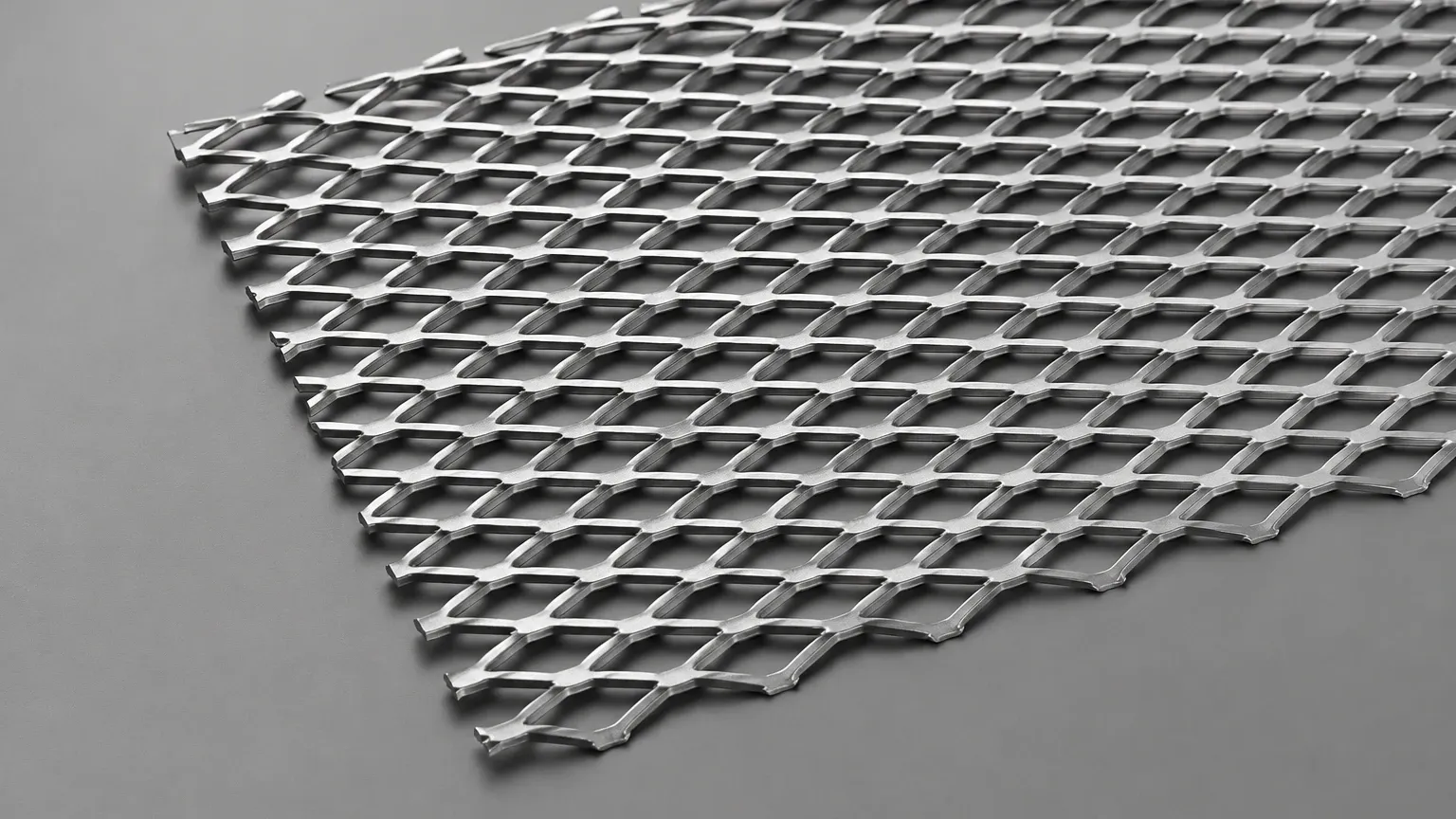
Expanded metal is produced by simultaneously slitting and stretching a solid metal sheet, creating a diamond-shaped pattern of openings. Unlike perforated metal, which involves punching out material and creating waste, the expansion process preserves the integrity of the original sheet while increasing its surface area. For industrial procurement teams and engineers, selecting the right Perforated & Expanded Metal involves a deep dive into metallurgical properties, geometric tolerances, and the specific demands of the operating environment.
The Role of 24 x 24 Expanded Metal in Industrial Filtration
The 24-inch by 24-inch dimension is a common standard in industrial housing and rack systems. In filtration, 24 x 24 expanded metal is frequently utilized as a rigid support structure for pleated filters or fine wire mesh cartridges. Its primary function in these assemblies is to provide mechanical stability against high-pressure differentials that could otherwise collapse or deform softer filter media.
In heavy-duty air filtration, chemical processing, and hydraulic systems, the expanded metal acts as a "skeleton." By maintaining a consistent 24 x 24 panel size, manufacturers like Kaifil ensure compatibility with standard industrial frames, reducing the need for extensive retrofitting. The choice of expanded metal over other support types, such as welded wire or perforated sheets, is often dictated by the need for a high strength-to-weight ratio and a high percentage of open area to minimize flow resistance.
Understanding Technical Specifications: SWD, LWD, and Strand Geometry
When specifying 24 x 24 expanded metal, engineers must look beyond the overall panel dimensions. The performance of the mesh is determined by its internal geometry, specifically the Short Way of Design (SWD) and the Long Way of Design (LWD).
* SWD (Short Way of Design): This is the distance from a point on a diamond to the corresponding point on the next diamond, measured across the short axis. It dictates the density of the pattern.
* LWD (Long Way of Design): This is the distance measured across the long axis of the diamond. The ratio between SWD and LWD determines the shape of the opening and the structural rigidity of the panel.
* Strand Width and Thickness: These parameters define the amount of metal in the mesh. A thicker strand provides greater mechanical strength but reduces the open area, potentially increasing the pressure drop across the filter.
Furthermore, engineers must choose between "raised" and "flattened" expanded metal. Raised expanded metal retains the natural angularity of the expansion process, providing better grip and turbulence, which can be beneficial in certain gas-phase filtration applications. Flattened expanded metal is passed through a cold-rolling mill, resulting in a smooth, level surface that is ideal when the mesh needs to be bonded to other layers or when a low-profile component is required.
Material Selection: Stainless Steel vs. Alternative Alloys
For most B2B industrial applications, material selection is the most critical factor in determining the total cost of ownership. While expanded metal can be produced from carbon steel or aluminum, stainless steel is the preferred choice for demanding environments such as chemical processing, food and beverage production, and pharmaceutical manufacturing.
1. Grade 304 Stainless Steel: This is the standard industrial grade, offering excellent corrosion resistance and durability. It is suitable for most general filtration and support tasks where extreme chemical exposure is not expected.
2. Grade 316/316L Stainless Steel: For applications involving high chloride environments or acidic solutions, Grade 316 is the engineering standard. The addition of molybdenum provides superior pitting resistance. Grade 316L (low carbon) is often specified for components that require extensive welding to prevent carbide precipitation.
3. High-Nickel Alloys: In specialized aerospace or high-temperature chemical reactors, alloys like Inconel or Monel may be used, though these are typically reserved for environments where standard stainless steel would fail prematurely.
Kaifil specializes in custom stainless steel solutions, ensuring that every 24 x 24 expanded metal panel meets the specific metallurgical requirements of the application, balancing initial procurement costs with long-term service life.
Structural Integrity and Load-Bearing Capacity
In many industrial systems, the 24 x 24 expanded metal panel is not just a filter; it is a structural component. In hydraulic systems or high-flow water treatment, the mesh must withstand significant mechanical loads. The load-bearing capacity of expanded metal is influenced by the orientation of the diamonds. Generally, the LWD should run parallel to the span for maximum strength.
Engineers must calculate the "deflection" of the panel under peak operating pressures. If the expansion is too light, the panel may bow, leading to bypass or failure of the primary filter media. Conversely, an over-engineered panel adds unnecessary weight and cost. Technical data sheets provided by manufacturers typically include the weight per square foot and the percentage of open area, which are essential inputs for these engineering calculations.
Integration with Wire Mesh and Multi-Layer Filtration Systems
One of the most effective uses of 24 x 24 expanded metal is as a drainage or support layer in multi-layer sintered or bonded filter elements. In these configurations, a fine stainless steel wire mesh provides the actual filtration (the "micron rating"), while the expanded metal provides the structural backbone.
This "sandwich" construction allows for:
* Increased Surface Area: By supporting pleated designs, expanded metal allows for more filter media to be packed into a standard 24 x 24 footprint.
* Uniform Flow Distribution: The diamond pattern of the expanded metal helps to distribute the fluid or gas evenly across the surface of the fine mesh, preventing localized "hot spots" or premature blinding of the filter.
* Ease of Cleaning: The rigid structure of the expanded metal allows for effective backwashing or ultrasonic cleaning without risking damage to the delicate filtration layers.
Evaluating Open Area and Flow Dynamics
The percentage of open area is a critical metric for any engineer designing a filtration system. In a 24 x 24 expanded metal panel, the open area typically ranges from 30% to 80%, depending on the strand width and diamond size.
A higher open area results in a lower pressure drop (ΔP). In energy-intensive industries, reducing the pressure drop across a filter bank can lead to significant savings in pump or fan energy consumption. However, the trade-off is a reduction in mechanical strength. When selecting Perforated & Expanded Metal for a project, it is vital to perform a flow analysis to ensure that the mesh provides sufficient throughput while maintaining the necessary structural safety margins.
Customization and OEM Manufacturing Standards
While 24 x 24 is a standard dimension, the internal specifications are rarely "one size fits all." Kaifil’s OEM capabilities allow for precise customization of expanded metal components. This includes:
* Custom Edge Treatments: Panels can be supplied with solid borders (random sheared or bond sheared) to facilitate easier installation into frames or to improve safety by eliminating sharp edges.
* Precision Tolerances: In high-precision industrial equipment, even a 1/16-inch variance can cause assembly issues. Advanced manufacturing ensures that every panel is square and dimensionally accurate.
* Surface Finishes: Depending on the application, panels can be passivated for enhanced corrosion resistance, electropolished for a high-purity finish (common in the pharmaceutical industry), or coated with specialized polymers for chemical compatibility.
By working closely with a manufacturer that understands the engineering behind the product, purchasing teams can avoid the pitfalls of using generic, off-the-shelf components that may not meet the rigors of industrial use.
Maintenance, Cleaning, and Service Life Considerations
The durability of stainless steel 24 x 24 expanded metal makes it a cost-effective long-term solution compared to disposable synthetic supports. However, maximizing service life requires proper maintenance.
In applications where the expanded metal is exposed to particulates, "blinding" or "plugging" can occur. Because of the angular strands in raised expanded metal, particulates can sometimes become lodged in the diamond corners. Regular cleaning protocols, such as high-pressure hosing, steam cleaning, or chemical baths, should be established based on the material being filtered.
Engineers should also monitor for signs of "stress corrosion cracking" or mechanical fatigue, especially in systems subject to frequent pressure pulsations. If a panel shows signs of thinning strands or broken bonds, it should be replaced immediately to prevent catastrophic failure of the entire filtration assembly.
Final Selection Guidelines for Engineers
Before finalizing a purchase order for 24 x 24 expanded metal, technical teams should confirm the following parameters:
1. Material Grade: Is SS304 sufficient, or does the chemical environment require SS316L?
2. Opening Size (SWD x LWD): Does the diamond size provide the necessary support for the primary filter media?
3. Open Area Percentage: Will the mesh meet the flow rate requirements without excessive pressure drop?
4. Flattened vs. Raised: Which profile is better suited for the housing and the flow dynamics of the system?
5. Load Requirements: What is the maximum pressure differential the panel will encounter during a "dirty filter" scenario?
By addressing these technical considerations, companies can ensure they are investing in filtration components that deliver reliable performance and high durability. For more detailed technical specifications and to explore the full range of customization options, engineers are encouraged to Review product options and application support to find the optimal solution for their specific industrial needs.
