


1 2 X 13 Expanded Metal
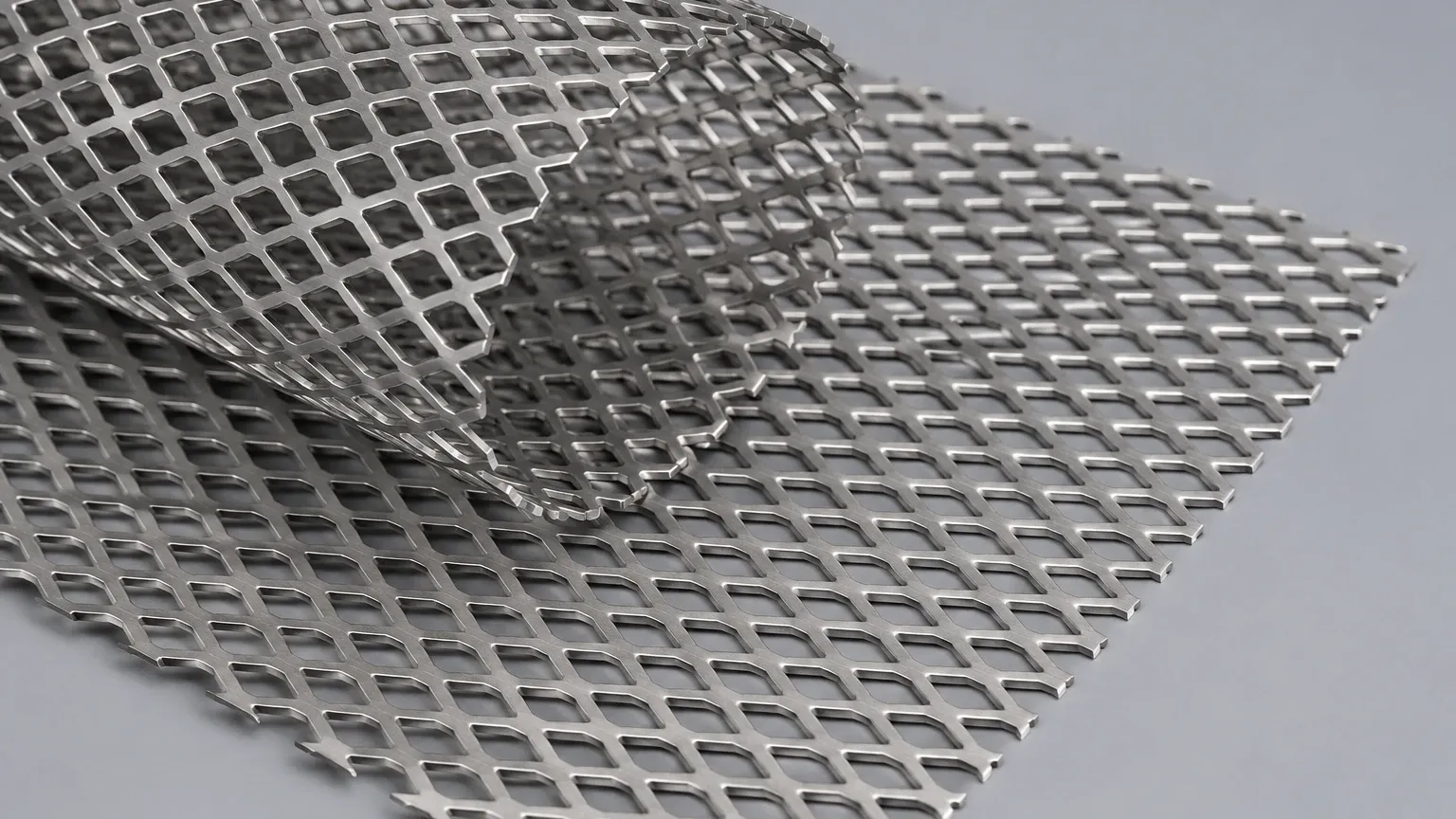
In the realm of industrial materials, precision and structural integrity are paramount. Among the various specifications used in filtration, security, and architectural applications, 1 2 x 13 expanded metal stands out as a versatile and widely utilized standard. This specific designation refers to a material that has been slit and stretched to create a diamond-shaped pattern, where the "1/2" typically denotes the nominal width of the diamond opening and "13" refers to the gauge of the metal before expansion.
For engineers and procurement professionals, understanding the nuances of this specification is essential for ensuring that the material performs as expected within a larger system. Whether it is used as a support structure for fine wire mesh or as a standalone protective barrier, the mechanical properties and dimensional tolerances of 1 2 x 13 expanded metal dictate its suitability for demanding industrial environments.
Understanding the Nomenclature of 1 2 x 13 Expanded Metal
To accurately specify expanded metal, one must understand the industry-standard terminology used to describe its dimensions. The term "1 2 x 13" is shorthand that requires further clarification regarding the orientation of the diamonds and the thickness of the strands.
SWD and LWD Dimensions
The diamond pattern is defined by two primary axes: the Short Way of Diamond (SWD) and the Long Way of Diamond (LWD). In a standard 1/2" expanded metal product, the SWD is approximately 0.5 inches, measured from the center of one bond to the center of the next bond across the short axis. The LWD is typically longer, often ranging from 1.2 to 1.25 inches. These dimensions are critical because they determine the density of the pattern and the overall rigidity of the sheet.
The Significance of 13 Gauge
The number "13" represents the manufacturer’s standard gauge for the base material. For carbon steel, 13 gauge is approximately 0.090 inches thick, while in stainless steel, it may vary slightly depending on the specific mill standards. When this material is expanded, the thickness of the resulting strand remains consistent with the original gauge, but the width of the strand (the amount of metal between the openings) can be adjusted during the manufacturing process to meet specific strength or open-area requirements.
Technical Specifications and Material Properties
When evaluating Perforated & Expanded Metal for industrial use, engineers must look beyond the nominal size to the specific performance data. The 1 2 x 13 specification offers a balance of open area and structural reinforcement that is difficult to achieve with other materials.
Open Area and Flow Rates
One of the most important metrics for filtration and ventilation applications is the percentage of open area. For 1 2 x 13 expanded metal, the open area typically falls between 60% and 75%, depending on the strand width. A higher open area allows for lower pressure drops in fluid or air handling systems, which is a primary concern for designers of industrial filtration units. Conversely, a narrower opening provides better particle retention and greater mechanical protection.
Weight and Structural Integrity
Despite its high open area, 1 2 x 13 expanded metal maintains significant strength-to-weight ratios. Because the metal is expanded rather than punched (as is the case with perforated metal), there is no scrap loss during production, and the interconnected strands distribute loads more effectively. A typical sheet of 13-gauge expanded steel weighs approximately 1.47 pounds per square foot for the raised version and slightly less for the flattened version.
Raised vs. Flattened 1 2 x 13 Expanded Metal
There are two primary forms of expanded metal available: raised (standard) and flattened. Choosing between them depends entirely on the intended application and the need for surface smoothness.
Raised Expanded Metal
In its "as-expanded" state, the strands and bonds are set at a uniform angle to the plane of the sheet. This creates a three-dimensional surface that provides excellent grip and rigidity. In industrial walkways or stair treads, the raised edges of 1 2 x 13 expanded metal offer slip resistance. In filtration, the raised structure can act as a turbulator, disrupting flow patterns to improve contact time in chemical processing applications.
Flattened Expanded Metal
Flattened expanded metal is produced by passing the standard raised sheet through a cold-roll reducing mill. This process flattens the strands and bonds into a single plane, resulting in a smooth, level surface. Flattened 1 2 x 13 expanded metal is often preferred when the material serves as a support backing for delicate filter media, such as fine wire mesh or synthetic membranes. The smooth surface prevents the expanded metal from puncturing or abrading the more fragile layers of a filter cartridge.
Role in Industrial Filtration Systems
In the context of Kaifil’s expertise, 1 2 x 13 expanded metal is frequently utilized as a core component in complex filtration solutions. Its primary function in these systems is to provide a robust skeleton that can withstand high differential pressures.
Support Cages for Filter Cartridges
Industrial filter cartridges, particularly those used in hydraulic systems or high-viscosity chemical processing, are subject to intense pressure. A 1 2 x 13 expanded metal cylinder provides the necessary hoop strength to prevent the collapse of the pleats or the inner core. Stainless steel variants are particularly valued here for their ability to maintain structural integrity while resisting chemical attack.
Pre-Filtration and Debris Removal
In water treatment or intake systems, this specification acts as an effective pre-filter. The 1/2-inch nominal opening is ideal for capturing larger debris—such as stones, wood chips, or large organic matter—before the fluid reaches more sensitive downstream components. By removing these large particles, the expanded metal extends the service life of finer filter elements, reducing the total cost of ownership for the facility.
Material Selection: Stainless Steel vs. Carbon Steel
While 1 2 x 13 expanded metal can be manufactured from various alloys, the choice of material is the most significant factor in the longevity of the component. At Kaifil, the focus is often on high-performance alloys that meet stringent industrial standards.
* Carbon Steel: This is the most cost-effective option for general-purpose applications where corrosion is not a primary concern. It is often galvanized or powder-coated to improve its lifespan in outdoor environments.
* Stainless Steel (304 and 316): For the food and beverage, pharmaceutical, and chemical industries, stainless steel is the standard. Grade 304 offers excellent general corrosion resistance, while Grade 316 provides superior protection against chlorides and acidic environments. Stainless steel 1 2 x 13 expanded metal is also easier to sanitize, making it a requirement for hygienic applications.
* Aluminum: Used primarily when weight reduction is the priority, aluminum expanded metal is lightweight and naturally resistant to atmospheric corrosion, though it lacks the mechanical strength of steel or stainless steel.
Engineering Considerations for Procurement
When ordering 1 2 x 13 expanded metal, engineers must confirm several technical details to ensure the product arrives ready for installation. Misunderstandings in these areas can lead to significant delays or assembly failures.
Edge Conditions: Random vs. Bond
Expanded metal sheets can be sheared in two ways. "Random shearing" results in jagged edges where the diamonds have been cut through. "Bond shearing" (or shearing on centers) results in a closed-diamond edge that is safer to handle and easier to weld into a frame. For filtration components that require precise fitment into a housing, bond shearing is usually the preferred method.
Tolerances and Flatness
Standard industrial tolerances for expanded metal can vary. If the material is being used in a precision-engineered assembly, it is vital to specify the allowable camber (the bow in the sheet) and the dimensional tolerance for the overall length and width. High-quality manufacturers like Kaifil adhere to strict quality control protocols to ensure that flattened expanded metal is truly flat and free from surface burrs that could compromise the filtration media.
Customization and Fabrication
Most industrial applications require more than just a raw sheet of metal. Fabrication services such as circular cutting, rolling into cylinders, and welding into custom frames are common requirements. When sourcing 1 2 x 13 expanded metal, confirming the manufacturer's ability to perform these secondary operations can streamline the supply chain and ensure better component compatibility.
Conclusion: Selecting the Right Solution
The 1 2 x 13 expanded metal specification is a cornerstone of industrial design, offering a unique combination of transparency, strength, and economy. Whether it is utilized for its aesthetic appeal in architectural facades or its functional reliability in a high-pressure filter housing, its performance is rooted in the precision of its manufacture.
For technical professionals, the key to a successful project lies in the details: choosing the correct material grade, deciding between raised or flattened profiles, and ensuring that the edge conditions meet the needs of the final assembly. By working with a manufacturer that understands the complexities of industrial filtration and metal fabrication, engineers can ensure that their use of 1 2 x 13 expanded metal contributes to a durable and efficient system. For more information on specific configurations and material options, you can Review product options and application support to find the ideal match for your technical requirements.
