


5 X 10 Expanded Metal
In industrial manufacturing and filtration engineering, the selection of material dimensions and structural configurations is critical to the efficiency and longevity of the final system. The 5 x 10 expanded metal sheet—referring to a standard 5-foot by 10-foot footprint—represents one of the most versatile and widely utilized formats in heavy-duty industrial applications. Unlike perforated metal, which is created by punching holes and discarding the slug, expanded metal is manufactured by simultaneously slitting and stretching the material. This process creates a diamond-shaped pattern that is structurally integral, providing a high strength-to-weight ratio that is essential for filtration support, protective guarding, and structural reinforcement.
For engineers and procurement teams, understanding the technical nuances of Perforated & Expanded Metal is vital when designing systems for chemical processing, water treatment, or food and beverage production. The 5 x 10 sheet size is particularly favored because it minimizes the number of welds and seams required in large-scale assemblies, thereby reducing potential points of failure and streamlining the fabrication process.
Technical Specifications and Geometry
When specifying 5 x 10 expanded metal, engineers must look beyond the overall sheet dimensions and focus on the internal geometry of the diamond pattern. The performance of the material in a filtration or structural context is defined by several key parameters:
* SWD (Short Way of Diamond): The distance from the center of a bond to the center of the next bond across the short axis of the diamond.
* LWD (Long Way of Diamond): The distance across the long axis of the diamond.
* Strand Width and Thickness: The amount of metal fed into the precision dies to create the pattern. The thickness of the strand determines the overall rigidity and pressure rating of the component.
* Open Area Percentage: This is perhaps the most critical metric for filtration applications. It determines the flow rate and pressure drop across the medium. A 5 x 10 sheet with a high open area allows for high-volume throughput but may require additional structural support if used in high-pressure hydraulic systems.
In the context of 5 x 10 expanded metal, the orientation of the diamonds relative to the 10-foot length is a standard engineering consideration. Typically, the LWD runs parallel to the length of the sheet, but custom orientations can be produced to meet specific directional strength requirements.
Material Selection for Industrial Environments
While expanded metal can be produced from various alloys, industrial filtration solutions almost exclusively demand stainless steel due to its superior mechanical properties and resistance to environmental degradation. At Kaifil, the focus remains on high-grade alloys that can withstand the rigors of demanding chemical and thermal environments.
Stainless Steel 304
This is the most common grade used for 5 x 10 expanded metal sheets. It offers excellent corrosion resistance to a wide range of atmospheric environments and many corrosive media. In food and beverage applications, 304 stainless steel is often the baseline requirement for hygiene and durability.
Stainless Steel 316/316L
For more aggressive environments, such as marine applications or chemical processing involving chlorides, 316 stainless steel is preferred. The addition of molybdenum enhances its resistance to pitting and crevice corrosion. In pharmaceutical filtration, 316L (low carbon) is frequently specified to ensure the integrity of the filter components during welding and high-temperature sterilization cycles.
Specialty Alloys
In specific high-temperature or highly acidic environments, engineers may opt for duplex stainless steels or nickel-based alloys. These materials ensure that the 5 x 10 expanded metal structure does not suffer from stress corrosion cracking or premature mechanical failure under load.
Flattened vs. Raised Expanded Metal
One of the primary decisions an engineer must make when selecting 5 x 10 expanded metal is whether to use the "raised" (standard) or "flattened" variant. Each has distinct implications for industrial filtration and mechanical design.
Raised Expanded Metal
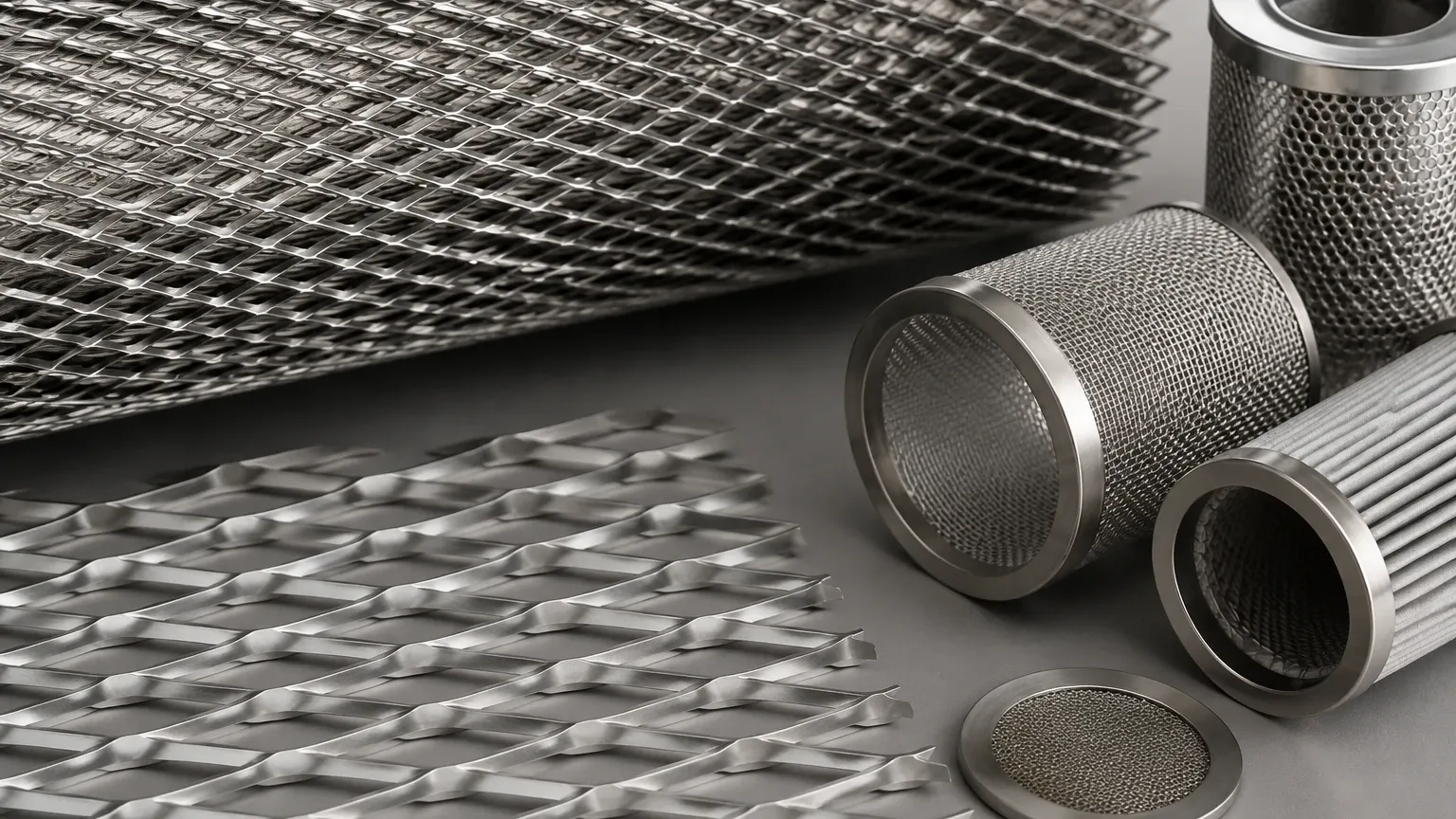
In its standard form, the strands and bonds are set at a uniform angle to the plane of the sheet. This creates a three-dimensional surface that offers exceptional grip and structural rigidity. In filtration, raised expanded metal is often used as a primary debris guard or as a high-surface-area substrate for specialized coatings. The angled strands can also assist in breaking up laminar flow, which may be desirable in certain mixing or heat exchange applications.
Flattened Expanded Metal
Flattened expanded metal is produced by passing the standard expanded sheet through a cold-roll reducing mill. This process flattens the strands and bonds into a single plane, resulting in a smooth, level surface. For filtration engineers, flattened 5 x 10 expanded metal is often the preferred choice for use as a support layer for fine wire mesh. The smooth surface prevents the delicate mesh from being abraded or punctured under high-pressure differentials, ensuring the longevity of the multi-layer filter element.
Engineering Considerations for Filtration Support
In many industrial filtration systems, the 5 x 10 expanded metal sheet does not act as the primary filter medium but rather as the structural backbone. Precision metal filter components often involve a combination of fine wire mesh and a sturdier support layer.
Pressure Drop and Flow Dynamics
The geometry of the expanded metal significantly influences the fluid dynamics within a filter housing. Engineers must calculate the effective open area to ensure that the support layer does not become a bottleneck for the flow. In large-scale water treatment plants, using 5 x 10 sheets allows for the construction of large-diameter intake screens with minimal structural interference.
Mechanical Bonding and Welding
The integrity of a filter cartridge or panel depends on the quality of the bond between the expanded metal and the filter frame. Because expanded metal is a single piece of material (not woven or welded at the intersections), it does not unravel. This makes it an ideal candidate for precision TIG or plasma welding. When working with 5 x 10 sheets, the consistency of the strand thickness is paramount to achieving uniform weld penetration and preventing thermal distortion.
Applications Across Key Industries
The versatility of 5 x 10 expanded metal allows it to solve complex engineering challenges across various sectors:
* Chemical Processing: Used as catalyst support grids and internal tower packing where corrosion resistance and structural stability are non-negotiable.
* Food and Beverage: Employed in drying trays, smoking racks, and large-scale filtration systems where ease of cleaning and material safety (FDA compliance) are required.
* Hydraulic Systems: Acts as a protective outer wrap for hydraulic filter elements, shielding the inner pleats from mechanical damage during installation and operation.
* Pharmaceuticals: Used in cleanroom air filtration supports and as components in centrifugal separation equipment where high rotational speeds demand perfectly balanced and rigid materials.
Procurement and Quality Assurance
When sourcing 5 x 10 expanded metal for industrial projects, purchasing teams must confirm several factors to ensure the material meets the intended performance specifications. A "standard" sheet may not always meet the tolerances required for precision engineering.
Tolerance and Flatness
For 5 x 10 sheets, maintaining flatness is a common challenge. Engineers should specify the maximum allowable camber and out-of-flatness, especially if the material is to be used in automated CNC cutting or welding processes. High-quality manufacturers like Kaifil utilize advanced leveling equipment to ensure that large-format sheets remain within tight tolerances.
Edge Conditions
Expanded metal can be supplied with "random sheared" or "bond sheared" edges. For filtration applications where the sheet is inserted into a groove or frame, bond shearing is often necessary to provide a clean, safe edge that facilitates a proper seal. This is particularly important in 5 x 10 sheets where the perimeter length is significant.
Material Certification
In regulated industries such as pharmaceuticals or aerospace, full traceability is required. Procurement teams should ensure that the 5 x 10 expanded metal is accompanied by Mill Test Reports (MTRs) that verify the chemical composition and mechanical properties of the alloy.
The Role of Customization in Industrial Filtration
While the 5 x 10 format is a standard, the specific requirements of a filtration project often necessitate customization. Kaifil specializes in tailoring the expanded metal process to meet specific engineering goals. This includes adjusting the expansion ratio to achieve a precise open area or utilizing specialized finishing processes like electropolishing to enhance corrosion resistance and reduce surface roughness.
By selecting the correct 5 x 10 expanded metal configuration, engineers can optimize the total cost of ownership for their filtration systems. The durability of stainless steel, combined with the structural efficiency of the expanded pattern, reduces the frequency of replacement and maintenance, providing a reliable solution for the most demanding industrial environments.
For those evaluating material options for upcoming projects, it is essential to consult with manufacturers who understand the intersection of material science and filtration technology. Whether the goal is to support a fine wire mesh or to provide a robust barrier in a chemical reactor, the technical characteristics of the expanded metal will dictate the success of the application.
To explore specific configurations and technical data for your next project, you can Review product options and application support to find the ideal balance of strength, flow, and durability.
