


24 X 48 Expanded Metal
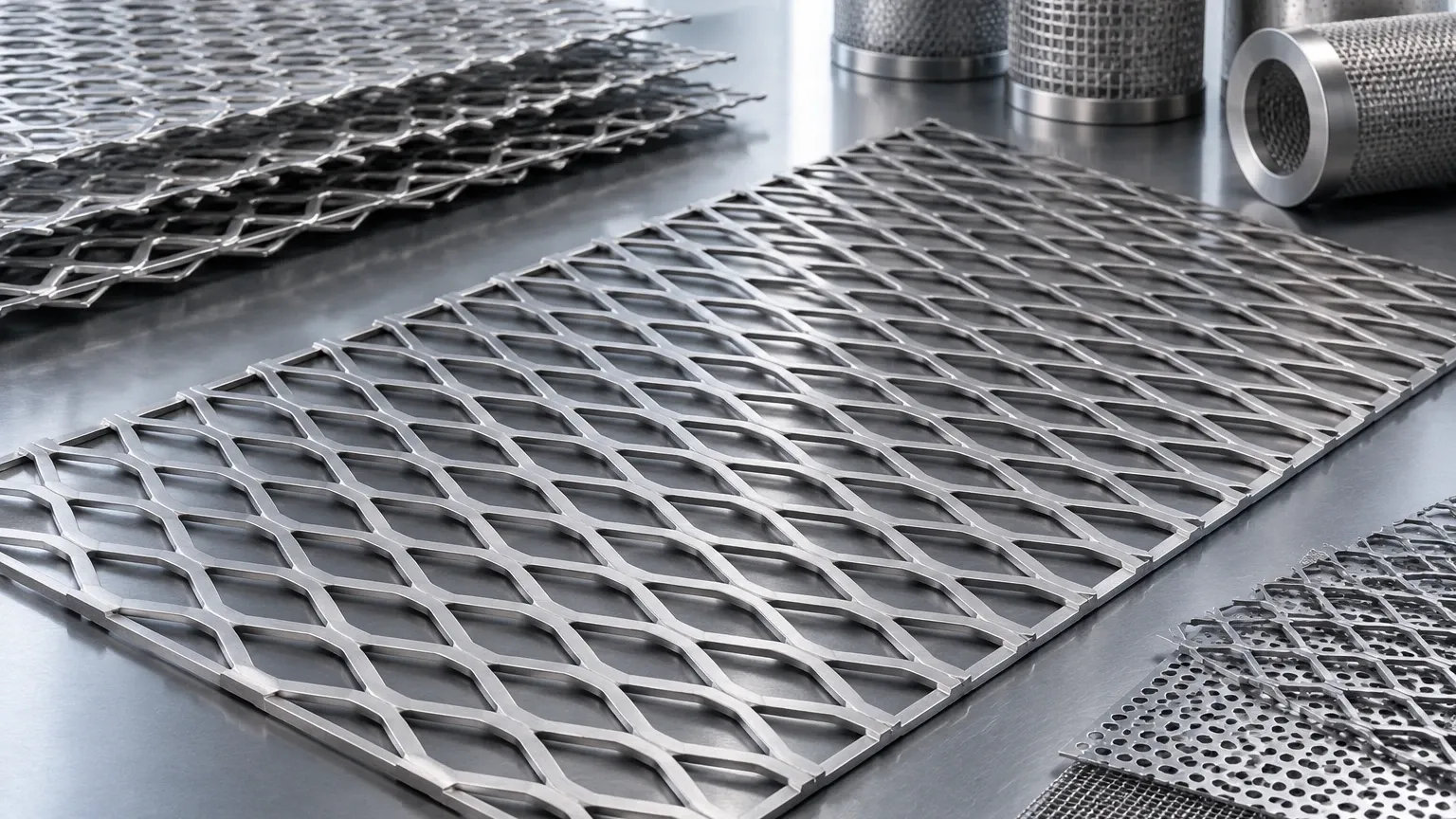
In industrial manufacturing and filtration engineering, the selection of base materials requires a balance between structural integrity, open area, and ease of processing. Expanded metal, a versatile material created by simultaneously slitting and stretching a solid metal sheet, is a staple in these environments. The 24 x 48 expanded metal configuration represents a widely utilized standard sheet size (2 feet by 4 feet), offering a manageable footprint for custom fabrication, filtration support structures, and protective enclosures.
For engineers and procurement teams, understanding the technical nuances of expanded metal—ranging from the geometry of the diamond openings to the metallurgical properties of the alloy—is essential for ensuring long-term performance in demanding applications. As a professional manufacturer specializing in Perforated & Expanded Metal, Kaifil provides the technical depth required to integrate these components into complex industrial systems.
Understanding the 24 x 48 Expanded Metal Standard
The 24 x 48-inch dimension is often selected for its logistical and ergonomic advantages. In many industrial workshops and specialized filtration assembly lines, this size allows for manual handling without the need for heavy lifting equipment, while providing enough surface area to yield multiple smaller components with minimal scrap waste.
Expanded metal is distinct from perforated metal because it is produced through a cold-forming process that does not generate waste. A solid sheet is fed through a machine where reciprocating knives slit and stretch the metal in a single motion. This process creates a continuous piece of material with diamond-shaped openings. Because the metal is stretched rather than punched, the resulting mesh is often stronger per pound than the original solid sheet, as the strands are oriented at an angle to the plane of the sheet, providing inherent structural rigidity.
Manufacturing Methods: Standard vs. Flattened
When specifying 24 x 48 expanded metal, engineers must choose between two primary finishes: standard (raised) and flattened. This choice significantly impacts the material's thickness, surface texture, and suitability for specific filtration or guarding tasks.
Standard Expanded Metal
Standard expanded metal, also known as raised expanded metal, is the product as it comes directly from the expanding machine. The strands and bonds (the intersections of the strands) are set at a uniform angle to the plane of the sheet. This creates a three-dimensional surface that provides excellent grip for walkways and high structural strength for support cages. In filtration, the raised profile can help create turbulence in fluid flow or provide a stand-off distance between different layers of filter media.
Flattened Expanded Metal
Flattened expanded metal is produced by passing the standard expanded sheet through a cold-roll reducing mill. This process flattens the strands and bonds into the same plane, resulting in a smooth, level surface. Flattening reduces the overall thickness of the sheet and slightly elongates the diamond pattern. For applications requiring a flush fit against other components, such as in fine wire mesh filter assemblies or decorative architectural panels, flattened 24 x 48 expanded metal is the preferred choice. It is also easier to clean, making it suitable for food and beverage or pharmaceutical applications where hygiene is paramount.
Technical Parameters and Filtration Efficiency
The performance of expanded metal is defined by several geometric variables. When reviewing product options and application support, engineers should focus on the following specifications to ensure the material meets the intended filtration or structural requirements:
* SWD (Short Way of Design): The distance from the center of one bond to the center of the next bond measured across the short diamond diagonal.
* LWD (Long Way of Design): The distance from the center of one bond to the center of the next bond measured across the long diamond diagonal.
* Strand Width: The amount of metal fed into the machine for each slit and stretch cycle.
* Strand Thickness: The thickness of the original base metal sheet.
* Open Area Percentage: This is perhaps the most critical metric for filtration. It determines the flow rate and pressure drop across the material. A higher open area allows for greater throughput but may compromise the structural support of the filter media.
In many industrial filtration systems, 24 x 48 expanded metal serves as a "support mesh" or "drainage layer." It provides the mechanical strength necessary to prevent finer filter media, such as stainless steel wire cloth, from collapsing under high differential pressure. Selecting the correct SWD and LWD ensures that the support mesh does not obstruct the active filtration area of the primary medium.
Material Selection for Industrial Environments
The longevity of an expanded metal component depends heavily on its material composition. While carbon steel is common for general-purpose guarding, industrial filtration and chemical processing require alloys that can withstand corrosive environments and temperature fluctuations.
Stainless Steel (304 and 316L)
Stainless steel is the hallmark of Kaifil’s production. Grade 304 provides excellent corrosion resistance for most atmospheric and water-treatment applications. For more aggressive environments, such as chemical processing or marine applications, Grade 316L is recommended due to its molybdenum content, which provides superior resistance to pitting and crevice corrosion. Stainless steel 24 x 48 expanded metal is also heat-resistant, maintaining its structural integrity in high-temperature filtration processes.
Aluminum and Special Alloys
Aluminum expanded metal is used when weight reduction is a priority, such as in aerospace or portable filtration units. It offers natural atmospheric corrosion resistance. For highly specialized industrial needs, materials like Monel, Inconel, or Titanium can be expanded for use in extreme chemical or high-heat environments, though these are typically produced to order rather than stocked in standard 24 x 48 sheets.
Engineering Considerations for Custom Filtration Solutions
Integrating 24 x 48 expanded metal into an industrial product requires more than just selecting a sheet size. Engineers must consider how the material will be fabricated and joined to other components.
Edge Conditions and Safety
Expanded metal naturally has "open" or "closed" edges depending on where the cut is made relative to the diamond pattern. Raw edges can be sharp and may require a U-edging or frame for safety and structural stability. In filtration cartridges, the edges are often welded or crimped into end caps. Ensuring a clean, burr-free cut is essential to prevent damage to delicate filter membranes or injury to personnel during maintenance.
Load-Bearing and Directionality
Expanded metal has different load-bearing capacities depending on the orientation of the diamonds. The LWD should typically run perpendicular to the support spans to maximize the material's strength. When designing a 24 x 48 panel for a walkway or a heavy-duty filter basket, the orientation of the sheet during the cutting process can significantly affect the final product's deflection under pressure.
Compatibility with Secondary Processes
Often, the 24 x 48 sheet is a starting point for further fabrication. This may include rolling the sheet into a cylinder for a filter core, welding it into a frame, or applying coatings such as powder coating or galvanization. Stainless steel expanded metal is particularly well-suited for TIG and MIG welding, allowing for the creation of robust, permanent assemblies used in hydraulic systems and water treatment plants.
Quality Control and Procurement Best Practices
When sourcing 24 x 48 expanded metal for industrial projects, procurement teams must verify that the manufacturer adheres to strict quality standards. Inconsistent diamond shapes or variations in strand thickness can lead to failures in high-pressure filtration environments.
Key evaluation criteria should include:
1. Dimensional Tolerance: Ensure the sheet dimensions and diamond sizes fall within the specified engineering tolerances.
2. Flatness: For flattened expanded metal, verify that there is no residual bowing or camber that could interfere with automated assembly processes.
3. Surface Integrity: Check for the absence of cracks at the bonds, which can occur if the metal is over-stretched or if the material grade is brittle.
4. Material Certification: Request Mill Test Reports (MTRs) to confirm the chemical composition of the alloy, especially for 316L stainless steel used in pharmaceutical or food-grade applications.
Working with a manufacturer like Kaifil, which understands the specific demands of filtration and precision metal components, ensures that the material supplied is not just a commodity but an engineered solution tailored to the application's requirements.
Conclusion: Selecting the Right Solution
The 24 x 48 expanded metal sheet is a versatile building block for industrial engineering. Whether used as a protective guard, a structural support for pleated filter media, or a component in a chemical reactor, its performance is dictated by the precision of its manufacture and the suitability of its material grade. By focusing on technical specifications like SWD, LWD, and the distinction between standard and flattened finishes, engineers can optimize their designs for both durability and cost-effectiveness.
For those developing custom filtration systems or industrial equipment, selecting a partner with deep expertise in metal expansion and fabrication is critical. For more information on technical specifications and material availability, Review product options and application support to find the ideal configuration for your project's specific needs.
