


Can You Cook on Expanded Metal
In the world of custom fabrication, industrial food processing, and outdoor equipment manufacturing, expanded metal is a frequently utilized material due to its unique structural properties and cost-effectiveness. However, a recurring question for engineers and fabricators is: can you cook on expanded metal? The short answer is yes, but the decision involves critical engineering considerations regarding material composition, surface treatments, and safety protocols.
Understanding the distinction between industrial-grade Perforated & Expanded Metal and food-safe surfaces is essential for ensuring both the longevity of the equipment and the safety of the end consumer. This guide examines the technical requirements, material selection criteria, and maintenance practices necessary when using expanded metal for cooking applications.
Understanding Expanded Metal in Food-Contact Applications
Expanded metal is produced by simultaneously slitting and stretching a metal sheet, creating a diamond-shaped pattern of openings. Unlike perforated metal, which involves punching out material, the expansion process creates no waste, making it a highly efficient choice for large-scale fabrication.
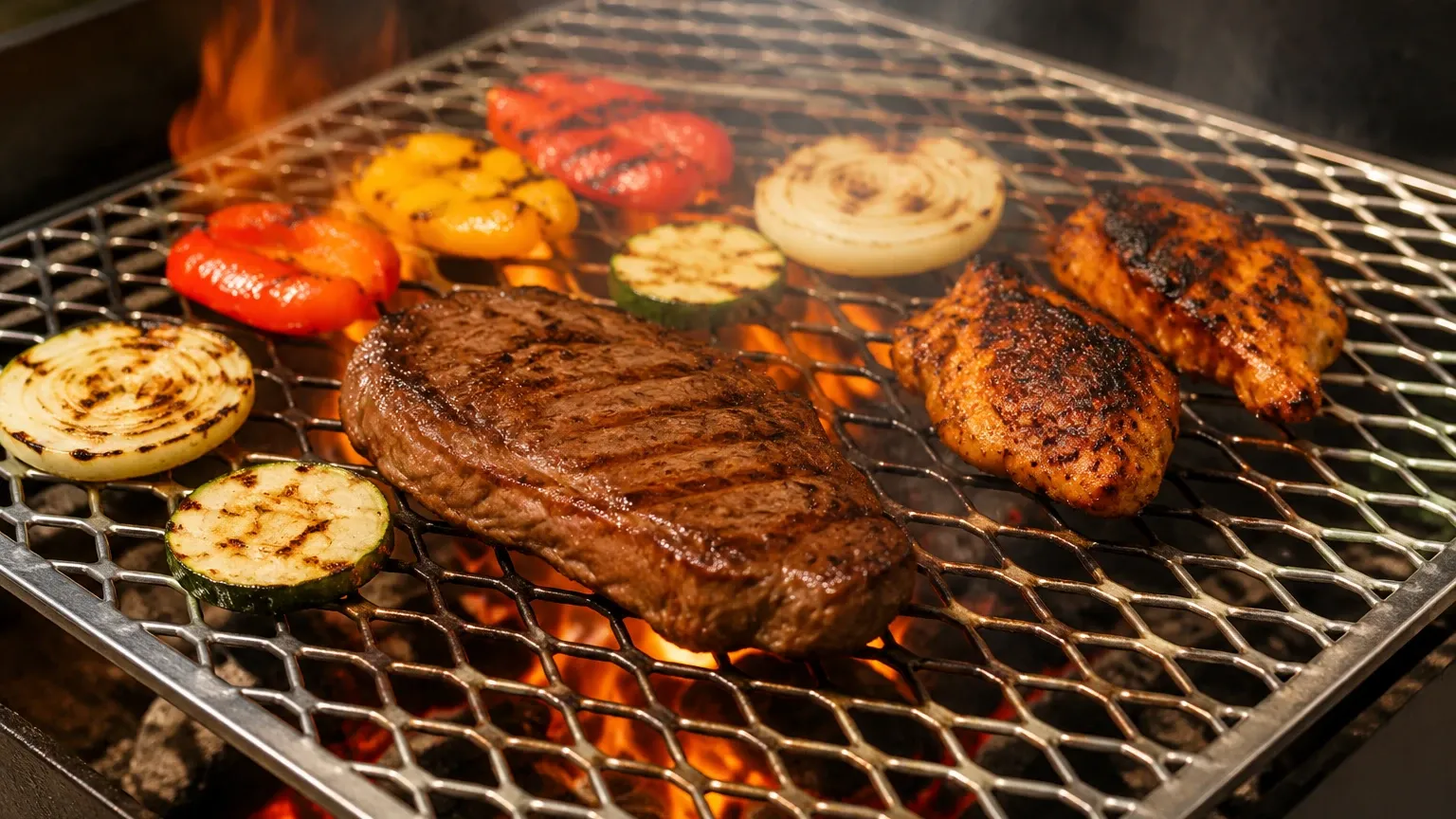
In a cooking context, expanded metal is valued for its high strength-to-weight ratio and its ability to allow heat, smoke, and air to circulate freely around food items. This makes it a staple in the manufacturing of industrial smokers, commercial grill grates, and food dehydration racks. However, not all expanded metal is created equal. The manufacturing process often involves the use of industrial lubricants and coolants, and the base material itself may contain alloys or coatings that are unsuitable for high-heat food contact.
When evaluating whether a specific piece of expanded metal is suitable for cooking, engineers must look beyond the physical dimensions and consider the metallurgical properties and the "Flat" vs. "Raised" orientation of the mesh.
Material Selection: The Critical Safety Factor
The most significant factor in determining whether you can cook on expanded metal is the base material. Choosing the wrong alloy can lead to chemical leaching or the release of toxic fumes when the metal is subjected to high temperatures.
Stainless Steel: The Gold Standard
Stainless steel, particularly grades 304 and 316, is the preferred choice for food-grade expanded metal. It is naturally resistant to corrosion, does not require a protective coating, and can withstand high temperatures without degrading. From a hygiene perspective, stainless steel is non-porous and easy to sanitize, making it ideal for commercial kitchens and industrial food processing lines.
Carbon Steel: The Industrial Favorite
Plain carbon steel is commonly used in heavy-duty BBQ smokers and outdoor grills. While it is safe to cook on, it requires significant preparation. Carbon steel is prone to oxidation (rust), so it must be "seasoned"—a process of coating the metal in fat or oil and heating it to create a polymerized protective layer. Without seasoning, carbon steel expanded metal will deteriorate quickly in the presence of moisture and heat.
Galvanized Steel: The Major Hazard
You should never cook on galvanized expanded metal. Galvanized steel is coated with a layer of zinc to prevent rust. When heated to the temperatures required for cooking, the zinc coating vaporizes, releasing toxic fumes. Inhaling these fumes can lead to "metal fume fever," a condition characterized by flu-like symptoms. Furthermore, zinc can leach into the food itself. In any B2B procurement process for cooking equipment, ensuring that the Perforated & Expanded Metal is not galvanized is a non-negotiable safety requirement.
Technical Specifications for Cooking Surfaces
When selecting expanded metal for a cooking surface, engineering specifications such as gauge, strand width, and opening size must be optimized for the specific application.
Flat vs. Raised Expanded Metal
Expanded metal naturally has a "raised" surface where the strands are turned at an angle to the original plane of the sheet. While this provides excellent grip and structural rigidity, it can be difficult to clean, as food particles can become trapped in the crevices.
For cooking grates, "Flattened" expanded metal is often preferred. This material has been passed through a cold-rolling reducing mill, which flattens the strands and bonds back into the same plane. Flattened expanded metal provides a smooth, level surface that is easier to scrape clean and allows for more even contact with the food, which is essential for searing and heat transfer.
Gauge and Structural Integrity
The gauge (thickness) of the metal determines its ability to retain heat and resist warping under thermal stress. For heavy-duty industrial grills, a thicker gauge (such as 9-gauge or 13-gauge) is typically required. Thinner gauges may be suitable for light-weight smoking racks but can sag or deform if subjected to direct flame or heavy loads of meat.
Safety Risks and Industrial Residues
Even if the material is stainless or carbon steel, the manufacturing process introduces risks that must be addressed before the metal ever touches food. During the expansion process, heavy machinery uses oils and coolants to reduce friction and heat. These industrial lubricants are not food-safe and may contain heavy metals or synthetic chemicals.
For B2B buyers and fabricators, it is critical to confirm the cleaning protocols used by the manufacturer. If the expanded metal is not specifically sold as "food-grade," it must undergo a rigorous degreasing process. This typically involves:
1. High-Pressure Steam Cleaning: To break down heavy oils.
2. Food-Safe Degreasers: Using citrus-based or phosphoric acid cleaners to remove chemical residues.
3. High-Heat Burn-Off: Heating the metal to a high temperature (above 500°F) for an extended period to vaporize any remaining organic compounds.
Failure to properly clean industrial Perforated & Expanded Metal can result in off-gassing and unpleasant flavors being transferred to the food.
Preparation and Maintenance: Seasoning Your Metal
For carbon steel expanded metal, the preparation doesn't end with cleaning. To make the surface viable for long-term cooking, it must be seasoned. This is a standard engineering practice in the BBQ industry to prevent corrosion and create a non-stick surface.
1. Initial Cleaning: Remove all mill scale and industrial oils.
2. Oil Application: Apply a thin, even layer of high-smoke-point oil (such as flaxseed, canola, or grapeseed oil) to the entire surface of the mesh.
3. Thermal Polymerization: Heat the metal in a controlled environment until the oil reaches its smoke point and begins to cross-link into a hard, plastic-like film.
4. Repetition: This process should be repeated 3-5 times to build a durable barrier.
In an industrial or commercial setting, maintenance schedules must include regular inspections of the seasoning layer. If the metal begins to show signs of red rust, it must be wire-brushed and re-seasoned immediately to maintain food safety standards.
Engineering Considerations: Durability and Heat Retention
From a thermal engineering perspective, expanded metal offers unique advantages over solid plates or traditional wire mesh. The diamond pattern creates a specific "open area" percentage (usually between 40% and 70%), which dictates how much direct radiant heat reaches the food versus how much is conducted through the metal strands.
Thermal Mass
Expanded metal has less thermal mass than a solid cast iron grate. This means it heats up and cools down faster. In industrial smoking applications, this is beneficial because it allows for precise temperature control. However, for high-heat searing, engineers must select a heavier gauge to ensure the metal holds enough heat to create the desired Maillard reaction on the food surface.
Airflow and Combustion
In charcoal or wood-fired systems, expanded metal is often used as a coal grate (the surface that holds the fuel). The open diamond pattern allows ash to fall through while maintaining airflow to the fire. When used as a cooking surface above the fuel, this same airflow ensures that smoke can envelop the food, which is critical for flavor development in commercial smokehouses.
Conclusion: Selecting the Right Expanded Metal
So, can you cook on expanded metal? Yes, provided you prioritize material science and safety. For the most reliable and hygienic results, stainless steel flattened expanded metal is the industry standard. If budget or specific traditional cooking methods dictate the use of carbon steel, rigorous cleaning and seasoning protocols must be followed.
When sourcing materials for food-related projects, it is essential to work with a manufacturer that understands the technical requirements of the application. At Kaifil, we provide high-quality Perforated & Expanded Metal solutions tailored to demanding industrial environments. Whether you are designing filtration systems or custom food processing equipment, selecting the correct material grade and finish is the first step toward a successful and safe engineering outcome.
Before proceeding with your next fabrication project, ensure you have confirmed the material certification (MTR) and the absence of any hazardous coatings. By following these engineering guidelines, expanded metal can serve as a durable, efficient, and safe medium for a wide variety of cooking and food processing applications.
