


Where Can You Buy Expanded Metal
For procurement managers and design engineers in the industrial sector, the question of where can you buy expanded metal is rarely about finding a simple retail outlet. Instead, it is about identifying a supply partner capable of meeting rigorous technical specifications, material tolerances, and long-term durability requirements. Expanded metal is a critical component in various industrial applications, ranging from structural reinforcement and architectural facades to high-precision filtration support.
When sourcing these materials, the choice of supplier directly impacts the performance of the end product, especially in demanding environments like chemical processing, pharmaceutical manufacturing, and hydraulic systems. This guide explores the different sourcing channels, technical evaluation criteria, and engineering considerations necessary to secure high-quality Perforated & Expanded Metal for industrial use.
1. Defining Industrial Sourcing Channels
Identifying where can you buy expanded metal requires an understanding of the three primary tiers of the supply chain. Each tier serves a different volume and technical complexity level.
Metal Service Centers and Distributors
General metal service centers are the most common source for standard, off-the-shelf expanded metal sheets. They typically stock common materials like carbon steel, aluminum, and basic stainless steel grades (such as 304). These distributors are suitable for general-purpose applications where precision tolerances are not the primary concern, such as safety walkways, fencing, or basic machine guards. However, they often lack the specialized engineering support required for custom filtration components.
Local Fabricators
Local fabrication shops can take standard sheets and cut or form them to specific dimensions. While this provides a level of customization, these shops are often limited by the quality of the raw material they source from distributors. They may not have the specialized tooling required to produce the fine-mesh expanded metal used in high-precision industrial filters.
Specialized Manufacturers (OEM Partners)
For engineers developing proprietary equipment or specialized filtration systems, working directly with a manufacturer like Kaifil is the most effective route. Specialized manufacturers control the entire production process—from material selection and the expansion ratio to final finishing. This is where you can buy expanded metal that is specifically engineered for filtration accuracy, structural integrity under high pressure, and chemical compatibility.
2. Technical Specifications to Confirm Before Purchase
When evaluating where can you buy expanded metal, the technical data sheet provided by the supplier is the most important document. Industrial buyers must confirm several key parameters to ensure the material is fit for purpose.
SWD and LWD (Short Way of Design and Long Way of Design)
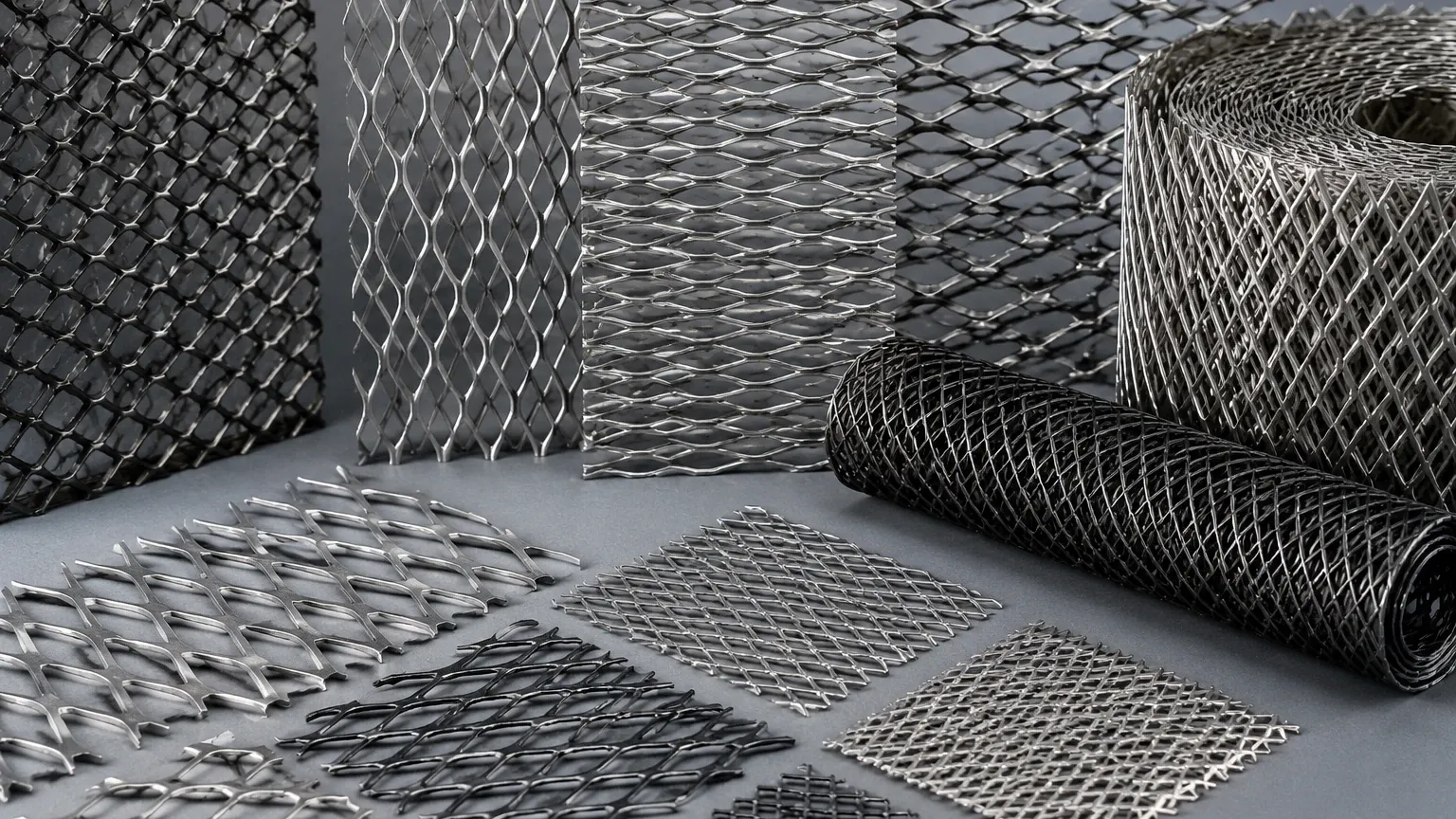
Expanded metal is defined by its diamond-shaped openings. The SWD is the distance from the center of a bond to the center of the next bond across the short axis, while the LWD follows the long axis. In filtration applications, these dimensions determine the size of the particles that can pass through or the level of support provided to a finer filter mesh.
Strand Width and Thickness
The strand width refers to the amount of metal between the openings, and the thickness refers to the gauge of the original sheet. Together, these determine the mechanical strength of the mesh. For high-pressure hydraulic filters, a thicker strand is often necessary to prevent deformation under flow surges.
Open Area Percentage
The open area is a critical calculation for flow dynamics. It represents the ratio of the openings to the total area of the sheet. In chemical processing or water treatment, an accurate open area calculation is essential to ensure that the filter does not create an excessive pressure drop, which could damage pumps or reduce system efficiency.
3. Material Selection for Industrial Environments
The environment in which the expanded metal will operate dictates the material choice. While carbon steel is cost-effective, it is often unsuitable for the specialized industries served by Kaifil.
* Stainless Steel (304, 316, 316L): This is the gold standard for industrial filtration. Stainless steel expanded metal offers exceptional corrosion resistance, making it ideal for food and beverage processing, pharmaceutical production, and marine environments. 316L, with its lower carbon content, is particularly preferred for applications involving welding to prevent carbide precipitation.
* Specialty Alloys: In extreme chemical environments or high-temperature applications, materials like Monel, Inconel, or Titanium may be required. When researching where can you buy expanded metal, confirm if the manufacturer has experience handling these difficult-to-work-with alloys.
* Aluminum: Used primarily where weight reduction is critical and corrosion resistance is needed, though it lacks the mechanical strength of stainless steel at high temperatures.
4. The Role of Expanded Metal in Filtration Systems
In many industrial contexts, expanded metal serves as a structural backbone. Understanding this role helps in selecting the right supplier.
Support for Pleated Media
In many liquid and air filtration systems, the primary filtration media (such as fine wire mesh or synthetic fabric) is relatively fragile. Expanded metal is used as an inner or outer support core. It must be rigid enough to maintain the pleat geometry under pressure while being smooth enough to avoid puncturing the delicate filter media.
Pre-Filtration and Coarse Screening
In water treatment or heavy industrial machinery, expanded metal acts as a primary screen to remove large debris before the fluid reaches finer filtration stages. Here, the uniformity of the expansion process is vital to ensure consistent flow and predictable maintenance cycles.
Flow Diffusion
Expanded metal can also be used to diffuse flow, breaking up high-velocity streams to protect downstream components. This requires precise control over the angle of the strands during the expansion process, a capability typically found only with specialized manufacturers.
5. Evaluating Manufacturer Capabilities for Custom Projects
If your project requires more than a standard sheet, you need to evaluate the manufacturer's engineering and production capabilities. A reliable OEM partner should offer the following:
* Custom Tooling: The ability to create unique diamond patterns or sizes that are not part of the standard industrial catalog.
* Flattened vs. Raised Options: Standard expanded metal has a "raised" profile where the strands are at an angle to the plane of the sheet. Flattened expanded metal is passed through a cold-rolling mill to create a smooth, flat surface. For filter cartridges, flattened metal is often preferred to ensure a tight fit within the housing.
* Precision Cutting and Forming: Industrial filters often require expanded metal to be rolled into cylinders or cut into complex shapes with tight tolerances. Ensure the supplier can provide these secondary operations in-house to maintain quality control.
* Surface Finishing: Depending on the application, you may require degreasing, pickling, electropolishing, or powder coating. For pharmaceutical and food-grade applications, a high-quality finish is non-negotiable to prevent contamination.
6. Common Risks in Sourcing Expanded Metal
When buyers prioritize low cost over technical verification, several risks emerge that can lead to system failure or increased total cost of ownership.
Material Substitution
Lower-tier suppliers may provide material that does not meet the specified grade (e.g., substituting 201 stainless steel for 304). In a chemical plant, this can lead to rapid corrosion and catastrophic failure. Always demand Material Test Reports (MTRs) to verify the chemical composition of the alloy.
Inconsistent Expansion
Poorly maintained machinery can result in inconsistent diamond sizes across a single sheet. This creates "weak spots" in the mesh and leads to uneven flow distribution in filtration applications.
Burrs and Sharp Edges
The expansion process naturally creates sharp edges. For industrial filters, these must be managed through proper finishing. Unfinished burrs can break off and enter the fluid stream, damaging downstream components like valves or sensitive instrumentation.
7. Total Cost of Ownership and Quality Assurance
While the initial purchase price is a factor, the total cost of ownership (TCO) is a more accurate metric for industrial buyers. High-quality Perforated & Expanded Metal from a reputable manufacturer like Kaifil may have a higher upfront cost but offers significant savings through:
* Extended Service Life: Durable materials and precise manufacturing reduce the frequency of filter replacements.
* Reduced Downtime: Reliable components prevent unexpected system failures and the associated costs of halted production.
* Simplified Compliance: In regulated industries like food and pharma, having fully documented, high-quality materials simplifies the audit and certification process.
Before finalizing where can you buy expanded metal, ask the supplier about their quality management systems. ISO 9001 certification, rigorous in-process inspections, and a clear protocol for handling non-conforming materials are hallmarks of a professional industrial partner.
Conclusion
Sourcing expanded metal for industrial applications is a technical exercise that requires a deep understanding of material science, mechanical engineering, and filtration principles. By moving beyond general distributors and engaging with specialized manufacturers, purchasing teams can ensure they receive components that meet the exact demands of their application.
Whether you are designing a new hydraulic system, upgrading a chemical reactor, or developing a custom food-processing filter, the quality of the expanded metal is foundational to your success. Focus on technical transparency, material traceability, and manufacturing precision to find the right partner for your project.
