


Expanded Metal Art
In the realm of industrial manufacturing and architectural design, the boundary between functional utility and aesthetic expression often overlaps. Expanded metal, traditionally utilized for its structural integrity and filtration capabilities, has evolved into a versatile medium for architectural features and industrial design. When engineers and designers refer to expanded metal art, they are typically discussing the intentional application of precision-engineered metal mesh to achieve specific visual and performance-oriented goals.
For B2B procurement teams and project engineers, understanding the technical nuances of Perforated & Expanded Metal is essential for ensuring that a project meets both its structural requirements and its design intent. This guide explores the engineering principles, material considerations, and manufacturing processes that transform standard industrial components into sophisticated architectural solutions.
The Engineering Behind Expanded Metal Production
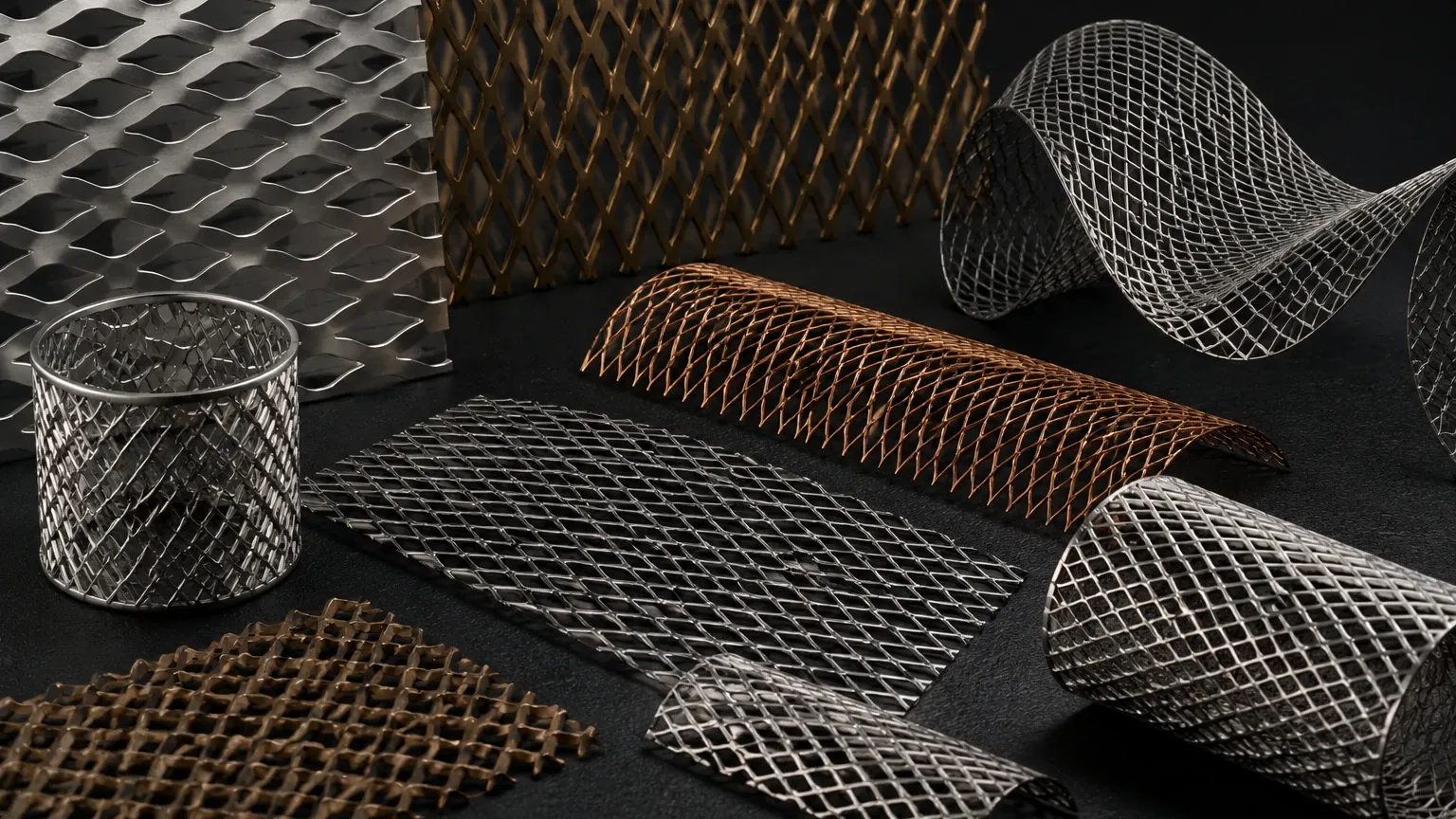
Unlike perforated metal, which is created by punching holes into a solid sheet and resulting in material waste, expanded metal is produced through a unique "slit and stretch" process. A metal sheet is simultaneously slit and cold-drawn, expanding the slits into uniform diamond-shaped openings.
This process offers several technical advantages for industrial art and architectural applications:
1. Material Efficiency: Because the metal is stretched rather than punched, there is zero material waste. This makes it a cost-effective and sustainable choice for large-scale installations.
2. Structural Integrity: The resulting mesh is a single piece of material. There are no welds or joints to fail, and the interconnected strands distribute loads efficiently across the panel.
3. Weight-to-Strength Ratio: Expanded metal provides a high level of rigidity and strength while remaining significantly lighter than a solid sheet of the same thickness.
4. Directional Properties: The angled strands of expanded metal create a three-dimensional texture that can control light, airflow, and visibility depending on the orientation of the panel.
Technical Parameters for Design Customization
When specifying expanded metal art for industrial or architectural projects, engineers must define several key geometric parameters. These dimensions dictate both the visual "texture" of the metal and its mechanical performance.
LWD and SWD (Long Way of Design and Short Way of Design)
These terms refer to the dimensions of the diamond opening. The LWD is the distance from the center of one bond to the center of the next bond across the long axis, while the SWD is the distance across the short axis. By adjusting these ratios, manufacturers can create elongated, narrow diamonds or wider, more open patterns.
Strand Width and Thickness
The strand width refers to the amount of metal between the openings, while the thickness refers to the gauge of the original sheet. Heavier gauges and wider strands increase the structural capacity and visual "heaviness" of the piece, whereas thinner strands create a delicate, translucent effect often sought in interior decorative screens.
Percent Open Area
This is a critical calculation for both filtration and architectural facades. In expanded metal art, the open area determines how much light or air can pass through. For exterior building envelopes, a specific open area may be required to meet HVAC ventilation standards or to provide solar shading that reduces building cooling loads.
Material Selection: Durability in Industrial Art
For industrial filtration components or architectural installations, material selection is the primary factor in determining the lifecycle and maintenance requirements of the product. Kaifil specializes in high-performance alloys that withstand demanding environments.
Stainless Steel (304 and 316 Grades)
Stainless steel is the gold standard for expanded metal art due to its inherent corrosion resistance and high-end finish.
* Grade 304: Suitable for most indoor applications and mild outdoor environments. It offers excellent formability and a clean aesthetic.
* Grade 316: Essential for coastal installations or chemical processing environments where exposure to chlorides or corrosive agents is high. It provides superior pitting resistance.
Aluminum
Aluminum is frequently chosen for large-scale architectural facades where weight is a primary concern. It is naturally corrosion-resistant and can be anodized or powder-coated in a wide range of colors to achieve specific artistic effects.
Carbon Steel
While more economical, carbon steel requires secondary finishing—such as galvanizing or painting—to prevent oxidation. In some industrial art contexts, "weathering steel" (Corten) is used to allow a controlled layer of rust to form, providing a rugged, industrial aesthetic without compromising structural integrity.
Applications of Expanded Metal Art in Industry
While the term "art" might suggest purely decorative use, in the B2B sector, these applications are almost always multi-functional.
Architectural Facades and Solar Shading
Expanded metal panels are used as "skins" for buildings. The three-dimensional nature of the mesh allows it to act as a louver. When installed with the strands angled downward, the panels can block high-angle summer sun while allowing low-angle winter sun to penetrate, significantly improving energy efficiency.
Industrial Filtration and Protective Guards
In high-end machinery or custom filtration systems, the expanded metal serves as a protective barrier or a support structure for finer filter media. Using custom patterns allows manufacturers to maintain brand identity and aesthetic consistency even in purely functional components.
Interior Partitions and Acoustic Panels
In commercial and industrial interiors, expanded metal is used for room dividers and ceiling panels. When backed with acoustic insulation, these panels help manage sound levels in large open spaces while maintaining an industrial, modern look.
Engineering Considerations for Installation
Integrating expanded metal art into a project requires careful consideration of how the material will be supported and joined. Engineers should evaluate the following before finalizing a design:
* Flattened vs. Raised: Standard expanded metal has "raised" strands that create a 3D texture. Flattened expanded metal is passed through a cold-roll reducing mill, resulting in a smooth, flat surface. Flattened mesh is often safer for high-traffic areas where people might touch the material.
* Framing and Attachment: Because expanded metal has raw edges after cutting, it typically requires a U-edging or an angle iron frame. The method of attachment (welding, bolting, or clipping) must account for the thermal expansion of the metal, especially in outdoor applications.
* Wind Loading: For exterior panels, the "drag coefficient" of the specific mesh pattern must be calculated. The mesh acts as a sail; if the open area is too low, wind loads can put significant stress on the building's structural frame.
Why Precision Matters in Custom Fabrication
In the context of expanded metal art, precision is not just about aesthetics; it is about consistency. When panels are installed side-by-side, even a millimeter of deviation in the diamond pattern can create a visible "seam" or misalignment that ruins the visual continuity of the installation.
Working with a manufacturer like Kaifil ensures that advanced manufacturing capabilities are applied to every sheet. From material selection to the final cut, the focus remains on delivering components that meet the exact tolerances required for industrial assembly and architectural precision.
Procurement Checklist: Confirming Project Requirements
Before initiating a purchase order for expanded metal art components, procurement teams and engineers should confirm the following details to ensure the final product meets the application's needs:
1. Environment: Will the material be exposed to saltwater, high humidity, or industrial chemicals? (Select 304 vs. 316 Stainless Steel).
2. Orientation: Is the LWD running vertically or horizontally? This significantly affects the visual pattern and the structural spanning capability.
3. Finish Requirements: Does the project require a mill finish, electropolishing (for stainless steel), or a specific RAL color powder coating?
4. Load Requirements: Will the mesh be used as a walkway or a safety guard? This dictates the required gauge and strand width.
5. Tolerances: What are the allowable deviations in panel size and diamond alignment for the specific installation method?
Conclusion
Expanded metal art represents the successful marriage of industrial efficiency and creative design. By leveraging the unique geometric properties of expanded metal, engineers can solve complex problems related to light control, ventilation, and structural support while achieving a sophisticated visual outcome. Whether the goal is a high-performance filtration component or a striking architectural facade, the key to success lies in understanding the technical boundaries of the material and selecting a manufacturing partner capable of delivering precision-engineered solutions.
By focusing on material quality, geometric accuracy, and application-specific engineering, B2B buyers can ensure that their use of expanded metal provides long-term value, durability, and aesthetic impact.
