


Expanded Metal Metal
In the landscape of industrial material processing, expanded metal metal stands as a versatile and resource-efficient solution for structural support, filtration, and protective screening. Unlike perforated materials that are created by punching holes and discarding the slug, expanded metal is manufactured through a simultaneous slitting and stretching process. This method ensures that no material is wasted, resulting in a high strength-to-weight ratio that is particularly advantageous in demanding B2B environments such as chemical processing, water treatment, and industrial filtration.
For engineers and procurement specialists, understanding the technical nuances of expanded metal metal is essential for optimizing system performance and controlling costs. This guide examines the manufacturing mechanics, technical specifications, and engineering considerations necessary for selecting the appropriate metal components for industrial applications.
The Manufacturing Mechanics of Expanded Metal
The production of expanded metal metal involves a specialized machine that slits and stretches a solid sheet of metal in a single motion. This process creates a diamond-shaped pattern of openings, where the strands and bonds (the intersections of the strands) are set at a uniform angle to the plane of the sheet.
One of the primary benefits of this manufacturing technique is the preservation of structural integrity. Because the metal is not cut into separate pieces but rather stretched, the electrical and thermal conductivity of the original sheet is maintained. Furthermore, the lack of waste makes it a more cost-effective alternative to perforated metal in many high-volume industrial scenarios.
Raised vs. Flattened Expanded Metal
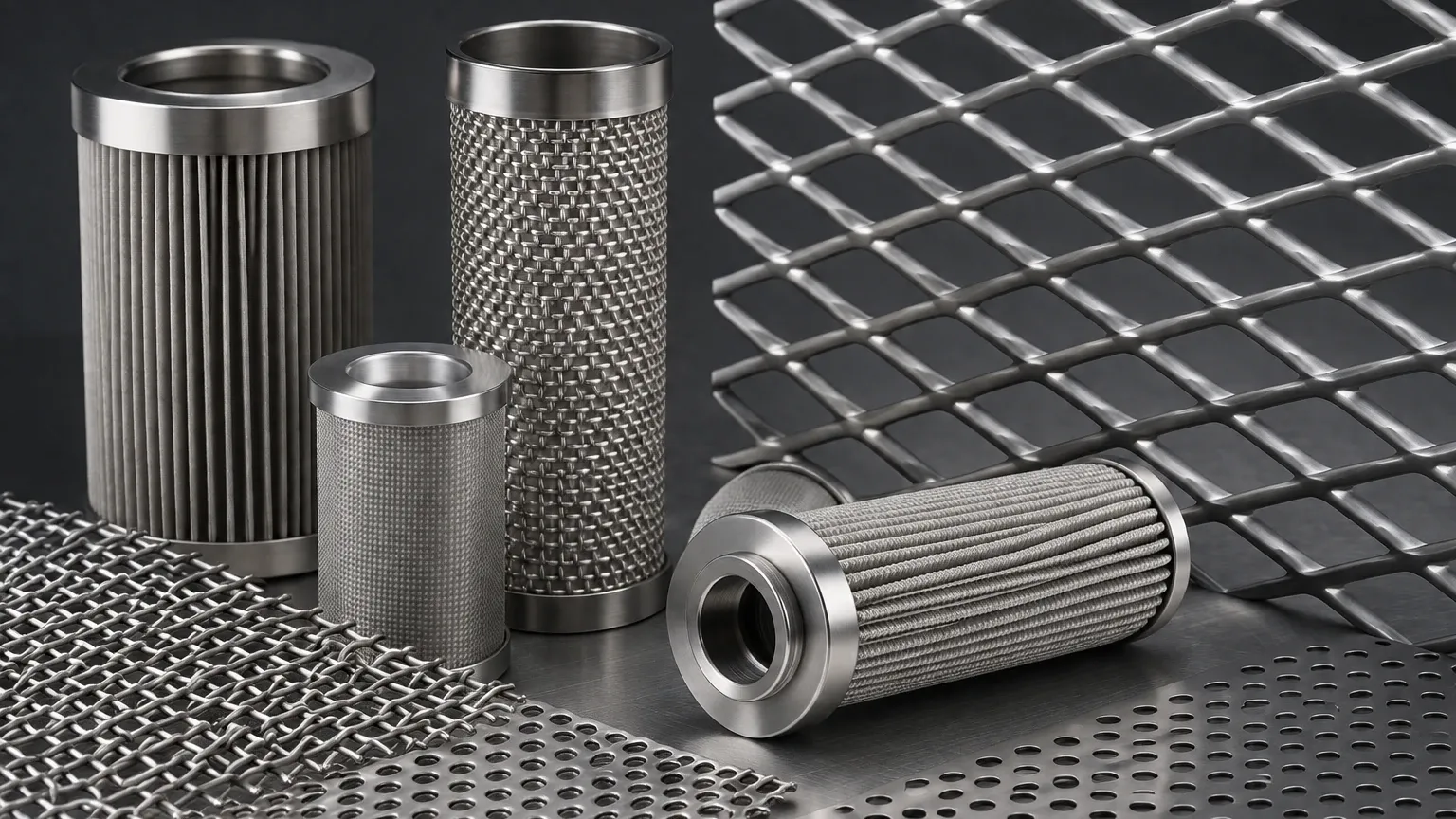
When the metal is first expanded, it is known as "raised" or "standard" expanded metal. The strands are tilted at an angle, providing a slip-resistant surface and increased rigidity. For applications requiring a smooth, flush surface—such as the inner or outer support cores of a filter cartridge—the material undergoes a secondary cold-rolling process to create "flattened" expanded metal. This reduces the thickness of the sheet and results in a smooth, two-dimensional surface that is easier to clean and less likely to snag or damage delicate filter media.
Technical Specifications and Terminology
To specify expanded metal metal accurately, engineers must use standardized terminology to ensure the manufacturer meets the required tolerances and performance metrics. The following parameters are critical in the design phase:
* SWD (Short Way of Diamond): The distance from the center of one bond to the center of the next bond measured across the short diamond diagonal.
* LWD (Long Way of Diamond): The distance from the center of one bond to the center of the next bond measured across the long diamond diagonal.
* SWO (Short Way of Opening): The clear distance between the inside edges of the diamond across the short diagonal.
* LWO (Long Way of Opening): The clear distance between the inside edges of the diamond across the long diagonal.
* Strand Width: The amount of metal fed into the machine for each stroke of the die.
* Strand Thickness: The gauge or thickness of the original base metal.
* Percentage of Open Area: A critical calculation for filtration and airflow applications, determining the resistance to flow and the volume of fluid that can pass through the medium.
By manipulating these variables, manufacturers can produce a wide range of Perforated & Expanded Metal products tailored to specific pressure drop requirements and structural loads.
Engineering Considerations for Industrial Filtration
In the context of industrial filtration, expanded metal metal often serves as the "skeleton" of a filter element. While fine wire mesh or synthetic membranes perform the actual particle separation, they lack the mechanical strength to withstand high differential pressures. Expanded metal provides the necessary reinforcement.
Structural Support and Rigidity
The diamond-shaped truss pattern of expanded metal is inherently strong. When used as a support tube for pleated filter cartridges, it prevents the pleats from collapsing under the force of high-viscosity fluids or high flow rates. Engineers must calculate the collapse pressure of the expanded metal core to ensure it exceeds the maximum operating pressure of the system by a safe margin.
Flow Dynamics and Pressure Drop
The angle of the strands in raised expanded metal can influence the turbulence of the fluid passing through it. While turbulence can sometimes be beneficial for mixing, it often leads to an undesirable pressure drop. In high-precision filtration, flattened expanded metal is typically preferred to minimize resistance and maintain a laminar flow profile as the fluid enters the primary filtration layer.
Material Compatibility
Selection of the base alloy is paramount. In chemical processing and pharmaceutical applications, stainless steel (typically AISI 304 or 316L) is the standard due to its corrosion resistance and ability to withstand high-temperature sterilization. 316L stainless steel, with its addition of molybdenum, offers superior resistance to chlorides and pitting, making it the preferred choice for marine or aggressive chemical environments.
Comparative Analysis: Perforated vs. Expanded Metal
When deciding between perforated and expanded metal metal for an industrial project, several B2B-specific factors come into play:
1. Material Utilization: Perforated metal can result in up to 40% material waste depending on the hole pattern. Expanded metal has near-zero waste, which significantly lowers the material cost, especially when using expensive alloys like Titanium or Hastelloy.
2. Weight Efficiency: Expanded metal provides a higher strength-to-weight ratio. This is vital for mobile industrial equipment or large-scale filtration systems where reducing dead weight lowers shipping and installation costs.
3. Aesthetics and Grip: While perhaps less critical in a closed filtration system, the raised texture of expanded metal provides excellent grip for industrial walkways and platforms, whereas perforated metal is generally smoother.
4. Hole Geometry: Perforated metal allows for precise circular, square, or slotted holes. Expanded metal is primarily limited to diamond or hexagonal shapes. If a specific circular aperture is required for a sifting application, perforated metal may be the only option.
Selection Criteria for Purchasing and Engineering Teams
Before placing an order for expanded metal metal, technical teams should confirm a set of authoritative parameters to ensure the product is fit for purpose. Relying on vague descriptions can lead to system failure or premature wear.
Dimensional Tolerances
Standard industrial tolerances for expanded metal often allow for slight variations in the LWD and SWD. However, for precision filtration components, tighter tolerances are required to ensure the metal fits perfectly within the filter housing or end caps. Specifications should clearly state the allowable deviation in sheet size, flatness, and camber.
Surface Finish and Cleaning
In food, beverage, and pharmaceutical industries, the surface finish of the metal is a regulatory requirement. Expanded metal may require electropolishing to remove burrs and create a passivated surface that resists bacterial growth. Purchasing teams should verify if the manufacturer provides ultrasonic cleaning to remove residual oils from the expanding process, which could contaminate the process fluid.
Total Cost of Ownership (TCO)
While expanded metal often has a lower initial purchase price than perforated metal, the TCO should consider the replacement cycle. Factors such as the thickness of the strands and the quality of the welds (if the sheet is formed into a cylinder) determine the lifespan of the component. A thinner, cheaper expanded metal might save costs upfront but fail under pressure spikes, leading to costly downtime and potential damage to downstream equipment.
Customization and OEM Capabilities
Modern industrial applications rarely rely on "off-the-shelf" solutions. Customization is often necessary to meet the specific demands of a unique filtration system. Specialized manufacturers like Kaifil provide OEM services that allow for the integration of expanded metal into complex assemblies.
Customization options include:
* Variable Open Areas: Adjusting the expansion ratio to achieve a specific flow rate.
* Custom Alloys: Utilizing specialized grades of stainless steel or nickel alloys for extreme environments.
* Integrated Fabrication: Providing expanded metal that is already cut to size, rolled, and seam-welded into cylinders, ready for assembly into filter cartridges.
* Multi-Layer Composites: Sintering or mechanically bonding expanded metal to fine wire mesh to create a single, high-strength filtration medium.
Technical Summary for Engineers
Expanded metal metal is more than just a decorative or architectural material; it is a critical engineering component in the industrial sector. Its unique manufacturing process offers a combination of strength, economy, and versatility that is difficult to match with other metal processing techniques. By focusing on the specific diamond dimensions, material grades, and surface finishes, engineers can design filtration and support systems that are both robust and cost-effective.
When evaluating suppliers, it is important to choose a partner with deep technical expertise in both the material properties and the application requirements. Whether the goal is to support a pleated filter element in a hydraulic system or to provide a durable screen for water intake, the correct application of expanded metal principles ensures long-term operational reliability. For more information on specific configurations and engineering support, professionals can Review product options and application support to find the right fit for their industrial requirements.
